
Quick Answer: Which Cardio Machine Should You Choose?
Choosing the ideal home cardio machine requires balancing your fitness goals, physical space, budget, and joint health. A pedal exerciser is the most compact and budget-friendly option, making it excellent for low-impact rehabilitation, active desk work, and gentle mobility. A treadmill offers natural walking and running movements that build bone density, but it demands a large, permanent floor area and a higher financial investment. A spin bike provides a highly efficient, low-impact platform for high-intensity interval training (HIIT) and lower-body strength, requiring a moderate amount of space. The right choice depends entirely on your personal lifestyle constraints and physical needs rather than finding a single superior machine.
Space, Budget, and Intensity: How They Compare
To make an informed decision, you must evaluate how each machine fits into your physical home, your financial plan, and your daily physical capacity. Home gym equipment is a long-term investment, and mismatching a machine to your living conditions can lead to unused gear gathering dust.

Space and Storage Requirements
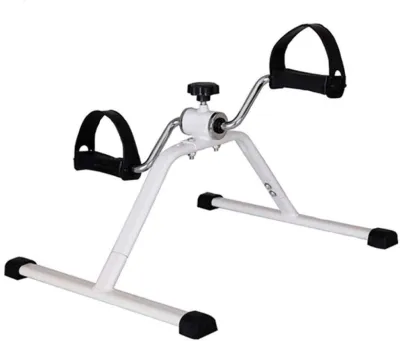
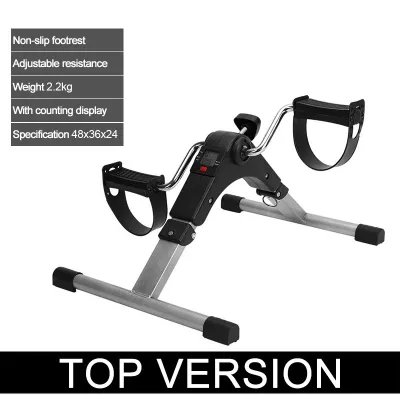
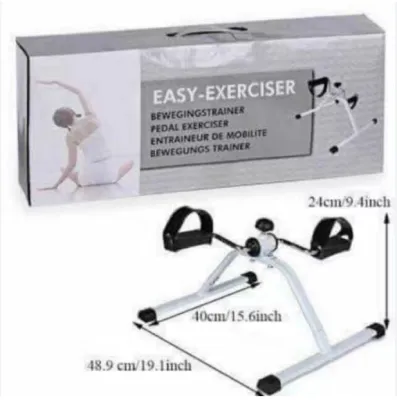
The physical footprint of your exercise equipment is often the ultimate deciding factor, especially if you live in a compact condominium or apartment in urban areas where space is premium. A pedal exerciser is remarkably small, typically measuring no more than 50 centimeters in length and width. This ultra-compact profile allows you to slide it under a desk, store it in a small closet, or tuck it beneath a bed when not in use. It requires virtually no dedicated floor space during workouts, as you simply place it in front of an existing chair.
Products mentioned in this guide
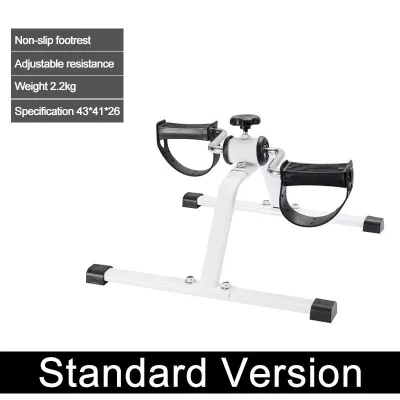
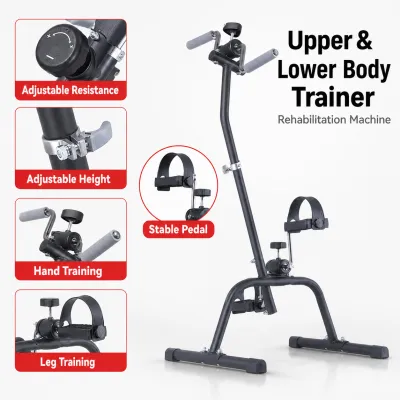
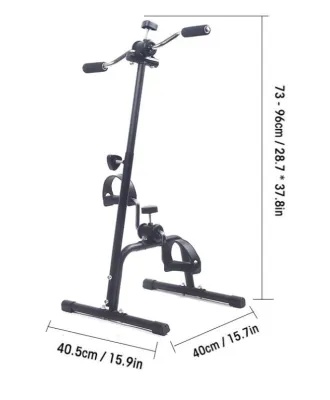
Prices are valid at publication and may change. Please refer to the product page for the latest price.
In contrast, a treadmill requires a substantial and permanent footprint. A standard home treadmill can easily occupy an area of 1.8 meters by 0.9 meters. Even folding models, which save vertical space when stored, still require a significant amount of open floor space when unfolded for use. Furthermore, you must account for safety clearance: manufacturers generally recommend leaving at least 2 meters of clear space behind the treadmill belt and 1 meter on each side. Ceiling height is another critical factor; if you plan to use the incline feature, you must ensure your ceiling is high enough so your head does not clear the ceiling joists during a workout.
Spin bikes occupy a middle ground. They have a fixed footprint, usually around 1.2 meters by 0.5 meters. While they do not fold away as easily as pedal exercisers, they are significantly more compact than treadmills. You do not need to worry about overhead clearance, but you must ensure you have enough lateral space to mount and dismount safely. Before purchasing any equipment, grab a measuring tape and physically mark out the dimensions on your floor to visualize the impact on your living space.
Budget and Long-Term Value
The financial commitment of home cardio gear spans a wide spectrum, encompassing both the initial purchase price and ongoing maintenance costs. Pedal exercisers represent the most accessible entry point. High-quality manual or magnetic pedal exercisers generally cost under ₱3,000. Because they have fewer moving parts and rarely require electrical power, their long-term maintenance costs are practically zero.
Spin bikes sit comfortably in the mid-range price tier. Entry-level friction-resistance bikes can be found for around ₱5,000 to ₱10,000, while high-quality magnetic-resistance models with digital connectivity typically range from ₱15,000 to ₱35,000. Long-term costs are relatively low, though friction models will eventually require replacement felt pads, and you may occasionally need to lubricate the chain or belt drive.
Treadmills are the most expensive option, both upfront and over time. A reliable, motorized home treadmill generally starts around ₱15,000 for basic walking pads, while robust running models with powerful motors, advanced cushioning, and incline features can range from ₱30,000 to well over ₱70,000. Beyond the purchase price, treadmills consume a notable amount of electricity, particularly during long, high-speed runs. They also require regular belt lubrication, tension adjustments, and potential motor repairs, making them the most high-maintenance option of the three. Always verify the manufacturer’s warranty terms—especially for the motor and frame—before committing to a high-end treadmill.
Workout Intensity and Joint Impact
The physiological response and physical stress of each machine vary greatly, making your current fitness level and joint health critical screening criteria. Pedal exercisers are designed primarily for low-intensity, active recovery, and gentle cardiovascular stimulation. Because you remain seated in a standard chair, there is zero impact on your lower-body joints. While you can increase the resistance to work your muscles, a pedal exerciser is not built for high-intensity cardiovascular training or rapid calorie burning.
Spin bikes excel at high-intensity, low-impact workouts. By adjusting the resistance knob, you can simulate steep climbs and perform intense sprint intervals that rapidly elevate your heart rate. Because your feet remain clipped or strapped into the pedals, your joints do not experience the repetitive impact forces associated with running. This makes spin bikes an excellent tool for building lower-body endurance and burning calories without aggravating existing joint issues.
Treadmills offer a weight-bearing workout, which is highly beneficial for stimulating bone density and strengthening the skeletal system. However, this comes at the cost of higher joint impact. Walking on a treadmill is relatively low-impact, but running subjects your knees, ankles, and hips to forces up to several times your body weight. While modern treadmill decks feature built-in shock absorption systems to mitigate this stress, they still present a higher impact risk than stationary cycling or pedal exercising. If you are recovering from a joint injury or suffer from chronic osteoarthritis, the non-weight-bearing nature of cycling or pedal exercising is generally much more forgiving.
Pedal Exerciser, Treadmill, and Spin Bike Breakdown
Understanding the specific design, mechanics, and target audience of each machine will help you determine which one aligns with your daily routine and physical capabilities.
Pedal Exercisers: Best for Low-Impact and Small Spaces
A pedal exerciser, often referred to as a desk cycle or mini exercise bike, consists of a compact pedal mechanism housed in a lightweight frame. It is designed to be operated while sitting in a standard household or office chair. Some models feature dual-purpose designs with hand pedals, allowing you to place the unit on a table to work your upper body and arms.
These devices are exceptionally beneficial for specific demographics. Desk-bound office workers can use them to combat sedentary habits during long virtual meetings, while seniors can use them to maintain joint mobility and healthy circulation from the comfort of their favorite armchairs. They are also widely utilized in physical therapy settings for gentle post-surgery rehabilitation, particularly for knee or hip replacements.
However, pedal exercisers have distinct limitations. The short pedal crank arm restricts the range of motion compared to a full-sized bicycle, which limits overall muscle engagement. Because you cannot stand up on the pedals, your core and upper body remain largely disengaged. Additionally, because the units are lightweight (often weighing less than 8 kilograms), they can slide forward on smooth tile or wood floors during vigorous pedaling. To prevent this, always place the exerciser on a high-traction rubber mat or secure it to your chair leg using an anchor strap.
Treadmills: Best for Walking, Running, and Bone Density
Treadmills feature a continuous moving belt driven by an electric motor or, in the case of manual treadmills, the user’s own physical effort. They are designed to replicate the natural biomechanics of walking, jogging, and running indoors, shielding you from outdoor hazards like uneven pavements, traffic, and unpredictable tropical downpours during the rainy season.
The primary advantage of a treadmill is its versatility. You can easily adjust the speed and incline to customize your workout, moving from a gentle stroll to steep hill climbs or high-speed intervals. This weight-bearing movement is essential for maintaining bone mineral density, making it a valuable tool for preventing osteoporosis. Furthermore, treadmills engage your entire body, including your core, glutes, hamstrings, and upper body, leading to a higher rate of energy expenditure compared to seated exercises.
The primary drawbacks of treadmills are their physical size, high power consumption, and mechanical complexity. Motorized treadmills require a dedicated electrical outlet and can be noisy, producing both airborne motor noise and structural vibrations from your feet striking the deck. When shopping for a treadmill, always check the Continuous Horsepower (CHP) rating rather than the peak horsepower; a motor with at least 2.5 CHP is recommended for running, while 1.5 to 2.0 CHP is sufficient for walking. Additionally, verify that the belt length matches your stride—taller runners typically require a belt length of at least 140 centimeters to prevent overstepping.
Spin Bikes: Best for High-Intensity and Lower-Body Endurance
Spin bikes, or indoor cycling bikes, are engineered to mimic the aggressive geometry and physical feel of a road bicycle. They feature a heavy perimeter-weighted flywheel connected to the pedals via a chain or belt drive. Unlike traditional upright exercise bikes, spin bikes allow you to stand up on the pedals, enabling high-power climbs and dynamic body movements.
These bikes are the ultimate tool for lower-body conditioning and cardiovascular endurance. The heavy flywheel creates momentum, requiring consistent muscular effort to keep the pedals turning, which heavily targets your quadriceps, hamstrings, glutes, and calves. They are highly favored for structured cycling workouts and high-intensity interval training (HIIT), allowing you to burn a high volume of calories in a relatively short period.
However, the aggressive riding position of a spin bike is not suitable for everyone. The forward-leaning posture can place strain on your lower back and neck if the bike is not adjusted correctly. Achieving a precise bike fit is essential: your knee should have a slight bend of roughly 25 to 35 degrees at the bottom of the pedal stroke, and the handlebar height should support your torso without forcing you to round your spine. Additionally, the firm, narrow saddles typical of spin bikes can cause initial discomfort; you may need to invest in a padded gel seat cover or specialized cycling shorts to improve comfort during longer sessions.
How to Choose the Right Cardio Equipment for Your Lifestyle
To streamline your decision-making process, consider how your physical environment, health status, and fitness aspirations intersect. Use this conditional framework to identify your ideal match:
- Choose a Pedal Exerciser if:
- Your living space is highly restricted, or you live in a studio apartment with no room for large fitness machinery.
- You have a strict budget and want to avoid high upfront costs or ongoing electrical expenses.
- Your primary goal is to stay active while working a sedentary desk job or to gently rehabilitate joints after an injury.
- You require a completely silent machine that can be used without distracting others in the same room.
- Choose a Treadmill if:
- You enjoy the natural mechanics of walking, jogging, or running and want to train for outdoor events indoors.
- You want a weight-bearing exercise to improve bone density and joint strength over time.
- You have a dedicated workout area with high ceilings and a solid floor that can handle vibration and noise.
- You have a flexible budget that allows for a high-quality motorized machine and potential long-term maintenance.
- Choose a Spin Bike if:
- You want a high-intensity, sweat-heavy workout to maximize calorie burn and cardiovascular fitness.
- You prefer a low-impact exercise that spares your knees, ankles, and hips from repetitive pounding.
- You have a moderate amount of floor space and want a durable, long-lasting machine with minimal electrical components.
- You enjoy the physical challenge of cycling and want to build significant lower-body muscular endurance.
- Verify First if:
- You live in a multi-story apartment or condominium complex. Treadmill footfalls can transmit low-frequency noise through concrete floors, potentially disturbing neighbors below. If noise is a concern, a spin bike with magnetic resistance or a quiet pedal exerciser is a much more considerate choice.
- You have pre-existing medical conditions, such as severe joint degeneration, spinal issues, or cardiovascular limitations. Always consult a healthcare professional or physical therapist before starting a new exercise regimen on any of these machines.
Safety Checks and Maintenance for Home Cardio Gear
To ensure your equipment remains safe to operate and lasts for years, you must establish a regular routine of safety inspections and preventative maintenance. This is particularly important in tropical climates like the Philippines, where high ambient humidity can accelerate rust and mechanical wear.
- Equipment Setup and Stability: Always place your cardio equipment on a flat, level, and solid surface. Using a dedicated high-density rubber equipment mat under treadmills and spin bikes is highly recommended; this mat protects your flooring, dampens noise and vibration, and prevents the machine from shifting during use. For pedal exercisers, ensure the unit is positioned on a non-slip surface or anchored securely to your chair to prevent it from sliding away mid-workout. For treadmills, safety guidelines dictate leaving at least 2 meters of clear space behind the rear roller to prevent entrapment if you fall off the moving belt.
- Usage Limits and Physical Safety: Before operating any machine, carefully review the manufacturer's user manual to verify the maximum weight capacity and height limits. Never exceed these specifications, as doing so can compromise the structural integrity of the frame or overload the motor. Remember that fitness equipment is a tool for conditioning, not a replacement for professional medical guidance. If you are using any machine for injury rehabilitation, strictly adhere to the parameters set by your physical therapist. Always stop exercising immediately if you experience sharp pain, chest tightness, severe shortness of breath, or dizziness.
- Preventative Maintenance in Humid Climates: Sweat is highly corrosive due to its salt content. After every workout, use a clean, slightly damp microfiber cloth to wipe down all metal frames, handlebars, consoles, and adjustment knobs on your spin bike or treadmill to prevent corrosion. In humid environments, applying a thin coat of silicone-based protectant to exposed metal parts can help prevent rust. For treadmills, check the belt alignment and tension monthly, and regularly lubricate the underside of the treadmill deck with 100% silicone lubricant according to the manufacturer's schedule. For spin bikes, periodically check and tighten the pedals, seat post, and handlebar bolts to prevent wobbling.
Frequently Asked Questions (FAQ)
Can a pedal exerciser help me lose weight as effectively as a treadmill?
A pedal exerciser is generally not as effective for weight loss as a treadmill. Weight loss requires creating a caloric deficit, and the total calories burned depend on the amount of muscle mass engaged during exercise. Treadmills require full-body, weight-bearing movement, which recruits large muscle groups like your glutes, quadriceps, and core, resulting in a significantly higher calorie burn per hour. A pedal exerciser is a valuable tool for increasing daily activity, improving circulation, and burning extra calories while sitting, but it should be viewed as a supplement to an active lifestyle rather than a primary tool for rapid weight loss.
Is a spin bike or treadmill better for bad knees?
A spin bike is generally much better for individuals with bad knees. Cycling is a non-weight-bearing, low-impact exercise that guides your legs through a smooth, circular motion, minimizing sudden shocks to the knee joints. However, to prevent knee strain on a spin bike, you must ensure the seat is adjusted to the correct height and fore-aft position. A treadmill, even with advanced cushioning, still subjects your joints to the repetitive impact of your body weight hitting the deck, which can aggravate joint pain or arthritis. If you have knee concerns, consult a physical therapist to determine the safest movement pattern for your specific condition.

Community discussion
Share your experience or ask a question. Comments are reviewed before publication.