
Choosing between a pedal power kayak and a traditional paddle kayak comes down to how you plan to spend your time on the water, your physical preferences, and your budget. Pedal kayaks use leg-driven mechanisms to free up your hands, making them highly popular for activities like fishing and photography where constant positioning is required. Paddle kayaks rely on classic upper-body movement, offering a lighter, simpler, and more maneuverability-focused design that excels in shallow, rocky, or highly congested waters.
Understanding the practical trade-offs of each propulsion system helps you avoid costly purchasing mistakes. While one system might seem modern and convenient, the other might offer the rugged durability and ease of transport you need for your specific launch sites. By evaluating how these designs perform in real-world conditions, you can select the vessel that aligns closely with your outdoor goals.
How Pedal Power and Paddle Kayaks Actually Differ
The fundamental difference between these two watercraft lies in how they translate human energy into forward or backward motion. A pedal power kayak utilizes a mechanical drive unit mounted through a dedicated opening in the center of the hull, known as the drive well. These drive units typically operate using either a pair of flexible underwater flippers that sweep side to side or a rotational propeller system similar to a bicycle.
Products mentioned in this guide
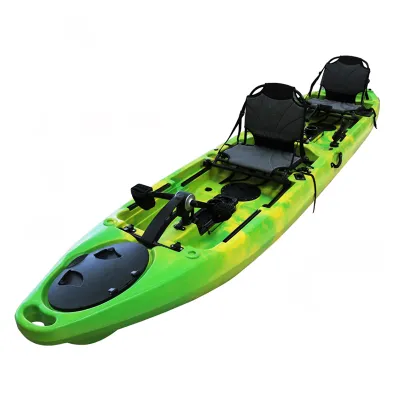
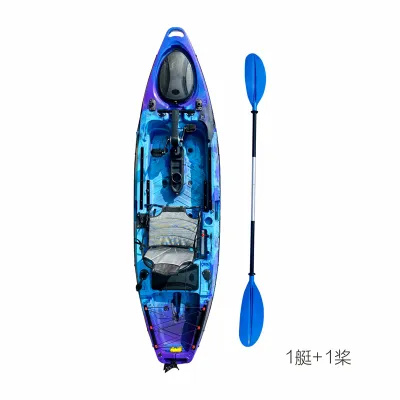
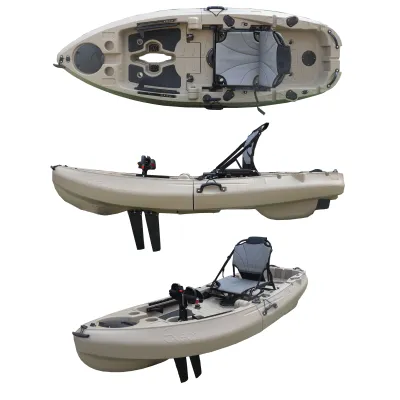

Prices are valid at publication and may change. Please refer to the product page for the latest price.
In contrast, a traditional paddle kayak relies entirely on a double-bladed paddle operated by the kayaker’s arms, shoulders, and core. This classic design requires no moving mechanical parts below the waterline, keeping the hull entirely sealed and smooth.
This mechanical divergence directly dictates the kayak’s internal cockpit layout and overall footprint. Because a pedal drive requires a central well, steering cables, and a rudder system, the cockpit of a pedal kayak is naturally more crowded. The manufacturer must reinforce the plastic around the drive well to withstand the continuous torque of pedaling, which often results in a wider, more substantial hull design.
Paddle kayaks feature clean, open decks with minimal obstructions. This simplicity provides more continuous storage space, allows for flexible seating adjustments, and keeps the overall profile of the kayak streamlined.
It is important to note that specific performance metrics, such as top speed and acceleration, are not determined by propulsion type alone. Instead, they depend heavily on the manufacturer’s hull specifications, the design of the drive system, and the physical conditioning of the user. A well-conditioned paddler in a sleek touring kayak can easily outpace an inexperienced pedaler in a wide, heavy recreational pedal kayak.
Evaluating Speed, Maneuverability, and Hands-Free Control
The on-water experience differs dramatically depending on how you power your craft. The most notable advantage of a pedal power kayak is hands-free operation. For anglers trying to cast along a windy shoreline or photographers tracking wildlife in a tidal current, the ability to adjust your position using only your legs is invaluable. You can hold your gear, adjust your line, or take photos while maintaining a steady glide.

Maneuverability, however, presents a distinct set of trade-offs. Paddle kayaks offer immediate, highly responsive turning capabilities. By executing basic paddle strokes like sweeps, draws, or reverse strokes, you can pivot a paddle kayak almost on its own axis. This makes paddle kayaks highly agile when navigating tight mangrove channels, winding rivers, or crowded coastal reefs.
Pedal kayaks generally rely on a rudder system controlled by a hand-operated dial or lever located on the side of the cockpit. While this setup is excellent for tracking straight over long distances, the turning radius is typically much wider than that of a paddle kayak. Additionally, while some pedal drives offer instant reverse by pedaling backward, other systems require you to pull a manual cable or shift a gear lever to change direction, which can slow down quick maneuvers.
Speed and efficiency are also highly dependent on water conditions and personal stamina. Because human leg muscles are larger and more powerful than upper-body muscles, most users find it easier to maintain a steady cruising speed over long distances in a pedal kayak without experiencing rapid fatigue. However, in heavy chop, strong head currents, or windy conditions, the efficiency of both systems will ultimately depend on how well the hull slices through the water and how much wind resistance the kayak presents.
Weight, Transport, and Maintenance Realities
While on-water performance is crucial, the logistics of getting your kayak to and from the water can heavily influence how often you actually use it. Pedal kayaks are significantly heavier than paddle kayaks. The weight of the mechanical drive unit itself, combined with the extra plastic reinforcement and rudder hardware, can add 10 to 20 kilograms of dry weight to the hull.
This added mass complicates transport and storage. Lifting a heavy pedal kayak onto a vehicle’s roof rack often requires two people or specialized load-assist accessories. You must carefully verify your vehicle’s roof rack weight capacity to ensure it can handle the combined weight of the kayak and its accessories.
During transit, you must remove the pedal drive mechanism and secure it inside your vehicle to protect the delicate gears and fins from road vibrations, dust, and wind damage. A paddle kayak, being lighter and structurally simpler, is much easier to lift, tie down, and store on standard wall racks or outdoor hooks.
Maintenance requirements also differ substantially, particularly in tropical, high-humidity, and saltwater environments. A paddle kayak requires minimal upkeep; a simple rinse with fresh water to remove salt and sand, followed by storage out of direct sunlight, is usually sufficient to keep the hull in top condition.
A pedal drive system is a complex piece of machinery with moving gears, chains, cables, and bearings. Saltwater exposure can quickly lead to corrosion, binding, or mechanical failure if the drive is neglected. After every outing, you must thoroughly rinse the drive unit with fresh water, inspect the seals for debris, and regularly apply marine-grade lubricants to keep the internal mechanisms moving smoothly.
Matching Propulsion to Your Kayaking Activities
To choose the right kayak, you must align the propulsion system with your typical paddling environments and primary activities. Pedal kayaks are well-suited for open, deep, and relatively calm waters. If you plan to troll for fish along deep coastal drop-offs, cover several kilometers of open water to reach a remote beach, or spend hours on a large lake, the leg-powered efficiency of a pedal system is highly advantageous.
Paddle kayaks remain the practical choice for shallow, complex, or high-energy environments. If your adventures take you into shallow mangrove forests, rocky rivers, or active surf zones, a paddle kayak’s shallow draft is essential.
Because a paddle kayak has a completely smooth hull bottom with no protruding parts, it can glide over sandbars, submerged logs, and shallow reefs without getting stuck or damaging equipment. A pedal drive extending beneath the hull would strike these obstacles, risking severe mechanical damage.
Before making your purchase, evaluate your typical kayaking scenarios using this practical checklist:
- Launch Site Accessibility: Will you be launching from a sandy beach, a concrete boat ramp, or a steep, rocky bank where you must drag or carry the kayak?
- Water Depth and Obstacles: Do your local waters feature shallow reefs, submerged logs, or thick aquatic vegetation that could tangle or damage a propeller or flipper system?
- Primary On-Water Goals: Is your main priority hands-free utility like fishing and photography, or do you value physical exercise, simplicity, and exploring tight spaces?
- Storage and Transport Limits: Do you have the physical strength to lift a heavy kayak solo, and does your vehicle or storage space accommodate a bulkier hull?
Budgeting for Your Kayak and Gear
The financial investment required for these two types of watercraft varies significantly. Pedal power kayaks sit at a premium price tier due to the complexity of their manufacturing, the inclusion of precision-engineered drive units, and integrated rudder systems.
To get an accurate picture of the current market, you should check local outdoor retailers and specialized water sports shops in the Philippines for exact ₱ pricing. Prices fluctuate based on shipping costs, import duties, materials, and seasonal promotions.
When planning your budget, look beyond the initial purchase price of the kayak itself. There are several hidden costs to verify before finalizing your decision.
For a pedal kayak, budget for potential replacement parts, specialized marine grease, and a heavy-duty roof rack or cart to transport the heavier hull. Even with a pedal kayak, you must still carry a paddle as a safety backup, meaning you cannot skip purchasing a quality paddle.
For a paddle kayak, investing in an upgraded, lightweight carbon-fiber paddle can dramatically reduce fatigue during long days on the water, which is a highly recommended secondary purchase.
Final Decision Framework: Choose Pedal or Paddle?
To help finalize your choice, use this structured decision framework based on your specific on-water goals and physical setup.
Choose a Pedal Kayak if:
- Your primary activity is kayak fishing or photography, where keeping your hands free is essential.
- You plan to cover long distances in deep, open coastal waters or large lakes.
- You prefer using your leg muscles for propulsion and do not mind the extra weight and maintenance.
Choose a Paddle Kayak if:
- You operate on a strict budget and want to minimize upfront and long-term maintenance costs.
- You frequently explore shallow reefs, rocky rivers, or dense mangrove channels where a shallow draft is required.
- You need a lightweight kayak that is easy to lift onto a car roof solo and store in a limited space.
Verify First if:
- You have existing knee or hip joint concerns (which may make pedaling uncomfortable) or shoulder issues (which may make paddling difficult).
- Your vehicle's roof rack has a low weight limit that cannot safely support a heavy pedal kayak.
- You have a secure, fresh-water washing station at home to rinse off a mechanical drive after every saltwater outing.
Frequently Asked Questions (FAQ)
Can I convert a regular paddle kayak into a pedal power kayak?
Most standard paddle kayak hulls are not structurally designed to accommodate a pedal drive system. Converting a traditional hull requires cutting a large hole for the drive well, which compromises the structural integrity of the plastic, leads to severe leaks, and voids any manufacturer warranties. If modular propulsion is a priority, look specifically for kayaks designed by the manufacturer to accept interchangeable pod systems.
Are pedal kayaks suitable for shallow rivers and rocky areas?
Pedal kayaks are generally not suited for shallow, rocky, or debris-filled waters. The fins or propeller blades extend deep beneath the hull, making them highly vulnerable to striking rocks, logs, or shallow reefs, which can bend shafts or break gears. While some modern pedal drives can be retracted or kicked up flat against the hull, navigating these areas still risks damaging the rudder. A traditional paddle kayak, with its completely flat bottom, remains the safer and more practical option for shallow drafts.
Community discussion
Share your experience or ask a question. Comments are reviewed before publication.