
Choosing the correct Pilates ball size depends primarily on your height, as the diameter of the ball directly dictates your joint alignment and posture during exercise. When you sit on a fully inflated stability ball, your feet should rest flat on the floor with your knees bent at a 90-degree angle. For most individuals, this means matching your height to standard ball diameters: a 55 cm ball generally suits those between 4’11” and 5’4″, a 65 cm ball works best for heights between 5’5″ and 5’11”, and a 75 cm ball is designed for individuals 6’0″ and taller. Selecting the right size ensures that your workouts remain safe, effective, and comfortable, especially in warm, humid tropical environments where maintaining a secure grip and stable posture is crucial.
Why Proper Sizing Matters for Your Form
Using a Pilates ball that matches your physical proportions is essential for maintaining spinal neutrality and pelvic alignment. When the ball is too large or too small, your pelvis naturally tilts forward or backward to compensate for the uneven surface. This misalignment places unnecessary strain on your lumbar spine and can lead to lower back discomfort or muscle fatigue during core routines.
An oversized ball forces your hips higher than your knees, shifting your center of gravity forward and making it difficult to engage your deep abdominal muscles. Instead of working your core, you may find yourself relying on your hip flexors or leg muscles to stay balanced. This imbalance increases the risk of slipping off the ball, particularly during sweaty home workouts in humid conditions.
Products mentioned in this guide
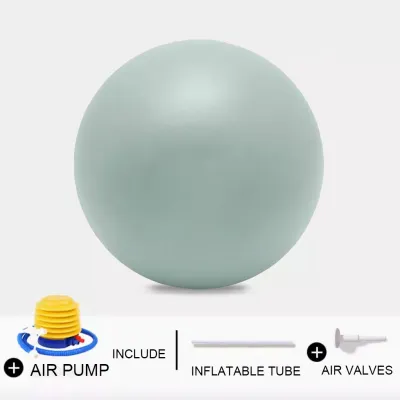
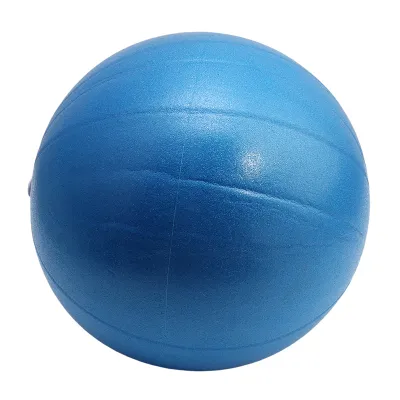
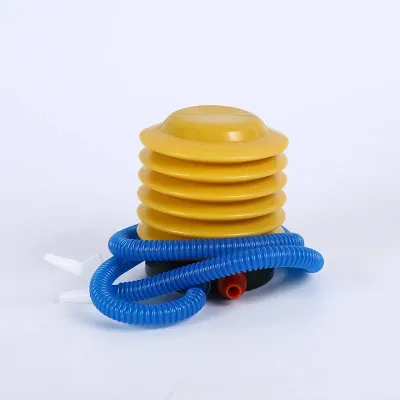
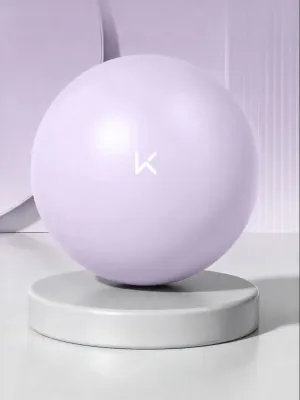
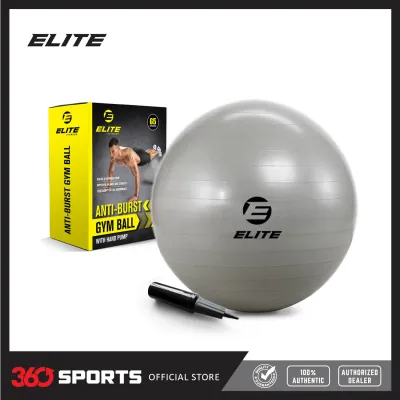
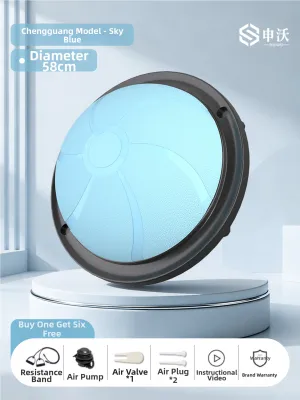
Prices are valid at publication and may change. Please refer to the product page for the latest price.
Conversely, an undersized ball causes your knees to rise above your hip line, compressing your lower back and putting excessive pressure on your knee joints. This cramped position limits your range of motion and prevents you from executing movements with controlled, fluid form. Proper sizing ensures that your muscles engage dynamically to stabilize your body, rather than relying on momentum or awkward joint angles to stay upright.
How to Match Your Height to a Ball Diameter
Finding the ideal Pilates ball begins with a general height-to-diameter comparison, which serves as your baseline. Standard exercise balls are typically categorized by their fully inflated diameters, ranging from 45 cm for shorter individuals to 75 cm or more for taller users. These measurements represent the maximum diameter the ball should reach when properly inflated.

While standard charts provide an excellent starting point, your individual body proportions can influence which size is truly best for you. For instance, someone with a longer torso and shorter legs may require a different size than someone of the same height who has longer legs. Therefore, it is always best to combine chart recommendations with a physical test to confirm the fit.
Using Manufacturer Height Charts
Before purchasing a Pilates ball from an online marketplace or local sports store, always consult the manufacturer’s specific sizing chart. These guides are usually printed on the product packaging or displayed in the online product description. Because material elasticity and design can vary slightly between brands, one manufacturer’s height brackets might differ from another’s.
Pay close attention to the units of measurement used in the sizing guide. Some charts list heights in centimeters, while others use feet and inches. Verifying these units helps prevent conversion errors that could lead to ordering the wrong size. If you are shopping locally in the Philippines, keeping a quick note of your height in both metric and imperial units makes comparing options much easier.
Performing the Seated Knee-Angle Test
The most reliable way to verify your Pilates ball size is by performing a seated knee-angle test. To do this, inflate the ball to its designated diameter and sit directly on the center of the ball. Ensure your feet are flat on the floor, spaced about hip-width apart, to establish a stable base.
Observe the angle of your knees and hips in a mirror or ask a workout partner to check your posture. Your thighs should be parallel to the floor, creating a clean 90-degree angle at both your knees and your hips. If your knees are positioned higher than your hips, the ball is too small or under-inflated. If your hips sit significantly higher than your knees, the ball is too large.
Adjusting Size for Specific Exercises and Goals
While the 90-degree rule is the standard for general fitness, you may want to adjust your ball size based on your specific workout goals or physical needs. For advanced core training, some fitness enthusiasts prefer a slightly smaller ball. A smaller surface area increases the instability of the ball, forcing your stabilizer muscles to work harder to maintain balance during planks or bridges.
Conversely, a slightly larger ball can be highly beneficial for gentle stretching, active recovery, or prenatal exercises. The increased height and volume of a larger ball provide a more supportive surface for back extensions and chest openers. Pregnant users often prefer a larger ball because it keeps the hips elevated, reducing pressure on the pelvis and making it easier to transition on and off the ball.
If you plan to use your Pilates ball as an active desk chair replacement to improve your daily posture, strict adherence to the seated knee-angle test is critical. The ball must be tall enough to keep your hips level with your knees while allowing your forearms to rest comfortably on your desk. Using an incorrect size as a chair can lead to poor ergonomic habits and chronic shoulder or neck tension over time.
Verifying Inflation and Weight Limits
Achieving the correct ball size is not just about purchasing the right box; it also depends on proper inflation. An under-inflated ball will compress significantly under your weight, effectively acting like a smaller size. This compression alters your knee angle, reduces the ball’s stability, and prevents you from getting the full core-engagement benefits of your exercises.
To ensure accurate inflation, use a tape measure to check the ball’s physical diameter rather than relying on visual estimation. You can place two boxes or chairs at a distance equal to the target diameter (such as 65 cm) and inflate the ball until it just fits between them. Avoid over-inflating the ball beyond its specified limit, as this can stretch the material too thin and increase the risk of popping.
Additionally, always check the manufacturer’s maximum weight capacity label before starting your routine. High-quality Pilates balls are designed with anti-burst technology, meaning they will deflate slowly if punctured rather than popping suddenly. Verifying that the ball’s weight limit comfortably accommodates your body weight ensures a safe, worry-free workout environment.
Frequently Asked Questions (FAQ)
What if my height falls between two size recommendations?
If your height sits right on the border between two sizes, it is generally recommended to choose the larger size. A larger ball offers more versatility because you can slightly under-inflate it to achieve the perfect 90-degree knee angle without compromising its structural integrity. This adjustment provides a slightly softer, more stable surface that is ideal for beginners.
Additionally, a larger ball provides a greater surface area, which is highly beneficial for floor-based exercises where the ball supports your back or legs. If you choose the smaller ball and try to over-inflate it to gain height, you risk damaging the material and creating an overly firm, unstable surface that is difficult to balance on.
Can I use a smaller Pilates ball for core workouts?
Yes, but it depends on the type of exercise you are performing. It is important to distinguish between a standard full-size stability ball (45 cm to 75 cm) and a mini Pilates ball, which typically measures between 20 cm and 30 cm. Mini balls are designed to be placed between your knees, ankles, or under your lower back to target specific muscle groups like the inner thighs and deep abdominals.
However, for exercises that require you to sit, lie, or balance your entire body weight on the ball, you must use a full-size ball matched to your height. Attempting to perform full-body seated balances or core rollouts on a ball that is too small will compromise your form and increase the risk of injury.
Community discussion
Share your experience or ask a question. Comments are reviewed before publication.