
Choosing between a plate-loaded and a selectorized leg press machine depends on your training experience, available space, and budget. If you prioritize rapid weight adjustments, a compact footprint, and user-friendly mechanics, a selectorized machine is generally your best option. Conversely, if you want near-limitless weight capacity, micro-loading capabilities, and a highly customizable resistance profile, a plate-loaded machine is the superior choice. Both designs offer distinct advantages for lower-body development, but understanding their structural differences is essential before making a significant investment for your home gym or commercial facility in the Philippines.
Understanding the Core Resistance Mechanisms
To make an informed decision, you must first understand how each machine generates and transmits resistance to your legs. The mechanical design dictates not only how you load the weight but also how the exercise feels throughout the entire range of motion.
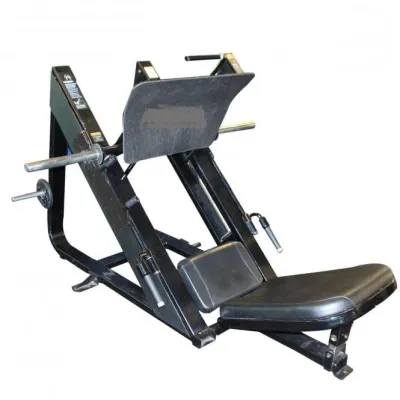
Plate-loaded leg press machines rely on gravity and direct physical loading. You manually slide Olympic or standard weight plates onto steel storage horns attached directly to the moving sled. Because the weight moves along a fixed track—often set at a 45-degree angle—the resistance is direct, with minimal mechanical interference. This setup creates a highly consistent force curve, though friction along the guide rods can slightly alter the perceived weight during the eccentric (lowering) and concentric (pushing) phases.
Products mentioned in this guide
Prices are valid at publication and may change. Please refer to the product page for the latest price.
Selectorized leg press machines, often referred to as pin-loaded machines, utilize a more complex system of cables, pulleys, and a guide-rod-aligned weight stack. Instead of handling heavy plates, you select your desired resistance by inserting a metal selector pin into the designated slot of the weight stack. The force is transmitted from the stack through a high-tensile steel cable and over a series of pulleys to the footplate. This mechanical system can introduce a small amount of friction, which sometimes makes the weight feel slightly different at the start of the movement compared to the finish.
Comparing Key Decision Factors for Your Gym Setup
Integrating a heavy strength training machine into your space requires careful planning around physical dimensions, structural limits, and ongoing upkeep. Both machine types impose different demands on your training environment.

Weight Capacity and Loading
The maximum load capacity of a selectorized machine is strictly limited by the physical size of its integrated weight stack. Once you max out the stack, adding more resistance is generally not possible without risking damage to the cable and pulley system. Plate-loaded machines, on the other hand, are limited only by the length of their weight horns and the thickness of the plates you use. This makes plate-loaded units highly adaptable for high-level strength athletes who require loads that exceed standard weight stacks.
Space and Footprint
When planning your gym layout, you must account for more than just the machine’s static footprint. Selectorized units are highly self-contained, meaning the weight stack moves vertically within a protective cage, requiring no extra lateral clearance. Plate-loaded machines require significant additional clearance on both sides of the unit so you can safely slide plates onto the horns without hitting walls or other equipment. In humid tropical environments like the Philippines, ensuring adequate airflow around these larger footprints is also crucial for user comfort.
Maintenance and Durability
The simplicity of a plate-loaded machine makes it incredibly durable and easy to maintain over years of heavy use. The primary maintenance tasks involve cleaning and lubricating the solid steel guide rods and checking the safety catches for wear. Selectorized machines require more frequent and detailed inspections. You must regularly check the high-tensile cables for fraying, inspect the pulley wheels for alignment and bearing wear, and ensure the selector pin is fully functional. In high-humidity areas, keeping these moving parts clean and lubricated is vital to prevent rust and ensure smooth operation.
Matching the Machine to Your Training Style and Goals
Your choice of equipment should directly support your fitness level, training methodology, and long-term physical goals. The way you interact with the machine during a workout can significantly impact your training consistency.
Beginners and Rehabilitation
For those new to strength training or recovering from an injury, selectorized leg presses offer an exceptionally safe and approachable entry point. The enclosed weight stack minimizes the risk of pinched fingers, and the ability to change weights in small, clearly marked increments allows for precise progression. Physical therapy clinics and home users focused on general wellness often prefer selectorized units because they eliminate the physical strain of lifting and carrying heavy weight plates before the workout even begins.
Advanced Lifters and Heavy Loading
Experienced lifters often gravitate toward plate-loaded leg presses because they allow for micro-loading. By using small fractional plates, you can increase the resistance by as little as 0.5 kilograms, which is highly beneficial when trying to break through training plateaus. Additionally, many plate-loaded sleds feature built-in peg attachments that allow you to secure resistance bands or chains. This accommodating resistance increases the tension at the top of the movement where your legs are mechanically strongest, providing a unique training stimulus that selectorized machines cannot easily replicate.
Convenience vs. Customization
If your workouts involve high-intensity techniques like drop sets, supersets, or rapid pyramid training, the convenience of a selectorized machine is unmatched. You can change the resistance in a matter of seconds without leaving the seat, keeping your heart rate elevated and maintaining muscular tension. Conversely, plate-loaded machines offer superior customization of the starting position and footplate angles, allowing you to target specific muscle groups—such as the quadriceps, glutes, or hamstrings—by adjusting your foot placement on a larger, often adjustable footplate.
Budgeting and Long-Term Value Considerations
Investing in a leg press machine involves both immediate upfront costs and long-term financial considerations. Understanding the total cost of ownership will help you allocate your fitness budget effectively.
Selectorized leg press machines typically command a higher initial purchase price. The manufacturing complexity of the weight stack, precision-machined guide rods, pulleys, and high-tensile cables drives up the cost. However, this price is comprehensive; once the machine is assembled, it is fully functional and ready for use without requiring any additional purchases.
Plate-loaded machines generally have a lower entry price for the frame itself because of their simpler mechanical design. However, you must factor in the additional cost of purchasing Olympic or standard weight plates and secure collars. If you do not already own a substantial collection of weight plates, this secondary purchase can easily double your initial investment. For a home gym in the Philippines, sourcing quality cast iron or rubber-coated plates is an essential line item to include in your overall budget, which can add tens of thousands of pesos (₱) to your total setup cost.
From a long-term value perspective, plate-loaded machines are nearly indestructible. With fewer moving parts, there are very few components that can break or wear out over time. Selectorized machines, while highly durable when properly maintained, will eventually require replacement cables or pulley wheels as the protective coatings wear down from friction.
Your Final Decision Framework
To finalize your decision, evaluate your personal training space, budget, and fitness goals against the specific characteristics of each machine type.
Choose a Plate-Loaded Leg Press If:
- You already own a comprehensive set of Olympic weight plates.
- Your training goals require extremely heavy loads or micro-loading progressions.
- You want a highly durable machine with minimal mechanical parts to maintain.
- You have a spacious workout area that allows for safe loading clearance on both sides of the machine.
Choose a Selectorized Leg Press If:
- You prioritize convenience, rapid weight changes, and seamless drop sets.
- You are setting up a compact gym space where every square meter counts.
- The machine will be used by multiple family members or clients with varying fitness levels.
- You prefer a self-contained system that does not require purchasing or storing loose weight plates.
Verify First Checklist:
- Measure Your Space: Confirm the physical footprint of the machine, adding at least 60 centimeters of clearance on all sides for loading plates or accessing the weight stack.
- Check Ceiling Height: Ensure your ceiling can accommodate the highest point of the sled track or the top of the weight stack cage.
- Verify Plate Compatibility: If choosing plate-loaded, confirm whether the machine's horns are designed for 50mm Olympic plates or 25mm standard plates.
- Review Manufacturer Specifications: Always check the manufacturer's documentation for the exact weight stack increments, maximum weight capacities, sled angles, and the placement of safety catches before making your final purchase.
Frequently Asked Questions (FAQ)
Can I convert a plate-loaded leg press to a selectorized one?
Modifying a plate-loaded leg press to function as a selectorized machine is highly discouraged. These machines are engineered with specific structural load paths, weld points, and safety mechanisms tailored to their original design. Attempting an aftermarket conversion by adding cables, pulleys, and a weight stack can compromise the structural integrity of the frame, void the manufacturer’s warranty, and create severe safety hazards during heavy training. If you require a selectorized system, it is safest to purchase a dedicated unit designed by the manufacturer for that purpose.
Does the sled angle affect the actual weight lifted?
Yes, the angle of the leg press sled directly influences the effective resistance you experience. On a standard 45-degree angled leg press, you are not lifting the entire weight loaded on the sled due to the physics of an inclined plane. The actual force required to move the sled is typically around 70% of the total weight, though this varies based on the machine’s specific design and track friction. To understand the true resistance profile, consult the manufacturer’s specifications for the exact mechanical advantage ratio of the machine.
Are plate-loaded leg presses safer for solo training?
Both plate-loaded and selectorized leg presses can be used safely without a spotter, provided you utilize the built-in safety mechanisms correctly. Plate-loaded machines feature adjustable safety stops or catches along the track that prevent the sled from crushing the user in the event of muscle failure. Selectorized machines rely on the weight stack bottoming out or internal safety pins. Regardless of the machine type, always test and set the safety catches to a height that allows a full range of motion while ensuring the weight cannot pin you if you cannot complete a repetition.
Community discussion
Share your experience or ask a question. Comments are reviewed before publication.