
Choosing the right leg press for your home gym depends on your training style, available floor space, and budget. If you prioritize heavy lifting and already own Olympic weight plates, a plate-loaded leg press offers the highest weight capacity and customization. For multi-user households or those who value rapid weight adjustments and built-in safety, a selectorized (pin-loaded) machine is the most convenient option. If you are working with a compact room or garage and prefer a smooth, joint-friendly movement pattern, a lever leg press provides an excellent space-saving alternative.
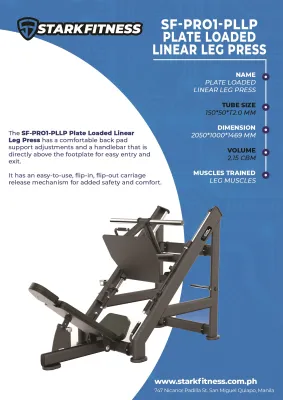
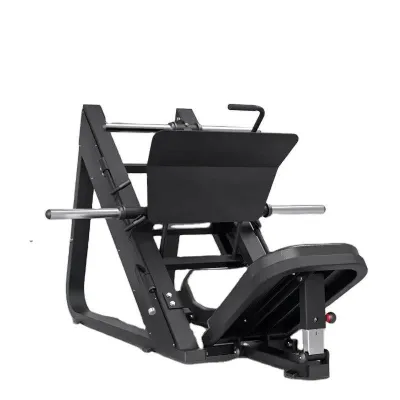
Understanding the mechanical differences between these three systems is essential before making a significant investment. A plate-loaded leg press relies on manual weight plate addition, where the user slides standard or Olympic plates onto weight horns attached directly to a moving sled. This sled typically glides along linear shafts or angled guide rods at a 45-degree angle, requiring the user to push the weight upward against gravity. The simplicity of this design means there are very few moving parts to wear out over time.
In contrast, a selectorized leg press utilizes a built-in weight stack. The user adjusts the resistance by inserting a magnetic selector pin into the desired weight increment. This force is transmitted through a system of high-tensile cables, pulleys, or a specialized cam that alters the resistance profile throughout the movement. This design eliminates the need to handle heavy plates, making it highly efficient for fast-paced workouts.
Products mentioned in this guide
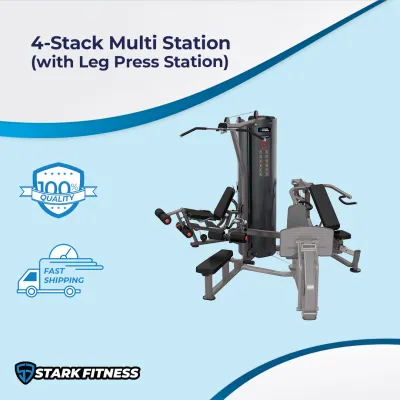
Prices are valid at publication and may change. Please refer to the product page for the latest price.
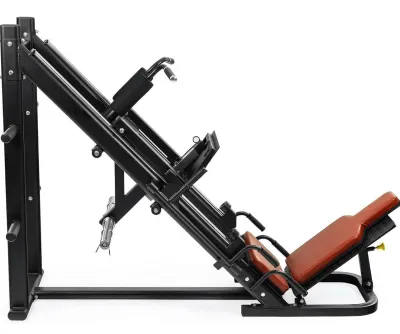
A lever leg press, often referred to as a pivot leg press, operates on a different mechanical principle. Instead of a sled sliding along linear tracks, the footplate is attached to a heavy-duty lever arm that swings in an arc around a fixed pivot point. This pivot-based resistance can be loaded with weight plates or connected to a fixed weight stack. The arc-like motion alters the strength curve, often making the exercise feel smoother and more natural, particularly at the bottom of the movement where joint stress is typically highest.
Evaluating Space, Budget, and Maintenance for Your Setup
Integrating a leg press into a home gym requires careful planning around physical and financial constraints. A leg press is typically one of the largest pieces of strength equipment you can buy, and its footprint extends beyond its static dimensions. For a plate-loaded machine, you must account for the active footprint, which includes the width of the weight horns plus at least 60 to 90 centimeters of clearance on either side to safely load and unload heavy plates without hitting walls or other equipment.
Budget considerations also extend beyond the initial purchase price of the machine. While plate-loaded models often have a lower upfront cost, they require a substantial investment in weight plates if you do not already own them. Purchasing several hundred kilograms of Olympic plates can double your overall expenditure. Selectorized machines have a much higher initial cost due to the precision-engineered steel weight stack, but they are a complete, self-contained system requiring no additional purchases. Lever machines generally offer a middle ground, with some models designed to use existing plates and others featuring compact, built-in resistance systems.
Maintenance requirements are heavily influenced by your local environment. In tropical climates with high humidity, moisture can quickly lead to rust on exposed steel guide rods and pivot points. Plate-loaded and selectorized machines require regular cleaning and lubrication of their linear shafts to maintain a smooth glide. Selectorized units also demand routine inspection of the cables and pulleys to check for wear, tension loss, or plastic coating degradation. Lever machines, with their simplified pivot-bearing design, generally require the least maintenance, making them highly durable in humid garage gym setups.
| Feature | Plate-Loaded Leg Press | Selectorized Leg Press | Lever Leg Press |
|---|---|---|---|
| Footprint | Large (requires side clearance) | Medium to Large | Compact to Medium |
| Upfront Cost | Moderate (excluding plates) | High (all-inclusive) | Moderate to High |
| Maintenance | Moderate (guide rod lubrication) | High (cable & pulley checks) | Low (pivot bearing care) |
| Weight Adjustments | Manual (slower) | Pin-selected (instant) | Manual or Pin-selected |
| Resistance Curve | Linear (constant) | Variable (cam-assisted) | Arc-based (smooth pivot) |
Plate-Loaded Leg Presses: Maximum Customization and Heavy Lifting
Plate-loaded leg presses are the gold standard for lifters focused on maximal strength and progressive overload. Because the weight capacity is limited only by the length of the weight horns and the structural integrity of the steel frame, these machines can handle immense loads that far exceed the limits of standard selectorized stacks. This makes them the preferred choice for competitive powerlifters and bodybuilders who require extreme resistance to stimulate muscle growth.

Another major advantage of the plate-loaded design is the ability to customize resistance increments. You can micro-load your lifts using small fractional plates, such as 1.25 kg or 2.5 kg plates, allowing for steady, incremental progress over time. Furthermore, because there are no cables or pulleys under tension, there is virtually no risk of sudden equipment failure during a heavy lift, providing peace of mind when training alone.
However, the manual labor involved in loading and unloading heavy plates can be a significant drawback. If your training routine involves drop sets, pyramid sets, or sharing the machine with a partner of a different strength level, the constant plate swapping can become exhausting and disrupt your workout flow. You also need to ensure you have adequate plate storage trees nearby, which further increases the space requirements of your gym.
Selectorized Leg Presses: Quick Adjustments and Built-In Safety
Selectorized leg presses excel in convenience, speed, and user-friendliness. The ability to change the resistance instantly with a selector pin makes these machines ideal for fast-paced training styles, such as high-intensity interval training (HIIT), supersets, or rapid drop sets. There is no need to bend down, lift heavy plates, or worry about storage, allowing you to maintain a high heart rate and focus entirely on your performance.
Safety is another key benefit of selectorized systems. The weight stack is typically enclosed within a protective steel shroud, which prevents hands, clothing, or curious pets from getting caught in the moving parts. Most selectorized machines also feature built-in, easily adjustable safety stops that prevent the weight stack from dropping completely, providing an excellent safety net for solo lifters training to failure without a spotter.
The primary trade-offs of selectorized machines are their high initial cost and fixed weight limits. A high-quality selectorized leg press is a premium investment, often costing significantly more than a plate-loaded equivalent. Additionally, if you eventually reach the maximum weight of the built-in stack, you cannot easily add more resistance, which may limit long-term progression for advanced lifters. The cable-and-pulley system also introduces friction and requires more frequent inspections to ensure smooth operation.
Lever Leg Presses: Compact Footprints and Smooth Resistance
Lever leg presses offer a unique, biomechanically optimized alternative to traditional linear machines. By utilizing a heavy-duty lever arm that rotates around a fixed pivot point, these machines deliver an exceptionally smooth resistance curve. The arc-like movement path naturally reduces shear stress on the knees and lower back, making it an excellent choice for lifters recovering from joint issues or those who find traditional 45-degree leg presses uncomfortable.
For home gym owners, the compact footprint of a lever leg press is a major selling point. Because they do not require long, angled guide rods or massive sliding sleds, lever machines can be designed with a much smaller physical profile. Many models can be placed directly against a wall, saving valuable floor space in tight spare bedrooms or crowded garage setups.
The main limitation of a lever leg press is the fixed movement path. Unlike a linear leg press where you can adjust your foot placement to drastically alter the angle of push, a lever machine’s arc-based motion dictates a specific path of travel. Additionally, if the machine is plate-loaded, you still face the task of manual loading, though the weight horns are often positioned in a more ergonomic, easily accessible location compared to traditional 45-degree sleds.
Decision Framework: Which Leg Press Matches Your Training Goals?
To choose the right leg press, you must align the machine’s mechanics with your specific training goals, space limitations, and budget.
Choose a plate-loaded leg press if your primary goal is maximal strength development, powerlifting, or bodybuilding. This option is ideal if you already own a comprehensive set of Olympic weight plates, have a spacious garage or dedicated gym room, and do not mind the physical effort of loading and unloading plates between sets.
Choose a selectorized leg press if you value convenience, speed, and safety above all else. This system is perfect for busy individuals who want to maximize their workout time, households with multiple users of varying strength levels, or lifters who prefer a self-contained machine with built-in safety enclosures and zero plate-handling requirements.
Choose a lever leg press if you are working with a limited footprint, such as a small spare room or a tight corner of a garage. It is also the superior choice if you prioritize joint health and prefer a smooth, pivot-based movement pattern that minimizes stress on your knees and lower back.
Before making your final decision, always verify several critical factors. Measure your ceiling height to ensure the machine can fully extend without hitting overhead obstructions. Check your floor’s load capacity, especially if you plan to install the machine on an upper level. Finally, consider your personal biomechanics; if possible, test different mechanisms at a local facility to see which movement path feels most comfortable for your joints.
Safety, Assembly, and Maintenance Checks for Home Use
Installing and operating a heavy leg press at home requires strict adherence to safety and maintenance protocols. Proper assembly is the foundation of a safe home gym. Always assemble the machine on a flat, level surface, and carefully follow the manufacturer’s instructions. Ensure every bolt is tightened to the specified torque, and consider using heavy-duty rubber gym flooring to absorb vibrations, protect your floor, and prevent the machine from shifting during heavy training sessions.
Before your first workout, perform a comprehensive safety check. Test the safety stops and sled locks without any weight loaded to ensure they engage smoothly and securely at various heights. Verify that the weight stack pins or plate collars fit tightly and do not slip during movement. These safety mechanisms are your primary defense against injury when training alone.
Routine maintenance is essential to preserve the smooth operation of your machine, especially in humid tropical environments where rust and dust can quickly degrade performance. Wipe down guide rods weekly with a clean microfiber cloth to remove sweat, dust, and old grease, then apply a thin layer of dry silicone or Teflon lubricant. Inspect cables for any signs of wear, such as cracked plastic coating, fraying wire strands, or loss of tension. Check pivot bearings on lever machines for smooth rotation and tighten any loose hardware immediately.
Establish clear stop conditions for your equipment. Immediately halt use of the machine if you observe frayed cables, bent guide rods, cracked welds, loose pulleys, or hear unusual grinding or squeaking noises. Do not attempt to use the machine with temporary fixes or damaged parts. Contact the manufacturer or a professional fitness equipment technician to source genuine replacement parts and ensure the machine is structurally sound before resuming your workouts.
Frequently Asked Questions (FAQ)
Does a leg press require floor reinforcement?
Standard residential floors, particularly upper-level wooden joist structures, are designed for standard living loads and may not safely support the concentrated weight of a heavy leg press. A fully loaded machine, combined with the user’s body weight, can easily exceed 500 kilograms. If you are installing the machine on a ground-floor concrete slab, which is common in Philippine garage gyms, reinforcement is generally unnecessary, though high-density rubber mats are highly recommended to distribute the weight and protect the concrete from cracking. For upper-floor installations, always consult a structural engineer to verify the floor’s load capacity before purchasing.
How much ceiling clearance is needed for a home gym leg press?
When measuring your space, do not rely solely on the static height of the machine listed in the product specifications. You must measure the maximum height the sled, weight horns, or lever arm reaches when fully extended during a lift. Additionally, account for your own height and foot placement, as your feet or the top of the sled may extend higher than the frame itself. Check the manufacturer’s guidelines for minimum ceiling clearance, and ensure you have at least 15 to 20 centimeters of extra space above the highest moving point to avoid hitting ceiling fans, light fixtures, or low-hanging beams.
Community discussion
Share your experience or ask a question. Comments are reviewed before publication.