
Managing your water supply is one of the most critical aspects of any outdoor adventure, yet finding the right balance between carrying capacity, weight, and pack space can be a persistent challenge. Choosing between a rigid canister and a collapsible carrier depends entirely on your transport method and camp setup: rigid canisters provide unmatched structural durability and stable, hands-free dispensing for stationary basecamps, while collapsible carriers offer exceptional space-saving flexibility and weight reduction for mobile, space-constrained journeys. By understanding how these two designs handle packing, durability, ergonomics, and specific outdoor scenarios, you can select the optimal container to keep your camp hydrated without unnecessary hassle.
How do rigid and collapsible water containers compare in space efficiency and storage?
Rigid water containers maintain a fixed, unyielding footprint whether full or empty, whereas collapsible carriers shrink to a fraction of their size once drained. This fundamental difference means rigid canisters require dedicated vehicle or closet space, while collapsible options tuck easily into tight pack corners.
Rigid canisters are constructed from thick, molded plastics like high-density polyethylene (HDPE). This material gives them a permanent, structural geometry. When packing for a trip, this fixed shape can be both an advantage and a drawback. On one hand, a rectangular or cubic rigid canister allows for predictable, stackable packing in a vehicle trunk or truck bed. You can place other gear on top of or alongside it without worrying about compressing the container or causing a sudden leak. On the other hand, once you consume the water, the empty canister still occupies the exact same volume. On the return journey, you must transport a bulky, empty plastic box, which can be frustrating if vehicle space is at a premium.
Products mentioned in this guide
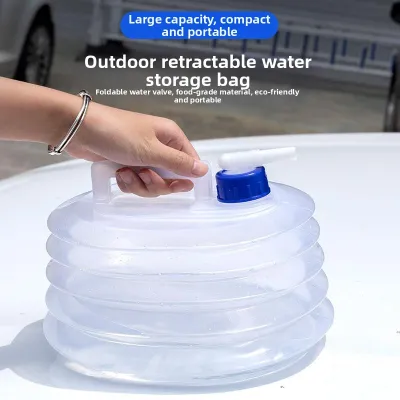
39 Lazada user ratings
👌Ease of Use: ok 🔨Durability: ok 👜Portability: ok Worry lang namin Baka mantas lalo na sa may folds or maging brittle yung plastic. Sana mat…Read full reviewShow less
👌Ease of Use: ok 🔨Durability: ok 👜Portability: ok Worry lang namin Baka mantas lalo na sa may folds or maging brittle yung plastic. Sana matibay
thank you seller! received them in good condition..🤩🍀✨️
maganda po ....baka mag repeat order din po
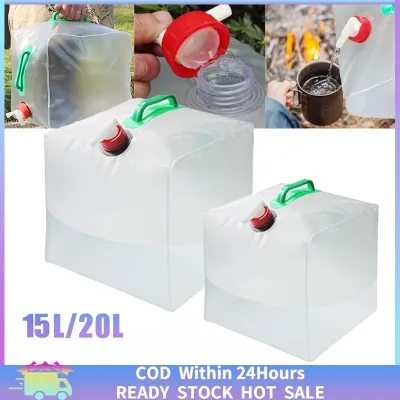
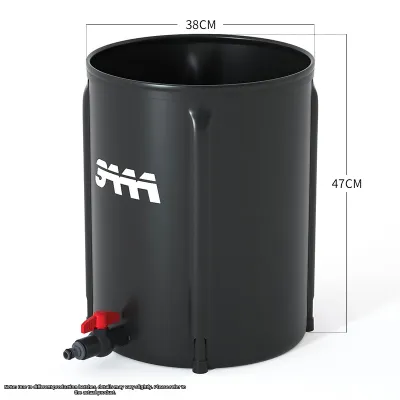
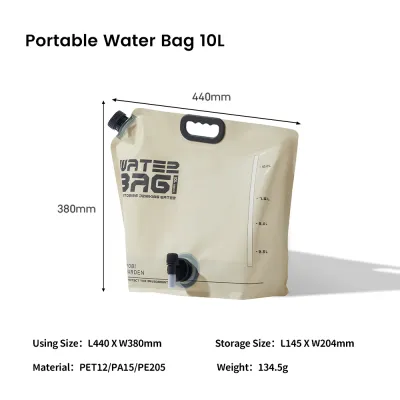
581 Lazada user ratings
👌Ease of Use:yes it's easy to use 🔨Durability:i think it's durable, let's see 👜Portability:yup it's portable and useful Convenient storage c…Read full reviewShow less
👌Ease of Use:yes it's easy to use 🔨Durability:i think it's durable, let's see 👜Portability:yup it's portable and useful Convenient storage container, Foldable and portable, Foldable and portable, Ideal for outdoor activities, 10L large capacity, 10L large capacity, Perfect for camping trips, thanks to the seller, to lazada, and to the rider who delivered it without any damage. i will definitely order again from this store! more blessings!
Perfect for camping trips, 👌Ease of Use: easy to carry 🔨Durability: very durable 👜Portability: very portable compared to the plastic water c…Read full reviewShow less
Perfect for camping trips, 👌Ease of Use: easy to carry 🔨Durability: very durable 👜Portability: very portable compared to the plastic water container
Foldable and portable, 10L large capacity, Ideal for outdoor activities, Perfect for camping trips,
Perfect for camping trips, Foldable and portable, maayos ang package, walang leaks
Foldable and portable, Ideal for outdoor activities, Perfect for camping trips
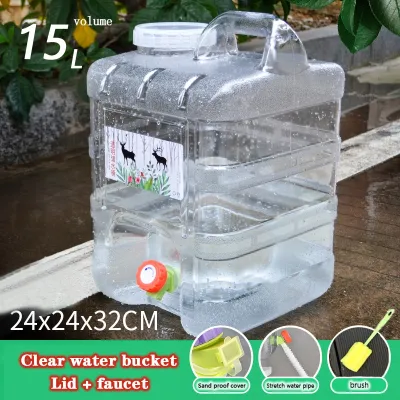
58 Lazada user ratings
🔨Durability:10 makapal at very clear 🧼Ease of Cleaning:10 pwedeng linisin loob very satisfied at sana magtagal pa
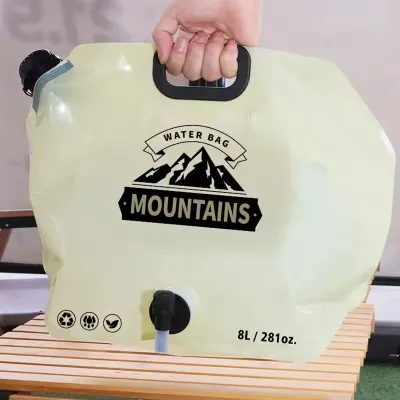
655 Lazada user ratings
Increased pocket for easy filling, Easy to hang on backpack, PE+PA+PET material, Soft thickened polymer, Stands upright when full, 🔨Durabili…Read full reviewShow less
Increased pocket for easy filling, Easy to hang on backpack, PE+PA+PET material, Soft thickened polymer, Stands upright when full, 🔨Durability:good 👜Portability:nice design 🧼Ease of Cleaning:good
🔨Durability:hoping that the quality of the material would last 🧼Ease of Cleaning:haven't tried yet to clean but hoping that it will be easy
PE+PA+PET material, Increased pocket for easy filling, Soft thickened polymer, Stands upright when full, Easy to hang on backpack,
item received in good condition., maganda yung item pero di pa nagamit., thank you seller and delivery rider
Increased pocket for easy filling, Easy to hang on backpack, maganda siya puedeng puede.
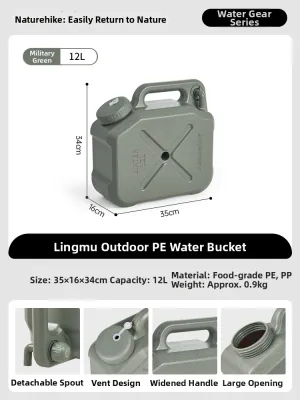
105 Lazada user ratings
The only way I could do this was if you had to do the whole process and I had a bunch more questions about how I could get my stuff
Maganda ang plastic Matibay din Walang leak ung gripo Ok din sya for wireless water dispenser Good addition to your camping needs
Large capacity, Easy to clean, Integrated faucet, Durable material, Genuine product, sksnsgskfnggsmncnccf
Good for camping, Large capacity, thick material yet light to carry. Sturdy and worth the money
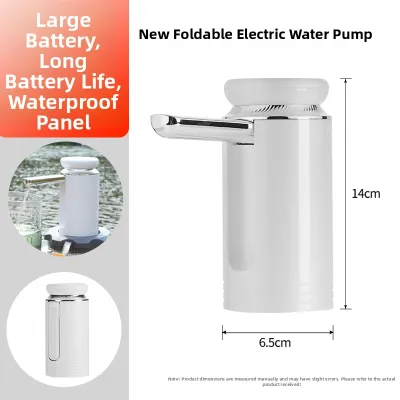
31 Lazada user ratings
There was a slight scent inside the bucket at first, but after soaking it in hot water and rinsing it with cold water, the smell is complete…Read full reviewShow less
There was a slight scent inside the bucket at first, but after soaking it in hot water and rinsing it with cold water, the smell is completely gone. The lid design is very practical compared to similar products, and the quality is good.
The container is very high quality clear and new highly praised for its toughness and nice design. No smell o taste like plastic really qual…Read full reviewShow less
The container is very high quality clear and new highly praised for its toughness and nice design. No smell o taste like plastic really quality food grade. Even the faucet vseems very tough. We will buy again
The service and quality are as great as always. The design looks excellent, it's very easy to use, and the stability gives it a real competi…Read full reviewShow less
The service and quality are as great as always. The design looks excellent, it's very easy to use, and the stability gives it a real competitive edge. Highly recommended.
The craftsmanship of this bucket is quite good and the quality is solid. The lid is well-designed, scientific, and the overall build quality…Read full reviewShow less
The craftsmanship of this bucket is quite good and the quality is solid. The lid is well-designed, scientific, and the overall build quality is excellent.
Prices are valid at publication and may change. Please refer to the product page for the latest price.
Collapsible carriers, typically made from flexible plastics, thermoplastic polyurethane (TPU), or laminated films, offer a completely different spatial dynamic. When filled, they expand to hold their rated volume, though their shape is often rounded or irregular, making them harder to stack neatly alongside rigid gear boxes. However, their true advantage emerges as you empty them. A drained collapsible carrier can be rolled, folded, or flattened into a highly compact form. This allows you to slide the empty container into a side pocket of a backpack, under a vehicle seat, or into a small storage bin.
When shopping, it is essential to verify the manufacturer’s listed dimensions for both filled and packed states. Look closely at the empty weight specifications as well; collapsible carriers often weigh significantly less than their rigid counterparts of the same capacity. If you are planning a trip where every gram and cubic centimeter matters, comparing these specifications will help you calculate the exact physical tax the container will levy on your gear setup.
Which container type offers better durability and leak resistance on the trail?
Rigid canisters provide superior puncture resistance and structural integrity under heavy impacts, while collapsible carriers are more vulnerable to sharp objects and seam stress over time. However, both types require careful inspection of their valves, caps, and seals to prevent slow leaks during transport.

Collapsible carriers rely on flexible materials that must bend and fold repeatedly. Over time, this constant flexing can create stress points, particularly along the welded seams or at the corners where the material folds tightly. If a collapsible container is scraped against sharp rocks, thorny brush, or rough camp tables, it faces a higher risk of puncture or abrasion compared to a solid plastic wall. When evaluating collapsible options, look for heavy-duty TPU or reinforced laminate materials, and check if the seams are wide and radio-frequency welded for enhanced strength.
Rigid canisters are built to withstand significant physical abuse. They can survive drops from camp tables, accidental impacts against rocks, and the general jostling that occurs in the back of an off-road vehicle. However, they are not entirely indestructible. Extreme cold can make certain plastics brittle, increasing the risk of cracking if dropped on a hard surface. Additionally, prolonged exposure to direct sunlight can cause ultraviolet (UV) degradation, making the plastic dry, faded, and prone to micro-cracking over several seasons of use. Storing rigid canisters out of direct sunlight when not in use is a simple way to preserve their structural integrity.
Regardless of the container style, the most common failure points are not the body walls, but the closures and dispensing mechanisms. Before heading into the field, inspect the cap threads, gaskets, and spigots. Check if the threads align smoothly without cross-threading, and verify that the rubber or silicone O-rings are seated flat within the cap. For collapsible carriers, pay close attention to the connection point where the rigid plastic spout is bonded to the flexible bladder, as this interface is subject to twisting forces when you tighten or loosen the cap.
How does the handling and water dispensing differ between rigid and collapsible options?
Rigid canisters offer stable, upright dispensing and sturdy, molded handles that make carrying heavy loads predictable and comfortable. In contrast, collapsible carriers can be awkward to carry as water shifts, often requiring two hands or a hanging setup to dispense water without spilling.
Carrying water is physically demanding, as one liter of water weighs exactly one kilogram. Rigid canisters excel in ergonomics because they feature integrated, heavy-duty molded handles. These handles provide a secure grip and distribute the weight evenly, preventing the container from sloshing or shifting balance while you walk from the camp water source. Collapsible carriers, especially larger ones, can feel like carrying a heavy, shifting jelly. Without a rigid frame, the water moves dynamically with every step, which can strain your wrists and fingers. While some collapsible models feature webbing straps or plastic handles, the lack of structural rigidity makes long-distance carrying more tiring.
At the campsite, dispensing water efficiently is crucial for cooking, drinking, and hygiene. Rigid canisters can be placed on the edge of a camp table or tailgate, allowing gravity to do the work. Many feature integrated spigots with air vent caps that ensure a smooth, continuous, glug-free flow of water. Collapsible carriers often require a different approach. Because they lack structure, they tend to sag as water drains. To dispense water, you may need to physically lift and squeeze the bladder, or hang the container from a tree branch or tripod to utilize a gravity-fed hose or tap. If you prefer a simple, turn-the-valve-and-walk-away dispensing method, the rigid canister is significantly more user-friendly.
Setting a container down on uneven ground—such as gravel, dirt, or grass—reveals another stark difference. A rigid canister has a flat, wide base that resists tipping, even when nearly empty. A collapsible carrier, particularly as it loses volume and structural pressure, becomes increasingly unstable. It can easily roll or slump over on sloped ground, potentially dirtying the nozzle or causing accidental spills if the valve is pressed against a rock.
What camping scenarios dictate the choice between a rigid canister and a collapsible carrier?
Your choice depends on how you travel: stationary basecamps and car camping favor the high capacity and rugged stability of rigid canisters, whereas backpacking and space-constrained travel demand the lightweight packability of collapsible carriers. Evaluating your group size, water source proximity, and transport method will help you decide if a single style or a hybrid combination fits your trip.
When your vehicle does the heavy lifting, the weight of a rigid canister is a non-issue. For car camping, overlanding, or setting up a multi-day basecamp, a large-capacity rigid canister is highly practical. It serves as a reliable, central water station where group members can easily wash hands, fill water bottles, and prep meals. The durability of a rigid container is also ideal for rugged environments where gear is frequently shifted around camp or exposed to rough surfaces.
If you are carrying all your gear on your back, every gram and liter of pack volume is critical. A rigid canister is entirely impractical for backpacking due to its bulk and empty weight. In this scenario, a collapsible carrier is the clear choice. You can hike with the carrier empty and rolled up inside your pack, then fill it at a water source near your designated campsite. This minimizes the physical toll of carrying water over long distances while ensuring you have enough capacity for overnight cooking and hydration once camp is established.
To make the right decision, assess the specific parameters of your upcoming trip. Consider the distance to the nearest water source; if you must walk a significant distance to fetch water, a rigid canister or a highly structured collapsible model with robust backpack straps is preferred. For large groups, a high-capacity rigid canister ensures a steady supply, whereas solo hikers will find a small collapsible bladder perfectly adequate. In many cases, experienced campers opt for a hybrid approach: using a large rigid canister in the vehicle for primary storage, and keeping a few small, collapsible carriers on hand for side hikes, emergency backups, or flexible water collection.
Community discussion
Share your experience or ask a question. Comments are reviewed before publication.