
When comparing the Promax PR20 to other entry-level road bikes in the Philippines, your decision should rest on a systematic verification of frame materials, drivetrain components, and local dealer support. The Promax PR20 is widely recognized as an accessible entry point for aspiring road cyclists, but its true value can only be measured when stacked against similarly priced competitors in the local market. Because component specifications can vary by production batch and retailer, verifying these details firsthand is essential to securing a safe, reliable, and high-performing ride. By understanding what to look for, you can make an informed choice that fits your budget and riding goals.
Setting the Baseline: Entry-Level Road Bikes in the Philippines
In recent years, road cycling has surged in popularity across the Philippines, serving as both a vibrant weekend sport and a practical solution for daily commuting. From navigating the congested streets of Metro Manila to climbing the scenic, winding roads of Rizal or Sierra Madre, local riders require bicycles that can withstand demanding conditions. For beginners, fitness enthusiasts, and daily commuters, the entry-level road bike segment offers an affordable gateway into this lifestyle without requiring a massive upfront financial investment.
Typically, entry-level road bikes in the local market fall within a price range of ₱8,000 to ₱18,000. Within this budget-friendly bracket, manufacturers must make strategic trade-offs to keep costs down. Buyers should expect heavier overall bike weights, simpler frame designs, and entry-tier components that require more frequent maintenance than their premium counterparts. Understanding these inherent limitations helps set realistic expectations regarding shifting speed, braking responsiveness, and long-term component wear.
Products mentioned in this guide
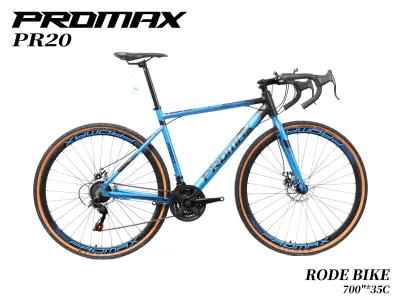
Prices are valid at publication and may change. Please refer to the product page for the latest price.
When shopping in this tier, local availability and proper sizing are paramount. Many budget-friendly brands distribute their models through a wide network of local bike shops, but stock levels and size options can fluctuate significantly. Because riding an improperly sized bike can lead to discomfort or injury, verifying what sizes are physically available in your area is just as important as comparing the technical specifications on paper.
Core Specifications to Verify: Promax PR20 vs. Alternatives
To determine how the Promax PR20 measures up against alternative entry-level road bikes, you must conduct a thorough side-by-side specification check. The foundation of any bicycle is its frame. You should verify whether the Promax PR20 model you are inspecting utilizes an aluminum alloy frame or a high-tensile steel frame. Aluminum alloy frames are highly desirable in the Philippines because they are lighter and naturally resistant to rust, which is a critical consideration given the country’s high humidity and intense rainy seasons. High-tensile steel frames are durable and budget-friendly, but they add substantial weight, making climbs more exhausting.

Next, evaluate the fork composition. Many entry-level alloy road bikes are paired with a steel fork to reduce manufacturing costs. While a steel fork can help absorb minor road vibrations, it also adds weight to the front end of the bike. If a competing model offers a full aluminum fork or even a carbon fiber fork at a similar price point, it represents a significant upgrade in terms of weight reduction and steering responsiveness.
Drivetrain configurations are another critical area of comparison. You should check the number of speeds (such as 2×7, 2×8, or 3×7) and the specific brand of the shifters and derailleurs. While established brands like Shimano are highly regarded for their reliability, many budget road bikes now feature components from alternative manufacturers like Sensah or L-Twoo. Verify the exact model of these components to ensure they meet your expectations for shifting smoothness and durability.
To assist in your comparison, use the following template to gather and verify specifications from local retailers or official product listings before making your purchase:
| Specification Feature | Promax PR20 (To Verify) | Alternative Model A (To Verify) | Alternative Model B (To Verify) | Why It Matters |
|---|---|---|---|---|
| Frame Material | [e.g., Alloy / Steel] | [e.g., Alloy / Steel] | [e.g., Alloy / Steel] | Affects overall weight, rust resistance, and frame stiffness. |
| Fork Material | [e.g., Alloy / Steel] | [e.g., Alloy / Steel] | [e.g., Alloy / Steel] | Impacts steering weight and front-end vibration dampening. |
| Drivetrain Speeds | [e.g., 2×7 / 2×8] | [e.g., 2×7 / 2×8] | [e.g., 2×7 / 2×8] | Determines gear range for climbing hills and maintaining speed. |
| Shifter Type | [e.g., Brifters / Stem] | [e.g., Brifters / Stem] | [e.g., Brifters / Stem] | Integrated brake/shift levers (brifters) offer safer handling. |
| Braking System | [e.g., Rim / Disc] | [e.g., Rim / Disc] | [e.g., Rim / Disc] | Affects stopping power, especially in wet or rainy conditions. |
| Tire Clearance | [e.g., 25c / 28c] | [e.g., 25c / 28c] | [e.g., 25c / 28c] | Wider tires provide better comfort and grip on rough roads. |
Frame Geometry and Ride Quality
Frame geometry dictates how a bicycle handles and how comfortable you will feel during extended rides. Road bikes generally fall into two geometric categories: endurance and race. Endurance geometry features a taller head tube and a shorter reach, placing the rider in a more upright position. This posture reduces strain on your lower back, neck, and shoulders, making it ideal for beginners and long-distance commuters. Race geometry is lower and more aggressive, designed to reduce wind resistance, but it requires greater core strength and flexibility to ride comfortably.
When evaluating the Promax PR20 against other models, check the standover height and reach to ensure a proper fit. Standover height is the clearance between the top tube of the frame and your crotch when standing flat-footed over the bike. Having adequate clearance is essential for safety, especially when you need to make sudden stops at traffic lights or navigate busy urban intersections. Always verify the manufacturer’s sizing chart, as a “medium” frame in one brand may fit differently than a “medium” in another.
Additionally, pay attention to tire clearance and fork design. Philippine roads often feature uneven concrete slabs, potholes, and loose gravel. A frame and fork that can accommodate wider tires (such as 28mm or 32mm) will allow you to ride at slightly lower tire pressures. This adjustment significantly improves traction, cushions the ride over rough surfaces, and reduces the risk of pinch flats.
Drivetrain and Braking Performance
Your ability to accelerate, climb, and stop safely depends entirely on the quality of your drivetrain and brakes. In the entry-level segment, the shifting mechanism is a major point of differentiation. Modern road bikes utilize integrated brake and shift levers, commonly referred to as “brifters.” These allow you to change gears without taking your hands off the brake hoods, which is a crucial safety feature when riding in heavy traffic. Some older or ultra-budget models may still use stem-mounted or downtube shifters, which require you to remove a hand from the handlebars to shift—a practice that can be unstable and intimidating for beginners.
Braking performance is equally vital, particularly when riding in tropical climates prone to sudden downpours. Entry-level road bikes typically feature either dual-pivot caliper rim brakes or mechanical disc brakes. Rim brakes are lightweight, simple to maintain, and highly cost-effective, but their stopping power can decrease when the wheel rims get wet. Mechanical disc brakes offer more consistent stopping power in wet conditions because the braking surface is located at the center of the wheel, away from road spray. However, budget mechanical disc brakes can be heavy, difficult to align perfectly, and require precise cable tension adjustments to prevent rubbing.
When comparing the Promax PR20 to its competitors, verify the exact braking system installed. If you plan to commute daily through rainy seasons, prioritizing a bike with reliable mechanical disc brakes may be beneficial. Conversely, if you primarily ride in dry weather on flat terrain, a well-adjusted set of caliper rim brakes will offer a lighter and simpler setup that is easy to maintain at home.
Evaluating Total Value: Price, Warranties, and Local Support
To determine the true value of the Promax PR20 compared to other entry-level options, you must look beyond the initial purchase price and consider the total cost of ownership. Start by verifying the current retail price in Philippine Pesos (₱) across multiple authorized physical dealers and reputable online marketplaces. While purchasing a bike online can sometimes yield a lower price, you must factor in the additional costs of shipping, professional assembly, and initial tuning.
Warranty coverage is another crucial factor that varies widely among budget-friendly brands. Some established manufacturers offer multi-year or lifetime warranties on their frames, protecting you against manufacturing defects. Budget brands may offer much shorter warranty periods, sometimes limited to just a few months, or may not cover components at all once the bike leaves the shop. Always ask the retailer for explicit details regarding what is covered under the warranty and how claims are processed locally.
Finally, never underestimate the value of local bike shop support. A reputable local shop can provide professional assembly, which is essential for ensuring that all bolts are torqued correctly, the wheels are true, and the gears are properly indexed. Furthermore, choosing a bike brand that is widely supported by local mechanics ensures that you can easily source replacement parts, such as derailleur hangers, brake pads, and cables, when they inevitably wear down over time.
Final Decision Framework: Choosing the Right Bike for Your Needs
To make your final decision, evaluate how each bike aligns with your specific riding goals, budget, and mechanical comfort level. Use the following guidelines to determine which path is right for you:
- Choose the Promax PR20 if:
- It fits comfortably within your immediate budget, leaving room for essential safety gear.
- The frame geometry matches your physical proportions and comfort preferences during a test ride.
- You have an authorized local dealer nearby who can provide reliable after-sales service, maintenance, and warranty support.
- Choose an alternative entry-level bike if:
- You require a specific component upgrade out of the box, such as a higher-tier groupset or a lighter aluminum fork.
- You prefer a brand that offers a more comprehensive, long-term frame warranty.
- The Promax PR20 is not available in your correct frame size, as riding an ill-fitting bike will lead to discomfort and potential injury.
- Verify first if:
- You are purchasing the bike online, as you must confirm the cost of professional assembly and verify that all parts arrived undamaged.
- You plan to ride in wet weather frequently, in which case you must verify the stopping power and alignment of the equipped braking system.
- The local bike shops in your area regularly stock replacement parts compatible with the specific drivetrain and frame design of your chosen model.
Frequently Asked Questions (FAQ)
Is the Promax PR20 suitable for long-distance riding?
Entry-level road bikes can be used for longer rides, provided they are properly fitted to your body. The comfort of your ride over long distances depends heavily on frame geometry, saddle choice, and handlebar positioning. If the bike features an aggressive geometry, you may experience fatigue in your back and neck during extended sessions. To improve comfort for longer journeys, consider investing in professional bike fitting adjustments, high-quality padded cycling shorts, and ergonomic bar tape to help reduce road vibrations.
What essential accessories should I budget for alongside an entry-level road bike?
When purchasing your first road bike, you must allocate a portion of your budget to essential safety and maintenance gear. At a minimum, you should purchase a high-quality, properly fitted helmet, as well as bright front and rear LED lights to ensure visibility on busy roads. For basic maintenance, budget for a reliable floor pump with a pressure gauge, a portable multi-tool for roadside adjustments, tire levers, and a spare inner tube that matches your tire size. These items are critical for ensuring your safety and keeping your bike running smoothly.
How do I ensure proper assembly if I buy online?
If you purchase a bicycle online, it will typically arrive partially assembled in a cardboard box. To ensure your safety and protect your warranty, it is highly recommended to take the boxed bike to a professional local bike shop for assembly and tuning. A qualified mechanic will ensure that the fork is installed facing the correct direction, the headset is properly tensioned, the brakes are aligned, and all bolts are torqued to the manufacturer’s specifications. If you must assemble it yourself, perform a rigorous pre-ride safety check, paying close attention to handlebar alignment, pedal tightness, and quick-release wheel security.
Community discussion
Share your experience or ask a question. Comments are reviewed before publication.