
Quick Answer: Choosing Your Pullup Band Resistance
To find the right pullup band, you must match the band’s physical width and thickness to your current pulling strength and body weight. Generally, wider and thicker bands provide more upward assistance, making the pullup easier, while thinner bands offer less help. However, because color coding is not standardized across fitness brands, you cannot rely on color alone to determine tension. Your ultimate goal is to select a band that provides just enough assistance to let you complete strict, controlled repetitions with proper form, rather than relying on momentum.
Decoding Band Specs: Thickness, Color, and Tension
When shopping for a pullup band, the physical dimensions of the loop—specifically its width and thickness—are the most reliable indicators of how much help you will get. A wider band contains more latex material, which creates higher resistance against stretching and therefore pushes you upward with greater force. When you review product listings, you will typically see these dimensions listed in millimeters, alongside an estimated tension range.

It is a common mistake to assume that a red band or a green band represents the same tension level across all brands. One manufacturer might use red for their lightest band, while another uses it for medium resistance. To avoid purchasing an incorrect level, always bypass the color name and look directly at the manufacturer’s specific tension chart, which usually maps the band’s width to an estimated weight assistance range.
Products mentioned in this guide
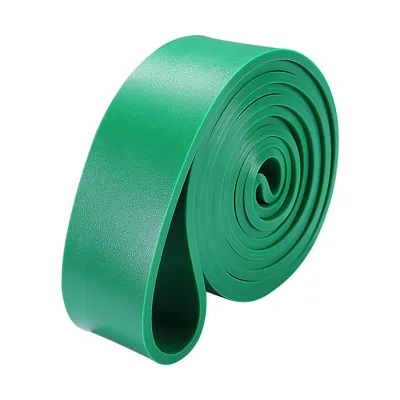
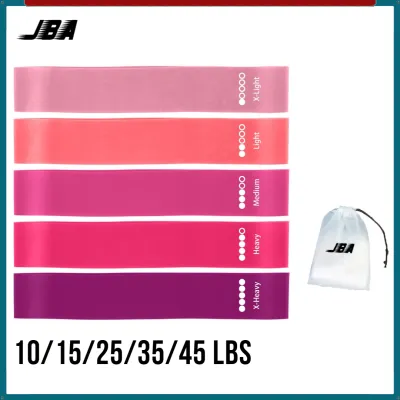
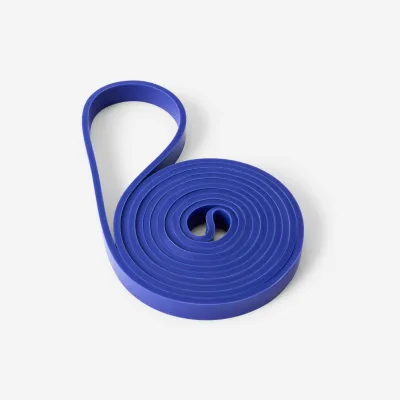
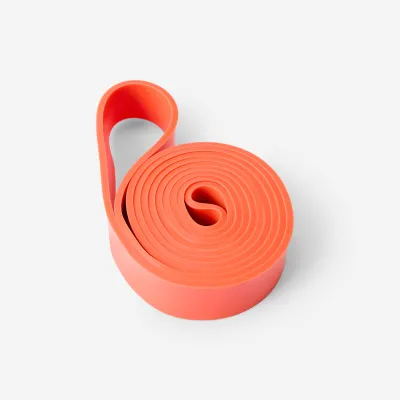
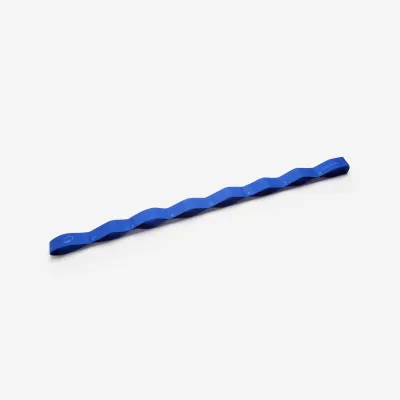
Prices are valid at publication and may change. Please refer to the product page for the latest price.
You must also understand how stretch percentage affects the actual load during your exercise. The tension rating printed on a package is rarely a static number; it represents a range from the initial stretch to the maximum safe elongation. At the bottom of a pullup, when your arms are fully extended and the band is stretched to its limit, you receive the peak assistance. As you pull yourself up and the band contracts, the upward assistance decreases, meaning you must exert more of your own muscle power to clear the bar.
Assessing Your Current Pulling Strength
Before choosing a band, you need an accurate assessment of your baseline pulling power. Start by testing your unassisted maximum repetitions on a stable pullup bar. Ensure your hands are securely placed, especially in warm, humid tropical environments like the Philippines, where sweat can quickly compromise your grip. If you can perform one or two strict, unassisted pullups with a full range of motion, your baseline is already established, and you will only require a light band to help increase your training volume.
If you cannot perform a single unassisted pullup yet, you can measure your baseline strength using negative repetitions and static holds. Jump or use a step to get your chin above the bar, then lower yourself down as slowly and smoothly as possible. If you can control your descent for five seconds or hold yourself at the top of the bar for several seconds, you have a solid foundation and can opt for a medium-resistance band. If you drop instantly without control, you will need a thicker, heavy-assistance band to safely learn the movement pattern.
Your total body weight also plays a critical role in this decision. A heavier individual requires more upward force to overcome gravity than a lighter individual of the same strength level. Additionally, maintaining core stability is harder when a thick band pulls your lower body forward, so your abdominal muscles must work harder to keep your path vertical.
Matching Your Strength to the Right Resistance
The key to effective strength training is finding the repetition sweet spot. For building pullup strength, you should select a pullup band that allows you to complete five to eight repetitions per set with strict form. The final two repetitions of each set should feel highly challenging, bringing your muscles close to fatigue without causing your shoulders to shrug or your back to arch excessively.
Heavy-assistance bands are excellent tools for beginners because they offset a significant portion of your body weight. This allows you to focus entirely on the movement pattern, learning how to retract your shoulder blades and engage your back muscles without straining. Conversely, lighter bands are ideal for intermediate lifters who can already perform a few unassisted reps but need a slight boost to overcome sticking points, such as the transition phase halfway up the movement.
If a single band does not perfectly match your current strength, you can combine multiple bands on the bar. For example, looping both a light band and a medium band over your bar allows you to perform your initial sets with high assistance. As your muscles fatigue, or as you get stronger over several weeks, you can simply remove one of the bands to fine-tune the resistance without needing to purchase an entirely new set.
Progressing to Lighter Bands as You Get Stronger
As your back and arm muscles adapt to the training load, you will notice clear signs of readiness to progress. If you can easily complete your target repetitions without feeling muscle fatigue, or if the band provides so much upward momentum that you fly up to the bar without effort, it is time to reduce the assistance.
To transition smoothly, you do not always have to buy a new band immediately. You can reduce the stretch and assistance of your current band by adjusting your body placement. For instance, placing only your knee in the loop instead of your foot shortens the stretch distance, which naturally decreases the upward assistance. Once this adjustment feels too easy, you can confidently step down to the next thinnest band in your collection.
The ultimate goal is to phase out the bands entirely. When you can perform ten to twelve controlled repetitions with your thinnest band, you are ready to attempt your first unassisted pullup. Always perform a quick warm-up before trying unassisted reps, and ensure your hands are dry to maintain a safe grip on the bar.
Frequently Asked Questions (FAQ)
Can I use a pullup band for exercises other than pullups?
Yes, a pullup band is a highly versatile tool that can be used for a wide variety of strength and mobility exercises. You can anchor the band to a low point to perform bicep curls or overhead presses, or wrap it around a sturdy post for horizontal rows and chest presses. When using the band for alternative exercises, the resistance level changes based on how far you stretch it from its anchor point. Always inspect the band for tiny cracks or wear before anchoring it, as sudden snapping can cause injury.
Does the length of the pullup band affect the resistance level?
Yes, the length of the band directly influences how much tension is generated during an exercise. Most standard pullup bands have a continuous loop length of about 104 centimeters, but the actual resistance you experience depends on the stretch percentage. Stretching a band beyond its intended limit increases the tension exponentially, but it also risks material failure. To ensure safety and longevity, avoid stretching any latex band more than two and a half times its original resting length. Furthermore, high humidity can cause latex bands to degrade faster over time, so storing them in a cool, dry place and checking them regularly for micro-tears is a vital safety step.
Community discussion
Share your experience or ask a question. Comments are reviewed before publication.