
Setting up a home boxing corner requires making practical gear decisions, starting with your hand protection. Choosing the correct weight for your punching gloves is not just a matter of comfort; it directly dictates your training safety, hand longevity, and workout efficiency. The optimal glove weight depends entirely on your target activity: heavy bag training demands thicker padding to absorb high-impact forces, while partner mitt drills require lighter gloves for speed and precision. If you are shadowboxing to build shoulder endurance and refine your form, lightweight gloves or specialized shadowboxing gloves are the most suitable choice.
Selecting the wrong weight can lead to chronic joint pain, acute wrist sprains, or accelerated wear on your equipment. In a home gym environment, where you may not have a professional trainer constantly monitoring your form, self-regulation and proper gear selection become your primary line of defense. By matching your glove weight to your specific physical profile and training routine, you can maximize your cardiovascular conditioning while keeping your hands fully protected.
Quick Reference: Matching Glove Weights to Home Boxing Activities
To help you configure your home training corner efficiently, here is a direct mapping of common boxing activities to their recommended glove weights. While these ranges serve as an excellent baseline, your individual body weight and training experience will ultimately determine the perfect fit.
Products mentioned in this guide
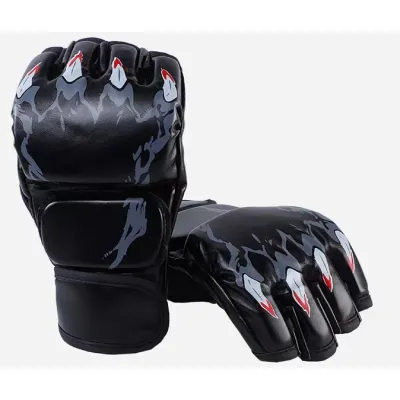
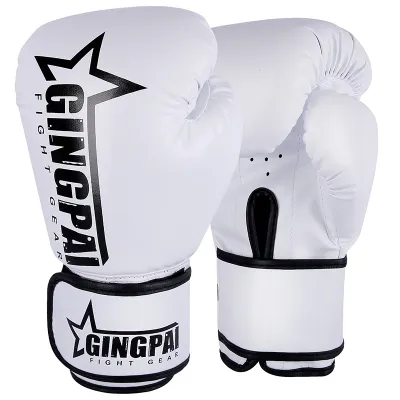
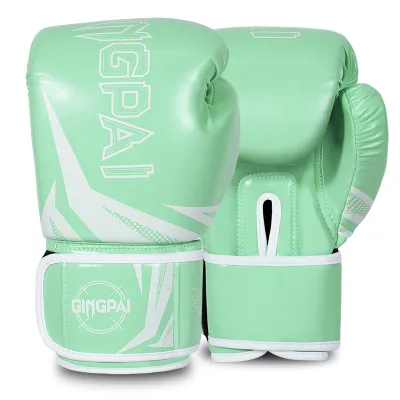
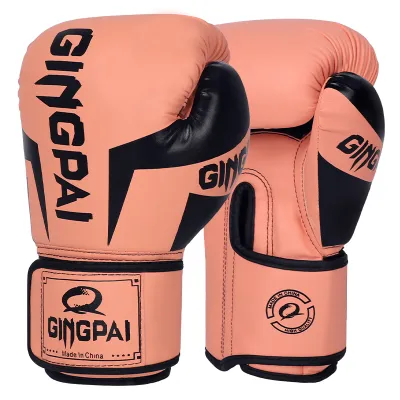
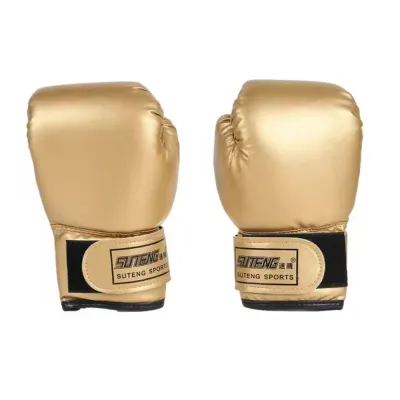
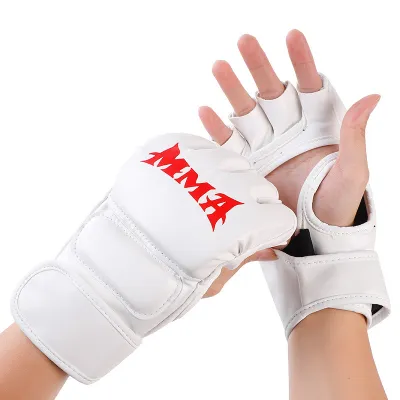
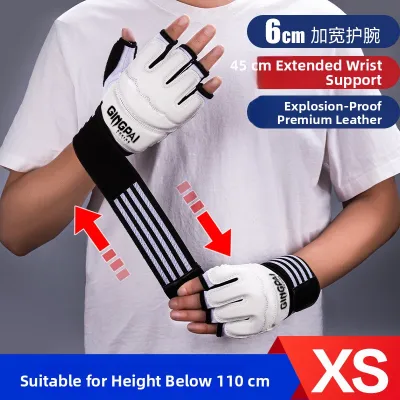
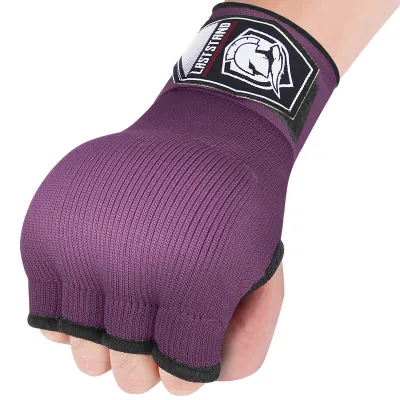
Prices are valid at publication and may change. Please refer to the product page for the latest price.
| Training Activity | Recommended Glove Weight | Primary Focus & Benefit |
|---|---|---|
| Heavy Bag Work | 14oz to 16oz (or heavier) | Maximum knuckle protection, wrist support, and impact absorption |
| Mitt Drills & Pad Work | 10oz to 12oz | Hand speed, combination accuracy, and realistic tactile feedback |
| Shadowboxing | 8oz to 10oz (or unweighted) | Shoulder endurance, technique refinement, and joint safety |
These baseline recommendations assume an average adult weight range of 130 to 180 pounds. If you fall outside this range or have pre-existing hand injuries, you will need to adjust your glove weight upward to ensure adequate protection. Let’s explore how these weights function mechanically to protect your hands.
Why Glove Weight (oz) Matters for Protection and Performance
In the boxing world, gloves are categorized by weight, measured in ounces (oz), rather than standard clothing sizes like small, medium, or large. This ounce rating specifically represents the weight of the internal padding, which is typically made of layered foam, polyurethane, or latex. A heavier glove does not necessarily have a larger hand compartment, but it always contains more padding material to decelerate your fist upon impact.

The mechanical trade-off between light and heavy gloves is a balance of speed versus protection. Lighter gloves (8oz to 12oz) reduce the overall mass at the end of your arms, allowing for faster punch acceleration, crisper combinations, and immediate tactile feedback when you land a blow. Conversely, heavier gloves (14oz to 18oz) act as a dense cushion that disperses kinetic energy over a larger surface area, safeguarding your delicate metacarpal bones while simultaneously forcing your shoulders to work harder, which builds localized muscular endurance.
Using mismatched gloves for your training activity introduces significant safety risks. If you strike a dense, unyielding heavy bag with lightweight 10oz gloves, the thin padding will quickly bottom out under high-impact forces. This means the foam compresses completely, transferring the residual shock directly into your knuckles, wrist joints, and elbows. Over time, this repetitive trauma can cause painful knuckle bruising, chronic tendonitis, wrist sprains, or even a boxer’s fracture—a break in the neck of the metacarpal bones.
Heavy Bag Work: Maximizing Knuckle Protection and Power
Hitting a heavy bag is one of the most physically demanding aspects of home boxing training. Because a heavy bag is dense, stationary, and often filled with tightly packed materials, it offers substantial resistance. Your gloves must act as a reliable barrier that absorbs the brunt of these high-velocity impacts, allowing you to throw punches with full power without fear of injury.
Recommended Weight Ranges Based on Body Size
For the majority of adults, 14oz and 16oz punching gloves serve as the industry standard for heavy bag training. The ideal weight for your setup depends heavily on your physical mass and the amount of force you naturally generate. As a general rule, lighter individuals weighing under 150 pounds (approximately 68 kilograms) can safely use 14oz gloves, as their impact force is unlikely to fully compress the foam padding.
If you weigh between 150 and 200 pounds, 16oz gloves are highly recommended to provide the necessary depth of protective foam. For individuals over 200 pounds (approximately 90 kilograms) or those who possess exceptional natural power, upgrading to 18oz gloves is a wise decision to prevent the padding from bottoming out during intense training sessions. Choosing a heavier glove ensures that the internal foam layers can successfully decelerate your fist before your knuckles make structural contact with the bag’s core.
Essential Features for High-Impact Bag Training
Beyond the weight of the glove, several structural features are critical for maintaining safety during high-impact heavy bag workouts. Look for gloves that feature multi-layered foam technology, which often combines high-density foam for shock dispersion with softer foam layers for hand comfort. The padding should be concentrated primarily over the knuckles and the front of the fist, rather than distributed evenly throughout the wrist or cuff.
The closure system is another vital consideration, especially when training alone in a home environment. While professional fighters often prefer lace-up gloves for their custom fit, hook-and-loop (Velcro) closure systems are far more practical for home use, allowing you to secure and remove your gloves independently. Ensure the Velcro strap is wide and rigid, wrapping tightly around your wrist to prevent lateral bending or hyperextension upon impact.
In the tropical climate of the Philippines, high humidity and heat make material durability and moisture management top priorities. Sweat can quickly saturate the lining of your gloves, leading to bacterial growth, unpleasant odors, and the rapid degradation of internal foam. Opt for gloves with breathable mesh palms, moisture-wicking inner linings, and high-quality synthetic or genuine leather outers that can withstand both heavy sweat and regular sanitization.
Mitt Drills and Pad Work: Balancing Speed and Tactile Feedback
Partner training with focus mitts or Thai pads is an excellent way to develop timing, accuracy, defense, and footwork in your home gym. Unlike the static resistance of a heavy bag, pad work is dynamic and collaborative, requiring a completely different set of physical demands from your hands and your gear.
The Ideal Weight Range for Pad Work
When working with focus mitts, the recommended glove weight drops to the 10oz to 12oz range. This reduction in weight is safe because focus mitts are inherently designed to absorb a significant portion of the punch’s impact. The pad holder actively “catches” your punches with foam-padded mitts, meaning your gloves do not need to carry the sole responsibility of dispersing the kinetic energy.
By using 10oz or 12oz gloves, you can focus on developing rapid hand speed, sharp punch mechanics, and complex combinations. The lighter weight allows you to mimic the hand speed of an actual sparring match or competitive bout, making your training sessions highly functional. Additionally, the reduced bulk of these gloves makes it easier to slip punches, roll under counter-attacks, and maintain tight defensive guards.
Why Heavier Gloves Hinder Mitt Drills
Attempting to perform high-speed mitt drills while wearing bulky 16oz heavy bag gloves is highly counterproductive. The extra weight and physical size of heavy gloves slow down your hand speed, making it difficult to execute rapid multi-punch combinations. This artificial lag can disrupt your timing and lead to poor habits, such as dropping your hands or looping your punches to compensate for the heavy load.
Furthermore, oversized gloves dull the tactile feedback of your punches. When you hit a focus mitt, you need to feel exactly how your knuckles are landing to gauge your accuracy and alignment. Bulky padding masks this feedback, making it hard to tell if you landed cleanly or with a slanted wrist. The added weight also places unnecessary strain on your shoulders during high-volume cardio drills, causing premature fatigue that degrades your punching form before you can complete your workout.
Shadowboxing: Prioritizing Hand Speed and Shoulder Endurance
Shadowboxing is the practice of punching the air to refine your technique, visualize movement, and warm up your muscles. Because there is no physical target to strike, shadowboxing places unique biomechanical demands on your body, requiring careful attention to joint safety and control.
Selecting Lighter Gloves for Technique and Speed
For shadowboxing sessions, you should use very light gloves, typically in the 8oz to 10oz range, or even specialized, low-profile shadowboxing gloves. The primary objective of shadowboxing is to focus on perfect form, footwork, and fluid movement. Heavy gloves would distort your natural punching mechanics, pulling your hands down and altering your center of gravity as you move across your home training space.
Using 8oz or 10oz gloves provides just enough resistance to keep your shoulders engaged and build muscular endurance without compromising your hand speed. This light resistance helps condition your deltoids and upper back muscles to keep your guard up during long rounds. It also simulates the weight of actual competition gloves, ensuring that your muscle memory translates accurately to real-world scenarios.
Preventing Joint Strain During Air Punches
The greatest physical risk during shadowboxing is not impact trauma, but the sudden deceleration of your limbs at the end of a punch. When you throw a punch into the air, your muscles and joints must work to stop the arm’s forward momentum. If you snap your punches with full force and lock out your joints, you run a high risk of hyperextending your elbows or straining your rotator cuff muscles.
To prevent these painful injuries, always maintain a slight micro-bend in your elbow at the full extension of every punch; never fully lock out your arm. Remember that glove padding does not protect your joints from the whiplash effect of missing a target. If you choose to shadowbox with gloves, the added weight increases the centrifugal force pulling on your joints, making proper control and a controlled deceleration phase even more critical.
Cross-Scenario Compatibility: Can One Pair of Gloves Do It All?
Setting up a home boxing corner can quickly become expensive, especially when factoring in the cost of a heavy bag, hand wraps, mats, and training pads. If you are a beginner or working with a limited budget, purchasing three separate pairs of gloves for different activities may not be practical. In these situations, finding a single, versatile pair of gloves is a common goal.
The Compromise Zone: 12oz to 14oz Gloves
If you must rely on a single pair of punching gloves for all your home training activities, the 12oz to 14oz range represents the ultimate compromise zone. A 14oz glove is generally heavy enough to provide acceptable knuckle protection on a heavy bag for users under 170 pounds, while remaining light enough to allow for decent hand speed during mitt drills and shadowboxing.
However, you must be fully aware of the inherent limitations of this all-rounder approach. A 14oz glove will still feel slightly bulky and fatiguing during fast-paced pad work, and it may not offer quite enough protection for heavy hitters throwing maximum-power shots on a dense bag. Conversely, a 12oz glove will feel excellent on the mitts but will carry a much higher risk of knuckle soreness and wrist strain if used regularly for high-impact bag training.
A Safe Decision Framework for Single-Glove Users
When forced to choose just one glove weight, you should always prioritize the training activity that carries the highest risk of injury. In boxing, this is almost always heavy bag work. It is far safer to tolerate a slightly slower, heavier glove during mitt drills and shadowboxing than it is to risk damaging your hands by hitting a hard heavy bag with under-padded gloves.
Therefore, if your routine includes regular heavy bag sessions, purchase a pair of 14oz or 16oz gloves as your primary gear. If your home workout consists almost entirely of shadowboxing and light cardio drills with no physical targets, you can safely opt for 10oz or 12oz gloves. In the Philippines, entry-level synthetic gloves can range from ₱1,200 to ₱2,500, while premium genuine leather gloves often exceed ₱5,000. Always let safety dictate your equipment choices, and upgrade to activity-specific gloves as your budget allows and your training intensity increases.
Frequently Asked Questions (FAQ)
Do I need hand wraps if I use heavier punching gloves?
Yes, hand wraps are absolutely mandatory for every boxing activity involving a physical target, regardless of how heavy or padded your gloves are. While glove padding protects your knuckles from external impact, hand wraps secure the internal structure of your hand by compressing the small bones and stabilizing your wrist joint. Always wrap your hands securely before putting on your gloves to prevent wrist collapse and joint separation.
Does my body weight change the punching glove oz I should buy?
Yes, your body weight is a primary factor in determining the correct glove weight, particularly for high-impact training. Heavier individuals naturally generate more kinetic energy and strike with greater force, which compresses glove foam much faster. To prevent the padding from bottoming out, individuals over 150 pounds should use 16oz gloves for heavy bag work, while those under 150 pounds can safely use 14oz gloves.
Are lace-up gloves better than Velcro for solo home training?
No, Velcro (hook-and-loop) gloves are highly recommended for solo home training because they allow you to put on and secure both gloves independently. Lace-up gloves offer superior, customized wrist support, but they require a second person to tie and untie them. For a convenient, self-sufficient home workout, a high-quality Velcro glove with a wide, rigid wrist strap is the most practical choice.
Community discussion
Share your experience or ask a question. Comments are reviewed before publication.