
Selecting the right training sled for your fitness journey depends on your primary athletic goals, the training surfaces available to you, and your storage limitations. While all sleds offer a high-intensity workout, they are not interchangeable. A dedicated push sled is engineered to build explosive forward drive and acceleration, a pull sled targets the posterior chain and upper-body pulling strength, and a multi-functional prowler combines these elements into a single, highly versatile conditioning tool. By matching your specific training objectives with the structural design of each sled, you can optimize your workouts while protecting your joints and your training environment.
Core Differences Between Push, Pull, and Prowler Sleds
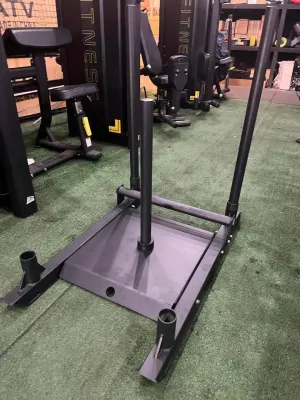
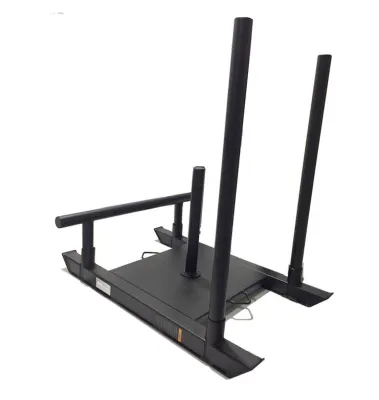
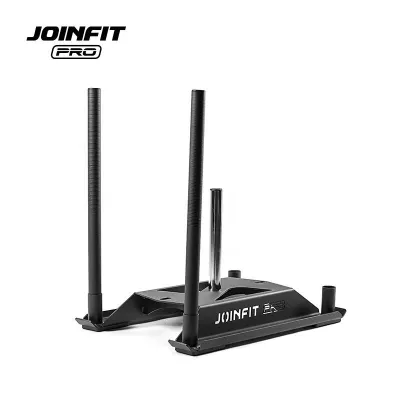
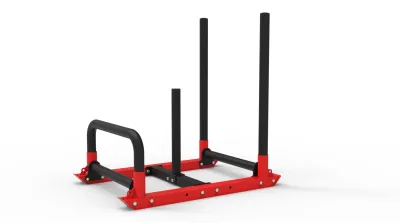
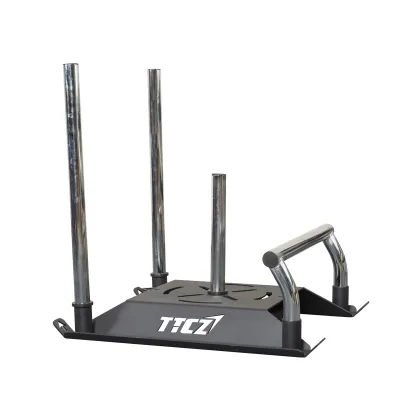
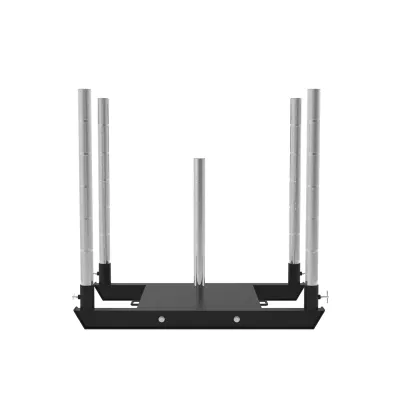
To make an informed choice, you must first understand how the physical design of each sled dictates its movement patterns and muscle engagement. A standard push sled typically features two upright poles mounted on a flat metal frame with smooth metal skis. This structure forces you into a forward-leaning stance, closely mimicking the acceleration phase of a sprint. The primary force is generated through your quadriceps, calves, and glutes as you drive your feet into the ground to push the load forward.
In contrast, a pull sled is a low-profile, flat platform designed to be dragged behind or pulled toward you. It lacks upright pushing handles, relying instead on heavy-duty straps, belts, or shoulder harnesses attached to a secure eyelet or anchor point. This setup shifts the mechanical load to your posterior chain—specifically your hamstrings, glutes, lower back, and upper back—depending on whether you are walking backward, dragging forward, or performing hand-over-hand rope pulls.
Products mentioned in this guide
Prices are valid at publication and may change. Please refer to the product page for the latest price.
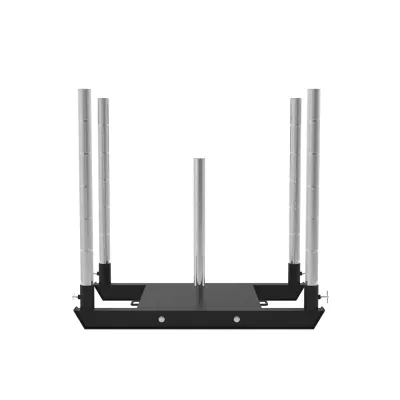
The prowler represents a hybrid design, featuring both high upright poles for pushing and low horizontal handles or attachment points for pulling. It is important to note that “prowler” is frequently used as a generic term in online marketplaces and fitness communities for any heavy-duty push-pull sled. However, true prowler-style frames are wider and more complex, offering multiple grip heights to vary your body angle and leverage. When shopping, you should verify the specific frame features, weld quality, and anchor points rather than relying solely on the product name.
Matching Sled Types to Your Specific Workout Goals
Your training objectives should dictate the physical characteristics of the equipment you choose. Selecting a sled that aligns with your movement patterns ensures that your workouts remain safe, progressive, and directly transferable to your sport or daily activities.

Push Sleds for Speed and Lower-Body Power
If your primary goal is to improve your sprinting speed, field acceleration, or quad-dominant lower-body power, a dedicated push sled is highly effective. The upright handles allow you to maintain a rigid torso and a forward lean that matches the optimal shin angle for sprinting. This position isolates the lower body, forcing your legs to generate continuous ground reaction force without the technical complexity of heavy barbell lifts.
When evaluating a push sled, you must verify the handle height and diameter to ensure they accommodate your body size and grip comfort. Handles that are too low or spaced too far apart can compromise your spinal alignment, putting unnecessary stress on your lower back during heavy pushes. Additionally, you should check if the handles are removable, which simplifies transportation and allows you to switch pushing directions without turning the entire sled around.
A key limitation of basic push-only models is their lack of versatility. They rarely feature secure, low-profile anchor points for heavy dragging, meaning you cannot easily transition to posterior chain work. If you try to attach straps to the upright poles of a push-only sled, you risk tipping the unit or damaging the frame welds under heavy loads.
Pull Sleds for Posterior Chain and Pulling Strength
For fitness enthusiasts focusing on hamstring development, glute activation, and active recovery, a pull sled is an exceptional tool. Backward sled dragging is widely utilized to build knee stability and strengthen the vastus medialis oblique muscle without placing an axial load on the spine. This makes it a valuable option for individuals recovering from back discomfort or those looking to balance quad-dominant training.
To use a pull sled safely, you must verify that the unit features a secure, low-profile attachment point centered on the frame. A low attachment point ensures that the pulling force is directed horizontally, keeping the sled flat against the ground and preventing the front skis from digging in or tipping over during heavy backward drags. The base must remain stable even when navigating minor surface transitions or uneven outdoor turf.
You should also account for the additional gear required to operate a pull sled. Unlike push models, which are ready to use out of the box, a pull sled requires a high-quality waist belt, a shoulder harness, or a heavy-duty tow strap. When purchasing, verify whether these accessories are included or if you need to source them separately, ensuring they are rated for the weight capacities you plan to pull.
Prowlers for Versatility and Full-Body Conditioning
If you want a single piece of equipment that can handle high-intensity interval training, full-body conditioning, and both push and pull movements, a prowler is the most versatile option. The multi-grip frame allows you to transition seamlessly from high-pole pushes to low-handle drives, which drastically changes the muscular demand and cardiovascular intensity of your workout.
This versatility comes with specific trade-offs, primarily regarding physical size and cost. Prowlers are generally larger, heavier, and more expensive than basic push or pull sleds, often requiring a larger investment of both budget and storage space. While a basic pull sled is relatively budget-friendly, a commercial-grade prowler represents a larger financial commitment, often costing several thousand pesos (₱) depending on the steel gauge and weld quality. In the Philippines, where home gym space or garage space may be limited, a large prowler can dominate your training area and be difficult to store securely away from tropical humidity.
Before purchasing a prowler, you should check the sled’s base width and overall weight capacity to ensure stability during dynamic, multi-directional movements. A wider base prevents the sled from tipping when you perform lateral shuffles or sudden directional changes. You should also verify that the frame features multiple welded eyelets, allowing you to attach ropes and straps for upper-body pulling exercises.
Space, Surface, and Equipment Compatibility Checks
Before finalizing your purchase, you must evaluate your training environment and existing gym gear to ensure compatibility. Sled training requires a suitable runway, and using the wrong equipment on an incompatible surface can damage both your property and the sled itself.
Surface compatibility is your first consideration. You must verify whether the sled’s skis or optional wheels are designed for turf, concrete, asphalt, or carpet. Standard steel skis slide smoothly on artificial turf or grass but will wear down rapidly, scratch, and make extreme noise on concrete driveways or asphalt roads. If you plan to train outdoors on concrete in your neighborhood, look for sleds that offer replaceable plastic ski liners or choose a wheeled sled designed specifically for hard surfaces. Always check the manufacturer’s guidelines to prevent permanent damage to your flooring or the sled’s frame.
Storage and footprint are equally critical, especially for home gym owners. Upright push sleds and prowlers with fixed poles require significant vertical and horizontal storage space. If your training area is limited, look for models with removable upright poles or flat, stackable pull sleds that can be hung on a wall or slid under a bed. In humid tropical climates, storing your sled indoors or in a dry, covered area is essential to prevent rust on the welds and weight posts.
Finally, you must check weight plate compatibility. Verify the diameter of the sled’s weight post before buying. Most commercial-grade sleds feature a 2-inch post designed for Olympic-sized weight plates, while some budget-friendly or home-use models might use a 1-inch post for standard plates. Ensuring your existing weight plates fit the sled’s post will save you from the unexpected expense of buying a new set of weights.
Final Decision Framework: Which Sled Fits Your Needs?
To choose the right sled, evaluate your primary training goals against your space and budget constraints:
- Choose a Push Sled if: Your primary focus is on developing sprint mechanics, explosive acceleration, and quad-dominant lower-body power, and you have a dedicated turf runway or outdoor space with replaceable ski liners.
- Choose a Pull Sled if: You prioritize posterior chain development, knee rehabilitation, and backward dragging, or if you have highly restricted storage space and need a compact, flat-folding unit.
- Choose a Prowler if: You require maximum training versatility, want to combine pushing and pulling in a single session, and have the budget and storage space to accommodate a larger, multi-grip frame.
Verify first if your training surface can withstand the friction of metal skis, or if you need to invest in protective plastic liners or a wheeled model. Additionally, check your existing weight plates to ensure they match the sled’s post diameter. Always review the manufacturer’s specifications for maximum weight limits, weld warranties, and surface guidelines before completing your purchase to ensure a safe and durable addition to your fitness routine.
Frequently Asked Questions (FAQ)
Can I use a dedicated push sled for pulling exercises?
It is generally not recommended to use a dedicated push sled for pulling exercises unless the manufacturer has explicitly designed and rated the frame with secure anchor points. Attempting to tie straps or ropes around the upright pushing poles can alter the sled’s center of gravity, causing it to tip backward or slide unpredictably during a pull. This can lead to sudden loss of balance or damage to the frame. Always verify that your sled has dedicated, low-profile welded eyelets designed specifically to handle the horizontal tension of heavy pulling straps.
How should I determine the starting weight for my sled workouts?
Your starting weight should be determined by your training intent and the friction of your training surface rather than a universal weight standard. For speed and conditioning workouts, start with an empty sled or a very light load to ensure you can maintain proper running mechanics and a high velocity. For strength-focused pushes or drags, you can gradually increase the load, but always begin with a light baseline to assess how the sled slides on your specific surface. Remember that grass, turf, and concrete all create different levels of friction, which dramatically alters the perceived weight.
Community discussion
Share your experience or ask a question. Comments are reviewed before publication.