
When choosing an inflatable boat for fishing in the Philippines, the choice between Polyvinyl Chloride (PVC) and Chlorosulfonated Polyethylene (CSM, commonly known as Hypalon) represents a crucial trade-off between upfront affordability and long-term survival under a punishing tropical sun. For anglers navigating the diverse marine environments of the archipelago, CSM boats consistently offer superior longevity, often lasting more than twice as long as PVC counterparts under intense ultraviolet (UV) exposure. However, PVC remains a highly viable and popular option for budget-conscious fishers who are prepared to follow strict storage and maintenance routines. Deciding which material is right for your fishing adventures requires analyzing how these fabrics interact with local waters, understanding their physical properties, and evaluating your storage capabilities.
How Philippine Waters Test Inflatable Boat Materials
The tropical climate of the Philippines presents a unique set of environmental challenges that can rapidly degrade substandard marine gear. The country experiences a high UV index year-round, coupled with sustained humidity and high ambient temperatures. This intense heat causes the air inside an inflatable boat’s chambers to expand rapidly during the day. If the boat is constructed from materials that soften or lose structural integrity under heat, this internal pressure puts immense stress on the seams, potentially leading to sudden failures.
Saltwater exposure is another constant factor for local anglers. When saltwater dries on the boat’s surface, it leaves behind microscopic salt crystals. These crystals act as a fine abrasive, particularly when trapped within the folds of the fabric or around the seams. Over time, constant friction from movement can wear down protective coatings. Additionally, the high salinity of tropical seas accelerates the corrosion of any metal D-rings, valves, or transom mounts if they are not thoroughly rinsed after every outing.
Products mentioned in this guide
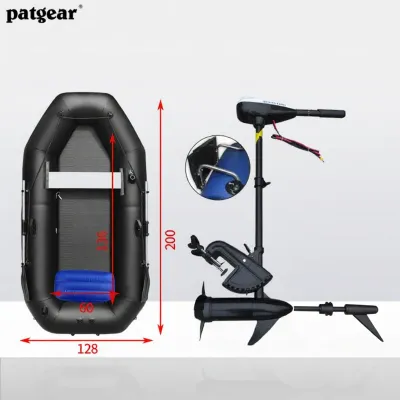
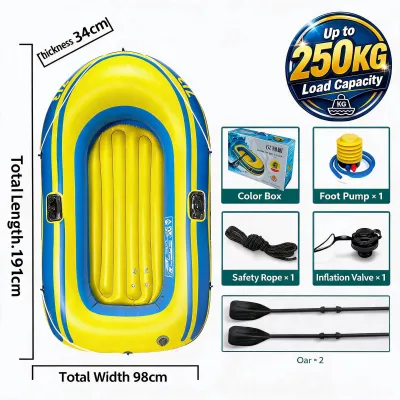
![[Buy 1 Get 10] 5-7 Person Inflatable Boat Family Raft PVC Fishing Boat for Beach & Sea Trips](https://img.lazcdn.com/g/p/7667031b67bb2e40b79639fcda639050.jpg_400x400q80.jpg_.webp)
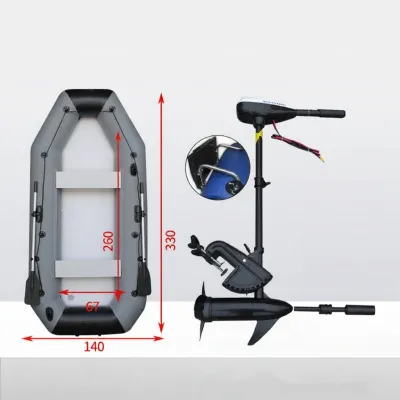
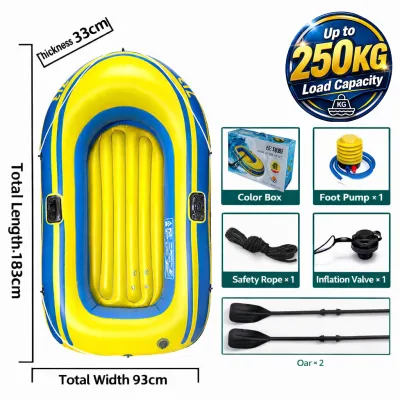
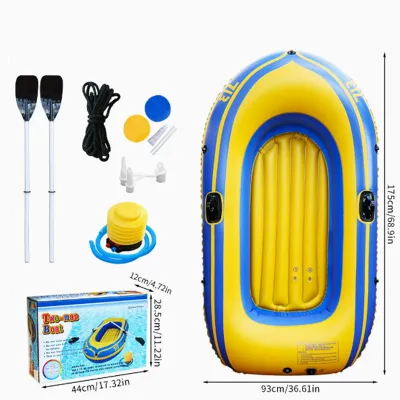
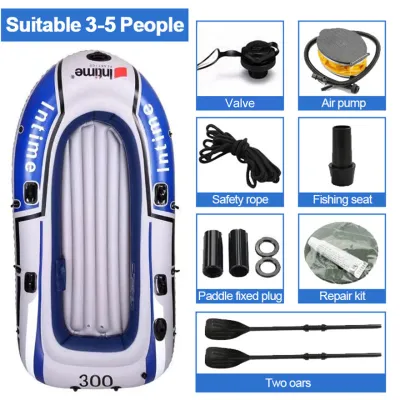
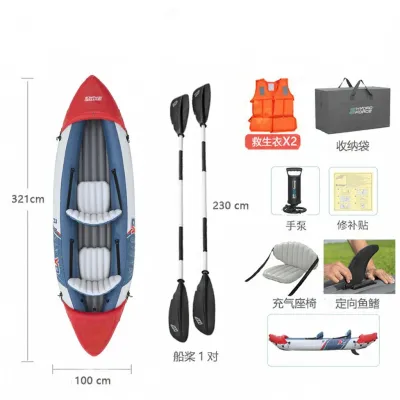
Prices are valid at publication and may change. Please refer to the product page for the latest price.
Physical hazards are abundant when fishing in coastal or inland waters. Anglers frequently navigate shallow coral reefs, rocky shorelines, and mangrove roots. These environments demand high puncture and abrasion resistance. Furthermore, the activity of fishing itself introduces sharp objects: thrashing fish with sharp dorsal spines (such as lapu-lapu or snapper), dropped bait knives, and stray hooks. A material’s ability to resist these daily hazards determines whether your fishing trip ends with a successful catch or an emergency repair.
PVC vs Hypalon: Core Material Differences for Anglers
PVC (Polyvinyl Chloride)
PVC is a synthetic plastic polymer that is widely used due to its excellent cost-effectiveness and lightweight nature. When fully inflated, high-quality PVC boats achieve impressive structural rigidity, providing a stable platform for casting and reeling. This rigidity is highly valued by anglers who need a firm floor and solid tubes to maintain balance while fighting fish.

However, PVC is inherently sensitive to prolonged UV radiation and extreme heat. Over time, UV rays degrade the plasticizers that keep the PVC fabric flexible, leading to material hardening, cracking, and eventual browning. Furthermore, the adhesives used in many standard PVC boats can soften when exposed to direct, midday tropical sun, which can compromise the integrity of hand-glued seams.
For these reasons, PVC is best suited for occasional anglers who have the indoor space to store the boat deflated and shielded from the elements when not in use. It is an excellent entry-level option for those who primarily fish in freshwater lakes or sheltered bays and can commit to disciplined post-trip care.
Hypalon and CSM (Chlorosulfonated Polyethylene)
It is important to clarify that “Hypalon” is a discontinued brand name originally owned by DuPont. Today, manufacturers use equivalent CSM (Chlorosulfonated Polyethylene) synthetic rubber fabrics, though the term Hypalon is still widely used in the boating industry. CSM is highly regarded for its exceptional resistance to environmental stressors.
This material is virtually unaffected by prolonged UV exposure, extreme heat, and common marine chemicals, including spilled outboard fuel, engine oil, or sunscreen. Unlike PVC, CSM remains highly flexible across a wide range of temperatures and does not rely on plasticizers that can leach out over time. This makes it incredibly durable in tropical climates where the boat might remain inflated on a trailer or dock for extended periods.
The primary trade-off is the initial investment. CSM boats require a significantly higher upfront cost and are heavier to transport, making them the preferred choice for professional guides, serious anglers, and those who fish frequently in demanding coastal environments.
Evaluating Durability and Long-Term Value
When evaluating the long-term value of these materials, typical lifespan ranges serve as a useful benchmark, though actual longevity depends heavily on your storage habits and maintenance routine. Under tropical Philippine conditions, a well-maintained PVC boat can typically last anywhere from 3 to 10 years. In contrast, a high-quality CSM boat can easily exceed 10 to 15 years of active service, with some commercial-grade hulls lasting up to 20 years.
The financial trade-off is clear. A PVC inflatable boat for fishing may have a lower upfront cost—often ranging from ₱15,000 to ₱50,000 depending on the size and brand—making it an attractive entry point for recreational anglers. However, if you plan to fish multiple times a week or leave your boat moored in the water, a CSM boat, which can range from ₱80,000 to over ₱200,000, may offer better long-term value. Over a decade, the cost per year of a CSM boat often proves lower because you avoid the need for premature replacement or frequent seam repairs.
Field repairability is another critical factor for remote fishing trips. PVC repairs are relatively straightforward and can be completed quickly using solvent-based polyurethane adhesives and PVC patches. These repairs can cure within a few hours, allowing you to get back on the water. CSM repairs, however, require a more meticulous multi-step process. Because CSM is a synthetic rubber, it must be sanded to abrade the surface before applying a cold-curing, two-part contact adhesive. While CSM repairs take longer to cure fully, the resulting chemical bond is incredibly strong and highly resistant to heat, ensuring that a properly executed seam or puncture repair will not fail under the hot tropical sun.
Verifiable Specifications to Check Before Buying
To ensure you are getting a durable inflatable boat for fishing, look beyond marketing labels and verify the manufacturer’s technical specifications. First, examine the fabric density, which is measured in denier. For fishing in rugged environments, look for a minimum fabric density of 900 to 1100 denier. A higher denier count indicates a thicker, heavier weave that provides superior resistance to punctures from fish spines and hooks. Additionally, verify the layer count; multi-ply fabrics (often consisting of an inner polyester mesh sandwiched between layers of PVC or CSM) offer much better structural stability.
Next, pay close attention to seam construction. For PVC boats, thermo-welded (or heat-welded) seams are highly recommended over hand-glued seams. Thermo-welding uses heat and pressure to fuse the PVC layers together, creating a single, continuous bond that is physically stronger than the material itself. This method eliminates the risk of adhesive failure under intense tropical heat. For CSM boats, hand-gluing is the standard assembly method because synthetic rubber cannot be heat-welded; however, reputable manufacturers use double-taped, cold-cure glued seams that provide exceptional durability.
The type of floor you choose also impacts the boat’s weight, stability, and abrasion resistance. Aluminum floors offer the highest durability and rigidity, making them ideal for standing while casting, but they can become hot under the sun and add significant weight. High-pressure drop-stitch floors are lightweight and can be inflated to a high rigidity, though they require careful pressure management in hot weather. Marine plywood floors offer a classic, sturdy feel but require regular varnish maintenance to prevent rot in humid climates.
Finally, check for integrated protective features. A high-quality inflatable boat for fishing should feature wide rubbing strakes along the sides and a durable keel guard along the bottom. These thick rubber strips act as sacrificial barriers, protecting the underlying fabric from direct contact with concrete boat ramps, wooden docks, and shallow coral reefs.
Essential Maintenance for Tropical Saltwater and Freshwater Use
To maximize the lifespan of your inflatable boat, establishing a consistent maintenance routine is essential, regardless of whether you choose PVC or CSM. After every fishing trip, especially in saltwater, thoroughly rinse the boat with clean, fresh water. Pay close attention to the seams, the transom interface, and the areas around the inflation valves. Removing salt crystals prevents them from drying and grinding into the fabric during transport or storage.
Applying a dedicated UV protectant can significantly extend the life of your boat’s fabric. Always check the applied product’s label and the boat manufacturer’s instructions before application to ensure chemical compatibility. Avoid using products containing silicone or petroleum distillates, as these can degrade PVC plasticizers or break down the adhesives holding the seams together. Apply the protectant to clean, dry tubes according to the manufacturer’s specified wait times.
Proper storage is critical in the humid Philippine climate. Before deflating and folding your boat, ensure it is completely dry. Trapped moisture in a folded boat creates an ideal breeding ground for mold and mildew, which can degrade fabric coatings and weaken glued transoms. Store the boat in a cool, dry, well-ventilated area away from direct sunlight and pests. If storing the boat inflated, release a small amount of air pressure to allow for thermal expansion if the storage area experiences temperature fluctuations.
Before launching your boat for any fishing excursion, conduct a thorough visual inspection. Check for early signs of seam separation, fabric softening, or bubbling around the valves. If you suspect a leak, spray a mixture of mild soap and water onto the area and watch for bubbles. If any issues are found, or if manufacturer instructions conflict with your repair plans, consult a qualified professional or the boat manufacturer before heading out onto the water.
Frequently Asked Questions (FAQ)
Does saltwater damage the fabric of inflatable boats?
Pure saltwater does not chemically degrade high-quality PVC or CSM fabrics. However, the hazard lies in the physical and mechanical effects of saltwater exposure. As saltwater evaporates, it leaves behind sharp salt crystals that can lodge in seams and fabric folds, causing abrasive wear over time. Additionally, saltwater accelerates the corrosion of non-marine-grade metal fittings and can weaken low-quality adhesives. Thoroughly rinsing your boat with fresh water after every saltwater outing is crucial to mitigating these risks.
How should I adjust air pressure when fishing in extreme heat?
As temperature rises during the day, the air inside your boat’s chambers expands, significantly increasing internal pressure and putting stress on the seams. To prevent damage, always check the manufacturer’s recommended operating pressure (usually measured in PSI or bar) using a reliable pressure gauge. If you inflate your boat to maximum pressure in the cool morning, monitor the tubes as the midday heat intensifies. If the tubes feel excessively hard or rigid, use the valve to release small increments of air to keep the pressure within safe limits. Remember to check the pressure again if the weather cools or if you enter cold water, as the air will contract and may require topping up.
Community discussion
Share your experience or ask a question. Comments are reviewed before publication.