
A quick-detach (QD) sling swivel is a specialized hardware connector designed to let you attach or remove a carrying sling from your equipment in seconds. Unlike traditional fixed loops or screw-gate swivels that require tools or tedious manual threading, a QD system relies on a simple mechanical release to secure or free the sling. This rapid-release capability is highly valued by target shooters, hunters, and archery enthusiasts who need to transition quickly between carrying their gear and active shooting. Choosing the right setup requires understanding how these small but critical components interface with your specific platform, sling width, and typical operating environment.
How QD Sling Swivels Work and Why They Matter
The core appeal of a QD sling swivel lies in its mechanical simplicity and speed. Most designs feature a cylindrical body with small, spring-loaded ball bearings or locking lugs protruding from the base. When you press a flush-mounted push-button or actuate a small lever, these lugs retract, allowing you to insert the swivel into a matching socket. Releasing the button or lever locks the lugs outward into an internal groove inside the socket, securing the connection. This design provides a highly stable anchor point that can rotate freely, preventing your sling from twisting or tangling during movement.
In contrast, traditional fixed loops or screw-on swivels require manual tightening and often remain permanently attached to the stock or forend. While traditional hardware is highly secure, it lacks the adaptability needed when you want to quickly strip off a sling to prevent snagging in dense brush or to clear your workspace on a shooting bench. However, the convenience of a QD system depends entirely on a precise mechanical match. Because there is no universal standard across all manufacturers, you must verify that the physical dimensions of the swivel lugs align perfectly with the internal geometry of your socket to prevent accidental release under load.
Products mentioned in this guide
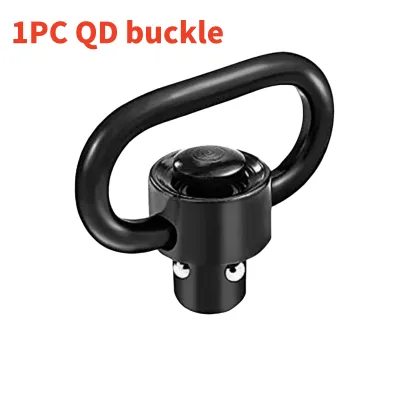
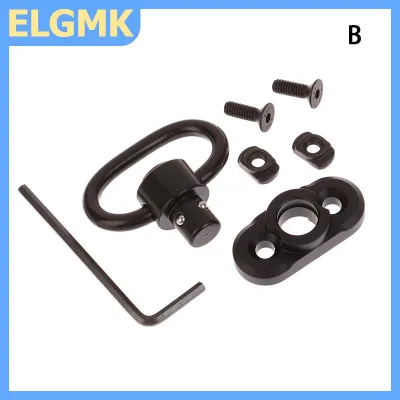
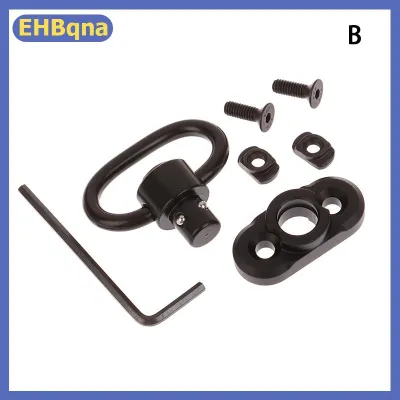
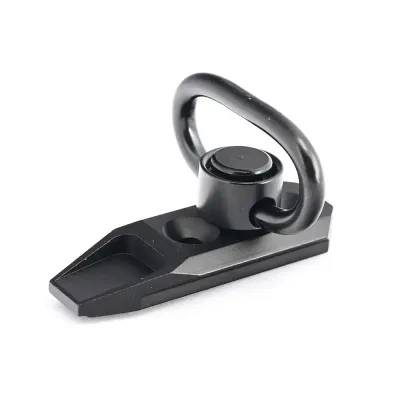
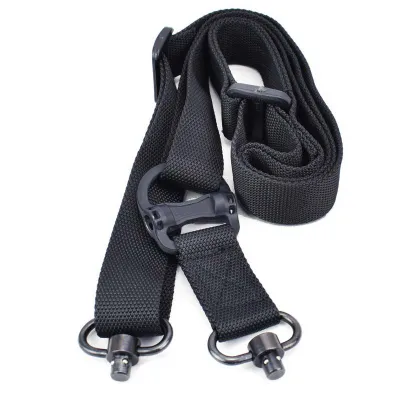
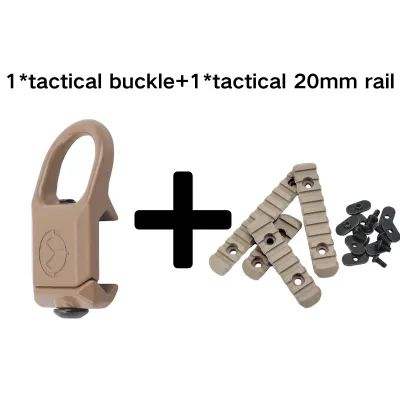
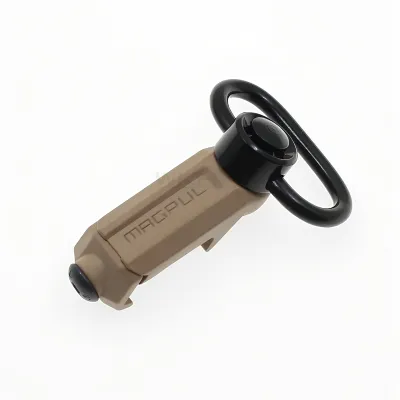
Prices are valid at publication and may change. Please refer to the product page for the latest price.
Key Specifications to Check Before You Buy
When selecting a QD sling swivel, the first technical specification to examine is the lug configuration. Swivels typically come in variations such as two-lug, three-lug, or four-lug designs. These lugs must seat securely within the corresponding recesses of your socket. A mismatch can prevent the locking mechanism from engaging fully, or worse, it can allow the swivel to pull free under minimal tension. Always check the manufacturer’s compatibility list to ensure the swivel is rated for your specific socket brand and model.

Next, consider the width of the swivel loop, which directly dictates the maximum sling width you can use. The most common sizes are 1-inch and 1.25-inch loops. Using a 1.25-inch sling in a 1-inch loop will cause the webbing to bunch up, restricting rotation and making the sling uncomfortable to wear. Conversely, a 1-inch sling in a 1.25-inch loop may slide side-to-side, leading to uneven weight distribution and premature wear on the edges of the strap.
Material selection and surface finishes are critical, especially when operating in challenging climates. In hot, humid tropical environments like the Philippines, moisture, sweat, and salt air can rapidly corrode low-grade hardware. Look for swivels constructed from heavy-duty steel treated with a manganese phosphate coating, or high-grade anodized aluminum. These finishes provide essential resistance against rust and wear.
While some manufacturers highlight extreme static pull-test ratings of several hundred kilograms, these figures have minimal impact on standard shooting or archery activities. Your primary focus should be on the quality of the machining and the smooth operation of the spring mechanism rather than chasing excessive load ratings that far exceed the weight of your equipment.
Evaluating Mounting Options and Placement
Your choice of QD sling swivel must align with the mounting interfaces available on your gear. Many modern stocks, chassis, and handguards feature integrated QD sockets machined directly into the frame. If your equipment lacks these built-in points, you will need to install aftermarket adapters. Common options include Picatinny rail mounts, M-LOK or KeyMod adapters, and screw-in bases for wooden or polymer stocks.
The placement of these mounting points significantly affects carrying comfort and how quickly you can bring your equipment to bear. Mounting a swivel at the 6 o’clock position (underside) is traditional and works well for simple over-the-shoulder carry. However, side-mounting at the 3 o’clock or 9 o’clock positions keeps the equipment flatter against your body, reducing bouncing and preventing the gear from rolling over while you walk.
Before purchasing any adapter, verify the pre-drilled hole specifications or rail dimensions on your equipment. If you are unsure whether a specific adapter will fit your handguard or stock, consult the manufacturer directly to avoid damaging your gear during installation.
Your Pre-Purchase Compatibility Checklist
To ensure a seamless setup and avoid purchasing incompatible hardware, follow this structured verification checklist before completing your purchase:
- Step 1: Identify the Socket Type. Inspect the existing sockets on your equipment. Note whether they are integrated or require an adapter, and check if they feature rotation-limiting tabs to prevent the sling from spinning completely.
- Step 2: Measure Your Sling. Use a ruler to verify the exact width of your carrying strap. Match this measurement to either a 1-inch or 1.25-inch swivel loop to ensure a proper fit.
- Step 3: Assess Your Environment. If you frequently hunt or shoot in high-humidity areas, prioritize corrosion-resistant finishes like phosphate-coated steel over untreated metals.
- Step 4: Cross-Reference Specifications. Double-check the product labels and manufacturer instructions for both the swivel and the socket to confirm they are designed to work together without mechanical play.
Frequently Asked Questions (FAQ)
Can I use a push-button QD swivel in any QD socket?
No, you cannot safely use any push-button QD swivel in any socket. While many standard dimensions exist, variations in lug counts, socket depths, and manufacturing tolerances mean that some swivels will not lock securely into certain sockets. Mixing incompatible parts can lead to sudden, accidental detachment, potentially dropping and damaging your equipment. Always test the connection lock manually before trusting it under load.
Do QD swivels affect the accuracy of my bow or firearm?
The QD swivel itself does not directly alter the mechanical accuracy of your equipment. However, improper placement or a loose mounting adapter can introduce unwanted movement or vibration during a shot. If a swivel or sling contacts a free-floating barrel or a bow limb, it can disrupt the natural harmonics and affect your point of impact. Ensure all mounting bases are tightened to the manufacturer’s torque specifications and check them regularly for play.
Community discussion
Share your experience or ask a question. Comments are reviewed before publication.