
Choosing your first pair of shoe skates comes down to where you want to roll and how you prefer to balance. If you prioritize immediate standing stability, plan to spend your time at indoor roller rinks, or want to explore dance and artistic movements, quad skates are an excellent starting point. On the other hand, if you are drawn to outdoor fitness, long-distance cruising on paved park paths, or commuting through neighborhood streets, inline skates offer the forward momentum and terrain handling you need. Both styles provide an exceptional workout, but they approach balance, movement, and stopping in fundamentally different ways. Understanding these differences before making a purchase ensures you select the configuration that matches your personal goals, local environment, and comfort level.
How Wheel Design Affects Your Balance and Learning Curve
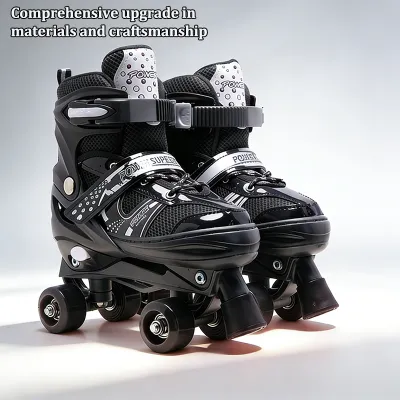
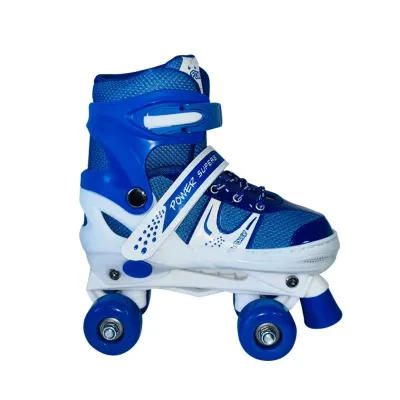
The physical layout of the wheels on your shoe skates dictates how your body interacts with the ground. Quad skates feature four wheels arranged in a two-by-two rectangular grid. This configuration provides a wide, stable base that makes standing still feel natural and secure. Beginners often find quads reassuring because they do not require constant micro-adjustments to remain upright while stationary. However, this wider wheelbase can feel clunky when transitioning into forward motion, as the lateral edges of the wheels can catch on uneven surfaces or during wide turns.
Inline skates align their wheels in a single, narrow line down the center of the sole. While this design makes standing completely still a challenge for absolute beginners, it excels once you start moving. The single-line alignment allows for smooth, efficient weight transfers from side to side, mimicking the natural stride of ice skating. Because the wheels are narrow, they glide over minor surface imperfections more easily than quads, though they require your core and ankle muscles to work harder to maintain lateral stability.
Products mentioned in this guide
![IMUTO[Free protective gear]Roller Skate Shoes for Kids Adjustable Quad Skates Roller Blades Skate Shoes for Girls Boys](https://img.lazcdn.com/g/p/c331c1cff9e4aed5897b5c76ff34bef4.png_400x400q80.png_.webp)
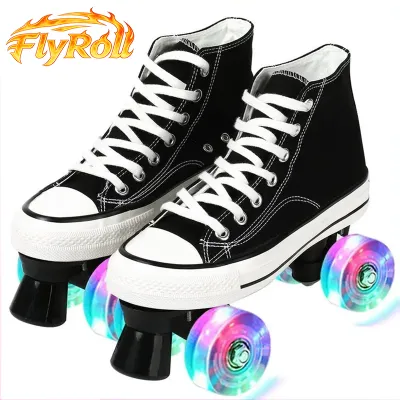
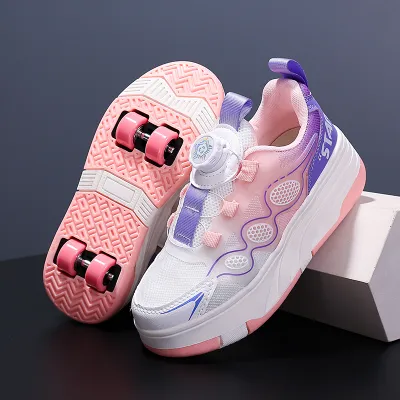
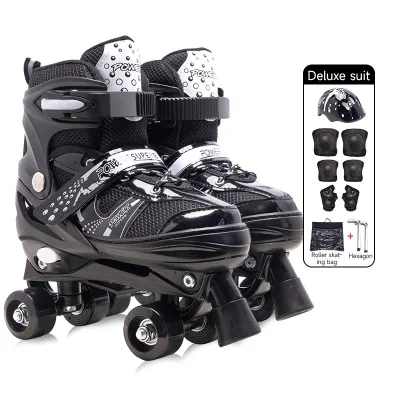
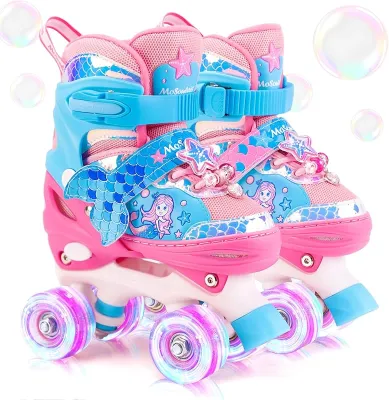
Prices are valid at publication and may change. Please refer to the product page for the latest price.
Ankle support and muscle fatigue also vary significantly between these two designs. Quad skates often feature high-top boots made of canvas, vinyl, or leather, which offer flexible ankle movement suitable for dance but require your lower leg muscles to actively stabilize your ankles. Inline skates typically utilize a rigid plastic outer shell with a high, supportive cuff. This stiff structure cradles the ankle, reducing lateral sway and minimizing muscle fatigue during long sessions, though it limits the ankle flexibility needed for artistic maneuvers.
Stopping mechanisms represent another critical difference. Quad skates utilize a toe stop located at the front of the boot. To brake, you must drag the toe stop behind you or turn around to apply pressure, which requires a degree of coordination. Inline skates generally feature a heel brake attached to the rear of one skate. Stopping involves sliding the braking foot forward and lifting the toe to press the rubber pad against the ground. Both methods require practice, but the heel brake is often more intuitive for beginners learning to control their speed outdoors.
Matching Your Skating Goals to the Right Wheel Configuration
Your skating environment and long-term aspirations should guide your choice of shoe skates. Different wheel configurations excel in specific settings, and selecting the wrong style for your preferred terrain can lead to frustration or premature wear on your equipment.

Quad Skates for Stability, Rinks, and Artistic Movement
Quad skates are the traditional choice for indoor roller rinks, where smooth, polished wood or concrete floors allow the wide polyurethane wheels to grip securely. If your goal is to participate in roller disco, practice synchronized dance steps, or eventually try roller derby, quads are the standard equipment. The rectangular wheel layout provides a solid platform for stationary tricks, spins, and quick lateral transitions.
While you can ride quad skates outdoors, they are highly sensitive to rough surfaces. Small pebbles, twigs, or cracks in the pavement can abruptly stop a wide quad wheel, potentially causing a fall. For outdoor use, you must verify that your quads are fitted with soft, gummy outdoor wheels designed to absorb shocks. Even with outdoor wheels, quads remain best suited for smooth, flat surfaces like outdoor basketball courts, barangay plazas, or dedicated park paths rather than rough public roads.
Inline Skates for Speed, Fitness, and Outdoor Commuting
Inline skates are built for distance, speed, and outdoor versatility. The narrow profile of the wheels reduces rolling resistance, allowing you to maintain forward momentum with less physical effort. This makes inline skates the superior option for cardiovascular fitness, long-distance cruising, and commuting along paved trails or city sidewalks.
The inline wheel configuration is also much better suited for navigating real-world outdoor terrain. Because the wheels are arranged in a single line, they can roll over cracks, expansion joints, and small debris that would trip up a quad skate. If you plan to skate in public parks, along seaside promenades, or on asphalt streets, inline skates provide a smoother, more forgiving ride. They allow you to cover kilometers of pavement efficiently while building lower-body strength and endurance.
How to Verify Fit, Ankle Support, and Safety Requirements
Before purchasing your shoe skates, you must verify that the boots fit correctly and offer adequate support. Proper sizing is crucial; skates that are too loose will cause your feet to slide, leading to painful blisters and a loss of control, while skates that are too tight can restrict circulation and cause cramping. Do not rely on your standard shoe size, as skate sizing varies significantly between manufacturers. Instead, measure your foot length in millimeters and compare it directly to the specific brand’s sizing chart.
When evaluating boot construction, check the product specifications for ankle support features. Beginners should look for boots with a stiff cuff or reinforced ankle panels. If you choose inline skates, look for models with secure closure systems, such as a combination of laces, micro-adjustable instep straps, and heavy-duty top buckles that lock your heel into place. For quad skates, ensure the lacing system allows you to tighten the boot snugly around your ankle without pinching.
Safety gear is non-negotiable for both skate types, especially when learning. A complete protective set includes a certified helmet, wrist guards, knee pads, and elbow pads. In tropical climates like the Philippines, look for protective gear featuring breathable mesh panels and moisture-wicking linings to stay comfortable in high humidity. Ensure that all pads fit snugly without sliding down your limbs, and verify that your wrist guards do not interfere with your ability to maintain a natural hand position while skating.
Decision Framework: Which Shoe Skates Should You Choose?
To finalize your decision, evaluate your personal preferences, physical comfort, and local skating environments against this structured framework.
- Choose Quad Skates if:
- You want maximum stability when standing completely still.
- Your primary skating venue will be indoor rinks, smooth concrete courts, or flat plazas.
- You are interested in artistic skating, dance, or roller derby.
- You prefer a classic, retro aesthetic and want to perform tight, lateral maneuvers.
- Choose Inline Skates if:
- You want to skate outdoors on asphalt, paved park paths, or sidewalks.
- Your main goal is cardiovascular fitness, speed, or long-distance commuting.
- You want a skate that can easily roll over small pebbles, cracks, and uneven surfaces.
- You prefer a highly supportive, rigid boot that minimizes ankle strain during long sessions.
- Verify first if:
- You have pre-existing ankle or knee concerns; inline skates generally offer more structural ankle support, but you should consult a professional if you have chronic joint issues.
- You need to check local rink or park rules, as some indoor venues in the Philippines require specific non-marking toe stops or wheel types to protect their floors.
- Your chosen protective gear fits properly over your clothing and does not restrict your range of motion.
- You have budgeted for safety gear alongside your skates, as high-quality pads and a helmet are essential components of your initial investment, typically ranging from ₱1,000 to ₱3,000 for a reliable beginner set.
Frequently Asked Questions (FAQ)
Is it easier to learn on quad skates or inline skates?
Neither skate is universally easier, as they challenge your balance in different ways. Quad skates are easier for standing still because of their wide, rectangular wheel base, making them feel safer to beginners at first. However, inline skates are generally easier to balance once you are moving forward, as their single-line design naturally tracks straight and glides over minor ground imperfections with less resistance.
Can I use the same protective gear for both skate types?
Yes, standard protective gear—including helmets, knee pads, and elbow pads—is fully interchangeable between quad and inline skating. However, you must ensure your wrist guards fit securely and allow you to fall forward safely on your palms. Always verify that your pads are rated for impact sports and fit snugly over your limbs without slipping during movement.
How do I maintain the wheels and bearings on my new skates?
Basic maintenance keeps your skates rolling smoothly and safely. After skating outdoors, especially in humid or dusty conditions, wipe down the boot and wheels with a dry cloth to remove dirt. Avoid rolling through water or puddles, as moisture can rust the bearings. Check your manufacturer’s manual for instructions on how to rotate your wheels to ensure even wear and when to apply specialized bearing lubricant.
Community discussion
Share your experience or ask a question. Comments are reviewed before publication.