
A quick detach (QD) sling mount is a specialized hardware system designed to let you attach or remove a carrying sling from a firearm or airsoft gun in seconds without using tools or unthreading webbing. It consists of two main parts: a female socket (the QD cup) integrated into or mounted on the gun, and a male connector (the QD swivel) attached to the sling itself.
This system allows shooters to transition smoothly between carrying, storing, and shooting stances. For example, if you need to quickly transition from a two-point carry to a hands-free configuration, or pack your gear into a compact bag, you can release the sling with a simple press or flip.
In tropical environments like the Philippines, where high humidity and sudden downpours are common, being able to quickly detach a wet sling for drying or maintenance prevents moisture from being trapped against the metal surfaces of your receiver or handguard.
Products mentioned in this guide
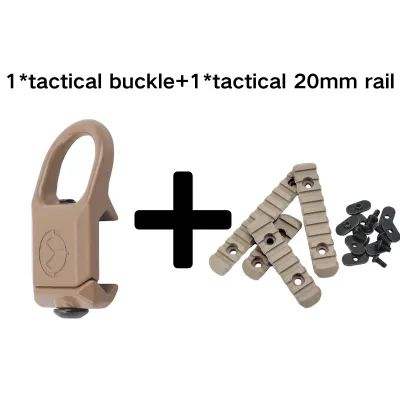
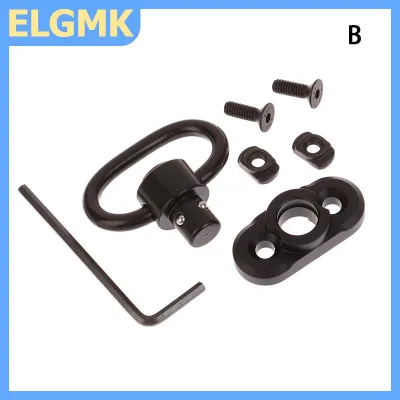
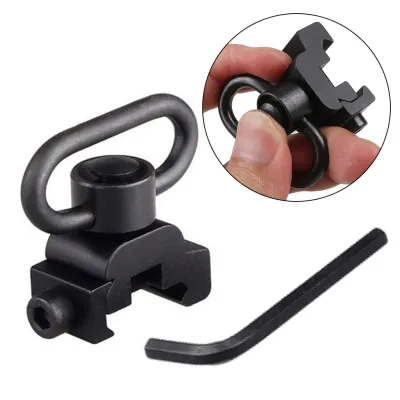
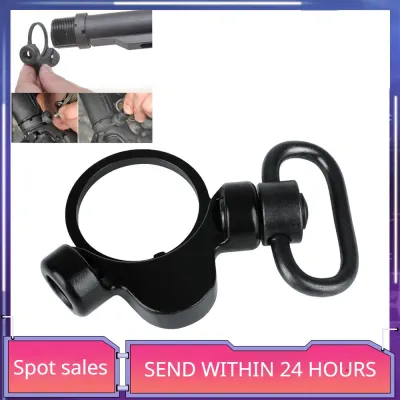
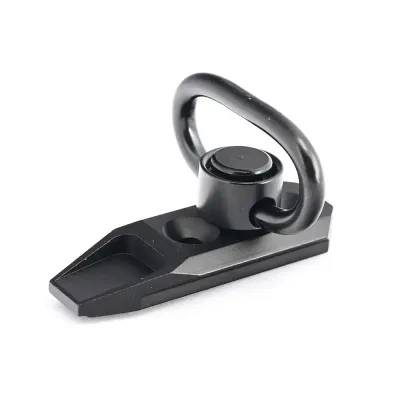
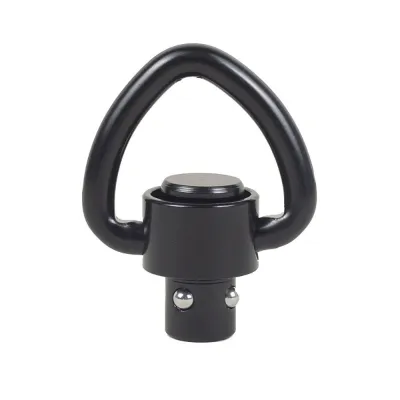
Prices are valid at publication and may change. Please refer to the product page for the latest price.
How QD Locking Mechanisms Work: Push-Button vs. Lever Designs
To choose the right hardware, it helps to understand how these systems hold under tension. They rely on internal detent balls (usually steel bearings) and spring tension. When the swivel is inserted into the cup, these bearings expand outward into an internal groove inside the cup, locking the assembly in place.
The two dominant mechanism types—push-button and lever-action—differ primarily in how they retract these bearings to release the connection.
Push-Button QD Mechanisms
The push-button design is the most common system available. Pressing the central button on the swivel depresses an internal spring, allowing the bearing balls to retract inward. Once retracted, the swivel can be pulled freely from the cup. Releasing the button forces the bearings outward again, locking them into the cup’s recessed groove.
This system is highly standardized across the industry. Most modern handguards, stocks, and receiver end plates come with pre-integrated QD cups. This means high cross-brand compatibility; a standard push-button swivel from one manufacturer will almost always fit a standard QD cup from another.
However, the primary risk is accidental detachment. If the exposed button snags on tactical gear, a plate carrier, or is pressed hard against a barrier or barricade during dynamic shooting, the sling can release unexpectedly, dropping the platform.
Lever-Action and Alternative Mechanisms
Lever-action and alternative designs address the snagging limitations of push-button systems. Instead of an exposed button, these designs use a small, flush-fitting lever. Flipping or rotating the lever cams the internal locking lugs or bearings into place.
Because there is no exposed button to press, the risk of accidental release during dynamic movements, crawling through brush, or close-quarters handling is virtually eliminated. The lever must be intentionally lifted or rotated to release.
The trade-off is compatibility. These systems are often proprietary. A lever-action swivel may require a matching cup from the same manufacturer to lock securely, offering less universal compatibility than the standard push-button design.
Key Specifications to Check Before Buying a QD Mount
Before purchasing a QD mount, verify several physical specifications to ensure compatibility with your existing gear and shooting style.

First, check the QD cup size and mounting pattern. For bolt-on cups, verify the mounting interface (such as M-LOK, Picatinny, or KeyMod) and the mounting pattern (such as standard 2-hole or 4-hole patterns) to ensure it matches your handguard or stock.
Second, match the swivel loop size to your sling webbing. Standard sizes are 1-inch and 1.25-inch. If you use a thick tactical sling, a 1-inch loop will bunch up the webbing, restricting movement, while a 1.25-inch loop on a narrow sling will slide around excessively.
Third, consider the rotation type. 360-degree rotation allows the swivel to spin freely, preventing the sling from binding, but can lead to the sling twisting up during active use. Limited rotation (such as 90 or 180 degrees) uses internal tabs to stop the swivel from spinning fully, keeping the sling flat and preventing twisting.
Finally, check the material and finish. Look for high-strength steel (often phosphated or nitrided) or anodized aircraft-grade aluminum. In humid, tropical climates, verifying corrosion resistance is critical to prevent rust from seizing the internal spring and detent balls.
Matching the QD Mechanism to Your Shooting Activity
Your choice of QD mechanism should align with your specific shooting discipline or airsoft scenario.
For active shooting sports, tactical training, or dynamic movement, lever-action or recessed/low-profile push-button mounts are highly recommended to prevent accidental drops when transitioning or moving past obstacles.
For benchrest shooting, target practice, or static hunting where the platform is not subjected to heavy gear snags, standard push-button swivels with 360-degree rotation are perfectly adequate and offer maximum convenience.
While the mechanical operation is identical, airsoft platforms often use cast zinc alloys or polymer receivers. Users must verify the structural integrity of these mounting points. Installing a heavy-duty steel QD cup and applying high tension on a thin polymer stock or handguard can cause cracking. Always check the manufacturer’s specifications for load limits or use reinforced backing plates.
Frequently Asked Questions (FAQ)
Can I Install a QD Cup on Any Firearm or Airsoft Gun?
Installation depends on the platform having a compatible interface like a Picatinny rail, M-LOK slot, KeyMod, or a pre-drilled stock. If your platform lacks these, aftermarket adapters are available, such as buffer tube mounts or rail-mounted cups. Avoid drilling directly into thin polymer stocks or unsupported airsoft receivers without verifying structural limits. Consult the manufacturer’s guidelines to prevent permanent damage.
Will a QD Sling Mount Interfere With My Optic or Sights?
Properly positioned QD cups (typically at the 3, 6, or 9 o’clock positions on a handguard) keep the sling clear of your sight line. However, you should verify the physical height of the attached swivel loop. If you run a low-mounted red dot or iron sights, a top-mounted or high-profile QD mount might clip into your lower third sight picture. Opt for side-mounted cups to maintain a completely clear field of view.
Community discussion
Share your experience or ask a question. Comments are reviewed before publication.