
Choosing the right pickleball ball trainer depends on your available practice space, budget, and specific training objectives. If you want to sharpen your quick-fire volleys, footwork, and reaction times within a compact driveway or garage, a rebound net offers an accessible, self-paced solution. On the other hand, if you aim to isolate specific mechanical flaws, practice spin defense, and build muscle memory through hundreds of identical feeds, a ball machine is the more robust tool, provided you have the budget, transport capacity, and court access to support it. Both options serve distinct roles in a player’s development, and understanding their mechanical differences is key to making a smart investment.
Core Differences in Training Focus and Mechanics
To choose the right pickleball ball trainer, you must first look at how each device alters your physical interaction with the ball. A rebound net operates on a closed feedback loop: the speed, spin, and angle of the ball returned to you depend entirely on the shot you just hit. If you strike the net with a soft dink, the ball returns softly; a hard drive yields a rapid, challenging rebound. This dynamic forces you to stay light on your feet, constantly adjusting your positioning and paddle face to keep the rally going. It closely mimics the unpredictable, rapid-fire nature of a live kitchen-line exchange, making it an exceptional tool for developing fast hands, soft touch, and split-step reflexes.
In contrast, a ball machine breaks this feedback loop by delivering a consistent, independent feed regardless of your previous shot’s quality. This isolation is highly valuable for technical refinement. When you are trying to correct a hitch in your backhand stroke or master the drop shot, you need the exact same ball delivered to the exact same spot repeatedly. A ball machine allows you to stand in one place and hit fifty identical shots in a row, focusing purely on your shoulder turn, paddle angle, and follow-through. Many machines also allow you to adjust the feed rate, oscillation, and spin, giving you a controlled environment to practice handling heavy topspin or backspin without the pressure of maintaining a live rally.
Products mentioned in this guide
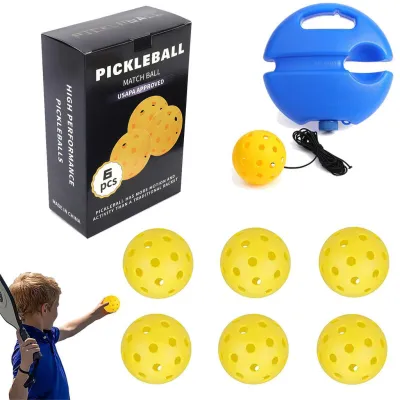
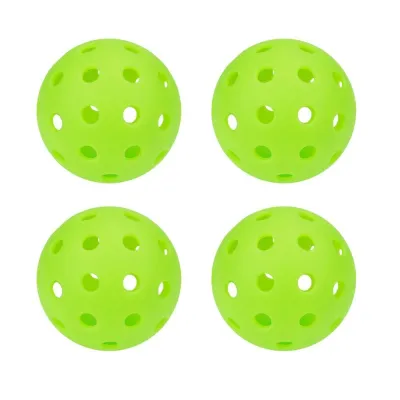
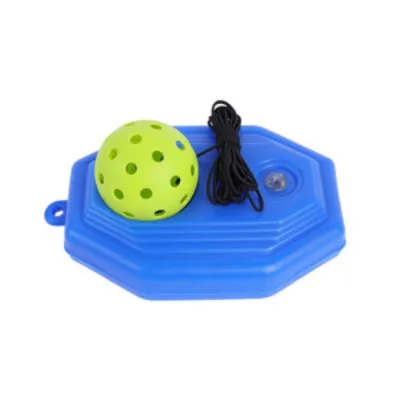
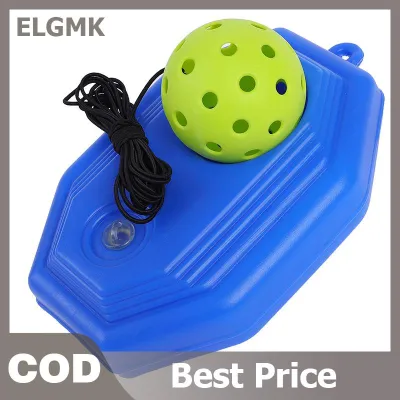
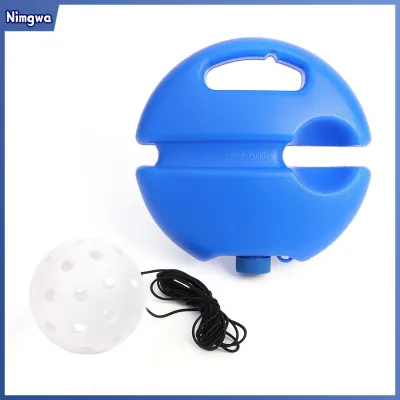
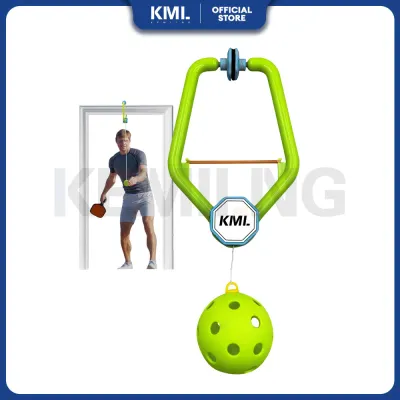
Prices are valid at publication and may change. Please refer to the product page for the latest price.
Space, Setup, and Portability Requirements
The physical environment where you plan to practice is often the deciding factor when selecting a pickleball ball trainer. Rebound nets are highly valued for their logistical flexibility. Most models feature lightweight steel or fiberglass frames that slot together with elastic shock cords, allowing you to set them up or break them down in minutes. Because they do not launch balls across a full court distance, you can comfortably place a rebound net against a garage wall, in a narrow driveway, or even on a spacious patio. They require no electrical power and fold down into compact carrying bags that easily fit into the trunk of a small car, making them highly portable for players who practice in varied locations.

Ball machines demand a much larger operational footprint and more careful logistical planning. To use a ball machine effectively, you generally need access to a flat, full-sized pickleball court or a very large, unobstructed concrete surface to accommodate the natural flight path and bounce of the fed balls. These machines are significantly heavier and bulkier than nets, often requiring wheels and a dedicated handle to transport from your vehicle to the court. Additionally, you must consider how the machine is powered. While many modern units feature built-in rechargeable batteries, others require a continuous connection to an AC power outlet. If you practice on public outdoor courts in the Philippines, where electrical outlets are rarely available near the playing surface, verifying the battery runtime and charging requirements of your chosen model is an absolute necessity before purchasing.
Furthermore, the tropical climate presents unique storage and maintenance challenges for both types of equipment. High humidity, intense heat, and sudden tropical downpours can rapidly degrade materials left outdoors. A rebound net must feature rust-resistant powder coating on its steel frame and UV-treated netting to survive humid conditions without rotting or sagging. For ball machines, the internal electronics, battery, and rubber throwing wheels are highly sensitive to moisture and extreme heat. You will need a dry, indoor storage space, such as a closet or a climate-controlled utility room, to prevent premature component failure, as leaving a complex electronic machine in a damp outdoor shed can quickly ruin your investment.
Budget and Long-Term Value Considerations
Your financial commitment is another major dividing line between these two training tools. Rebound nets represent a relatively low entry cost, making them an attractive option for casual players or those just beginning their pickleball journey. When budgeting for a net, which typically costs a fraction of the price of an electronic machine, you should focus on structural durability rather than searching for the cheapest option. Look closely at manufacturer specifications regarding frame thickness, net tension mechanisms, and weatherproofing. A slightly higher investment in a net with a robust, heavy-duty frame and replaceable elastic bungees will yield much better long-term value than a flimsy model that sags after a few weeks of intense hitting.
A ball machine is a premium investment, often costing tens of thousands of pesos, which requires a more thorough evaluation of long-term value and operational costs. Beyond the initial purchase price, you must factor in the cost of accessories, such as a large collection of practice balls, a ball hopper or tube for easy pickup, and potential battery replacements over time. To ensure you get your money’s worth, carefully review the manufacturer’s warranty terms, the availability of replacement parts like throwing wheels and belts, and the rated battery lifespan. For a dedicated player committed to rapid skill progression, the high upfront cost of a ball machine can be fully justified by its ability to feed hundreds of precise balls per hour, simulating hours of coaching drills without the ongoing expense of private lessons.
Comparing Key Specifications and Constraints
To help you quickly evaluate which pickleball ball trainer aligns with your logistical constraints and training goals, the table below outlines the primary differences in their design and operation.
| Feature | Rebound Net | Ball Machine |
|---|---|---|
| Primary Skill Focus | Reaction time, hand speed, footwork, and continuous rally flow | Stroke mechanics, spin defense, high-volume repetition, and court positioning |
| Space Required | Compact (driveways, garages, patios, or small backyards) | Full-sized court or large, flat, unobstructed concrete area |
| Power Source | None (fully manual and mechanical) | Rechargeable battery or AC wall outlet |
| Setup Complexity | Quick and simple (typically 5 to 10 minutes with no tools) | Moderate (requires positioning, filling the hopper, and calibrating settings) |
| Relative Cost Tier | Budget-friendly to moderate | Premium investment |
Because individual models vary widely, you should always verify the exact weight, hopper capacity, battery runtime, and maximum ball speed from the specific product manual before making a purchase. Treat any unverified specifications as critical checklist items to research, ensuring the equipment matches your physical lifting limits and the specific court rules of your local playing venue.
How to Decide: Matching the Trainer to Your Goals
To make your final decision, map your personal training goals, lifestyle constraints, and budget against the strengths of each trainer type.
You should choose a rebound net if:
- Your primary goal is to improve your hand-eye coordination, volley reflexes, and kitchen-line dinking rhythm.
- You have limited space at home, such as a single-car driveway or a small garage, and want the convenience of practicing steps away from your living room.
- You prefer a lightweight, highly portable setup that you can easily carry to a local park or store in a small closet without heavy lifting.
- You want a cost-effective training aid that requires zero electrical maintenance, charging, or battery replacements.
You should choose a ball machine if:
- You are focused on mastering specific stroke mechanics, such as perfecting your third-shot drop, deep drives, or overhead slams.
- You want to practice returning advanced spins, high-velocity shots, and deep baseline lobs in a highly controlled, repeatable environment.
- You have regular access to a flat, full-sized pickleball court and possess a vehicle suitable for transporting a heavy, bulky piece of equipment.
- You are prepared to make a significant financial investment to accelerate your competitive development through high-volume solo drilling.
Before finalizing your purchase, take a moment to verify a few practical details. If you are still unsure of your long-term commitment to pickleball, starting with a simpler rebound net is a low-risk way to build a daily practice habit. Additionally, ensure you have a safe, flat, and dry surface to use either trainer, and check with your local subdivision association or public court administrators to confirm if they allow the use of automated ball machines during public play hours.
Frequently Asked Questions (FAQ)
Can I use a rebound net for practicing pickleball serves?
Standard rebound nets are generally not ideal for practicing full-power pickleball serves due to their vertical design and limited surface area. A proper serve requires a downward and outward trajectory over a long distance, which a close-range rebound net cannot accurately simulate or return safely. However, if serve practice is a priority for you, check the manufacturer’s specifications to see if the net features an adjustable tilt angle. Some advanced rebounders can be angled backward, allowing them to catch and return higher-trajectory shots, though they still cannot replace the feedback of hitting serves on an actual open court.
Do ball machines require special pickleballs?
Most ball machines do not require proprietary balls, but they do require consistent ball types to prevent feeding jams and ensure predictable trajectories. You should consult your machine’s user manual to verify if it is optimized for indoor or outdoor pickleballs, as differences in hole patterns, weight, and plastic hardness can affect how the throwing wheels grip the ball. In the humid tropical climate of the Philippines, it is especially important to avoid using heavily worn, cracked, or waterlogged balls. Wet or dirty balls can slip on the machine’s internal rollers, leading to inconsistent feeds, motor strain, or mechanical jams that could damage the feeding mechanism.
Community discussion
Share your experience or ask a question. Comments are reviewed before publication.