
Choosing the right exercise equipment for your home setup depends entirely on your personal fitness objectives, physical space, and joint health. If your primary goal is to build muscle, tone specific areas, or recover from an injury without putting harsh pressure on your joints, resistance bands are your ideal choice. They provide continuous tension throughout each movement, making them highly effective for targeted strength training and rehabilitation.
Conversely, if your priority is to boost cardiovascular endurance, improve footwork agility, and burn calories rapidly in short, high-intensity sessions, a jump rope is the better tool. It offers an efficient way to elevate your heart rate and build coordination using minimal gear.
However, neither accessory is a complete substitute for specialized training. If your goals involve heavy powerlifting, maximal strength development, or highly specific sport skills, you will eventually need to supplement these tools with heavier external weights or dedicated training facilities.
Products mentioned in this guide
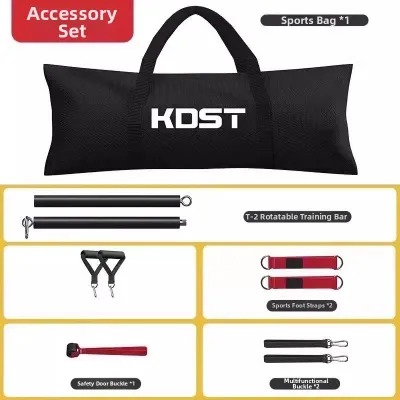
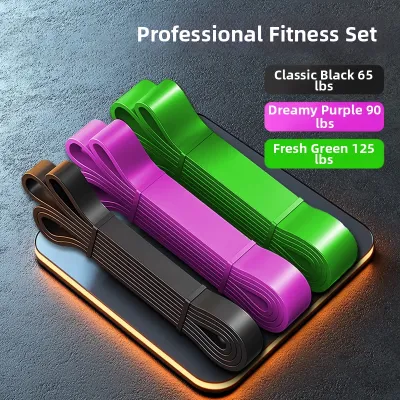


Prices are valid at publication and may change. Please refer to the product page for the latest price.
Comparing Fitness Outcomes: Strength vs. Cardio
Understanding how each tool affects your body is key to aligning your workouts with your physical goals. Resistance bands focus on progressive tension. Unlike traditional free weights, which rely on gravity, bands provide variable resistance that increases as the band stretches. This unique characteristic allows for excellent muscle isolation and low-impact strength building. It is particularly useful for targeting smaller stabilizing muscles, such as the rotator cuff or gluteus medius, which are often neglected in standard bodyweight exercises.
Furthermore, resistance bands challenge your muscles during both the concentric (lifting) and eccentric (lowering) phases of an exercise. This constant tension forces you to maintain control throughout the entire range of motion, which helps improve joint stability and muscle coordination without the risk of dropping heavy weights.
Jump ropes, on the other hand, focus primarily on cardiovascular conditioning. Jumping rope is a high-impact, full-body movement that rapidly elevates your heart rate. It demands constant coordination between your hands, feet, and core, while engaging fast-twitch muscle fibers in your calves, quadriceps, and shoulders. This makes it an exceptional tool for developing explosive power, agility, and cardiovascular endurance.
Additionally, the repetitive, low-level plyometric stress of jumping rope can help improve bone density in the lower body. However, because of the high-impact nature of the exercise, it requires proper technique and a gradual progression to avoid strain on your joints.
When it comes to weight loss, achieving a calorie deficit relies on a combination of dietary management and physical activity. A jump rope is highly efficient for burning calories in a short timeframe, making it excellent for high-intensity interval training (HIIT). On the other hand, resistance bands help build lean muscle mass. Muscle tissue is metabolically active, meaning that increasing your muscle mass through resistance training can help support a higher resting metabolic rate over time.
Practical Considerations for Home Workouts
Evaluating your physical environment is crucial before deciding on your home exercise equipment. In many homes, such as high-rise condominiums or compact apartments, indoor space is at a premium. Jumping rope requires a clear overhead clearance of at least several feet above your head, as well as a wide enough radius to prevent the cable from hitting furniture or light fixtures. Resistance bands require almost no vertical clearance and can be anchored to a sturdy door frame, a heavy table leg, or even under your feet, making them highly adaptable to tight living spaces.

Noise and joint impact are also major factors to consider. Jumping rope on hard surfaces like concrete, tile, or laminate floors can generate significant noise, which may disturb family members or downstairs neighbors. The repetitive impact can also stress your ankles, knees, and lower back if you do not use a shock-absorbing mat. Resistance bands operate silently and exert no impact forces on your joints, making them an excellent choice for late-night or early-morning workouts in shared living spaces.
Portability and storage are areas where both tools excel, but they handle tropical conditions differently. In humid climates, sweat can make handles slippery and accelerate the wear of certain materials. Resistance bands can be rolled up and stored in a small drawer, while a jump rope can be hung on a hook to prevent tangling. Keeping your gear out of direct sunlight is essential, as UV rays and high heat can cause latex bands to become brittle and crack over time.
Before every session, inspect your equipment to ensure safety. For resistance bands, check for micro-tears, discoloration, or dry rot caused by humidity and heat. For jump ropes, inspect the cable for fraying (especially if it is a steel cable coated in plastic) and ensure the ball bearings in the handles spin smoothly without grinding.
Decision Framework: How to Choose Your Equipment
To make the right choice, evaluate your lifestyle, physical condition, and home environment against this simple framework.
Choose Resistance Bands if:
- You are recovering from a joint injury or require low-impact exercises.
- Your home has low ceilings or limited workout space.
- Your primary focus is muscle hypertrophy, mobility, and targeted toning.
- You need a completely silent workout option to avoid disturbing others.
Choose a Jump Rope if:
- Your main goal is cardiovascular fitness, agility, and coordination.
- You have access to a suitable outdoor space, balcony, or a ground-floor room with high ceilings.
- You want to perform quick, high-intensity cardio sessions.
- You have a shock-absorbing floor mat to protect your joints and the rope.
Consider Both if:
- You want to build a well-rounded home gym on a budget. Combining the two allows you to perform high-intensity cardio intervals with the rope, followed immediately by strength-building sets with the bands.
When purchasing, check the product labels and specifications carefully. For resistance bands, verify the tension levels (usually measured in kilograms or pounds) and ensure they include essential accessories like padded door anchors, ankle straps, and secure carabiners. For jump ropes, check if the cable length is adjustable to match your height, and look for non-slip handles that can withstand sweaty hands in warm weather.
Building a Balanced Home Routine
To avoid overtraining and ensure steady progress, structure your weekly routine with recovery in mind. For example, you can schedule jump rope cardio sessions on Tuesdays and Thursdays, and resistance band strength training on Mondays, Wednesdays, and Fridays. This gives your joints and muscles adequate time to repair and adapt.
A typical resistance band session might focus on upper-body movements like banded rows, chest presses, and shoulder presses on one day, followed by lower-body movements like banded squats, glute bridges, and lateral walks on the next. Meanwhile, your jump rope sessions can be structured as interval training, alternating between 30 seconds of active jumping and 30 seconds of rest for a total of 15 to 20 minutes.
Always start with a dynamic warm-up to prepare your body for exercise. For jump rope workouts, focus on ankle mobility, calf stretches, and wrist rotations. For resistance band workouts, perform light bodyweight movements to activate your core and major muscle groups. End every session with static stretching to promote flexibility and reduce muscle tightness.
Listen to your body to prevent injuries. Stop jumping immediately if you feel sharp pain in your shins (a sign of shin splints), knees, or ankles. When using resistance bands, ensure the anchor is completely secure before pulling; if you notice any deep nicks or tears in the latex, discard the band immediately to avoid a painful snap injury.
Frequently Asked Questions (FAQ)
Can I use both resistance bands and a jump rope in the same workout?
Yes, combining both tools is an excellent way to create a high-energy hybrid workout. You can use the jump rope for a quick warm-up to elevate your heart rate, or use it as a high-intensity interval between your resistance band strength sets. To manage fatigue and maintain proper form, perform your complex strength movements with the bands first when your muscles are fresh, and use the jump rope as a cardio finisher at the end of your session.
How do I know when it is time to replace my equipment?
For resistance bands, replace them immediately if you observe visible nicks, small tears, fading color, or a loss of elasticity where the band feels unusually loose. For jump ropes, look for frayed inner steel cables, cracked plastic coatings, or handles where the internal bearings no longer spin smoothly. Regularly checking these components ensures your home workouts remain safe and effective.
Community discussion
Share your experience or ask a question. Comments are reviewed before publication.