
Quick Answer: The Core Difference at a Glance
Choosing between retractable roller skates shoes and traditional roller skates comes down to whether you prioritize multi-purpose convenience or dedicated athletic performance. Retractable roller skates shoes are designed as a hybrid footwear option, allowing you to transition between walking and casual rolling by deploying or hiding wheels embedded in the soles. They are ideal for casual cruising, short commutes, and indoor spaces where you want a fun, low-speed way to get around without carrying a spare pair of shoes.
Traditional roller skates, including both inline and quad varieties, are built purely for performance, fitness, and sport. They feature rigid, supportive boots, larger wheels, and robust braking systems designed to handle high speeds, rough outdoor terrain, and long-distance skating. If your goal is to get a cardiovascular workout, learn advanced tricks, or skate on uneven public paths, traditional skates are the safer and more effective choice.
What Are Retractable Roller Skates Shoes?
Retractable roller skates shoes, often referred to as kick roller shoes or wheel shoes, are casual sneakers featuring a built-in wheel mechanism within the sole. The primary appeal of this footwear is its dual-purpose design. Most models utilize a spring-loaded button located at the heel; pressing this button releases the wheel from its recessed compartment, instantly turning the sneaker into a rolling shoe. To return to walking mode, you press the button again while manually pushing the wheel back into the sole until it clicks and locks into place. Other variations feature manually removable wheels that you can pop out using a small tool, leaving a flat sole for walking.
Products mentioned in this guide
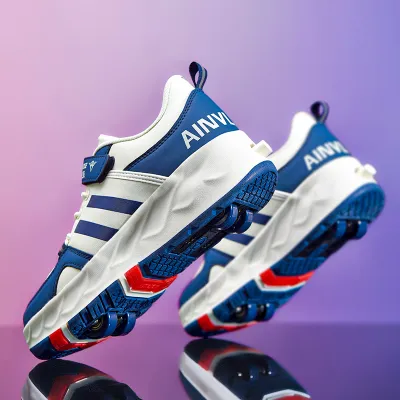
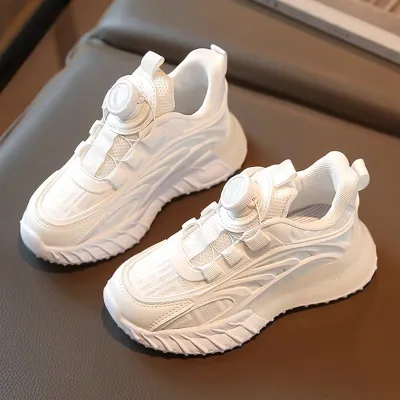
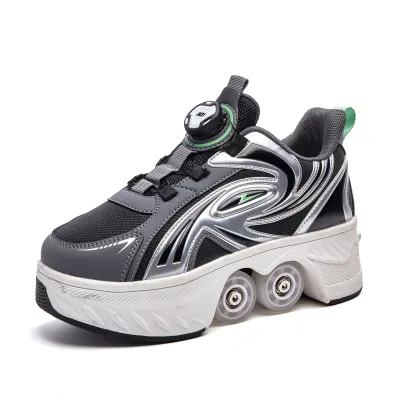
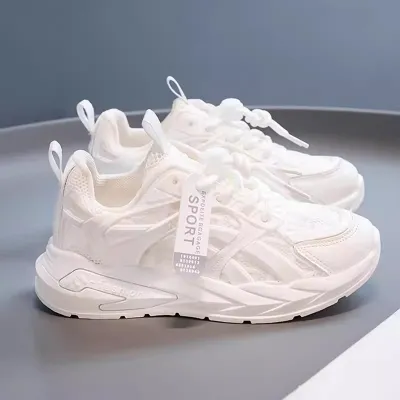
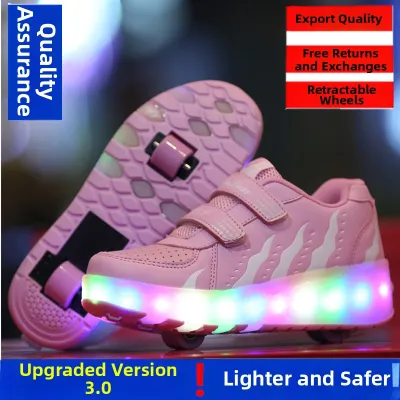
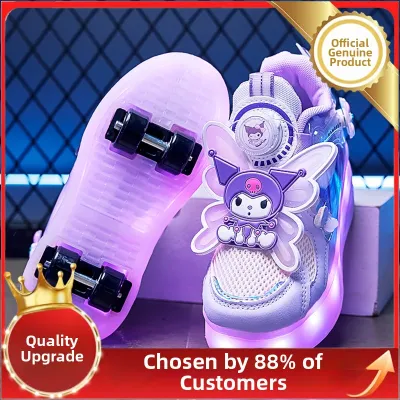
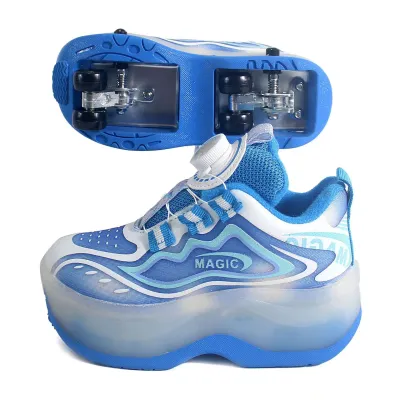
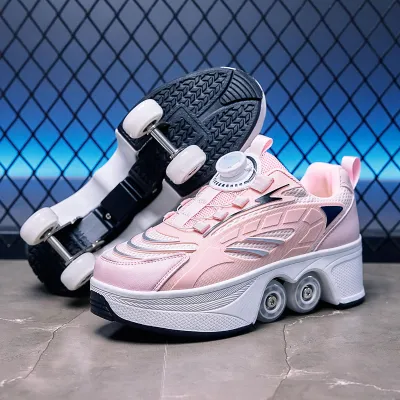
Prices are valid at publication and may change. Please refer to the product page for the latest price.

These hybrid shoes are designed for casual recreation, short urban commutes, and indoor rolling on highly polished surfaces, such as those found in shopping malls or community centers. They are popular among younger users and beginners who want a playful, low-barrier entry to rolling without the hassle of changing footwear. Because they look and function like regular sneakers when the wheels are retracted, they offer unmatched convenience for multi-stop outings.
However, this hybrid design introduces significant structural limitations. Because the sole must accommodate the wheel compartment and retraction hardware, these shoes are heavier and stiffer than standard athletic sneakers. Additionally, they offer minimal lateral ankle support compared to high-top skate boots. The wheels are typically small and made of hard plastic or low-rebound polyurethane, which limits their speed and makes them highly sensitive to small pebbles, cracks, and debris. Consequently, they are best viewed as a lifestyle novelty rather than specialized sports equipment.
What Are Traditional Roller Skates?
Traditional roller skates are dedicated sports equipment designed solely for skating. They are divided into two primary categories: inline skates (commonly known as rollerblades) and quad skates. Inline skates arrange three to four wheels in a single straight line, making them highly efficient for maintaining speed, traveling long distances, and navigating outdoor paved paths. Quad skates feature a classic two-by-two wheel configuration, providing a stable lateral platform that is highly favored for artistic skating, roller derby, dance, and retro rink sessions.
Unlike hybrid shoes, traditional skates are engineered to optimize power transfer, stability, and physical safety. The boots are constructed from rigid plastics, reinforced composites, or stiff leather to lock the foot and ankle securely in place. This rigid structure prevents the ankle from rolling under lateral pressure, allowing you to push off with maximum force and maintain balance at high speeds. They are ideal for dedicated fitness routines, high-intensity workouts, skate park tricks, and long-distance outdoor travel.
Furthermore, traditional skates are highly customizable and built to last. Almost every component is modular and replaceable, including the wheels, bearings, frames, toe stops, and liners. This allows you to adapt your gear to different environments—such as swapping out soft outdoor wheels for hard indoor wheels—and perform routine maintenance to extend the lifespan of your investment. While they require you to carry a separate pair of walking shoes, their safety, speed, and durability are unmatched by hybrid alternatives.
Self-Diagnosis: 5 Questions to Decide Your Perfect Pair
To determine which style of footwear fits your lifestyle, evaluate your personal skating goals, physical environment, and comfort requirements using the following self-diagnostic questions.
Question 1: What is your primary skating environment?
Your physical surroundings play a massive role in determining which footwear is safe and enjoyable. If you plan to skate primarily on smooth, polished indoor surfaces—such as mall floors, indoor basketball courts, or smooth concrete patios—retractable roller skates shoes perform adequately. Their small wheels require clean, flat ground to roll smoothly.
If your local environment consists of rough asphalt roads, cracked barangay streets, uneven sidewalks, or paths littered with small stones and tropical debris, traditional skates are highly recommended. Traditional inline or quad skates feature larger, softer, high-rebound polyurethane wheels that easily roll over small obstructions, cracks, and textured surfaces. Attempting to navigate rough outdoor terrain in retractable shoes can cause the small wheels to catch abruptly, increasing the risk of a forward fall.
Question 2: How much time will you spend skating vs. walking?
Consider the rhythm of your typical outing. If your routine involves multi-stop errands—such as riding a jeepney, walking through a convenience store, rolling down a short paved sidewalk, and then entering a restaurant—retractable shoes offer unparalleled convenience. You can transition from rolling to walking in seconds without carrying extra gear.
Conversely, if you intend to set aside dedicated time for continuous skating—such as a one-hour workout session around a local park or a weekend trip to a dedicated roller rink—traditional skates are the superior option. Carrying a backpack to store your walking shoes is a minor inconvenience compared to the superior comfort, speed, and physical support that traditional skates provide during extended periods of continuous rolling.
Question 3: What is your skill level and need for ankle support?
Ankle stability is a critical safety factor, especially for beginners. Retractable roller skates shoes feature a soft, low-top or mid-top sneaker construction. While comfortable for walking, they provide virtually no lateral ankle support when rolling. If you lose your balance or strike a small pebble, your ankle can easily twist outward or inward, leading to strains or sprains.
Traditional skates feature high-cuff boots made of molded plastic or stiff synthetic materials designed to wrap tightly around your ankle joint. This structural support keeps your feet aligned perfectly over the wheels, reducing muscle fatigue and preventing painful ankle rolls. If you are a beginner learning basic balance, or if you plan to skate at speeds faster than a gentle jog, the rigid support of traditional skates is essential for protecting your joints.
Question 4: Are you focused on fitness, tricks, or casual fun?
Identify what you want to achieve while on wheels. If your primary goal is casual recreation, novelty, and light amusement, retractable shoes are a fun and approachable choice. They are excellent for low-speed cruising and adding a bit of excitement to a casual walk.
If you want to burn calories, build lower-body muscle strength, improve cardiovascular health, or learn technical skills like jumps, slides, and transitions, you must choose traditional skates. Traditional skates allow for proper athletic posture, efficient stride mechanics, and the deep edge control required for advanced maneuvers. The heavy, stiff soles and small wheels of retractable shoes make athletic training and trick progression physically impractical and unsafe.
Question 5: What is your budget for gear and maintenance?
Evaluate your initial and long-term financial commitment. Retractable roller skates shoes are generally budget-friendly, typically ranging from ₱1,500 to ₱4,000. Because they are designed for casual, low-impact use, they require minimal maintenance beyond keeping the wheel wells clean, making them a straightforward, low-cost investment.
Traditional skates require a higher initial investment, with entry-level models starting around ₱3,000 and high-performance setups exceeding ₱10,000. Additionally, you must budget for essential safety gear, including a helmet, wrist guards, knee pads, and elbow pads. Over time, traditional skates also require maintenance costs for replacing worn-down wheels, rusted bearings, or worn brake pads. However, this modularity means you can replace individual parts rather than buying an entirely new pair of shoes when a single component wears out.
Safety, Protective Gear, and Maintenance
Regardless of which style you choose, safety must be your top priority. Traditional skates are capable of reaching high speeds, making high-quality protective gear non-negotiable. Always wear a properly fitted helmet, wrist guards, knee pads, and elbow pads before stepping onto the pavement. For retractable shoes, protective gear is still highly recommended, particularly for children, beginners, or anyone rolling on outdoor public paths where traffic and uneven terrain pose hazards.
Braking mechanisms differ significantly between the two styles and require specific techniques to master safely:
- Retractable Shoes: These typically lack a dedicated, high-friction brake pad. Stopping relies on dragging your heel, dragging the sole of your non-rolling foot, or stepping off the roll into a walk. Because stopping quickly can be difficult, you must maintain a low, controlled speed and avoid steep inclines.
- Traditional Skates: Inline skates usually feature a dedicated rubber heel brake, while quad skates utilize adjustable toe stops. Both styles allow for advanced stopping techniques, such as the T-stop or plow stop, which provide reliable stopping power at higher speeds.
Maintenance is crucial for ensuring performance and safety, especially in tropical climates. The high humidity and frequent rain in the Philippines can quickly damage wheel bearings. If you ride on wet roads or dusty paths, moisture and grit can enter the bearings, causing them to rust and seize.
To prevent this, always wipe down your wheels and chassis with a dry cloth after skating. Periodically check that all axle screws are tight and that the wheels spin freely. For retractable shoes, regularly inspect the spring-loaded button and wheel compartments to ensure they are free of dirt, sand, or small stones that could jam the locking mechanism. Finally, always verify the manufacturer’s stated weight limits and age recommendations before purchasing, as overloading retractable shoes can damage the internal components and cause the wheels to collapse unexpectedly during use.
Frequently Asked Questions (FAQ)
Can adults wear retractable roller skates shoes?
Yes, manufacturers do produce retractable roller skates shoes in adult sizes, but adult riders must exercise caution. Because these shoes rely on internal spring-loaded mechanisms and small axles, they have strict maximum weight capacities. Adults must carefully verify these weight limits before purchasing. Exceeding the recommended limit can cause the wheels to jam, fail to retract, or collapse under load, posing a significant safety risk.
Are retractable wheel shoes safe for young children?
Retractable wheel shoes are generally safe for children aged five and older, provided they have developed basic motor skills and balance. Parents should supervise children closely and ensure they master walking in the shoes with the wheels retracted before attempting to roll. It is highly recommended to equip children with a helmet and pads, and to restrict their rolling to flat, traffic-free areas away from stairs and slopes.
Can I use traditional roller skates for daily commuting?
Yes, traditional inline skates are highly efficient for daily commuting over moderate distances, offering excellent speed and vibration dampening on asphalt. However, they are less practical for multi-stop commutes that involve entering establishments. Because most indoor venues prohibit skates, you will need to carry a backpack containing a spare pair of walking shoes and take the time to sit down and change your footwear at each destination.
Community discussion
Share your experience or ask a question. Comments are reviewed before publication.