
Which Lifeguard Floater Should You Choose?
Selecting the right lifeguard floater depends entirely on your specific rescue environment, your level of certified training, and the operational protocols of your facility. There is no single flotation device that excels in every aquatic scenario. Instead, professional water safety relies on matching the tool to the physical demands of the water and the condition of the victim.
For active swimming pool patrols where you must swim out and wrap a victim securely, a flexible rescue tube is the standard choice. If you are patrolling open-water environments, surf beaches, or areas with strong currents, a rigid rescue can provides the necessary hydrodynamic shape and secure handholds to cut through waves. For stationary installations like private docks, resort pool decks, or boats where a bystander or lifeguard needs to perform a passive throw-rescue, a traditional ring buoy is the most appropriate option.
Before purchasing or deploying any equipment, you must verify that the device complies with the standards set by your local certifying agency and facility guidelines. Using the wrong device can compromise rescue times and victim safety.
Products mentioned in this guide
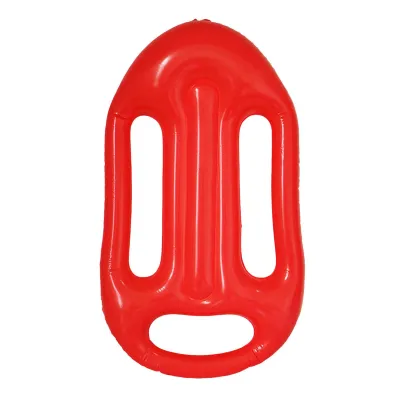
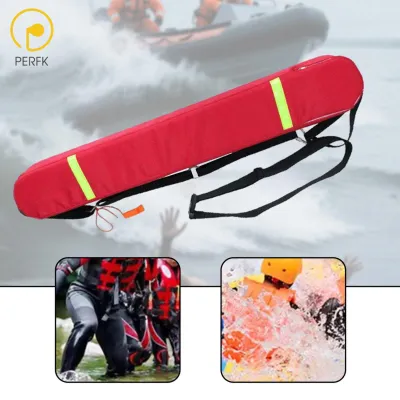
Prices are valid at publication and may change. Please refer to the product page for the latest price.
Understanding the Core Designs and Use Cases
Every lifeguard floater is engineered with a specific rescue philosophy in mind, balancing buoyancy, maneuverability, and ease of deployment. Understanding these fundamental design differences is the first step in choosing the correct equipment for your water safety needs.

Ring Buoy
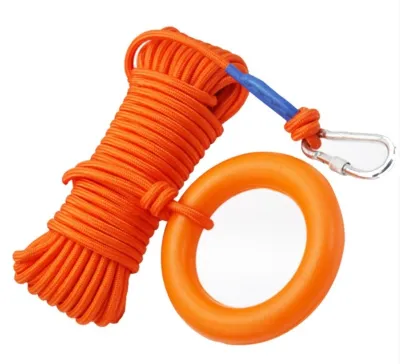
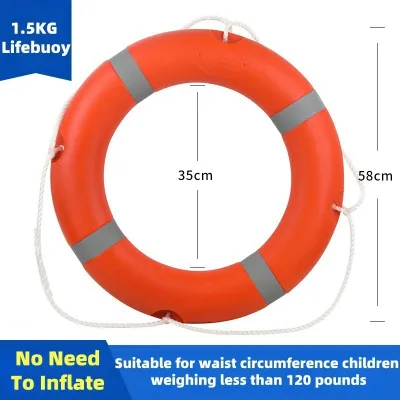
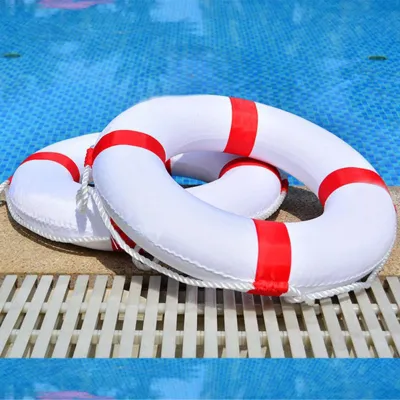
The ring buoy is a classic, rigid or semi-rigid circular flotation device wrapped with a perimeter grab-line. Typically constructed from solid foam or a hard plastic shell filled with buoyant material, it is designed to be thrown from a stable, dry position rather than carried during an active swim rescue.
You will commonly find ring buoys mounted on walls, posts, or brackets near swimming pools, public docks, and boat decks. Their primary purpose is to provide immediate, passive assistance to a conscious victim who is close enough to shore or a vessel to grab the ring or its attached throwing line.
However, the rigid circular shape makes the ring buoy highly impractical for active swimming rescues. It cannot be easily towed behind a swimming rescuer, nor can it be wrapped around an unconscious victim to keep their airway clear of the water.
Rescue Tube
The rescue tube is a long, flexible foam floater wrapped in a durable, waterproof skin, equipped with an adjustable shoulder harness and a heavy-duty tow line. This design is specifically engineered for active lifeguarding in controlled environments like swimming pools, water parks, and calm, shallow open-water zones.
Because of its flexible foam core, a lifeguard can bend the tube around a victim’s torso and secure it with a brass clip, creating a secure floating ring that keeps the victim’s head above water. This wrapping capability is highly effective for supporting both conscious and unconscious victims during transport.
While highly versatile in calm waters, the soft exterior of a rescue tube can degrade more quickly under intense tropical sun and constant chlorine exposure. It also lacks the hydrodynamic shape needed to easily slice through heavy surf or strong ocean currents.
Rescue Can
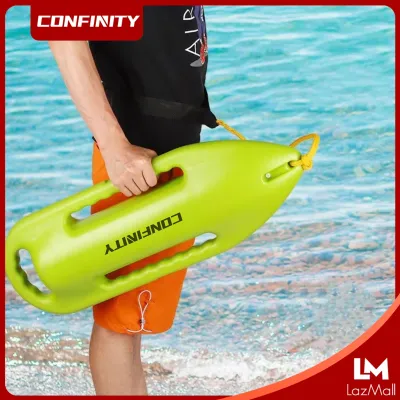
Often referred to as a torpedo buoy, the rescue can is a heavy-duty, rigid plastic flotation device featuring molded handgrips along its sides and a long tow line attached to a shoulder strap. This design is built specifically to withstand the harsh, dynamic conditions of open-water environments, such as surf beaches, lakes, and tidal zones.
The hard, hydrodynamic shell of the rescue can allows it to glide smoothly through waves and currents with minimal drag, making it the preferred tool for ocean lifeguards who must swim long distances. Its rigid handles provide multiple secure grip points for one or more victims to hold onto simultaneously during a rescue.
Despite its excellent performance in rough water, the rescue can cannot be wrapped around a victim like a flexible tube. This means the rescuer must rely on the victim’s ability to hold onto the device, or use specific towing techniques to support an unresponsive individual.
Key Comparison Dimensions for Water Rescue
To make an informed decision, you must evaluate how each lifeguard floater performs across several critical operational dimensions. These factors directly impact your physical exertion, rescue speed, and the safety of the victim.
Deployment and Handling
Deploying a lifeguard floater requires different levels of physical effort depending on the device’s design. A ring buoy requires minimal swimming preparation because it is thrown directly to the victim; however, executing an accurate throw requires practice and a clear line of sight. Rescue tubes and rescue cans are designed for active entry into the water. Carrying a rescue tube during a run and swim is relatively straightforward due to its lightweight, flexible nature, though the trailing line must be managed carefully to avoid tangling. A rescue can is slightly bulkier to carry on land but is exceptionally easy to launch into heavy surf, as its rigid body can be pushed through oncoming waves without catching water.
Victim Support and Securing
The way a device interacts with a victim is a crucial safety consideration. A rescue tube excels at securing a victim because it can be wrapped completely around their chest and clipped shut, allowing the lifeguard to swim hands-free while towing. This is particularly valuable when dealing with an unconscious or highly fatigued swimmer who cannot hold onto a device. In contrast, a rescue can requires the victim to actively grip the molded handles, which may be difficult for panicked or weak individuals. For unconscious victims, the rescuer must hold the victim onto the rescue can while swimming, which increases physical strain. A ring buoy offers the least support for securing, as the victim must simply hold onto the outer rope or slip their arms over the ring, making it unsuitable for unresponsive individuals.
Towing Efficiency
Towing resistance can quickly exhaust a rescuer, especially over long distances. The rescue can is the most hydrodynamic of the three, designed to slice through water with minimal drag, which is essential when swimming against strong currents or ocean swells. The rescue tube, while lightweight, creates more drag due to its flat, rectangular profile, making it less efficient for long-distance open-water swims. The ring buoy is not designed for towing; attempting to swim while pulling a ring buoy creates massive water resistance and is highly inefficient, which is why it is strictly reserved for throw-and-pull rescues from a fixed platform.
Storage and Durability
Environmental factors play a significant role in the lifespan of your water safety equipment. In tropical climates with high humidity and intense sunlight, hard plastic rescue cans offer exceptional durability, resisting UV degradation and physical impacts against rocks or sand. Rescue tubes, made of vinyl-coated foam, are more susceptible to punctures, tears, and gradual foam compression over time, especially when exposed to high levels of pool chlorine and direct sunlight. Ring buoys, depending on whether they are made of hard plastic or coated foam, fall in the middle; they are highly durable when mounted in protective housings but can degrade if left completely exposed to the elements on an open dock.
Matching the Floater to Your Skill Level and Environment
Selecting the right lifeguard floater is not just about the physical features of the device; it is about matching the equipment to the specific challenges of your venue and your level of training.
If you manage or patrol a standard lap pool, a community swimming pool, or a resort pool, the rescue tube is generally the most practical and widely mandated tool. Its ability to secure victims in calm water aligns perfectly with the typical rescue scenarios encountered in these facilities. For water parks with wave pools or lazy rivers, a combination of rescue tubes for active lifeguards and strategically placed ring buoys for rapid bystander response is often the most effective setup.
For open-water environments, such as public beaches, lake resorts, or coastal areas, the rescue can is the undisputed standard. The challenges of wind, waves, and long-distance swims require a rugged, hydrodynamic device that can assist multiple victims at once. Private docks, residential waterfronts, and boats, where professional lifeguards may not always be present, are best served by a high-visibility ring buoy equipped with a floating throw line, allowing anyone on land to quickly assist a struggling swimmer.
Regardless of your personal preference, you must always follow the specific equipment mandates of your certifying agency, such as the local Red Cross, or your facility’s standard operating procedures. Never substitute one device for another without formal authorization and proper training, as doing so can compromise safety protocols and liability coverage.
Before purchasing or deploying any lifeguard floater, use this verification checklist:
- Certification Alignment: Does the device match the specific rescue techniques taught in your certification course?
- Facility Regulations: Does your local health department or facility insurance policy require a specific type of flotation device?
- Environmental Suitability: Is the device material rated for your specific water conditions (e.g., UV-resistant plastic for outdoor ocean use versus chlorine-resistant coating for indoor pools)?
- Weight and Buoyancy Ratings: Does the device provide sufficient buoyancy to support the average weight of the patrons at your facility?
Inspection and Maintenance Checklist
Regular maintenance and inspection are critical to ensuring that your lifeguard floater performs reliably during an emergency. In tropical environments, heat, humidity, and salt water can accelerate the wear and tear on safety gear.
Perform a thorough visual and physical inspection of your equipment before every shift. Use the following checklist to identify potential points of failure:
- For Rescue Tubes: Check the vinyl coating for cracks, punctures, or peeling that could allow water to saturate the inner foam. Inspect the brass clip and ring for corrosion, and ensure the shoulder strap and tow line are securely stitched without fraying.
- For Rescue Cans: Inspect the hard plastic shell for hairline cracks, deep gouges, or leaks that could allow water to enter the hollow body. Check that the tow line is firmly attached to the internal securement point and that the shoulder strap is intact.
- For Ring Buoys: Examine the outer shell for cracks or soft spots. Inspect the perimeter grab-line to ensure it is tightly secured to the buoy and free of dry rot or fraying. Verify that the throwing line is neatly coiled and free of knots.
If you observe any structural compromise, faded safety colors that reduce visibility, or failing hardware, you must immediately remove the device from service. Do not attempt temporary repairs on compromised flotation equipment. Always consult the manufacturer’s specific care guidelines and replacement schedules to maintain compliance with safety standards.
Frequently Asked Questions (FAQ)
Can a standard pool ring buoy replace a professional rescue tube?
No, a standard pool ring buoy cannot replace a professional rescue tube for active lifeguarding duties. Ring buoys are designed strictly as passive throwing devices for conscious victims who can hold onto the ring while being pulled to safety. They cannot be wrapped around an unconscious victim, nor can they be easily towed during an active swimming rescue. Attempting to use a ring buoy during a swimming rescue increases drag and limits your ability to secure the victim. Always adhere to your facility’s safety protocols and use the specific equipment you were trained and certified to use.
How often should lifeguard flotation devices be inspected?
Lifeguard flotation devices should undergo a basic visual and functional inspection before every shift or daily use. This routine check ensures that straps, clips, lines, and the buoyant bodies of the devices are free from immediate defects that could fail during a rescue. In addition to daily checks, facilities should conduct and document formal monthly inspections. Always follow the manufacturer’s specific maintenance guidelines and local regulatory requirements to establish a compliant inspection schedule for your water safety equipment.
Community discussion
Share your experience or ask a question. Comments are reviewed before publication.