
To secure big game species in the deep waters of the Philippines, a “super strong” fishing line must offer more than just a high pound-test rating. It requires a balance of high tensile strength, excellent knot integrity, and reliable abrasion resistance to withstand sharp coral reefs, volcanic rocks, and the sheer power of pelagic predators. Anglers targeting species like Giant Trevally (talakitok), Yellowfin Tuna, and Marlin must look beyond marketing buzzwords and evaluate line materials, diameters, and system configurations to ensure their gear does not fail at the critical moment. Selecting the right line involves understanding how different materials behave under tension and matching your setup to the specific demands of tropical saltwater environments.
What "Super Strong" Actually Means for Big Game Fishing
When anglers search for a fishing line super strong enough to handle massive ocean predators, they often focus solely on the breaking strain printed on the box. However, raw tensile strength is only one component of a line’s true performance in real-world conditions. Tensile strength refers to the maximum static load a line can support before breaking under controlled, steady tension in a laboratory. In the dynamic environment of offshore fishing, lines are subjected to sudden, violent shocks, abrasive contact with boat hulls or reef structures, and intense friction through rod guides, all of which can cause a line to fail far below its rated limit.
Practical strength is a combination of knot strength, abrasion resistance, and shock absorption. A line with incredibly high tensile strength but poor knot security will fail at the connection point under a fraction of its rated load. Similarly, a line that cannot withstand the abrasive touch of a fish’s rough jaw or a nearby coral head will snap instantly during a fight. Therefore, evaluating a line’s strength requires looking at how it maintains its integrity under dynamic stress, knot compression, and environmental wear.
Products mentioned in this guide
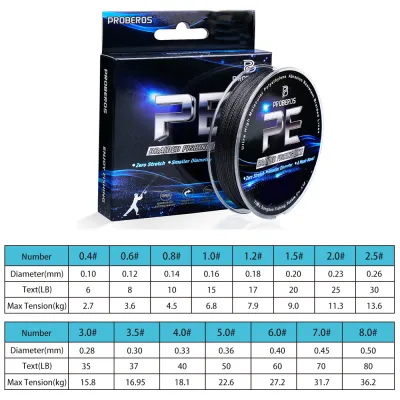
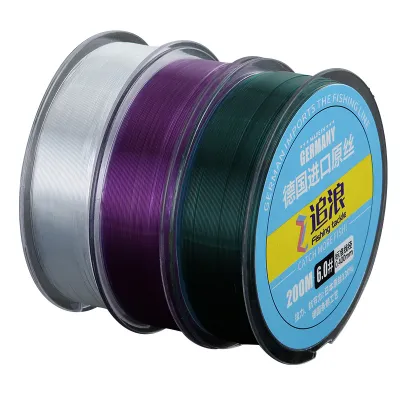
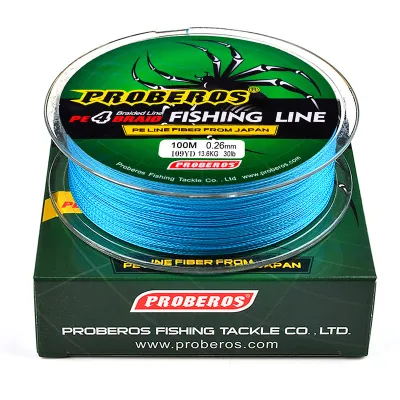
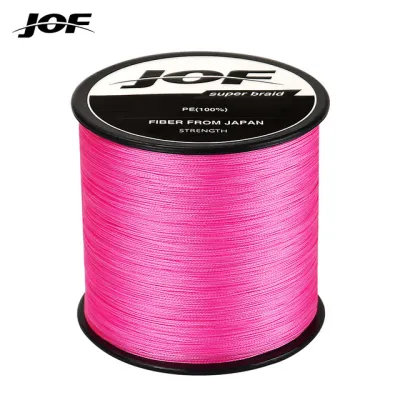
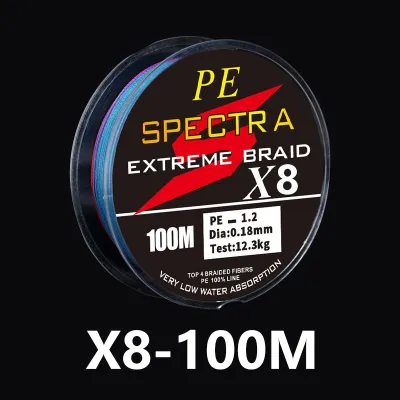
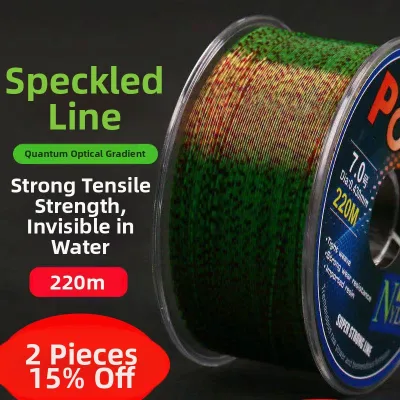
Prices are valid at publication and may change. Please refer to the product page for the latest price.
It is a common mistake to assume that spooling a reel with the highest possible pound-test is the best path to success. Excessively thick lines compromise casting distance, which is critical when trying to present topwater lures to skittish schools of tuna feeding on the surface. Furthermore, thicker lines reduce the overall line capacity of your reel spool. In big game fishing, having enough line capacity to survive a long, blistering run from a pelagic predator is often far more important than having an excessively heavy line that limits your spool to a short length.
A successful catch relies on a unified tackle system where the line, rod, and reel work in harmony. The reel’s drag system must be calibrated to slip smoothly before the line reaches its breaking point, while the rod’s parabolic bend acts as a massive spring to cushion sudden surges. By understanding this synergy, anglers can confidently use thinner, highly castable lines, relying on the rod’s flexibility and a properly set drag to tire out massive fish without risking a catastrophic line failure.
Comparing High-Strength Line Materials for Heavy-Duty Use
Selecting the right material is the first major decision when rigging up for big game fishing in the Philippines. The three primary options—braided line, monofilament, and fluorocarbon—each possess distinct physical properties that make them suitable for different parts of your fishing setup.

Braided Lines (PE)
Braided polyethylene (PE) lines represent the pinnacle of modern tensile strength relative to diameter. Constructed by weaving multiple microfibers together, braided line is incredibly thin, allowing anglers to pack hundreds of meters of high-pound-test line onto relatively small reels. This thin diameter also minimizes water resistance, enabling lures to sink faster and run deeper. Because braided line has virtually zero stretch, it provides unmatched sensitivity, allowing you to feel the slightest tap at great depths and execute instant, powerful hook sets. However, this lack of elasticity means braid cannot absorb sudden shocks, making a dedicated shock leader an absolute necessity to prevent snap-offs during aggressive strikes.
Heavy Monofilament
Nylon monofilament remains a classic choice for specific big game applications, particularly trolling and topwater casting. The defining characteristic of monofilament is its inherent elasticity, stretching up to 20% or 30% under load. This stretch acts as a built-in shock absorber, forgiving angler errors, cushioning violent head shakes, and preventing hooks from tearing out of a fish’s mouth during a high-speed run. Monofilament also possesses natural buoyancy, which helps keep topwater poppers and stickbaits performing correctly on the surface without pulling the nose of the lure downward.
Fluorocarbon
While fluorocarbon can be used as a mainline in lighter fishing styles, in big game scenarios, it serves almost exclusively as a heavy-duty leader material. Fluorocarbon has a refractive index very close to that of water, rendering it nearly invisible to sharp-eyed predators in clear tropical waters. More importantly, fluorocarbon is highly dense and hard-surfaced, offering superior abrasion resistance against abrasive fish teeth, gill plates, and sharp underwater structures. It also sinks quickly, making it excellent for presenting jigs or live bait deep in the water column.
Key Specifications to Verify Before Buying
Navigating the specifications of high-strength fishing lines requires a critical eye, as marketing claims on e-commerce platforms and packaging can sometimes be misleading. To ensure you are getting a genuinely reliable product, there are several key specifications you must verify before making a purchase.
First, always compare the listed pound-test (LB) against the actual diameter in millimeters. High-quality manufacturers produce thin lines with high breaking strains through advanced engineering and premium raw materials. If a product claims an exceptionally high pound-test at an impossibly thin diameter compared to established industry standards, it is highly likely an inflated or inaccurate specification. Reliable brands provide consistent, standardized diameter-to-strength ratios that you can verify across their product lines.
For braided lines, the weave quality and strand count are critical indicators of performance. Braids are typically categorized by the number of strands woven together, with 4-strand and 8-strand being the most common.
- 4-Strand Braids: These use thicker individual carriers, resulting in a rougher texture. While they do not cast as far, they offer excellent raw abrasion resistance against rocks and structures because the individual strands are thicker and harder to wear through.
- 8-Strand Braids: These use finer fibers to create a smoother, rounder profile. They cast much further and run quietly through rod guides, making them ideal for casting distance, though they can be more susceptible to fraying on sharp edges.
- Specialized Coatings: Look for lines that feature external coatings designed to seal the fibers, reduce water absorption, and minimize friction through the rod guides.
Knot strength is another vital factor to consider. A line is only as strong as its weakest knot, and some high-strength lines can lose up to 50% of their rated breaking strain when tied incorrectly. Always check the manufacturer’s recommended knots for the specific line type you choose. For joining heavy braid to leader materials, advanced friction knots like the FG knot or PR knot are essential, as standard knots can easily slip or cut through the slick coating of modern braided lines.
Matching Line Class to Your Target Species and Tackle
To prevent catastrophic gear failure, your fishing line must be carefully matched to the specifications of your rod and reel, as well as the specific big game species you plan to target in Philippine waters.
Your chosen line class must align with the rod power ratings and the maximum drag capabilities of your reel. Using a 100-pound braided line on a rod rated for a maximum of 50 pounds can result in a shattered rod blank if the drag is locked down during a fight. Conversely, using a line that is too light for the rod’s power rating prevents you from applying enough leverage to turn a powerful fish away from structure, rendering the rod’s lifting power useless.
Different big game species require specific line configurations based on their fighting style and habitat:
- Giant Trevally (Talakitok): Known for dirty fights close to shallow coral reefs. They require PE 6 to PE 10 braided mainlines (approximately 80 lb to 120 lb test) paired with a heavy 100 lb to 170 lb monofilament or fluorocarbon shock leader to survive intense reef runs.
- Yellowfin Tuna: Often targeted in deep, open water. They can be fished with PE 5 to PE 8 braid (60 lb to 100 lb) or 50 lb to 80 lb monofilament for trolling, allowing for long runs where reef contact is less of a concern.
- Marlin and Sailfish: Generally fished using standardized monofilament line classes (such as 30 lb, 50 lb, or 80 lb class) to comply with international angling rules, backed by heavy-duty wind-on leaders.
Calculating reel spool capacity is essential to ensure you do not get spooled by a powerful pelagic fish. Your reel should hold a minimum of 300 to 400 meters of your chosen line class. If using heavy monofilament, you will need a massive conventional reel to achieve this capacity. For spinning reels, spooling a backing of thin, high-strength braid topped with a shorter working section of monofilament or a long leader provides the ideal balance of capacity, casting distance, and shock absorption.
Building a Reliable Shortlist from Online and Local Shops
With numerous products available on online marketplaces and in local tackle shops, building a reliable shortlist requires a systematic approach to avoid counterfeit goods and misleading marketing.
Start by cross-referencing manufacturer specifications with independent angler forums, local fishing community feedback, and video reviews. Real-world testing by local anglers targeting hard-fighting species in tropical conditions provides the most accurate assessment of how a line performs. Pay close attention to reports of premature fraying, color bleeding, or unexpected breakages under load.
Be highly skeptical of product listings on online marketplaces that offer massive spools of “super strong” braid at prices that seem too good to be true, such as ₱150 for a 500-meter spool of 100 lb line. These products often suffer from poor quality control, inconsistent diameters, weak knot strength, and inaccurate pound-test ratings that fail under minimal pressure. Look for clear labeling of material origin, strand count, and precise diameter measurements.
To ensure authenticity and warranty support, always purchase your fishing line from authorized dealers, brand official stores, or reputable local tackle shops. Genuine high-performance lines are manufactured to strict tolerances, ensuring that a line rated for a specific breaking strain will consistently perform to its specifications when you hook the fish of a lifetime.
Frequently Asked Questions (FAQ)
How often should I replace my heavy-duty braided fishing line?
Braided fishing line is highly durable and can last for several seasons, but it is not immune to wear and tear. You should perform regular visual and tactile checks along the first few meters of the line, feeling for any fraying, fading, flat spots, or stiff sections that indicate damage. UV exposure, saltwater crystallization, and friction from rod guides gradually degrade the line’s fibers over time. To extend the lifespan of your braid, you can reverse the line on your spool—winding the worn top section to the bottom and bringing the unused bottom section to the top—or simply cut off the damaged top few meters after a heavy fishing trip.
Do I need a shock leader when using super strong braided mainlines?
Yes, a shock leader is absolutely essential when using braided mainline for big game fishing. Because braided line has virtually zero stretch, a sudden, violent strike from a large fish can easily snap the line or pull the hook out of the fish’s mouth. A heavy monofilament or fluorocarbon leader provides the necessary elasticity to absorb this initial shock. Additionally, braided line has poor abrasion resistance against sharp teeth, gill plates, and rocks; a thick leader protects the connection from being severed during the fight. Ensure you use a reliable connection knot, such as the FG knot or PR knot, to join the heavy braid to your leader securely.
Community discussion
Share your experience or ask a question. Comments are reviewed before publication.