
Selecting a super strong rubber band for advanced strength training in the Philippines requires a careful balance of material science, mechanical understanding, and environmental awareness. Advanced lifters demand resistance levels that challenge their muscular limits, meaning standard retail bands often fall short. To build serious strength, you need equipment that can handle extreme tension without snapping, especially when subjected to the tropical heat and humidity characteristic of the local climate.
Rather than relying on arbitrary color-coding or vague marketing claims, choosing the right heavy-duty resistance bands involves analyzing physical dimensions, material composition, and specific training applications. Whether you are looking to add accommodating resistance to your powerlifting routine or seeking a portable alternative to heavy iron, understanding how these tools function under high loads is essential. This guide breaks down the critical factors that define high-performance bands, helping you make an informed investment for your home gym or commercial fitness space.
Key Selection Criteria for Heavy-Duty Bands
Evaluating high-resistance bands begins with understanding how tension is generated. Unlike free weights, which provide a constant gravitational force, a super strong rubber band operates on a variable resistance curve. The resistance stated by manufacturers is typically a range, representing the tension at initial stretch up to the maximum recommended elongation, which is usually around 200% to 300% of the band’s resting length. For advanced lifters, this means a band rated for 45 kg might only offer 15 kg of resistance at the start of a movement, reaching its full rating only at peak extension. When selecting a band, you must calculate the distance you will stretch it during your exercises to ensure it delivers the necessary load where your biomechanics are strongest.
Products mentioned in this guide
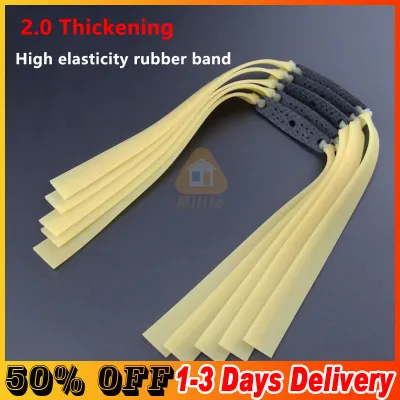
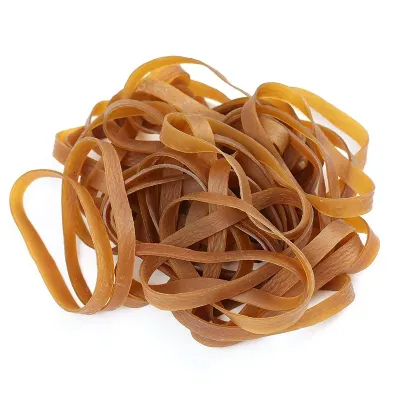

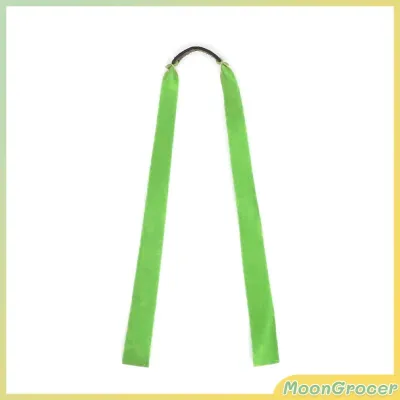
Prices are valid at publication and may change. Please refer to the product page for the latest price.
Material durability is the next critical factor, particularly when comparing natural latex to synthetic alternatives like Thermoplastic Elastomers (TPE). Natural latex is highly preferred for advanced strength training due to its superior elasticity, smooth tension progression, and resistance to deformation under heavy loads. Synthetic bands often suffer from tension loss, meaning they permanently stretch out and lose their resistance profile over time. Furthermore, high-quality latex bands are manufactured using a continuous layering process. This construction method involves wrapping thin sheets of latex around a core repeatedly, creating a dense, multi-layered structure. If a layered band suffers a minor surface nick, the outer layer may peel slightly, but the inner layers remain intact, preventing the sudden, explosive snaps common in single-extrusion synthetic bands.
Physical dimensions—specifically width and thickness—directly dictate a band’s maximum stretch limits and overall safety profile. Heavy-duty bands designed for advanced lifters generally feature a thickness of at least 4.5 mm, with widths ranging from 44 mm to over 64 mm for the highest resistance levels. A wider band distributes the tension across a larger surface area, which not only increases the resistance but also reduces the risk of localized stress concentration that leads to tearing. When evaluating bands, always verify these measurements rather than relying solely on weight ratings, as a thicker, wider band will inherently offer a more stable and durable resistance profile over years of intense training.
The tropical climate of the Philippines introduces unique challenges for rubber preservation. High ambient temperatures and elevated humidity levels can accelerate the degradation of natural latex, leading to premature drying, stickiness, or cracking. When purchasing bands locally, it is vital to select products that have been stored in climate-controlled environments and to avoid those that have sat in hot warehouses for extended periods. Prioritizing high-grade, multi-layered natural latex is the most effective way to ensure your equipment can withstand both your physical training demands and the local environmental conditions.
Matching Band Types to Advanced Training Goals
Advanced strength training utilizes different band designs depending on the movement pattern and training stimulus required. Continuous loop bands, also known as powerlifting bands, are the standard for compound movements. These flat, unbroken loops are typically 41 inches in length and are designed to be anchored to power racks, deadlift platforms, or heavy dumbbells. In powerlifting, they are used to apply accommodating resistance to squats, bench presses, and deadlifts, overloading the top portion of the lift where the lifter is mechanically strongest. They are also highly effective for providing assisted bodyweight movements, such as pull-ups and dips, allowing advanced athletes to perform high-volume training with controlled eccentric phases.

For isolation and hypertrophy-focused exercises, tube bands with handles and reinforced attachment points offer greater versatility. However, because advanced lifters generate significant force, standard tube bands with plastic clips are highly prone to failure. When selecting tube bands, look for models featuring heavy-duty steel carabiners, thick nylon webbing sleeves, and double-stitched connection points. The handles should feature a solid core and a textured grip to prevent slipping when hands become sweaty in humid training environments. Additionally, some advanced tube bands feature an internal safety cord—a high-strength nylon string inside the tube that prevents the band from over-stretching beyond its physical limit and protects the user if the rubber breaks.
Anchor point compatibility and clearance are crucial operational considerations for dynamic, full-range exercises. A super strong rubber band can exert hundreds of pounds of force, meaning any anchor point used must be absolutely immovable. If training at home, door anchors must only be placed on the hinge side of solid wood or metal door frames; hollow-core doors can easily splinter under the tension of a heavy band. For outdoor workouts or garage gyms, wrapping bands around concrete pillars, metal beams, or tree trunks is common, but these rough surfaces can quickly abrade the rubber. To prevent friction damage, always use a protective anchor strap or wrap a towel around the contact point before securing your band.
Safety Checks and Maintenance for High-Tension Use
Using high-resistance bands under heavy loads carries inherent risks, making a strict inspection routine non-negotiable. Before every workout, perform a thorough visual and tactile inspection of each band. Slowly stretch the band to about 50% of its length and run your fingers along the edges and flat surfaces, feeling for micro-tears, nicks, or rough patches. Look closely for any signs of discoloration, fading, or a powdery white residue, which are classic indicators of UV damage and dry rot. A band that exhibits any of these structural defects must be retired immediately; attempting to use a compromised band under high tension can result in severe facial, eye, or bodily injuries if it snaps.
Environmental management is key to extending the lifespan of your heavy-duty bands in tropical climates. Natural latex is highly sensitive to ultraviolet (UV) light, ozone, and extreme heat. Storing your bands in a hot car trunk, on a sunny balcony, or hanging them near a window will rapidly break down the rubber polymers, causing them to lose elasticity and become brittle. To maximize durability, store your bands in a cool, dry, and dark location, such as a breathable gym bag or a closed drawer. After intense, sweaty workouts, wipe the bands down with a damp cloth to remove sweat and body oils, which can also degrade the material over time, and allow them to air dry completely away from direct sunlight before storage.
Establishing clear stop-conditions and replacement triggers is essential for maintaining a safe training environment. A band should be replaced immediately if you observe any deep scratches, punctures, peeling layers, or if the rubber feels unusually stiff or sticky. Additionally, even without visible damage, bands that are subjected to frequent, heavy use should be replaced periodically—typically every 12 to 24 months depending on training volume—as the internal latex fibers gradually fatigue and lose their elastic memory. Never attempt to repair a damaged band by tying knots or using tape, as these modifications create severe stress concentration points that guarantee sudden failure under load.
Building a Progressive Overload Band Setup
Progressive overload is the foundation of strength development, and achieving it with resistance bands requires a strategic approach to stacking. Stacking involves using multiple bands simultaneously to create custom resistance levels that match your increasing strength. For example, rather than jumping from a single heavy band to an extra-heavy band—which can represent a massive, unmanageable leap in tension—you can stack a light band alongside your heavy band to add a precise, incremental load. This method allows for micro-loading, ensuring you can consistently challenge your muscles without compromising your lifting form or risking joint strain.
When investing in a heavy-duty band setup, verifying product labels and material claims is critical to avoiding low-quality counterfeits. Look for manufacturers that provide detailed specifications, including the exact physical dimensions, material composition (100% natural latex), and a clear resistance chart mapping tension to specific stretch percentages. Be cautious of generic listings on online marketplaces that promise extreme resistance levels at unrealistically low prices, as these are often made from cheap synthetic blends that degrade rapidly. Checking for warranty terms can also provide an indication of the manufacturer’s confidence in their product’s durability under high-tension use.
Deciding between purchasing a pre-configured bundle or individual bands in ₱ depends on your specific training goals and budget. For lifters who require a wide variety of resistance levels for different muscle groups—such as light bands for shoulder mobility and heavy bands for deadlifts—a complete bundle offers a comprehensive and cost-effective solution. However, if your primary goal is to add accommodating resistance to specific barbell lifts, purchasing pairs of identical individual bands is often the more practical route. Evaluate your current training frequency, the specific exercises in your program, and the local pricing options in ₱ to determine which configuration delivers the greatest long-term value for your strength journey.
Frequently Asked Questions (FAQ)
Can super strong rubber bands replace free weights for advanced lifters?
Super strong rubber bands are highly effective training tools, but they cannot completely replace free weights for advanced lifters due to the fundamental differences in resistance mechanics. Free weights provide a constant gravitational load throughout the entire range of motion, which is essential for building maximum strength at the bottom of lifts, such as the deep portion of a squat. Bands, conversely, feature a variable resistance curve where tension increases as the band stretches, meaning the load is lightest at the start of the movement. For optimal strength adaptations, advanced lifters should use bands as a supplement to free weights—using them to overload the lockout phase of lifts, improve explosive power, and provide joint-friendly hypertrophy volume.
How do I verify the actual resistance of a band during a workout?
To verify the actual resistance of a band without relying solely on manufacturer ratings, you can perform a simple calibration test at home using a standard digital luggage scale. Secure one end of the band to a sturdy anchor point at floor level, and attach the hook of the luggage scale to the other end. Pull the scale to the exact height or distance that corresponds to the peak extension of your exercise (for example, your shoulder height during an overhead press) and read the weight displayed on the scale. This measurement provides a highly accurate baseline of the actual tension in kilograms or pounds that your muscles must overcome at that specific point in the movement.
Community discussion
Share your experience or ask a question. Comments are reviewed before publication.