
Choosing the right football training cones in the Philippines requires balancing high visibility on tropical pitches, safety during high-speed contact, and durability against intense sun and sudden downpours. The ideal setup depends on your specific training goals—whether you are setting up rapid footwork grids, practicing close-control dribbling, or marking out full-sized tactical boundaries. By focusing on flexible materials that bounce back when stepped on and selecting high-contrast colors that stand out against both natural grass and artificial turf, coaches and players can ensure productive, safe, and long-lasting training sessions.
Selecting the right gear is not just about finding the cheapest option; it is about understanding how the physical design of a cone affects player safety and drill execution. In sports like football, where footwork is fast and physical contact with training equipment is frequent, the wrong type of cone can lead to interrupted sessions or even preventable injuries. Evaluating cones based on their material composition, height, and color contrast ensures that your training sessions run smoothly, allowing players to focus entirely on developing their skills.
Core Criteria for Choosing Football Training Cones
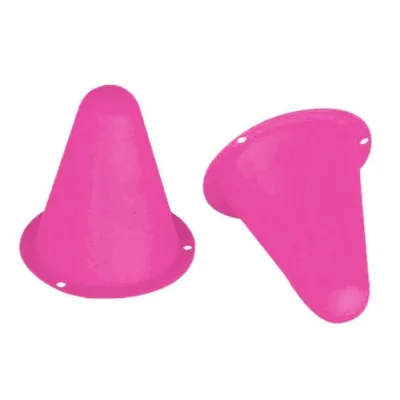
When selecting training cones, visibility is your first line of defense against disorganized drills. Tropical pitches in the Philippines present a wide variety of playing surfaces, from lush green natural grass fields and sandy dirt pitches to modern artificial turf and concrete barangay courts. To maintain focus, cones must offer sharp contrast against these backgrounds. Neon orange, vibrant yellow, and bright pink are the industry standards because they remain highly visible under the glaring midday sun, during overcast afternoon downpours, or under dim floodlights. Avoid dark greens, blues, or dull reds, as these colors easily blend into the grass or shadows, causing players to lose track of their boundaries.
Products mentioned in this guide

Prices are valid at publication and may change. Please refer to the product page for the latest price.
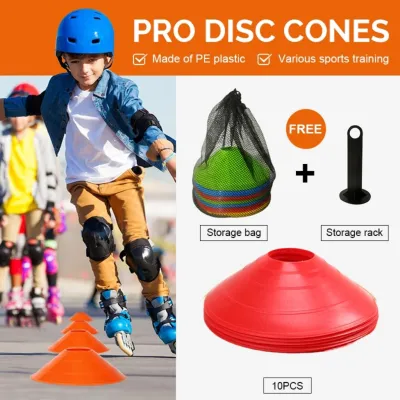
Profile height is another critical factor that directly influences safety and drill variety. Low-profile disc cones, which typically stand about two inches high, are excellent for high-speed footwork because they minimize tripping hazards. If a player steps on a disc cone, their foot can easily slide off without twisting an ankle. Conversely, tall marker cones, ranging from six to twelve inches, serve as prominent physical obstacles. These taller cones are ideal for simulating defenders, forcing players to make wider, more deliberate cuts, and marking clear boundaries that can be seen from across a large field.
Material flexibility and memory retention separate professional-grade training cones from cheap, brittle alternatives. High-intensity football drills involve constant movement, and cones will inevitably be stepped on or kicked by players wearing molded cleats. Rigid plastic cones will crack or shatter under this impact, creating sharp, jagged edges that pose a serious puncture hazard. Look for cones made from soft, low-density polyethylene (LDPE) or thermoplastic elastomer (TPE). These materials possess excellent memory retention, meaning they compress flat under weight and immediately pop back into their original shape.
Matching Cone Styles to Specific Football Drills
A successful football training session relies on using the right tool for the right job. Using a single style of cone for every exercise limits the variety and effectiveness of your drills. For example, trying to use tall, rigid cones for rapid agility ladders can lead to frequent trips, while using tiny disc cones to mark a full-sized pitch boundary makes it difficult for players on the opposite side of the field to see the lines.

Understanding how different cone profiles serve distinct coaching needs allows you to structure your sessions more efficiently. While specialized single-style packs are excellent for coaches who need to run specific, large-scale drills, purchasing mixed sets that combine low-profile discs with taller markers offers the greatest versatility. A mixed set allows you to set up complex, multi-stage drills where players transition from tight footwork grids into wide dribbling channels and final shooting zones.
Agility, Speed, and Footwork Drills
For agility, speed, and footwork exercises—often referred to as cone training—low-profile disc cones are the undisputed choice. These drills require players to perform rapid lateral movements, quick directional changes, and high-frequency footwork patterns. Because the player’s feet move incredibly fast in close proximity to the markers, the risk of stepping on a cone is high. The low, sloped profile of a disc cone ensures that if a player’s cleat makes contact, the cone simply flattens, allowing the player to maintain balance and continue the drill without risking a rolled ankle.
When setting up agility grids, slalom courses, or ladder-style drills, the physical footprint of the cone is highly important. Standard disc cones usually feature a base diameter of seven to eight inches, which provides a clear visual target without cluttering the training space. This compact size allows coaches to set up tight, precise grids that challenge a player’s reaction time and coordination. Using highly contrasting colors within the same grid can also help players quickly distinguish between different movement cues, such as using yellow cones for forward sprints and orange cones for lateral shuffles.
Dribbling and Ball Control Exercises
Dribbling and ball control drills require a delicate balance between clear visual guidance and uninterrupted ball movement. When players weave through a sequence of cones, the ball will frequently make contact with the obstacles. If a cone has a wide, rigid base or a hollow design with a steep, raised lip, a rolling football can easily get trapped underneath or bounce off at an unpredictable angle, disrupting the rhythm of the exercise. Selecting cones with a smooth, aerodynamic slope ensures that minor contact with the ball does not stop its momentum, allowing the player to recover and continue dribbling.
Using varied cone sizes within a single dribbling drill is an excellent way to simulate real-match scenarios and teach close-control techniques. For instance, you can set up a narrow channel using low-profile disc cones to practice tight, rapid touches with the inside and outside of the foot. At the end of the channel, placing a taller marker cone forces the player to execute a sharp, wide cut, simulating the action of beating a defender. By adjusting the spacing and height of the cones, coaches can gradually increase the difficulty, training players to keep their heads up and maintain control under pressure.
Field Marking and Tactical Boundary Setting
When it comes to marking out temporary pitches, small-sided game grids, penalty boxes, or passing lanes, visibility from a distance is the primary requirement. Low-profile disc cones are easily obscured by tall grass, uneven ground, or the natural movement of players on the field. For these tactical boundary-setting tasks, taller marker cones standing nine to twelve inches high are far more effective. Their height ensures they remain visible to players sprinting at full speed from the opposite side of the pitch, helping them maintain spatial awareness and stay within the designated playing area.
Wind and weather resistance are major considerations for outdoor field marking, especially on open, wind-swept pitches in the Philippines during the monsoon season. Lightweight disc cones can easily be blown away by a strong gust of wind, forcing coaches to constantly pause the session to reposition them. Taller marker cones with a wider, heavier base offer much better stability. Some advanced marker cones feature wind-resistant designs, such as hollow centers or strategically placed wind-holes that allow air to pass through without tipping the cone over. Alternatively, using cones with weighted rubber bases ensures they stay firmly anchored to the ground, even during intense wind and rain.
Durability and Weather Resistance Checks
The tropical climate of the Philippines presents a harsh environment for sports equipment, making durability and weather resistance key factors in your purchasing decision. Constant exposure to intense ultraviolet (UV) rays can rapidly degrade standard plastics, causing them to fade, lose their flexibility, and become highly brittle over time. When evaluating training cones, look for products that explicitly specify UV-resistant stabilizers in their material formulation. This ensures that the cones can withstand hours of exposure on open outdoor pitches without cracking or crumbling after just a few months of use.
Wet weather and muddy pitches are another common reality for local football players. When flat-bottomed disc cones are pressed into wet grass or mud, they can create a strong suction effect against the ground. This makes them difficult to pick up during teardown and can cause the cones to tear if pulled too forcefully. To prevent this, look for cones designed with small raised ridges on the underside or drainage holes near the top. These design features prevent water from pooling underneath, break the suction effect, and allow for quick, hassle-free cleanup even after a heavy downpour.
Finally, inspect the thickness and edge finishing of the plastic or rubber material. Ultra-thin cones may feel lightweight and cheap, but they tear easily along the rims after being stepped on a few times by players wearing metal or molded cleats. Cones with reinforced, rounded edges are far more durable and resistant to tearing. A thicker rim also ensures that the cone maintains its circular shape over time, preventing it from warping or developing sharp, jagged edges that could cause cuts or scratches during ground-based drills or physical contact.
Purchasing Considerations and Value Assessment
When browsing online sports retailers or local equipment shops, it is important to evaluate the overall value of a product listing rather than just looking at the price tag. Many sellers offer bulk packs of 50 or more disc cones, which are highly cost-effective for team coaches or schools. However, for individual players or small training groups, a smaller, specialized set that includes useful accessories may offer better value. Look for listings that include a convenient carrying strap, a plastic or metal carrier pole, or a mesh storage bag, as these accessories make transporting and organizing your cones significantly easier.
Always verify the actual contents and specifications of a multi-pack listing before making a purchase. Some online product descriptions can be misleading, displaying a complete training kit with ladders and hurdles in the main image while the actual purchase option only includes a basic set of cones. Carefully read the product details to confirm the exact count of cones, their dimensions (height and base diameter), and the quality of any included accessories. Checking customer feedback and photos can also provide valuable insights into the actual flexibility and color accuracy of the cones.
In the Philippine market, pricing for training cones varies depending on the quantity, material quality, and included accessories. A basic set of 10 to 20 low-profile disc cones typically ranges from ₱150 to ₱400, making it an affordable option for casual backyard practice. Larger bulk sets of 50 disc cones with a carrying holder generally cost between ₱600 and ₱1,500. Premium options, such as heavy-duty wind-resistant marker cones or sets made from highly durable, eco-friendly recycled materials, can range from ₱2,000 to ₱3,500. Investing in these higher-end options is highly recommended for professional academies, schools, or clubs where the equipment will face daily, heavy use under demanding outdoor conditions.
Frequently Asked Questions (FAQ)
Can I use standard traffic cones for football training?
Using standard, rigid traffic cones for active football drills is highly discouraged due to the significant risk of injury. Traffic cones are designed to be heavy, rigid, and highly visible to direct vehicular traffic, meaning they do not compress or flex when stepped on. If a player collides with or trips over a rigid traffic cone at high speed, it can cause severe ankle sprains, bruises, or dangerous falls onto the hard ground. Standard traffic cones should only be used for static, off-field purposes, such as marking out the general boundaries of a pitch, serving as temporary goalposts for casual play, or organizing training equipment away from the active playing zone.
How do I clean and store my training cones to extend their lifespan?
To maximize the lifespan of your training cones, rinse them with clean water after every session on muddy or wet pitches to remove dirt, grass, and abrasive sand. Allow the cones to air dry completely in a shaded area before stacking them, as storing wet cones can lead to mold growth, unpleasant odors, and material degradation. Stack them neatly on a carrier pole, strap, or inside a mesh bag to prevent them from warping or losing their shape. Avoid leaving your cones in direct sunlight inside a hot car trunk for extended periods, as extreme heat can soften the plastic and cause permanent deformation. If the cones become stuck together after being stacked wet, gently twist them apart rather than pulling forcefully to avoid tearing the rims.
Community discussion
Share your experience or ask a question. Comments are reviewed before publication.