
Choosing the right fishing nets depends primarily on your fishing platform, as the physical constraints of a shoreline and a boat demand entirely different gear designs. For shore fishing, you need highly portable, manually operated nets like cast nets for bait gathering or long-handled landing nets to secure catches from elevated piers and rocky banks. Conversely, boat fishing allows you to deploy larger, heavier, or passive net systems—such as gill nets, traps, or small trawl setups—that leverage the vessel’s mobility, storage space, and access to deeper water columns. Matching your net to your specific environment ensures you can retrieve your catch efficiently without damaging your gear, risking your safety, or violating local fisheries regulations.
Core Environmental Differences That Dictate Net Choice
The transition from land-based angling to boat-based fishing introduces dramatic changes in water depth, current dynamics, and underwater topography. When fishing from the shore, you are typically operating in shallow, high-energy surf zones or near rocky structures where snagging is a constant hazard. The bottom structure near the coast is often cluttered with rocks, coral fragments, or debris, which can easily tear delicate netting. In contrast, boat fishing opens up deeper water columns where the bottom structure may be hundreds of meters below, reducing the risk of snagging but requiring nets that can operate effectively in strong, multi-layered currents.
Space constraints also dictate how you handle your gear. On a crowded shoreline, sandy beach, or narrow concrete pier, your physical range of motion is limited by nearby obstacles, vegetation, and other anglers. Throwing a cast net or extending a long landing pole requires clear overhead and lateral space. On a boat, while you are free from shoreline obstacles, you must contend with a confined deck, wet and slippery surfaces, and the constant motion of the vessel. A large, sprawling net can quickly become a tripping hazard or tangle with onboard equipment, meaning storage and deployment logistics must be carefully managed.
Products mentioned in this guide
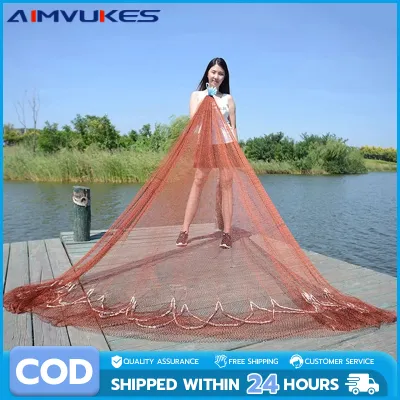
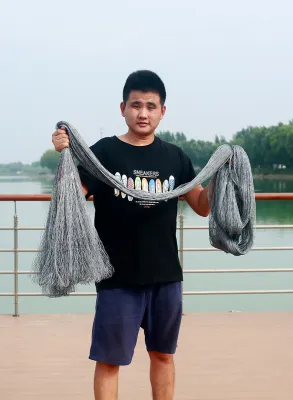
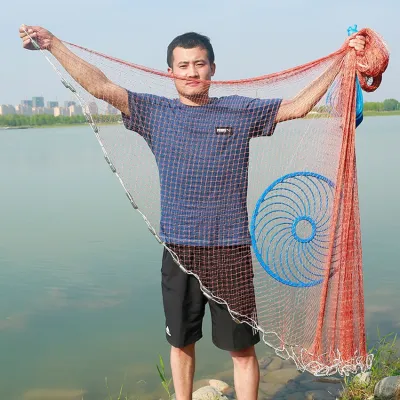
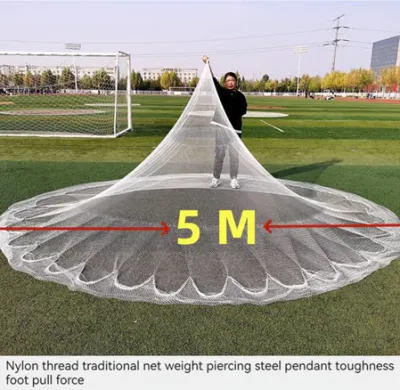
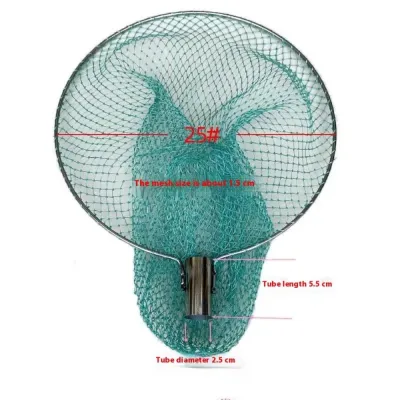
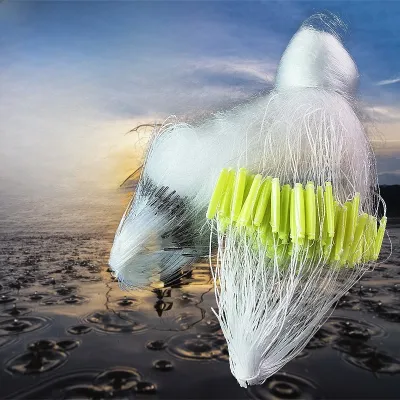
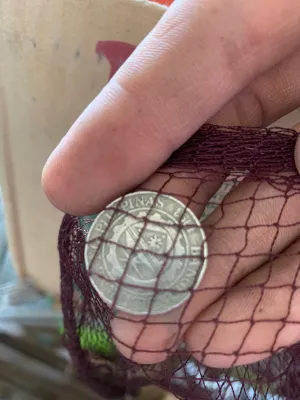
Prices are valid at publication and may change. Please refer to the product page for the latest price.
Finally, target species behavior varies significantly between these two environments. Coastal waters are home to smaller baitfish, crabs, and predatory species that hunt in the shallows, requiring fine-mesh nets that can be deployed quickly in response to visible schools. Deeper offshore waters host larger, fast-moving pelagic fish or bottom-dwelling species that require robust, deep-water nets capable of filtering large volumes of water or holding heavy catches without breaking.
Fishing Net Types Optimized for Shore Fishing
Shore-based angling requires lightweight, highly portable fishing nets that you can carry over long distances along beaches, rocky paths, or piers. Because you cannot rely on a motorized vessel to drag or lift heavy gear, these nets must be designed for manual operation, quick deployment, and easy transport.

When selecting a shore net, the primary considerations are the physical reach of the tool and the size of the mesh. Wading anglers and those fishing from low sandy banks need nets that can be operated with one hand while managing a rod, whereas pier and rock anglers require specialized extension handles to bridge the gap between their elevated standing position and the water’s surface.
Cast Nets for Shallow and Surf Zones
Cast nets are circular nets with weighted edges designed to be thrown by hand so they open fully in the air and sink rapidly to trap baitfish or schooling species underneath. For shore fishing in shallow sandy flats or gentle surf zones, a cast net is highly effective for gathering live bait like sardines (tamban) or silversides. The ideal radius for a beginner shore angler typically ranges from 1.2 to 1.8 meters (4 to 6 feet), which is manageable to throw without touching the ground or getting tangled in beach debris.
Throwing a cast net from the shoreline requires a clear, unobstructed area of at least three to four meters around you to swing the net safely. If you are standing on wet sand or wading in the surf, you must also account for the force of incoming waves, which can sweep your legs or pull the weighted net prematurely.
The weight distribution along the lead line is critical in surf conditions. A net that is too light will be swept away by the current before it reaches the seabed, allowing baitfish to escape. For shallow coastal waters, look for a weight ratio of approximately 500 to 750 grams of lead per foot of net radius, and verify that the mesh size is small enough—typically 6 to 12 millimeters—to prevent small baitfish from gilling themselves in the net.
Landing Nets for Pier and Rock Anglers
For hook-and-line anglers fishing from elevated structures like concrete piers, bridges, or steep rocky ledges, a landing net is indispensable for safely bringing a hooked fish out of the water. Attempting to lift a heavy fish directly by the line often results in a broken leader or a lost catch. Pier anglers require telescopic or modular handles that can extend from 3 to 6 meters to reach the water level, even during low tide.
When fishing from low rock platforms, a shorter, sturdier handle of 1 to 2 meters is often preferred, as it offers better leverage and control in turbulent whitewater. The hoop of the landing net should be wide and teardrop-shaped to accommodate the length of your target species, with a deep bag that prevents the fish from flopping out.
If you practice catch-and-release, the material of the mesh is highly important. Coarse nylon nets can scrape away a fish’s protective slime coat and damage its scales, increasing the risk of infection. Opt for knotless nylon, rubber-coated mesh, or solid silicone baskets, which are much gentler on the fish’s skin and prevent hooks from becoming hopelessly tangled in the fibers.
Fishing Net Types Optimized for Boat Fishing
Boat-based fishing allows you to utilize larger, heavier, and more specialized fishing nets that would be impossible to transport or deploy from the shore. Because the vessel provides both a stable platform and motorized propulsion, you can use active nets that are towed through the water or passive nets that are set at great depths and retrieved hours later.
However, operating nets from a boat requires careful planning regarding deck space, weight distribution, and vessel safety. A wet, heavy net can easily destabilize a small outrigger boat (bangka) if not loaded correctly, and loose netting on deck poses a severe entanglement hazard for the crew.
Trawl and Seine Nets for Open Water
Trawl and seine nets are active fishing nets designed to capture schooling fish in open water by either dragging the net behind a moving vessel (trawling) or encircling a school of fish and pulling the bottom closed (purse seining). These methods require a boat with sufficient engine power to overcome the drag of the net through the water, as well as mechanical winches or multiple crew members to haul the heavy, wet gear back on board.
These nets are highly effective in open, deep waters with sandy or muddy bottoms where there are no underwater obstructions to snag the net. Typical target species include mackerel, round scad (galunggong), and squid.
When deploying active nets from a boat, the primary safety concern is propeller entanglement. If a net or its towing lines drift too close to the stern, they can quickly wrap around the propeller shaft, disabling the vessel and creating a highly dangerous situation in rough seas. Anglers and commercial operators must maintain precise vessel maneuvering, monitor wind and current directions, and ensure all lines are kept taut and clear of the motor at all times.
Gill Nets and Traps for Deep or Drifting Setups
Gill nets and traps are passive fishing systems that are set in a specific location and left to fish on their own. A gill net is a vertical wall of fine monofilament netting suspended in the water column by floats at the top and weights at the bottom. Fish attempting to swim through the net are caught by their gills when they try to back out. Traps, such as wire or bamboo pots, guide fish or crabs through a one-way entrance into an enclosure from which they cannot escape.
Setting these systems from a boat requires careful assessment of water depth and current strength. If the current is too strong, it can collapse a gill net horizontally or drag a heavy trap far from its coordinates.
To keep a gill net standing vertically in deep water, you must balance the buoyancy of the float line with the weight of the lead line. If the net is too buoyant, it will drift away; if it is too heavy, it will sink to the bottom and snag on rocks or coral. Passive nets must be checked frequently—ideally every few hours—to retrieve the catch before it spoils in warm tropical waters, and to prevent bycatch of non-target species or the loss of the net, which can lead to “ghost fishing” where abandoned gear continues to kill marine life indefinitely.
Key Selection Criteria for Your Specific Scenario
To choose the right net for your specific fishing conditions, you must evaluate three primary technical specifications: mesh size, material thickness, and weight-to-buoyancy ratios.
Mesh size is the most critical factor for both legal compliance and target efficiency. The mesh must be small enough to retain your target species but large enough to allow juvenile fish to escape. In the Philippines, municipal ordinances and national laws set strict minimum mesh sizes for various types of fishing nets to protect juvenile populations. Always measure the stretched mesh size—the distance between two opposite knots when the mesh is pulled tight—and verify it against local regulations before heading out.
The material and twine thickness of the net determine its durability and visibility in the water. Monofilament nylon is highly transparent, making it excellent for gill nets and cast nets in clear water because fish cannot easily see it. However, monofilament is susceptible to abrasion from rocks and sharp teeth. Multifilament nylon (woven thread) is much stronger and more visible, making it suitable for landing nets, seine nets, and heavy-duty traps where strength is more important than stealth.
Finally, you must match the weight and buoyancy of your net to your target depth and current conditions. For fast-sinking cast nets or deep-water gill nets, heavier lead lines are required to overcome water resistance. For surface-dwelling species, ensure the float line has sufficient buoyancy to keep the top of the net at the surface even when subjected to tidal currents.
Cross-Scenario Compatibility: Can One Net Cover Both?
For budget-conscious anglers, purchasing multiple specialized nets may not be practical. While some nets are highly specialized, certain versatile options can transition between shore and boat environments with minor compromises.
A medium-radius cast net (around 1.5 meters or 5 feet) with a moderate weight distribution is one of the most adaptable tools. You can easily throw it from a sandy beach, a low pier, or the flat bow of a small boat to gather bait. Similarly, a telescopic landing net with a high-quality rubber-coated mesh can be collapsed for easy storage on a boat deck, yet extended to its full length when fishing from a high concrete pier or rocky shoreline.
However, using a shore-optimized net from a boat, or vice versa, always involves trade-offs. A long-handled pier landing net can be awkward and dangerous to swing on a small, crowded boat deck, potentially striking other passengers or tangling with rigging. Conversely, a short-handled boat landing net will leave you completely unable to reach the water from a high pier, forcing you to risk breaking your line to lift a fish.
To decide whether you need one hybrid net or two specialized nets, use this simple checklist:
- Do you fish from structures higher than two meters above the water more than 30% of the time? If yes, you need a dedicated long-handled or drop net for the shore.
- Is your boat deck smaller than four meters in length? If yes, avoid long-handled or bulky nets and opt for compact, folding, or telescopic models.
- Are your target species in both environments similar in size? If you target small baitfish from the shore but large pelagic fish from a boat, a single net cannot cover both; you must invest in two specialized nets to avoid losing your catch or damaging your gear.
Legal, Safety, and Maintenance Considerations
Operating fishing nets in the Philippines requires strict adherence to national and local environmental laws. Under the Philippine Fisheries Code (Republic Act 8550, as amended by RA 10654), the use of active gear in municipal waters (within 15 kilometers of the shoreline) is generally restricted or prohibited for commercial vessels, and specific minimum mesh sizes are mandated to prevent overfishing. Always consult your local Municipal Agriculture Office or the Bureau of Fisheries and Aquatic Resources (BFAR) to verify which net types, mesh sizes, and fishing zones are permitted in your area.
Safety must always be your top priority when handling nets. When throwing a cast net from the shore, ensure no other swimmers, waders, or anglers are within your throwing radius, as the heavy lead weights can cause serious injury if they strike someone. On a boat, keep the deck clear of loose netting, ropes, and weights. When hauling a heavy, wet net, stand with a wide, stable stance, wear non-slip footwear, and never wrap net lines around your hands or wrists, as a sudden swell or a large fish surge could pull you overboard.
To maximize the lifespan of your fishing nets, proper maintenance is essential, especially in hot, humid tropical climates. After every trip, thoroughly rinse your net with clean fresh water to remove salt, sand, slime, and organic debris. Salt crystals can dry and cut into synthetic fibers, while organic matter will rot and weaken the mesh. Always dry your nets in a shaded, well-ventilated area; direct sunlight and ultraviolet (UV) radiation rapidly degrade nylon and monofilament, making them brittle and prone to tearing. Once dry, inspect the net for small tears or loose knots, and store it in a cool, dry place away from rodents that might chew through the fibers.
Frequently Asked Questions (FAQ)
Do I need a special permit to use a cast net in the Philippines?
Recreational anglers using a small cast net solely to gather bait for personal hook-and-line fishing typically do not require a commercial permit. However, municipal governments govern their own local waters and may have specific ordinances restricting net use in marine protected areas or sanctuaries. Always check with the local municipal hall or barangay fisheries committee before casting.
How do I repair a small tear in my fishing net while on the water?
For a quick on-the-water fix, keep a plastic net needle pre-wound with matching nylon twine in your tackle box. Tie off the broken strand at a secure knot above the tear, weave the needle through the broken mesh squares using a sheet bend knot to recreate the grid pattern, and tie it off securely at the opposite end. If the tear spans more than three or four mesh squares, wait until you return to shore to perform a proper, permanent repair.
What is the best way to store a wet fishing net on a small boat?
Keep wet nets in a dedicated, heavy-duty plastic bucket or a ventilated mesh gear bag placed in a secure corner of the deck. This prevents the wet net from sliding around, tangling with rods, or creating a tripping hazard for the crew. Never leave a wet net bunched up in a closed, unventilated compartment or under direct tropical sunlight, as the trapped heat and moisture will rapidly degrade the synthetic fibers and promote mildew.
Community discussion
Share your experience or ask a question. Comments are reviewed before publication.