
Finding the right shoulder support for men in the Philippines requires balancing physical demands, recovery goals, and the realities of a hot, humid climate. Whether you are recovering from a basketball injury, managing discomfort from long hours at a desk, or seeking extra stability during heavy gym sessions, a shoulder brace can provide targeted compression and structural cues. However, a single design cannot address every scenario. Selecting the ideal support involves evaluating the brace’s material, its level of restriction, and how well it manages sweat during daily activities or intense workouts.
Identifying Your Primary Shoulder Support Need
To choose the correct shoulder support, you must first pinpoint exactly why you need it. Men’s shoulder supports generally fall into three functional categories: proactive sports support, post-workout recovery, and chronic daily discomfort management. Proactive sports support is designed for active use during high-movement activities like basketball, badminton, or weightlifting. These braces prioritize mobility and dynamic compression, helping to keep the joint warm and stable without severely limiting your range of motion.
Post-workout recovery supports, on the other hand, are typically worn after physical exertion to help manage mild swelling and localized soreness. These often feature thicker materials or integrated pockets designed to hold hot or cold gel packs, facilitating targeted thermal therapy.
Products mentioned in this guide
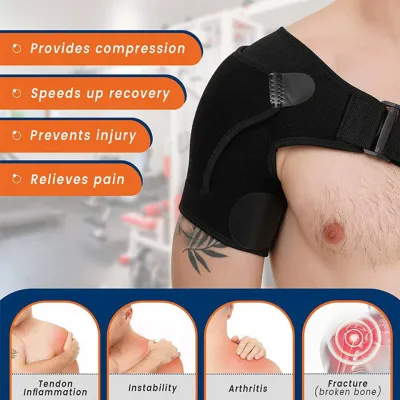
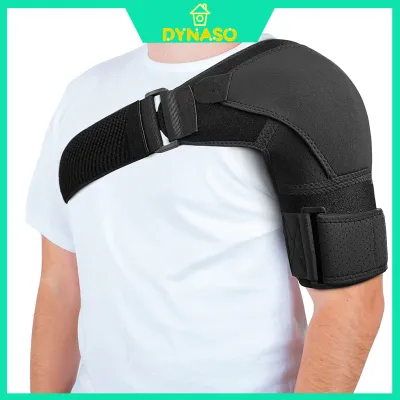
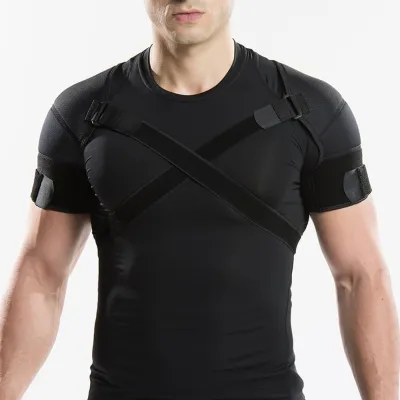
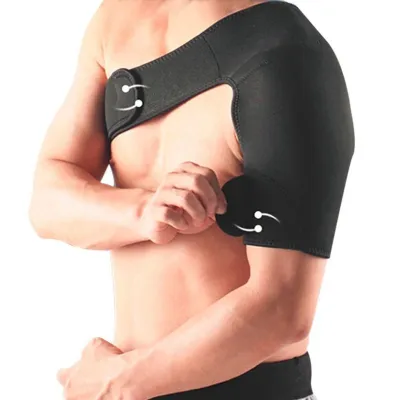
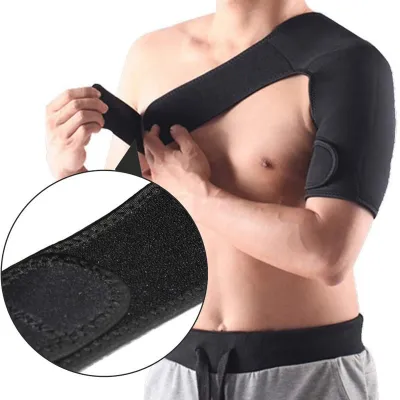
Prices are valid at publication and may change. Please refer to the product page for the latest price.
For chronic daily discomfort—such as stiffness from prolonged desk work or repetitive overhead lifting—the focus shifts to gentle alignment cues and long-term wearability. These supports are designed to be low-profile, fitting discreetly under standard clothing like office barongs or casual t-shirts while providing light compression to reduce fatigue.
While self-selection is common for mild soreness, you must recognize when to stop and consult a healthcare professional. If you experience sharp, shooting pain, persistent numbness or tingling down your arm, visible joint deformity, or a sudden loss of motor control and range of motion, do not attempt to self-treat with a retail brace. These are clear signals of potentially severe injuries, such as dislocations, rotator cuff tears, or nerve impingement, which require immediate medical evaluation.
Additionally, the local environment plays a critical role in your selection. The tropical climate of the Philippines, characterized by high temperatures and intense humidity, accelerates sweat production. Wearing a thick, non-breathable brace during a commute on public transit or during an outdoor game can quickly lead to heat retention, skin chafing, and sweat rash. Therefore, matching the intensity of your activity and the local weather to the brace’s material is essential for maintaining skin health and ensuring you can wear the support long enough to experience its benefits.
Comparing Common Shoulder Support Types
Understanding the structural differences between shoulder supports allows you to match a specific design to your daily routine and physical needs. Manufacturers design braces with varying levels of restriction, compression, and thermal properties.

Compression Sleeves: These are lightweight, highly elastic pull-on sleeves that offer mild to moderate compression. They are highly suitable for active sports because they prioritize maximum mobility and efficient sweat management. When shopping, check the product labels for multi-directional stretch fabrics and moisture-wicking properties. These sleeves work by enhancing proprioception—your body’s awareness of joint positioning—which can help you maintain proper form during overhead movements.
Neoprene Wraps and Thermal Braces: Constructed from thicker, synthetic rubber, neoprene wraps provide robust structural support and excellent heat retention. This makes them highly effective for post-workout recovery or soothing stiff joints, as the retained body heat helps promote local blood circulation. However, because neoprene is naturally insulating, you must verify the material’s thickness and look for perforated or breathable variations. In tropical climates, standard solid neoprene can trap sweat against the skin, making ventilated options highly preferable for extended wear.
Posture Correctors and Clavicle Straps: These supports feature a figure-eight design that wraps around both shoulders and the upper back. Instead of restricting shoulder joint movement directly, they provide gentle physical cues to prevent slouching and rounded shoulders. They are ideal for men who spend long hours sitting at office desks or driving. When evaluating these, check the adjustable strap limits to ensure they can be tightened comfortably without pinching the armpits, and verify that the straps feature thick, breathable padding to prevent friction against your clothes or skin.
Immobilizers and Slings: These are highly restrictive supports designed to keep the arm and shoulder completely still. They are typically used following acute injuries, subluxations, or surgical procedures. Because immobilizing a joint can lead to muscle stiffness and atrophy if done incorrectly, these supports carry strict boundaries for use. You must only use immobilizers and slings under the direct guidance of a healthcare provider, carefully following both the medical advice and the manufacturer’s safety warnings regarding wear duration.
| Support Type | Primary Use Case | Key Features to Verify on Label | Limitations |
|---|---|---|---|
| Compression Sleeve | Active sports, gym workouts, mild joint awareness | Moisture-wicking fabric, multi-directional stretch, non-slip silicone grips | Minimal structural restriction; not suitable for acute joint instability |
| Neoprene Wrap | Post-workout recovery, thermal therapy, moderate support | Perforated or breathable neoprene, adjustable chest straps, gel pack pocket | Can become hot and sweaty in humid weather; bulkier under tight clothing |
| Posture Corrector | Desk work, daily alignment cues, mild upper back fatigue | Padded underarm straps, adjustable hook-and-loop tension, breathable mesh | Does not support the shoulder joint directly; not intended for active sports |
| Immobilizer / Sling | Post-injury recovery, joint immobilization | Adjustable shoulder and waist straps, padded neck sleeve, quick-release buckles | Restricts all movement; must only be used under professional medical supervision |
Essential Specifications and Label Checks
When purchasing a shoulder support, relying on product titles or marketing claims is not enough. You must carefully read the manufacturer’s packaging, labels, and user manuals to verify the product’s specifications and safety guidelines. Start by checking the intended use statements, indications, and contraindications. Manufacturers clearly state whether a brace is designed for general athletic support, mild sprains, or specific post-operative care. Using a brace outside its intended scope can lead to inadequate support or accidental re-injury.
Next, inspect the material composition listed on the label. If you have sensitive skin or are prone to allergies, verify that the brace is latex-free. For users in warm climates, look for technical fabrics such as nylon-spandex blends, breathable neoprene, or integrated mesh panels. These materials facilitate airflow and pull moisture away from the skin, reducing the risk of bacterial growth, odor, and skin irritation during prolonged wear.
The durability and adjustability of the closure mechanisms are equally vital. Examine the quality of the hook-and-loop fasteners (commonly referred to as Velcro) and any integrated D-rings or buckles. High-quality fasteners ensure the brace remains securely in place during movement and does not lose its grip after a few uses. Look for reinforced stitching around the strap attachment points, as these areas experience the highest tension during adjustment and wear.
Finally, review the care instructions provided by the manufacturer. Maintaining hygiene is critical for any accessory worn close to the skin. Braces that require complex cleaning methods may be neglected, leading to odor and material degradation. Checking whether the item is hand-washable and understanding its drying requirements will help you maintain its elasticity, structural integrity, and hygiene over time.
Sizing, Fit, and Wearability for Men
An improperly fitted shoulder support can do more harm than good. A brace that is too tight can restrict blood circulation, pinch nerves, and limit breathing, while a brace that is too loose will fail to provide any meaningful compression or stability. To find the correct size, you must take accurate physical measurements rather than relying on your standard t-shirt size.
To measure your body correctly, use a flexible fabric measuring tape and follow these steps:
- Chest Circumference: Wrap the tape measure horizontally around the widest part of your chest, just under your armpits, keeping the tape flat and level.
- Bicep Circumference: Measure the circumference of your mid-bicep on the arm of the affected shoulder while your arm is relaxed at your side.
- Shoulder Width (if required): Measure from the outer tip of one shoulder blade across your upper back to the tip of the other shoulder blade.
Once you have these measurements, compare them directly to the brand-specific sizing chart provided on the packaging or the manufacturer’s official product page. Sizing standards vary significantly between brands; a “Medium” in one brand may correspond to a “Large” in another. If your measurements fall between two sizes, check the manufacturer’s recommendations. Generally, choosing the larger size is safer to avoid restricted circulation, especially if the brace features highly adjustable straps that allow you to tighten the fit manually.
After putting on the brace, perform several observable fit checks to ensure it is safe and comfortable to wear. First, verify that there is no painful pinching or chafing in your armpits or across your chest. Second, move your arm through a comfortable range of motion; the brace should stay securely in place without sliding down your arm or shifting across your back. Third, take several deep breaths to confirm that the chest strap does not restrict your lung expansion.
When purchasing from online marketplaces, always check the seller’s return and exchange policies. Because a proper fit is highly individual, choosing a seller that offers straightforward size exchanges ensures you are not stuck with an unusable product if your initial measurements do not yield the perfect fit.
Frequently Asked Questions (FAQ)
Can I wear a shoulder support all day for pain relief?
You should always consult the manufacturer’s recommended wear time printed on the product label, as guidelines vary based on the brace’s design. Generally, wearing a shoulder support continuously all day is not recommended unless specifically instructed by a physician. Prolonged, uninterrupted wear can lead to muscle dependency, where the surrounding muscles rely on the brace for stability and gradually weaken over time. Additionally, keeping a brace on for extended periods—especially in hot, humid conditions—increases the risk of sweat accumulation, skin maceration, and severe chafing. If you experience increased pain, numbness, coldness in your hand, or skin irritation, you must remove the brace immediately and seek a professional medical evaluation.
How do I clean and maintain a neoprene shoulder brace?
To prolong the lifespan of a neoprene shoulder brace and maintain proper hygiene, follow the care instructions on the product label. Standard maintenance typically involves hand-washing the brace in cold water using a mild, bleach-free detergent. Gently squeeze out excess water without wringing or twisting the fabric, as harsh twisting can warp the neoprene and damage the internal stitching. Always air-dry the brace flat or hang it in a shaded, well-ventilated indoor area; never expose it to direct sunlight, clothes dryers, or iron heat, as high temperatures rapidly degrade elastic fibers and synthetic rubber. Additionally, check the hook-and-loop closures regularly and remove any lint, hair, or debris to ensure the straps continue to grip securely.
Does a shoulder brace replace physical therapy or medical treatment?
No, a consumer shoulder brace is a supportive accessory designed to assist with joint stability and comfort; it is not a medical cure or a replacement for professional healthcare. If you are recovering from a shoulder injury, a brace should only be used as a complement to a structured rehabilitation plan designed by a physical therapist or orthopedic specialist. Relying solely on a brace to mask pain while continuing strenuous activities can lead to chronic joint instability or more severe tissue damage. You must immediately stop using the brace and consult a doctor if you experience red-flag symptoms, such as a sudden increase in pain, joint swelling, a feeling of the shoulder slipping out of its socket, or persistent weakness in your arm.
Community discussion
Share your experience or ask a question. Comments are reviewed before publication.