
Quick Answer: Which Ab Roller Fits Your Current Level?
Choosing the right abs roller wheel depends entirely on your current core strength, stability, and training experience. If you are a beginner, returning to fitness after a break, or looking to master the basic rollout movement without tipping over, a dual-wheel ab roller is your ideal starting point. The wider base of support provides the lateral stability needed to focus purely on forward and backward extension.
Conversely, if you can easily hold a strict, flat-backed plank for over 60 seconds and want to challenge your deep stabilizer muscles, a single-wheel ab roller is the better choice. This design introduces a significant anti-rotation challenge, forcing your obliques and shoulders to work to keep the wheel tracking straight. Before purchasing either model, always verify your baseline core endurance and lower back health to prevent injury.
How Wheel Configuration Changes Your Core Workout
The physical design of an abs roller wheel dictates how your muscles respond to gravity and movement. The most critical mechanical difference lies in the base of support. A dual-wheel model features two wheels positioned side-by-side, creating a wider footprint on the floor. This wide contact patch distributes your body weight across a larger surface area, which inherently minimizes lateral wobble and allows the roller to glide along a predictable, linear path.
Products mentioned in this guide
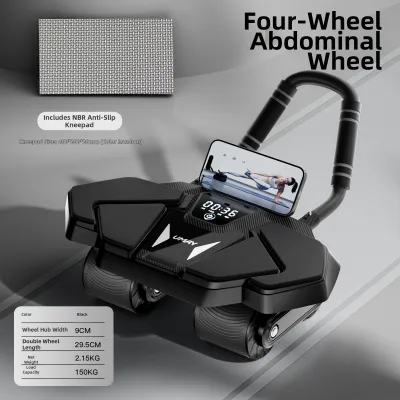
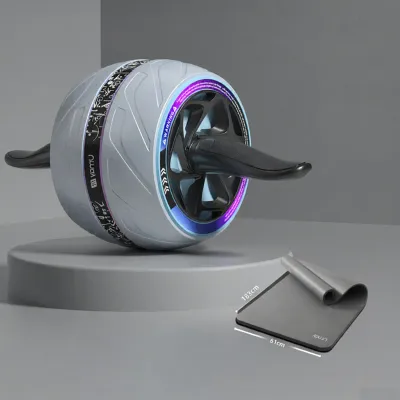
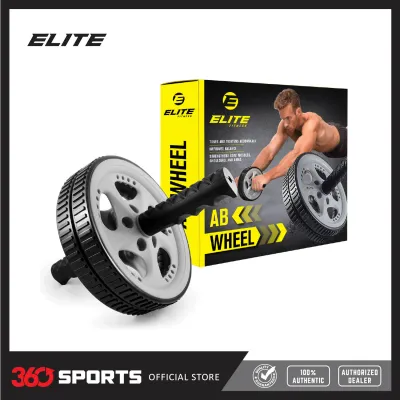
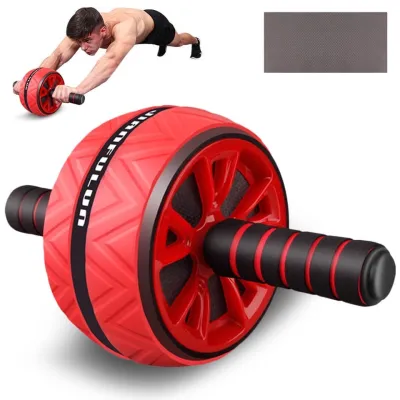
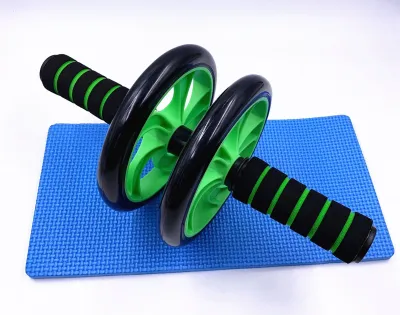
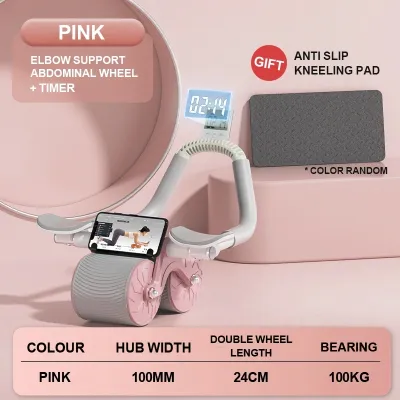
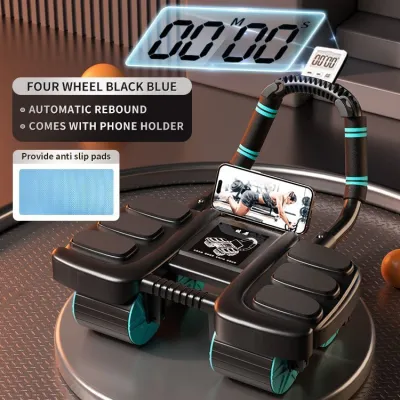
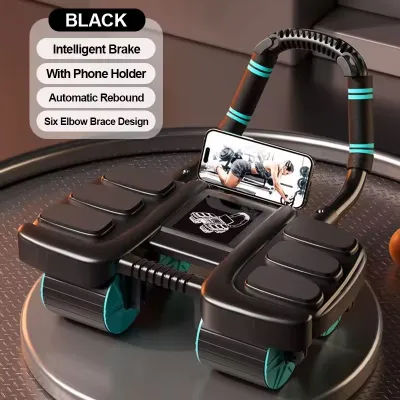
Prices are valid at publication and may change. Please refer to the product page for the latest price.

In contrast, a single-wheel roller relies on a narrow, single point of contact with the ground. This design drastically reduces lateral stability, turning the rollout into a multi-directional balancing act. As you roll forward, your body must constantly fight the tendency of the wheel to tilt or veer to the left or right. This lateral instability forces your internal and external obliques, along with deep stabilizers like the transverse abdominis, to contract intensely to maintain a straight trajectory.
Furthermore, wheel configuration directly influences weight distribution and joint alignment. Dual-wheel rollers often feature wider handles or a wider axle, which can alter the angle of your wrists, elbows, and shoulders. A wider grip can sometimes reduce the shear stress on your shoulder joints by distributing the load more evenly, making it more comfortable for individuals with minor shoulder tightness. Single-wheel rollers typically utilize a more compact handle design, requiring precise shoulder packing and wrist alignment to prevent joint strain as you reach the peak of your extension.
Dual-Wheel Ab Roller: Building Foundational Core Strength
For those who are new to core-focused resistance training, the dual-wheel ab roller serves as an excellent gateway tool. Its primary benefit is the elimination of lateral instability, which allows you to dedicate your mental and physical effort to mastering the basic rollout mechanics. Beginners often struggle with the “hip sag” or “pelvic dump” during a rollout; by removing the fear of tipping sideways, the dual-wheel design lets you focus entirely on maintaining a strong posterior pelvic tilt and a braced abdominal wall.
This configuration is also highly beneficial for individuals rehabilitating their core after a period of inactivity. Because the dual wheels guide you along a stable track, you can safely build up your baseline muscular endurance without exposing your lower back to sudden, twisting micro-movements. It acts as a training wheel system for your torso, ensuring that your primary focus remains on the forward-and-backward extension phase where the rectus abdominis is heavily recruited.
However, the dual-wheel design does have distinct limitations. As your core strength improves, the inherent stability of the dual wheels may eventually make the exercise feel too easy, limiting your long-term progression. Additionally, the wider frame and dual-wheel assembly can make the unit slightly bulkier, requiring more storage space in your home gym setup or making it less convenient to pack into a travel bag. Some users also find that the fixed, wider track limits their ability to perform angled rollouts designed to target the obliques.
Single-Wheel Ab Roller: Challenging Advanced Core Stability
The single-wheel ab roller is a high-performance tool designed specifically for individuals who have already established a rock-solid core foundation. Operating on a single, narrow point of contact, this variation demands exceptional anti-rotation strength and upper-body proprioception. Every millimeter of the rollout requires your nervous system to make micro-adjustments to keep the wheel from slipping sideways, turning a standard abdominal exercise into a full-body stability challenge.
When using a single wheel, muscle engagement shifts dramatically. While your rectus abdominis still handles the primary load of resisting spinal extension, your obliques, serratus anterior, and deep rotator cuff muscles must fire continuously to stabilize the moving pivot point. This makes the single-wheel roller highly effective for athletes, climbers, and advanced fitness enthusiasts who require functional, multi-directional core strength that translates directly to unstable environments or contact sports.
Despite these benefits, the single-wheel roller carries strict contraindications. It is absolutely not recommended for anyone currently experiencing active lower back pain, lumbar stiffness, or shoulder impingement. Without a wide base of support, any momentary lapse in core tension can cause the lower back to arch excessively or the shoulders to collapse, placing dangerous shear forces on the spine and rotator cuffs. If you cannot maintain a flawless, shaking-free plank on the floor, you are not yet ready for the demands of a single-wheel rollout.
How to Choose the Right Abs Roller Wheel for Your Routine
Selecting the perfect abs roller wheel requires an honest self-assessment of your physical capabilities and training environment. Before making a decision, run through this practical checklist to gauge your readiness:
- Plank Test: Can you hold a strict forearm plank with a neutral spine and active glute engagement for at least 60 seconds without your hips sagging?
- Push-Up Competency: Can you perform 10 to 15 controlled, full-range-of-motion push-ups with perfect spinal alignment?
- Spinal Awareness: Can you consciously tilt your pelvis backward (posterior pelvic tilt) and maintain that position while under physical tension?
If you answered “no” to any of these questions, start with a dual-wheel model to build the necessary baseline strength.
Your choice should also align with your broader training goals. If your primary objective is general fitness, moderate core toning, or safe home workouts, a dual-wheel roller offers a reliable, low-risk path. If your goals involve advanced athletic performance, high-level gymnastics, or maximizing rotational stability for sports, the single-wheel model is the superior tool for the job.
Finally, do not overlook practical, real-world considerations. In tropical climates like the Philippines, high humidity can make hands sweaty and floors slick. Look for rollers with sweat-resistant, textured rubber or foam grips to prevent your hands from slipping mid-rollout. Consider your home’s flooring as well; if you train on smooth ceramic tiles or polished wood common in local homes, you will need a wheel with a high-traction rubber tread to prevent the roller from sliding out from under you unexpectedly. Whether you are investing ₱300 or ₱1,500 in your home gym setup, choosing the right wheel configuration is critical.
Essential Form Checks and Safety Boundaries for Rollouts
Regardless of the wheel configuration you choose, executing the rollout with flawless form is non-negotiable. The most critical form cue is maintaining a posterior pelvic tilt throughout the entire movement. Imagine tucking your tailbone between your legs and pulling your belly button toward your spine; this locks your pelvis in place and prevents your lower back from arching into a banana shape, which transfers the entire load onto your lumbar spine. Keep your core braced as if you are about to be pressed, and avoid letting your ribs flare upward.
Managing your range of motion is equally vital for safety. You do not need to roll out until your chest touches the floor on day one. Instead, restrict your rollout distance to a range that you can actively control and, more importantly, pull back from using only your abdominal muscles. A good rule of thumb is to start by rolling out just a few feet; if you feel your lower back pinch or your hips sag, you have gone too far.
Always establish strict stopping conditions for your workout. Stop the exercise immediately if you feel a sharp pinch in your lower back, discomfort in your shoulder joints, or strain in your wrists. Equipment can never replace physical preparation and self-awareness. If joint pain persists after stopping, discontinue use entirely and consult a qualified physical therapist or medical professional to address any underlying mobility or strength imbalances.
Frequently Asked Questions (FAQ)
Can I transition from a dual-wheel to a single-wheel ab roller?
Yes, transitioning is a natural progression once you have mastered the dual-wheel model. Look for readiness signals such as the ability to perform 3 sets of 15 slow, controlled dual-wheel rollouts with zero lower back discomfort and perfect form. When you are ready to upgrade, use a transition strategy to mitigate the increased instability. Position yourself facing a wall, using the wall as a physical stopper to limit your rolling distance to just one or two feet. This allows you to adapt to the lateral wobble of the single wheel in a safe, controlled range of motion before gradually increasing your distance.
Does the wheel material or tread pattern affect the workout?
Absolutely. The material and tread pattern of your abs roller wheel directly impact safety, floor grip, and noise. Wheels made of cheap, hard plastic tend to slip easily on smooth surfaces like tile, polished concrete, or hardwood, which can lead to sudden falls and injuries. Look for wheels wrapped in thermoplastic rubber (TPR) or high-density polyurethane with a textured tread pattern, as these materials provide reliable traction and prevent slipping even when floors are slightly damp from tropical humidity. Additionally, wider wheel profiles—even within the single-wheel category—offer slightly more rolling resistance and baseline stability compared to ultra-thin, blade-like wheels. Always check the manufacturer’s specifications and product labels to verify floor-type compatibility before training.
Community discussion
Share your experience or ask a question. Comments are reviewed before publication.