
Riding your bicycle through a sudden downpour or along muddy, waterlogged trails often brings the stressful realization that your brakes are not grabbing the way they do on dry pavement. To regain control and confidence when the weather turns, choosing the right wet condition brake pads is essential: sintered (metallic) pads generally provide more consistent stopping power and exceptional durability when water and grit coat your rotors, whereas resin (organic) pads offer quieter performance and immediate initial bite in dry conditions but wear down rapidly and lose consistency in wet, abrasive environments. Understanding how these two compounds handle moisture, heat, and wear will help you select the safest option for your specific riding conditions.
How do sintered and resin brake pads differ in basic construction and wet-weather behavior?
Sintered and resin brake pads differ fundamentally in their material composition, which directly dictates how they manage the thin film of water that forms on your brake rotors during a wet ride. Sintered pads are made of metallic particles fused together under high pressure and heat, while resin pads consist of organic fibers bound by a polymer resin.
Sintered brake pads, often labeled as metallic, are manufactured by combining metallic elements—such as copper, bronze, and steel—and compressing them under extreme heat and pressure. This process, called sintering, creates a highly dense, hard, and heat-resistant pad. When water coats the brake rotor, the hard metallic compound of a sintered pad acts like a squeegee, cutting through the liquid film to establish direct metal-to-metal contact with the rotor surface almost instantly.
Products mentioned in this guide
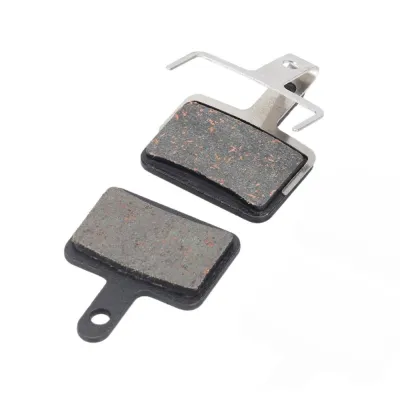
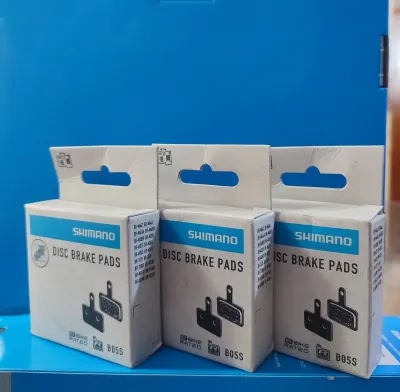
5 Lazada user ratings
thank you seller
ok good makapit
ok good 5 star
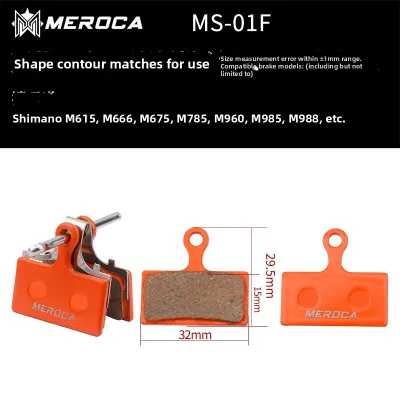
23 Lazada user ratings
I got this a few years ago, and it still looks pretty thick. I think the brake just needs some adjustment. I'll switch to a new one for now,…Read full reviewShow less
I got this a few years ago, and it still looks pretty thick. I think the brake just needs some adjustment. I'll switch to a new one for now, but the brake feels quite responsive, and I can always switch back if needed down the line.
Good product quality, Universal fit for bikes, Crop top design, High quality resin, Lightweight design, Strong braking power,
🔌Compatibility:compatible with himo Z16 Good product quality, for 2 wheels ebike
Great seller! The quality is really good! You can tell it’s well made!
It's really easy to use and responds quickly.
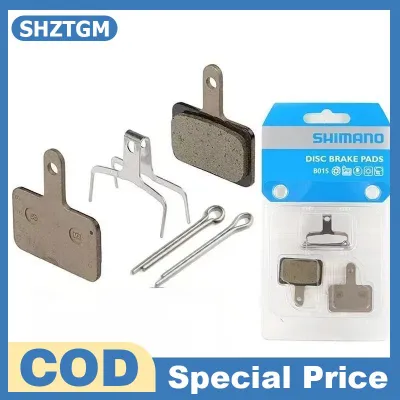
7 Lazada user ratings
misleading. front photo of order shows shimano but when you scroll thru the item page, it is a toopre
🔨Durability:ok nmn sya sana matibay
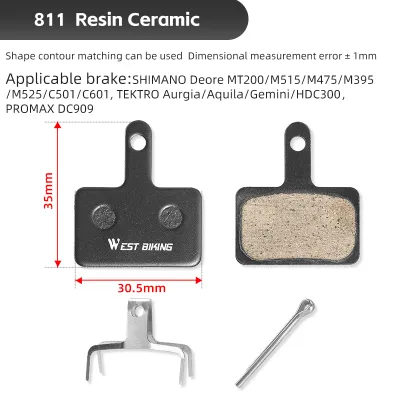
569 Lazada user ratings
High-quality semi-metal brake pads., Made from durable materials for long-lasting performance., Strong braking force, perfect for mountain b…Read full reviewShow less
High-quality semi-metal brake pads., Made from durable materials for long-lasting performance., Strong braking force, perfect for mountain biking.,
🔨Durability:Provides reliable and consistent braking power., 🔌Compatibility:Made from durable materials for long-lasting performance.,
Made from durable materials for long-lasting performance., Provides reliable and consistent braking power.,
Made from durable materials for long-lasting performance., High-quality semi-metal brake pads.,
🔨Durability:good 🔌Compatibility:good 🛠️Ease of Installation:good
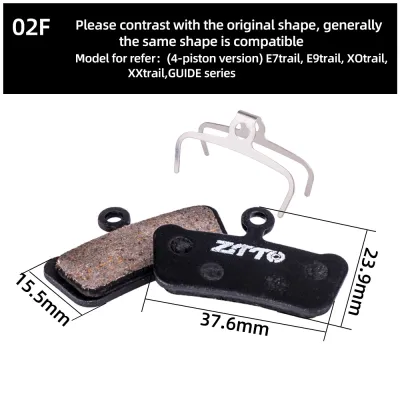
716 Lazada user ratings
matched the specifications that i needed and the pad works great! very cheap and effective. would definitely recommend the brand to others.
The item arrived within the given estimated time of arrival. It was packed by the seller well. Thank you Lazada and seller. More power!
🔨Durability:so far so good 🔌Compatibility:sofar sogood 🛠️Ease of Installation:sofarsogood
ang ganda saktong sakto sa brake ko at nagamit ko na rin siya ang lakas ng kapit
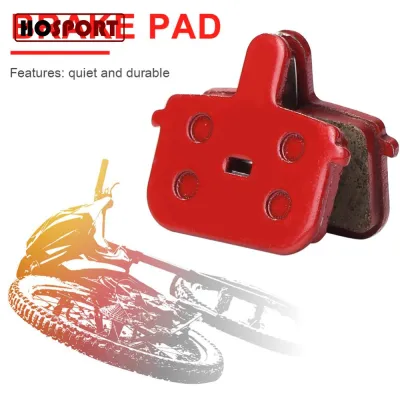
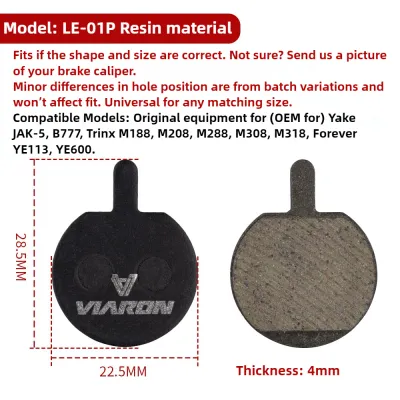
Prices are valid at publication and may change. Please refer to the product page for the latest price.
Resin brake pads, commonly referred to as organic pads, utilize a mixture of non-asbestos organic fibers, such as glass, rubber, carbon, and Kevlar, bound together by a polymer resin. These materials are softer, allowing them to conform closely to the microscopic imperfections of the brake rotor. However, when water is introduced, this soft compound struggles to sweep away the liquid film as efficiently. The water can act as a lubricant, causing the pad to hydroplane slightly over the rotor surface until friction heat evaporates the moisture.
Furthermore, the physical structure of resin makes it susceptible to absorbing small amounts of moisture and road oils, which can permanently degrade its braking efficiency. Sintered pads, being non-porous, do not absorb water or oils. When shopping for replacement pads, check the manufacturer’s packaging for specific “all-weather” or “wet-weather” designations. Some modern resin formulations include small amounts of metal filings to improve wet-weather friction, proving that material categories are not always absolute.
Which brake pad material provides better initial bite and modulation in the rain?
Resin brake pads typically offer a more immediate initial bite and progressive modulation in dry conditions, but in wet weather, sintered pads provide more predictable, consistent stopping power throughout the entire lever pull. The choice between them depends on whether you prioritize instant low-speed response or sustained control on long, wet descents.

Initial bite refers to how quickly and aggressively the brakes engage. In dry weather, resin pads excel at this, providing a sharp, reassuring grab with minimal lever effort and excellent modulation. In the rain, however, this progressive feel can turn into a delayed response. You may pull the lever and feel very little deceleration initially as the pad works to clear the water film, followed by a sudden, unpredictable grab once dry contact is established.
Sintered pads behave differently. In dry conditions, their initial bite can feel somewhat wooden, requiring a firmer pull. But when the trails or roads are wet, this characteristic becomes an advantage. Sintered pads maintain a highly stable friction coefficient across a wide range of temperatures and moisture levels, keeping the lever feel firm and consistent.
To safely evaluate how your chosen pad material handles wet conditions, perform a controlled, low-speed test before heading out onto technical trails or busy public roads. Find a flat, safe area free of traffic, wet the rotors with clean water, and accelerate to a moderate speed. Apply the brakes gently several times to feel how long it takes for the pads to clear the water film and begin slowing the bike.
It is also important to recognize that extreme conditions can overwhelm even the best brake pad compounds. If you frequently ride in deep mud, heavy tropical downpours, or down steep descents, the sheer volume of water and debris may require more than just a change in pad material. In these demanding scenarios, upgrading to larger rotor diameters provides a larger surface area to sweep away water and dissipate heat.
How do sintered and resin pads compare regarding rotor wear and noise on wet trails?
Sintered brake pads cause significantly higher rotor wear and generate louder, high-pitched noise when wet compared to resin pads, which are quieter but wear out themselves rather than wearing down the rotor. This trade-off means choosing sintered pads prioritizes pad longevity at the expense of rotor life and quiet operation.
The hardness of sintered metallic compounds makes them incredibly durable, but this durability comes at a cost to your brake rotors. When you ride in wet conditions, tires throw up a slurry of water, sand, and fine trail grit. Sintered pads trap these abrasive particles against the steel rotor, acting like sandpaper and rapidly grinding down the rotor’s thickness. Resin pads, being much softer, allow the grit to wash away or embed slightly, meaning the pad itself bears the brunt of the wear while preserving the rotor.
Noise is another major differentiator that can affect your riding experience. Wet brakes are notorious for producing a loud, high-pitched squeal caused by high-frequency vibrations as the pad slips and grips across the wet rotor surface. Resin pads generally quiet down quickly once they generate enough heat to dry the rotor. Sintered pads, due to their metal-on-metal contact, can produce a persistent, deafening screech when wet that may not subside until you perform several hard, heat-generating stops.
Because sintered pads accelerate rotor wear in wet and gritty environments, regular inspections of your braking hardware are essential. Use a digital caliper or micrometer to measure your rotor thickness at multiple points along the braking track. Most manufacturers stamp a minimum wear limit directly on the rotor face—typically around 1.5mm or 1.8mm. If you notice a distinct, sharp lip at the outer edge of the rotor or deep concentric grooves, the rotor has reached the end of its safe service life and must be replaced immediately.
What maintenance and inspection steps keep your wet condition brake pads performing safely?
Regular visual inspections and thorough cleaning after wet rides are critical to preventing brake fade, premature wear, and sudden stopping failures. Water, mud, and road oils can quickly contaminate your braking system, making routine post-ride maintenance a vital safety habit.
To maintain your brakes, inspect them visually after every wet or muddy ride. Remove the wheels to get a clear view of the calipers and pads. Check the thickness of the friction material; if the compound is under 1mm, replace the pads immediately. Riding on worn pads risks backing-plate-to-rotor contact, which ruins rotors instantly and drastically reduces stopping power.
During your inspection, look closely for signs of surface contamination or glazing. Glazing occurs when the brake pads are subjected to high heat without being fully bedded in, resulting in a shiny, glass-like finish on the pad surface that severely reduces friction. Contamination is usually caused by chain lubricants, road oils, or leaking hydraulic fluid soaking into the pad material. While glazed pads can often be restored by gently sanding the surface with fine-grit sandpaper on a flat block, contaminated pads—especially porous resin ones—must be discarded and replaced.
Cleaning your rotors and pads correctly is the next crucial step in restoring friction. Use only high-purity isopropyl alcohol (90% or higher) or a dedicated, residue-free disc brake cleaner. Spray the cleaner onto a clean, lint-free cloth and wipe the rotors thoroughly. Avoid spraying aerosol cleaners directly onto the wheel or caliper, as overspray can wash grease out of hub bearings or contaminate the pads.
Knowing when to stop riding and seek professional help is the ultimate safety check for any cyclist. Cease riding immediately and consult a qualified bicycle mechanic if you experience a spongy or soft lever feel that pulls all the way to the handlebar grip, which indicates air has entered your hydraulic lines. Other critical stop conditions include visible hydraulic fluid leaks around the caliper pistons, deep grooves or cracks in the rotors, or if your brakes continue to slip and fail to slow you down even after cleaning.
How should you choose between sintered and resin pads based on your specific riding conditions?
To choose the right brake pad, match the compound to your local terrain, weather patterns, and riding style while ensuring strict compatibility with your braking hardware. In regions with intense wet seasons, such as the heavy monsoon periods in the Philippines, your choice can significantly impact both safety and maintenance costs.
For daily urban commuters or recreational riders navigating flat paved roads, resin pads are often the practical choice. They offer quiet, reliable performance in dry-to-damp conditions and preserve your rotors, keeping overall maintenance costs low. However, if you are an avid mountain biker tackling steep, technical descents in wet forests, or if you commute daily through heavy downpours during the monsoon season, sintered pads are the far safer and more economical choice. Sintered pads will not dissolve in the mud, will maintain consistent stopping power when drenched, and will save you from frequent pad replacements.
Before making a purchase, you must verify the compatibility of your existing braking hardware. Many entry-level and mid-range bicycles come equipped with rotors stamped with the warning “Resin Pads Only.” These rotors are constructed from softer steel alloys that cannot withstand the high heat and abrasive nature of sintered metallic pads. Installing sintered pads on a “Resin Only” rotor will cause the rotor to wear down dangerously fast, potentially leading to sudden failure. If you wish to switch to sintered pads, you must also upgrade your rotors to a compatible, hardened steel model.
When you are ready to buy, use this quick checklist at your local bike shop or when browsing an online marketplace to ensure you select the correct product:
- Check your rotor markings to confirm if they support metallic or sintered compounds.
- Match the pad shape and model number exactly to your specific brake caliper brand (e.g., Shimano, SRAM, Tektro).
- Assess your primary riding environment, choosing sintered for heavy mud, steep descents, and maximum durability, or resin for quiet stops and lighter, drier road use.
- Look for specialized features, such as cooling fins or aluminum backing plates, if you frequently ride long, steep descents where heat buildup is a concern.
Community discussion
Share your experience or ask a question. Comments are reviewed before publication.