
The Short Answer: Which Core Equipment Should You Buy?
Choosing between a sit-up bench and an ab roller depends on your current fitness level, your available home space, and how you prefer to train your core. There is no single superior option, as both tools approach abdominal training from entirely different biomechanical angles.
A sit-up bench is highly adjustable and offers a controlled, stable environment. It is an excellent choice for beginners who need to build baseline strength, as well as intermediate lifters looking to isolate their abdominal muscles using targeted, progressive decline angles.
An ab roller is a compact, high-intensity tool that demands exceptional baseline core stability. It engages your entire kinetic chain, forcing your deep stabilizers, shoulders, and back to work in unison. If you have limited storage space and already possess a strong, pain-free lower back, the ab roller offers an intense, functional workout that is difficult to replicate with bodyweight exercises alone.
Products mentioned in this guide
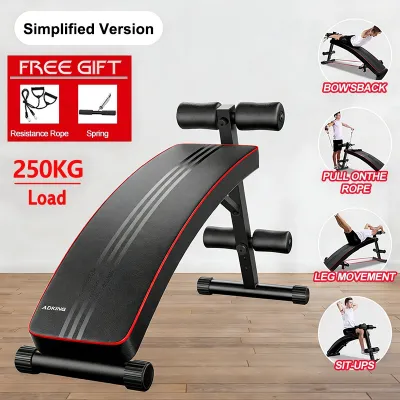
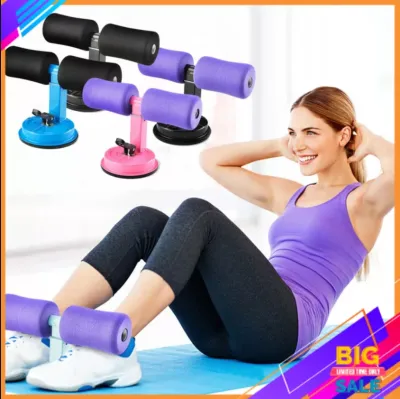
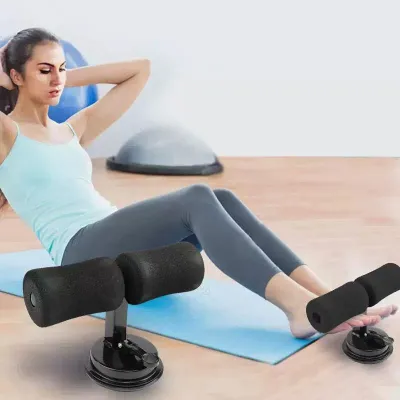
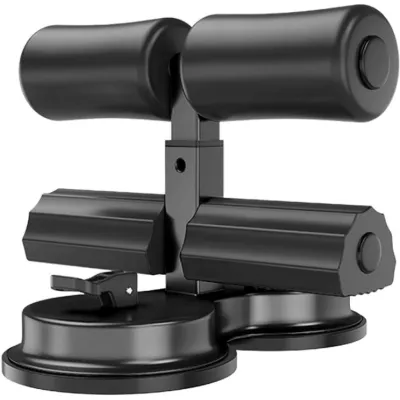
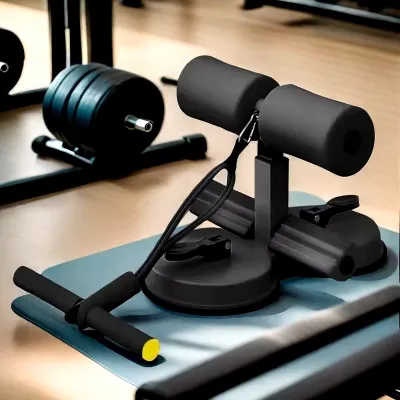
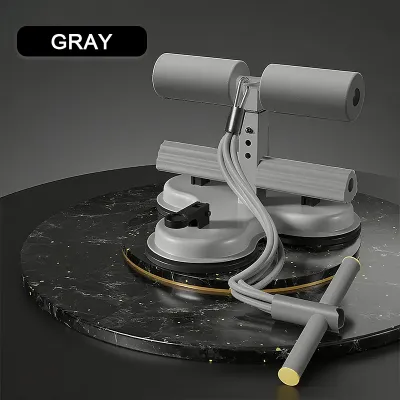
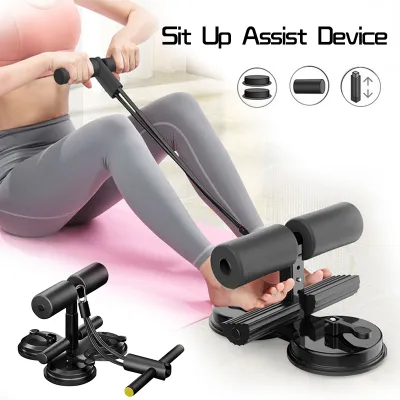
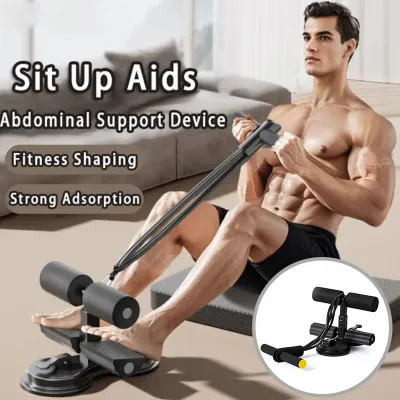
Prices are valid at publication and may change. Please refer to the product page for the latest price.
How Sit-Up Benches and Ab Rollers Target Your Core
To understand which tool fits your routine, you must first look at how they load your muscles. While both target the midsection, they utilize completely opposite movement patterns: spinal flexion versus anti-extension.

Sit-Up Bench Mechanics: Spinal Flexion and Isolation
A sit-up bench primarily utilizes spinal flexion. This is the action of curling your ribs toward your pelvis, which directly targets the rectus abdominis (the visible front abdominal muscles).
Because your feet are anchored under padded rollers, your hip flexors—specifically the iliopsoas and rectus femoris—are heavily recruited to help pull your torso upward. By adjusting the decline angle of the bench, you increase or decrease the gravitational pull on your upper body, allowing you to systematically scale the resistance of the movement.
Ab Roller Mechanics: Anti-Extension and Full-Body Tension
An ab roller operates on the principle of anti-extension. Instead of shortening your abdominal muscles through a crunching motion, you are forcing your core to contract statically to prevent your lower back from sagging as you roll forward.
This rollout movement targets the deep transversus abdominis, which acts as your body’s natural corset. Because your upper body supports your weight during the extension, the exercise also heavily recruits your latissimus dorsi (back muscles), pectorals, anterior deltoids, and triceps. It is a compound, integrated movement that treats the core as a stabilizer rather than an isolated mover.
Comparing Space, Safety, and Workout Intensity
Before investing in new gear, it is essential to weigh the practical realities of home workouts. Factors like floor space, joint stress, and how easily you can progress an exercise will dictate whether a tool gets daily use or gathers dust.
Space and Storage Constraints
In urban living spaces, such as compact apartments or condominiums, footprint is a major deciding factor. A sit-up bench is a substantial piece of furniture. Even foldable models require dedicated floor space during use and a clear storage spot afterward. Furthermore, in humid tropical climates, the vinyl padding and steel frame of a bench require regular wiping down to prevent sweat buildup, mildew, and rust.
An ab roller is incredibly compact. It can easily be tucked into a drawer, placed under a bed, or packed into a travel bag. It requires no assembly or dedicated floor space beyond a flat surface long enough for your body length. For those prioritizing a minimalist home setup, the roller is the clear winner in terms of convenience.
Safety and Joint Stress
Both tools carry distinct injury risks if performed with poor technique. On an ab roller, the primary risk is lower back hyperextension. If your core tires or lacks the strength to maintain a neutral pelvis, your lower back will arch excessively, transferring the entire load onto your lumbar spine. This can lead to acute lower back strain.
On a sit-up bench, the risks are often centered on the neck and hip flexors. Many users instinctively pull on their neck with their hands, straining the cervical spine. Additionally, because the feet are anchored, overactive hip flexors can pull on the pelvis and lower back, leading to tightness and discomfort in the lumbar region after high-volume sessions.
Progression and Intensity
Scaling your workouts is crucial for long-term progress. A sit-up bench makes progression straightforward. You can start at a flat or mild decline, and gradually increase the angle as you get stronger. You can also easily hold a weight plate or dumbbell against your chest to add resistance.
An ab roller has a much steeper learning curve. Progression is managed by altering your leverage and range of motion. Beginners must start on their knees, rolling out only a partial distance—often using a wall as a physical stopper to limit the roll. Progressing to a full, standing rollout requires elite-level core strength and shoulder stability, making the jump in difficulty quite drastic.
| Feature | Sit-Up Bench | Ab Roller |
|---|---|---|
| Footprint & Storage | Large; requires dedicated floor space or folding storage | Extremely compact; fits in a drawer or small bag |
| Primary Muscle Focus | Rectus abdominis, hip flexors | Deep core (transversus abdominis), lats, shoulders, lower back |
| Learning Curve | Low to moderate; intuitive movement | High; requires strict form to prevent injury |
| Adjustability | High; multiple decline angles and height settings | Low; progression relies on body positioning and range of motion |
Which Equipment Matches Your Fitness Profile?
To make your final decision, evaluate your current physical capabilities, space limitations, and training preferences against these two profiles.
Choose a Sit-Up Bench If:
- You are a beginner: You need a supportive, predictable environment to build basic abdominal strength without overloading your shoulders or lower back.
- You want targeted isolation: Your primary goal is to isolate the rectus abdominis and build definition through controlled flexion.
- You have dedicated space: You have a home gym setup or enough floor space to accommodate a larger piece of equipment.
- You want easy progression: You prefer a simple, measurable way to increase difficulty by adjusting physical pins and angles.
Choose an Ab Roller If:
- You have established core strength: You can easily perform a standard plank with perfect form for at least 60 seconds.
- You have limited space: You live in a shared space or small apartment and need equipment that can be stored out of sight instantly.
- You want functional, full-body integration: You prefer movements that train your core to stabilize your spine while your limbs are in motion.
- Your joints are healthy: You have strong, pain-free shoulders, wrists, and a resilient lower back.
When to Avoid Both
If you are currently experiencing acute lower back pain, shoulder impingement, or neck strain, neither of these tools is appropriate. High-tension movements can worsen existing joint issues. In these scenarios, prioritize bodyweight stabilization exercises like bird-dogs, dead bugs, or basic planks, and consult a physical therapist or physician before introducing external equipment.
The Baseline Stability Test
Before purchasing an ab roller, perform a simple self-assessment. Assume a standard forearm plank. Focus on keeping your glutes squeezed, your pelvis tucked, and your shoulder blades pushed apart. If you cannot maintain this position with perfect form for 40 to 60 seconds without your lower back sagging or aching, start with a sit-up bench or floor-based progressions first. Buying an ab roller too early often leads to frustration and avoidable strain.
Frequently Asked Questions (FAQ)
Can I use an ab roller if I have lower back pain?
No, you should avoid using an ab roller if you are actively experiencing lower back pain. The rollout movement requires immense anti-extension strength to keep the spine neutral under load. If your core stabilizers are weak or fatigued, your lower back will arch, placing severe pressure on your lumbar vertebrae and spinal discs. If you feel any pinching or aching in your lower back during a rollout, stop immediately. Focus instead on low-impact rehabilitation exercises like dead bugs, glute bridges, or modified planks under the guidance of a healthcare professional.
Is a sit-up bench better for beginners than an ab roller?
Yes, a sit-up bench is generally much better suited for beginners. It provides a stable, guided path of motion and allows you to adjust the decline angle to match your current strength level. This adjustability makes it easier to manage the physical strain on your muscles. However, beginners must still practice proper form on a bench. Avoid pulling on your neck with your hands, and focus on curling your torso upward using your abdominal muscles rather than relying entirely on your hip flexors to yank your body up.
Community discussion
Share your experience or ask a question. Comments are reviewed before publication.