
Selecting the correct slam ball requires balancing weight and diameter with your current strength, grip capacity, and training goals. Choosing a ball that is too heavy can compromise your form and lead to injury, while one that is too light won’t provide enough resistance to build explosive power. By understanding how weight increments, diameter ranges, and materials interact, you can select equipment that supports proper movement mechanics and stands up to high-impact training.
Understanding Slam Ball Weight and Size Specifications
Slam balls are specialized fitness tools designed to be thrown repeatedly onto the ground or against walls. Unlike standard medicine balls, they are built to absorb high-impact forces without bouncing back or rolling away. Manufacturers produce these balls in standard weight increments, typically ranging from light options to heavy, advanced loads. The weight you choose directly dictates the velocity of your throws and the overall cardiovascular demand of your training sessions.
The physical size of a slam ball, measured by its diameter, also plays a critical role in how you handle the equipment. Smaller diameters are generally easier to grip and control, making them ideal for rapid, high-repetition movements. Larger diameters require a wider arm span and greater chest engagement to hold, which changes the leverage during lifts and ground-to-overhead movements. Because exact dimensions and weight distributions vary across different brands, you should always check the manufacturer’s product labels and specification sheets before purchasing.
Products mentioned in this guide
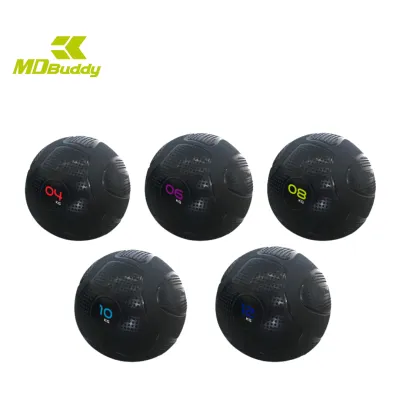
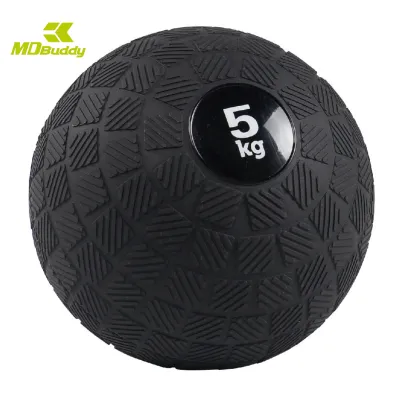
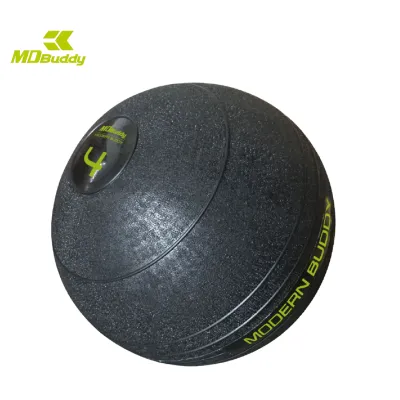
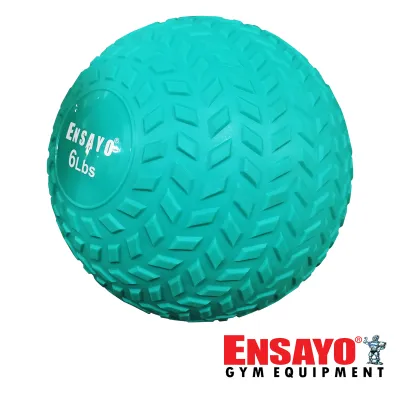
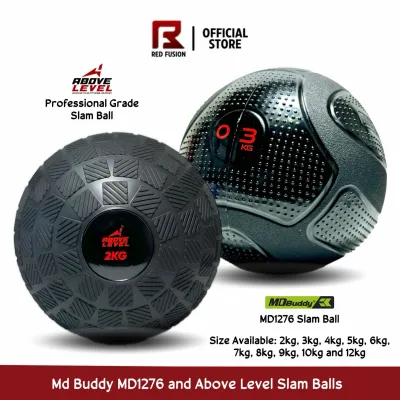
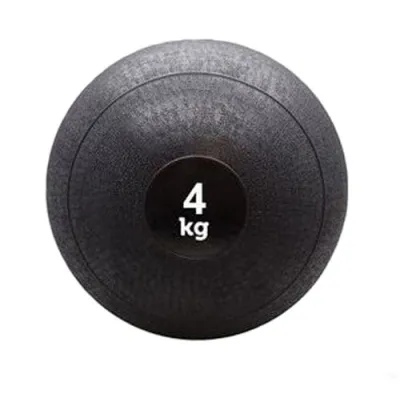
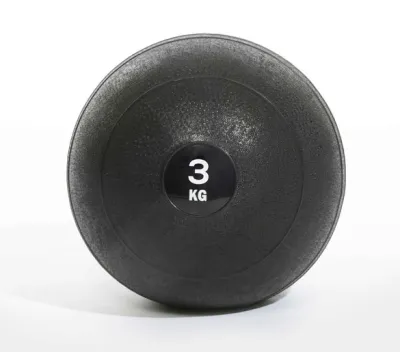
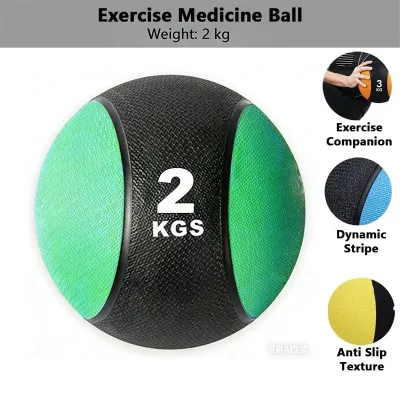
Prices are valid at publication and may change. Please refer to the product page for the latest price.
Matching Weight to Your Fitness Level and Strength
Finding the right weight tier is essential for maintaining proper movement mechanics during high-intensity workouts. For beginners or those focusing on high-velocity conditioning, lighter weight tiers are generally the most appropriate starting point. These lighter loads allow you to focus on explosive speed and clean movement patterns without straining your joints. Intermediate and advanced lifters often progress to medium or heavy tiers to build raw power and core stability.

To test if a slam ball weight is suitable for your current fitness level, observe your form during a basic hip-hinge and overhead extension. You should be able to lift the ball from the floor, bring it fully overhead with straight arms, and slam it downward using your core muscles rather than just your arms. If your lower back rounds during the pick, or if your shoulders struggle to stabilize the ball at the top of the movement, the weight is too heavy.
Starting with a lighter ball allows you to master the essential mechanics of deceleration and core engagement. When you slam a ball, your body must rapidly brace to absorb the downward force and maintain balance on a potentially humid or slippery gym floor. Once you can perform multiple sets with explosive speed and perfect posture, you can safely consider moving up to the next weight increment.
Choosing the Right Size and Diameter for Your Exercises
The physical diameter of a slam ball influences your grip security and the specific muscles recruited during an exercise. Smaller balls allow your hands to wrap more completely around the surface, reducing forearm fatigue during long, high-rep conditioning circuits. This compact size is particularly beneficial for users with smaller hands or those performing fast-paced rotational throws.
Larger diameter slam balls are excellent for movements that mimic real-world lifting, such as two-handed carries, bear hugs, and shoulder-over-shoulder tosses. The wider shape forces you to engage your chest, biceps, and upper back just to keep the ball secure against your torso. This makes larger balls a popular choice for functional strength training and core stabilization routines where grip challenge is a primary goal.
Regardless of the size you select, the surface texture of the ball is critical for maintaining control during sweaty workouts in tropical climates. Look for textured shells, deep tire-tread patterns, or reinforced seams that provide reliable traction even when your hands are wet. A secure grip prevents the ball from slipping prematurely during the upward phase of a throw, protecting your face and body from accidental impact.
Checking Material, Bounce, and Safety Features
A true slam ball must feature a “dead bounce” design, meaning it drops to the floor and stays there without rebounding. Traditional medicine balls often have a high rebound capacity, which can cause them to bounce back into your face or chest with dangerous force during a high-velocity slam. Before purchasing, verify that the product is explicitly rated for high-impact slamming and will not bounce.
The durability of a slam ball depends heavily on its outer shell material and internal filling. Most high-quality options utilize a thick, flexible polyvinyl chloride (PVC) or rubber shell filled with fine sand or iron pellets. This combination allows the ball to deform slightly upon impact, absorbing the kinetic energy and preventing rolling. You can verify these material specifications by reviewing the manufacturer’s product descriptions and user manuals.
Safety also requires assessing your training environment and monitoring the condition of your equipment over time. Ensure your floor surface is compatible with high-impact drops; rubber gym matting is ideal for protecting both the ball and the subfloor. Establish a routine check to inspect the ball’s shell for signs of tearing, seam separation, or sand leakage, and stop using the equipment immediately if any structural damage is visible.
Frequently Asked Questions (FAQ)
Can I use a regular medicine ball for slam exercises?
No, you should not use a standard medicine ball for overhead slams unless the manufacturer explicitly states it is rated for high-impact drops. Traditional medicine balls are often made of hard plastics, leather, or bouncy rubber that can rupture upon impact or rebound unpredictably, posing a significant risk of injury. Always check the product label and safety warnings to confirm the ball is designed to absorb dead-weight impacts.
How do I know when it is time to upgrade to a heavier slam ball?
You are ready to upgrade to a heavier slam ball when you can complete your entire workout routine with perfect form, full overhead extension, and explosive speed without experiencing excessive fatigue. If the ball feels light enough that your throwing velocity no longer challenges your core stability, it may be time to move to the next weight tier. Focus on maintaining high movement speed and power output rather than simply chasing a heavier number.
Community discussion
Share your experience or ask a question. Comments are reviewed before publication.