
Quick Answer: Which Running Knee Brace Do You Need?
Selecting the right running knee brace depends on your specific joint issues, pain location, and recovery stage.
- Choose a knee sleeve if you need mild compression, warmth, and general joint awareness for daily runs. It is best for managing minor soreness, mild arthritis, or general stiffness.
- Choose a knee strap if you experience localized pain directly below the kneecap, such as patellar tendon strain or Jumper's Knee.
- Choose a hinged knee brace if you are recovering from a ligament injury (like an MCL or LCL sprain) or require maximum mechanical stability to prevent lateral shifting.
While a brace can manage symptoms and support your recovery, it does not replace a professional medical diagnosis. If you experience severe or acute pain, consult a healthcare professional before continuing your training.
Understanding the Three Main Types of Running Knee Braces
Running subjects your knees to forces up to four times your body weight with every step. To manage these forces, knee braces utilize different mechanical and physiological pathways. Understanding how each design interacts with your joint is key to choosing the right support.
Products mentioned in this guide
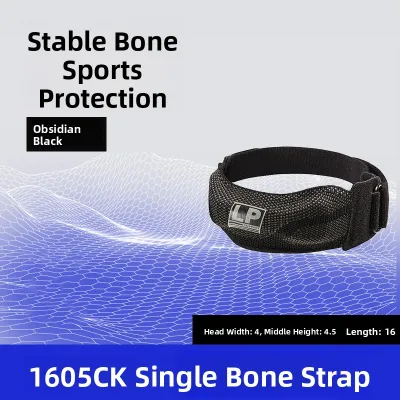
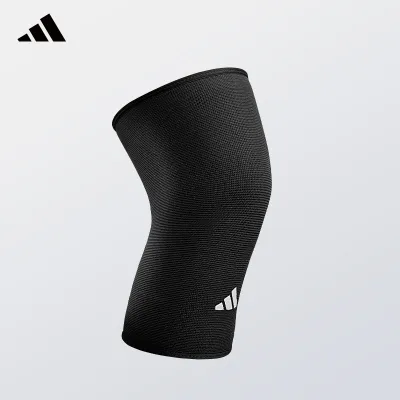
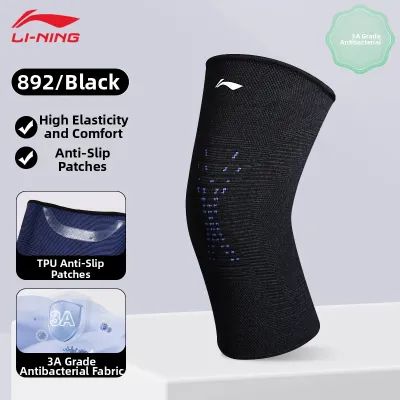
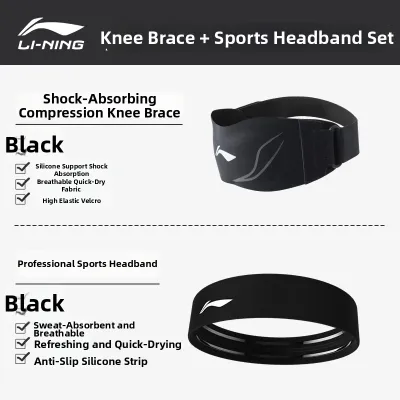
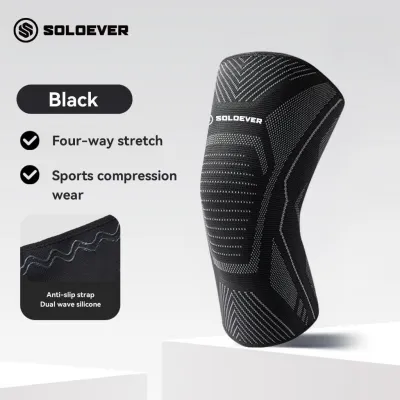
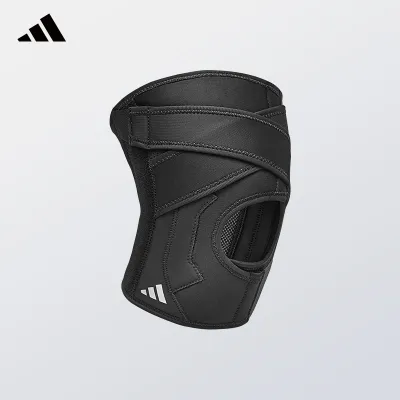
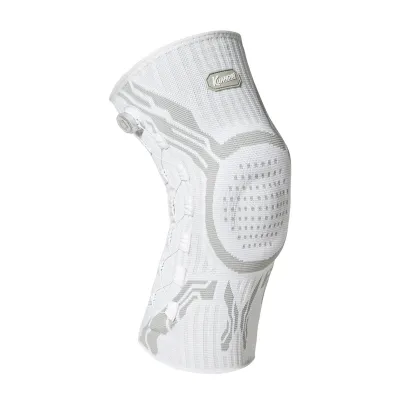
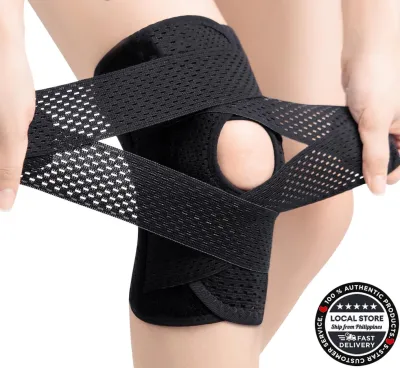
Prices are valid at publication and may change. Please refer to the product page for the latest price.

Knee Sleeves: Compression and Mild Support
Knee sleeves are tubular, elastic garments that slide over your foot and up to your thigh, fully enveloping the knee joint. Typically made of neoprene or engineered compression knits, they fit snugly against the skin. Rather than physically restricting joint movement, sleeves work primarily through compression and proprioception—the sensory feedback that informs your brain of your joint’s position in space.
By compressing the soft tissues around the knee, a sleeve increases local blood circulation, which helps manage minor swelling and keeps the joint warm. This warmth is highly beneficial for runners dealing with mild stiffness or arthritis during early morning runs. Because they lack rigid structural components, knee sleeves allow for a completely natural range of motion. This makes them comfortable for daily training, though they offer minimal mechanical support against lateral shifting or hyperextension.
Knee Straps: Targeted Tendon Relief
A knee strap is a minimalist band that wraps around the leg just below the kneecap. It consists of a narrow strap—often lined with a dense rubber or silicone tube—and a hook-and-loop closure to adjust tension. Unlike a sleeve, a strap does not provide general compression. Instead, it focuses entirely on the patellar tendon, which connects your kneecap to your shinbone.
When tightened, the strap applies localized pressure to the middle of the tendon. This pressure shortens the functional length of the tendon, altering the angle at which it pulls on the kneecap. Consequently, the mechanical strain is redistributed away from the inflamed fibers, and the shock of foot strikes is partially absorbed by the strap. This makes straps ideal for conditions like patellar tendinopathy (Jumper’s Knee). However, because they leave the rest of the knee exposed, they offer zero lateral stability or warmth.
Hinged Knee Braces: Maximum Stability and Protection
Hinged knee braces represent the highest level of external joint support. These devices feature rigid or semi-rigid side hinges made of metal or hard plastic, integrated into a thick fabric sleeve with multiple adjustable straps above and below the knee. The hinges are aligned with the natural pivot point of your knee to allow flexion and extension while blocking lateral (side-to-side) movement and preventing hyperextension.
This mechanical lock is essential for runners recovering from ligament sprains or tears, such as those affecting the medial collateral ligament (MCL) or lateral collateral ligament (LCL). By physically preventing the knee from buckling or shifting sideways, a hinged brace protects healing tissues. However, this extreme stability comes with trade-offs. Hinged braces are significantly bulkier, heavier, and generally restrict the natural fluid mechanics required for active running. They are typically reserved for post-injury rehabilitation, walking, or very low-intensity jog-walk intervals.
Key Comparison Dimensions for Runners
When choosing between these three options, runners must balance the level of support they require against the practical demands of their training. A brace that is too restrictive will alter your running gait, potentially causing secondary injuries in your hips, ankles, or lower back. Conversely, a brace with insufficient support will fail to alleviate your symptoms.
The table below outlines how the three main brace types compare across the key dimensions that affect a runner’s performance and comfort:
| Brace Type | Support Level | Flexibility & Range of Motion | Breathability | Best Use Case |
|---|---|---|---|---|
| Knee Sleeve | Mild / Proprioceptive | Excellent (unrestricted) | Moderate to High | General soreness, mild stiffness, arthritis, daily training |
| Knee Strap | Moderate (targeted tendon) | Excellent (unrestricted) | High (minimal skin coverage) | Patellar tendinitis, Jumper's Knee, localized sub-patellar pain |
| Hinged Brace | High / Mechanical | Restricted (linear movement only) | Low (bulky, heavy coverage) | Ligament sprains (MCL/LCL), post-surgery rehab, severe instability |
Understanding these trade-offs is crucial for your long-term joint health. For instance, while a hinged brace offers unmatched mechanical stability, its bulk and weight make it impractical for high-cadence road running or long-distance training. The heavy materials and multi-strap systems trap heat and moisture, which can quickly lead to severe chafing in the sensitive area behind the knee (the popliteal fossa).
In contrast, knee straps offer excellent breathability and freedom of movement. Because they cover only a narrow band of skin below the knee, they present virtually zero risk of chafing behind the joint, making them a favorite for marathon runners and trail runners who need to maintain a natural stride over long hours. However, if your knee pain is caused by lateral instability or general cartilage wear rather than tendon strain, a strap will provide no relief.
Knee sleeves sit in the middle of the spectrum. They offer a balanced compromise for runners who need a little extra security and warmth without sacrificing their stride. However, because they cover a large area of the leg, the material choice becomes critical. A thick neoprene sleeve can quickly become a sweat-soaked weight in warm weather, whereas a lightweight, engineered knit sleeve offers superior moisture management at the expense of some warmth.
Matching the Brace to Your Knee Condition and Running Intensity
To select the correct brace, you must align the device’s mechanical function with your specific injury or pain pattern. Misusing a brace can mask symptoms temporarily while allowing an underlying injury to worsen, or it can introduce new biomechanical imbalances.
Runner's Knee (Patellofemoral Pain Syndrome)
Runner’s knee is characterized by a dull, aching pain behind or around the kneecap, often caused by poor tracking of the patella as it slides along the groove of the thighbone. If you suffer from this condition, a standard knee sleeve may help by providing general compression and warmth, but an open-patella sleeve with a built-in gel ring or donut stabilizer is often more effective. The gel ring surrounds the kneecap, physically guiding it to track correctly during the bending and straightening of your stride.
Alternatively, if your runner’s knee symptoms are exacerbated by high-impact running on hard concrete pavements, a knee strap can be highly effective. By dampening the vibrations and reducing the pull of the quadriceps on the patellar tendon, the strap can alleviate the pressure between the kneecap and the femur. If your pain persists despite using these options, it is vital to evaluate your running form, footwear, and hip strength rather than relying solely on a brace.
IT Band Syndrome
A common misconception among athletes is that any knee pain can be resolved with a standard running knee brace. Iliotibial (IT) band syndrome causes sharp pain on the outside of the knee, typically triggered after a specific distance or duration of running. Because the IT band is a thick band of fascia that extends from the hip down to the shin, traditional knee sleeves, straps, and hinged braces are generally ineffective at addressing this issue.
The friction and inflammation of the IT band at the lateral femoral epicondyle cannot be compressed or stabilized away by a knee brace. Instead of wrapping the joint, runners dealing with IT band pain should focus on targeted rehabilitation. This includes strengthening the gluteus medius and core muscles, improving hip mobility, and utilizing foam rollers or massage therapy on the lateral thigh muscles. Attempting to run through IT band pain using a knee brace often leads to compensatory movement patterns that strain other areas of the leg.
Long-Distance vs. Trail Running
Your running environment and distance should also dictate your choice of brace. For long-distance road running, where repetitive, linear motion dominates, minor discomforts can escalate into painful abrasions. A low-profile, highly breathable compression knit sleeve or a simple knee strap is generally preferred. These options minimize the risk of chafing and do not add unnecessary weight to your legs as fatigue sets in over long kilometers.
Trail running introduces uneven terrain, sudden lateral shifts, and steep descents, which place unique demands on the knees. While the instinct might be to reach for a highly supportive hinged brace to handle the uneven ground, the bulk and weight of a hinged design can actually increase the risk of tripping on rocks or roots. Instead, trail runners with minor instability often find that a high-quality, flexible knee sleeve with flexible spiral stays (thin, flexible metal coils on the sides) provides the perfect balance. It offers a subtle physical reminder to keep the joint aligned and helps protect against minor twists without restricting the agile footwork required to navigate technical trails.
Sizing, Fit, and Material Choices for Humid Climates
No matter which type of brace you select, its effectiveness depends entirely on a proper fit. A brace that is too loose will slide down your leg as you run, losing its therapeutic value and causing distraction. A brace that is too tight can restrict blood circulation, pinch nerves, and cause localized swelling.
To find your correct size, do not rely on your clothing size or make a guess. Use a soft, flexible tape measure to measure the circumference of your leg. Most manufacturers require three measurements: the circumference of your mid-patella (directly over the center of your kneecap), the circumference of your thigh (typically 10 to 15 centimeters above the kneecap), and the circumference of your calf (10 to 15 centimeters below the kneecap). Take these measurements while standing with your leg slightly bent. If your measurements fall between two sizes, it is generally advisable to choose the larger size if you have larger muscles, or the smaller size if you require maximum compression.
In a tropical, high-humidity climate like the Philippines, material choice is paramount. Traditional neoprene is excellent for heat retention and provides robust compression, but it does not breathe. During a humid run along the Mall of Asia bayside or through the UP Diliman academic oval, a neoprene brace will trap sweat against your skin. This can lead to heat rashes, skin irritation, and cause the brace to slip down your leg.
For hot and humid conditions, look for braces made from engineered 3D-knit fabrics. These materials are highly breathable, moisture-wicking, and dry quickly. Additionally, ensure the brace features integrated silicone wave bands or grippers along the top inner hem. These silicone strips grip the skin gently, preventing the brace from migrating down your thigh as you sweat. An open-patella design—where the kneecap is left exposed—is also highly recommended for humid environments, as it allows heat to escape from the front of the joint.
Safety Boundaries: When a Brace Is Not Enough
A running knee brace is a valuable management tool, but it is not a substitute for joint health, proper biomechanics, or professional medical care. Wearing a brace to mask pain so you can continue training through a structural injury is a dangerous practice that can lead to chronic joint damage and compensatory injuries in your hips, lower back, or opposite leg.
Before using a knee brace, always check the product’s packaging and instructions, and review the care guidelines provided by the manufacturer of any existing medical supports you may have. If your knee pain is accompanied by any of the following warning signs, you must stop running immediately and consult a physician or physical therapist:
- A sudden, sharp, or tearing pain during a run.
- Rapid and visible swelling within hours of an activity.
- An inability to bear weight on the affected leg.
- A sensation of the knee locking, catching, or completely giving way.
- Numbness, tingling, or coldness in your lower leg or foot.
A brace can help you manage minor soreness, recover from mild strains, or navigate a structured rehabilitation program. However, long-term joint health requires a holistic approach that combines correct footwear, strength training, flexibility exercises, and adequate rest.
Community discussion
Share your experience or ask a question. Comments are reviewed before publication.