
Selecting the right hardware for your climbing rack is a balancing act between safety, weight, and ease of use. When looking for a small carabiner with lock, the variety of locking mechanisms can feel overwhelming. Your choice must align with your climbing style, the environment, and your experience level. In tropical, high-humidity environments—where sweat, mud, and moisture are constant factors—the mechanical reliability of your gear becomes even more critical.
To narrow down your options immediately, consider this basic breakdown. Screwgate carabiners offer the ultimate versatility and weight savings, making them the standard choice for building anchors and racking gear where you want deliberate control. Twist-lock carabiners, utilizing a two-stage automatic system, are ideal for fast, repetitive clipping scenarios like belay redirects where you cannot afford to forget to lock the gate manually. Complex auto-locking systems, such as three-stage or magnetic locks, provide the highest level of security for critical, unattended points, though they come with a weight penalty and a steeper learning curve. Ultimately, while a smaller locker shaves precious grams off your harness, selecting the correct lock type is a high-stakes safety decision that must match your specific task on the rock.
Comparing Locking Mechanisms for Small Carabiners
Before you invest in new hardware, it is essential to understand the mechanical engineering behind each design. The way a gate closes and secures itself affects not only how fast you can move on a route but also how the carabiner behaves under environmental stress. Let us examine the three primary categories of locking mechanisms you will encounter when shopping for a compact locking carabiner.
Products mentioned in this guide
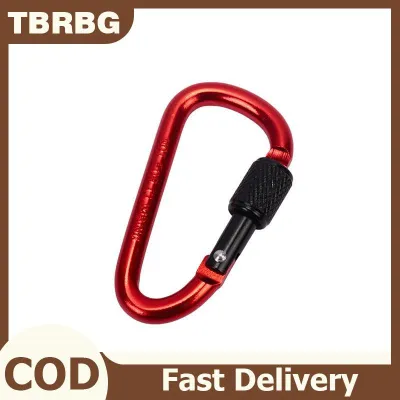
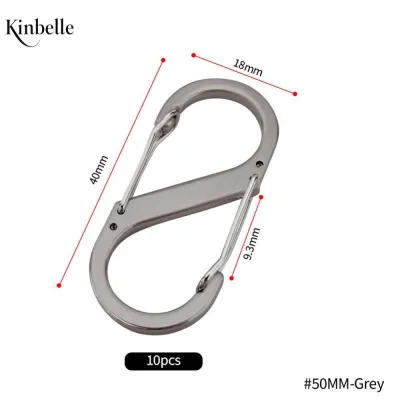
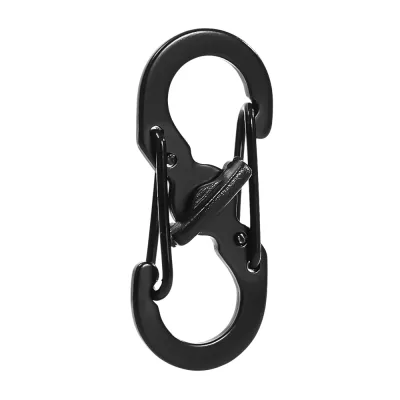
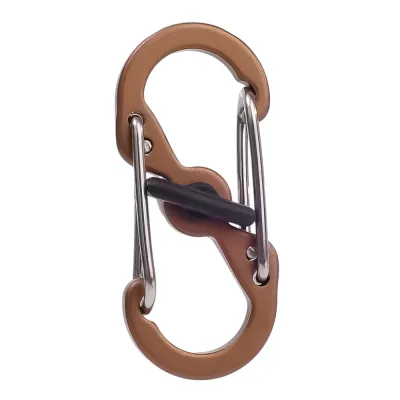
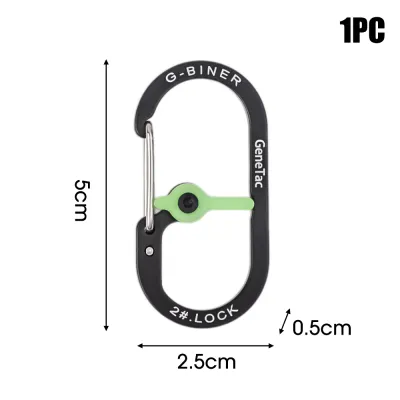
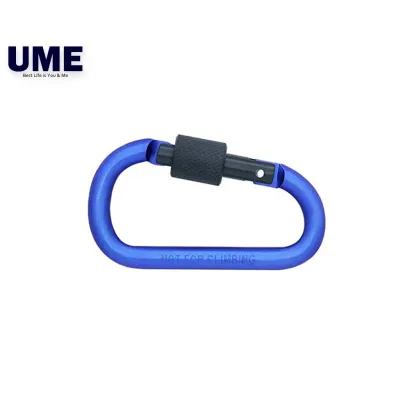
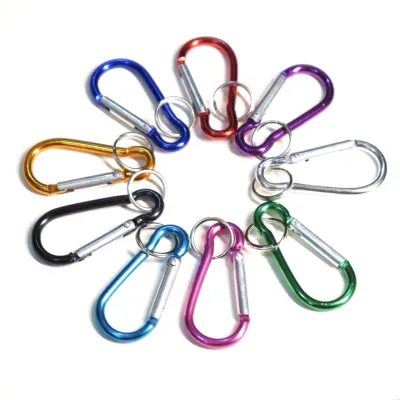
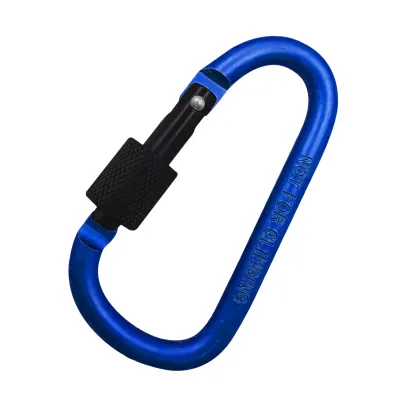
Prices are valid at publication and may change. Please refer to the product page for the latest price.
Screwgate (Manual Screw-Lock)
The screwgate is the classic manual locking mechanism that climbers have relied on for decades. Its operation is straightforward: a threaded barrel or sleeve sits on the gate and must be manually spun upward to cover the gate nose, physically preventing the gate from opening. This simplicity is its greatest strength, as there are no internal springs or complex levers that can fail.
From a practical standpoint, screwgates are highly favored because they are exceptionally lightweight and compact. Because the mechanism has very few moving parts, it is highly resistant to mechanical failure and is incredibly easy to clean if it gets clogged with dirt, sand, or tropical mud. You can easily rinse it out in fresh water and dry it without worrying about ruining a delicate internal spring.
However, the manual nature of the screwgate is also its primary drawback. It requires a deliberate action to lock, and doing so often requires two hands, which can be challenging when you are holding onto a small hold with your other hand. Additionally, because the sleeve relies on friction to stay closed, it can slowly vibrate loose over time due to rope movement or contact with the rock face. For this reason, screwgates are best suited for situations where you can easily monitor them, such as building multi-pitch anchors or racking gear on your harness.
Twist-Lock (Two-Stage Auto-Locking)
If you want the peace of mind that comes with a gate that locks itself, a twist-lock mechanism is the next step up. This is a two-stage automatic locking system that requires you to perform two distinct actions to open the gate: first, you must twist the spring-loaded sleeve a quarter-turn, and second, you pull the gate open. The moment you let go of the gate, the internal spring snaps the sleeve back into its locked position.
The primary benefit of a twist-lock is speed and automated security. It completely eliminates the risk of human error where a climber forgets to manually lock the gate after clipping. Once you master the motion, you can easily operate a twist-lock with one hand, making it incredibly efficient for high-frequency clipping scenarios. This makes it a popular choice for attaching belay devices or setting up quick redirects on a pitch.
Despite these advantages, the twist-lock has notable limitations. The internal spring mechanism is sensitive to environmental contamination; if you are climbing in muddy, dusty, or sandy conditions, debris can easily migrate inside the sleeve and prevent the spring from fully returning to the locked position. Furthermore, the twisting motion can be surprisingly difficult to execute if your hands are cold, sweaty, or if you are wearing gloves.
Auto-Locking (Three-Stage and Magnetic Systems)
For maximum security at critical connection points, manufacturers have developed highly secure auto-locking systems. These typically fall into two categories: three-stage mechanical locks and magnetic locking systems. A three-stage lock requires three distinct motions to open—such as sliding the sleeve up, twisting it, and then pulling the gate open—making accidental opening virtually impossible. Magnetic systems use small magnets in the nose and gate to keep the gate securely closed until you pinch the release tabs.
The standout advantage of these advanced auto-locking systems is their high level of safety. They are designed to prevent accidental opening even if the carabiner rubs against a rock feature, a sling, or a moving rope. This makes them excellent for critical, set-and-forget applications where the carabiner will be out of your direct line of sight for extended periods, such as top-rope anchor setups or rescue systems.
However, this extreme security comes with significant trade-offs in weight, bulk, and usability. These carabiners are generally heavier and larger than their screwgate counterparts, which somewhat negates the benefit of choosing a “small” carabiner. They are also notoriously difficult to operate with one hand, requiring practice and finger dexterity. Additionally, the highly complex mechanical tolerances mean they are the most susceptible to jamming or failing to lock if they are exposed to dirt, grit, or salt air.
Matching the Lock to Your Climbing Scenario and Experience
Choosing the right carabiner is not just about comparing specifications; it is about matching the tool to the specific task and your personal comfort level on the rock. Different climbing scenarios demand different levels of speed, weight management, and security.

Critical Connections: Anchors and Belay Redirects
When you are establishing critical connection points, such as an anchor master point, a top-rope extension, or a belay redirect pulley, the consequences of a gate opening are severe. In these high-stakes scenarios, you want a locking mechanism that offers absolute reliability. Many climbers prefer to use a pair of small screwgate carabiners for these connections, carefully arranging them so that their gates are opposed and reversed. This classic technique provides redundant security without adding the bulk of a larger auto-locking carabiner.
Alternatively, if you are setting up an anchor that will be left unattended—such as a top-rope anchor where multiple climbers will be cycling through—a three-stage auto-locking carabiner is an excellent choice. It provides an extra layer of insurance against rope movement or rock contact shifting the gate open.
It is vital to remember, however, that your gear selection does not replace proper anchor-building training and judgment. If a climber is unsure about load distribution or equalization, they should seek instruction from a certified guide or qualified professional before relying on their gear.
High-Frequency Use: Alpine Draws and Gear Racking
On the other end of the spectrum are high-frequency, weight-sensitive activities like alpine climbing, multi-pitch traditional climbing, or sport climbing on wandering routes. In these situations, you will often use small locking carabiners on alpine draws or extendable slings to prevent “gate flutter”—a phenomenon where rapid vibrations can cause an unlocked gate to momentarily open—or to ensure that a critical piece of protection does not accidentally unclip itself from a twisting sling.
For these applications, screwgate carabiners are overwhelmingly favored by experienced climbers. Every gram counts when you are carrying a full rack up a long multi-pitch route, and screwgates are consistently the lightest option available. Their slim profile also makes them much easier to rack compactly on your gear loops, preventing your harness from becoming a cluttered, heavy mess. Furthermore, the reliable, mechanical simplicity of a screwgate is highly valued in unpredictable outdoor environments where you might encounter dirt, ice, or rain.
This is an area where beginner and advanced preferences often diverge. Beginners often feel a strong pull toward auto-locking carabiners because the automatic click provides instant peace of mind. However, as you gain experience, you will likely find that the speed, weight savings, and glove-friendly operation of a manual screwgate make it a far more practical tool for fast-paced climbing. True safety comes from building the muscle memory and mental discipline required to check your gates systematically.
Essential Safety Checks and Maintenance for Locking Carabiners
A small carabiner with lock is a life-support tool, and like any mechanical safety device, it requires regular inspection and maintenance to perform reliably. This is especially true in tropical climates, where high humidity, sweat, and salty sea breezes can accelerate corrosion and cause mechanisms to bind.
You should perform a thorough visual and functional inspection of your carabiners before every climbing session. Start by checking for excessive gate play; the gate should align perfectly with the nose when closed. Next, test the locking sleeve to ensure it moves smoothly along its entire range of travel without grinding or sticking. Finally, inspect the metal body, paying close attention to the nose and the gate notch. Look for any deep grooves worn by ropes, sharp edges, cracks, or corrosion. If you notice any of these defects, the carabiner must be retired.
To keep your locking mechanisms operating smoothly, establish a regular, low-risk cleaning routine.
Step-by-step cleaning process:
- Wash the carabiner in warm water mixed with a mild, non-detergent soap.
- Use a soft-bristled brush, such as an old toothbrush, to gently scrub away dirt, sand, and dried sweat from the hinge, spring, and locking sleeve.
- Rinse the carabiner thoroughly with clean, fresh water to remove all soap residue.
- Allow it to air dry completely away from direct sunlight and heat sources.
Once the carabiner is dry, you may need to apply a lubricant to restore smooth operation. Use only dry graphite or a lubricant specifically approved by the climbing gear manufacturer. Never use general-purpose household oils, grease, or WD-40; these substances leave a sticky residue that acts as a magnet for dirt and grit, which will quickly jam the mechanism. Additionally, petroleum-based lubricants can degrade the nylon slings or ropes that come into contact with the carabiner.
Knowing when to retire your gear is a critical safety skill. You must immediately retire any locking carabiner if:
- The locking sleeve is sticky, cracked, or fails to move smoothly even after cleaning and lubrication.
- An auto-locking sleeve fails to snap back and lock automatically when released.
- The carabiner has been subjected to a severe drop from a significant height onto a hard surface, which can cause invisible micro-fractures in the aluminum.
- The body shows significant wear, with deep grooves exceeding the manufacturer's specified limits (typically 1 mm).
Finally, keep in mind that small locking carabiners inherently have less material and a smaller physical profile, which often translates to a lower minor-axis strength compared to full-sized models. This makes them highly vulnerable to cross-loading—a dangerous scenario where the carabiner is pulled sideways across the gate rather than along its strong spine. Always check the manufacturer’s technical specifications for exact strength ratings, take extra care to ensure your carabiners are oriented correctly, and use appropriate hitches, rubber keepers, or positioning clips to keep the load aligned along the major axis.
Frequently Asked Questions (FAQ)
Can I use a small locking carabiner for my primary belay device?
Generally, using a small locking carabiner (such as a compact D-shape or small oval) as your primary belay carabiner is not recommended. Because of their tight geometry, small carabiners do not provide enough space for a belay device and the rope to glide freely. This can cause the belay device to pinch against the frame, creating excessive rope drag or interfering with the braking mechanism. For belaying, you should use a wide, pear-shaped HMS carabiner specifically designed to accommodate the rope and device smoothly, reserving your small lockers for anchors, gear racking, and redirects.
Are auto-locking carabiners safer than screwgates for beginners?
While auto-locking carabiners prevent the human error of forgetting to screw a gate shut, they are not inherently safer than manual screwgates. Auto-locks introduce different risks; for example, the spring-loaded sleeve can catch on a rock edge or sling, which can twist the sleeve and accidentally open the gate. Furthermore, the false sense of security provided by an automatic system can lead to complacency. True safety does not come from a mechanical feature; it comes from developing a rigorous habit of visually and physically double-checking every connection before you leave the ground.
Community discussion
Share your experience or ask a question. Comments are reviewed before publication.