
Finding the right soccer net goal for your space requires balancing the player’s age, training objectives, and the physical limits of your yard or court. Choosing an oversized net can lead to damaged property, while an undersized one might not provide the realistic practice your training demands. By measuring your area and understanding standard dimensions, you can select a setup that keeps the game safe and engaging.
Whether you are setting up a practice area in a spacious provincial lawn or a compact urban driveway, matching the equipment to your environment is essential. The right goal size ensures that players can develop authentic skills while minimizing the risk of stray balls causing neighborhood disruptions. Investing in a properly sized net also extends the life of your gear, as it reduces the likelihood of the frame colliding with nearby walls or fences.
Quick Reference: Standard Soccer Goal Dimensions
Selecting a soccer net goal starts with understanding the standard dimensions used across different age groups and play styles. Official matches and casual training sessions utilize distinct sizes to match the physical capabilities of the players.
Products mentioned in this guide
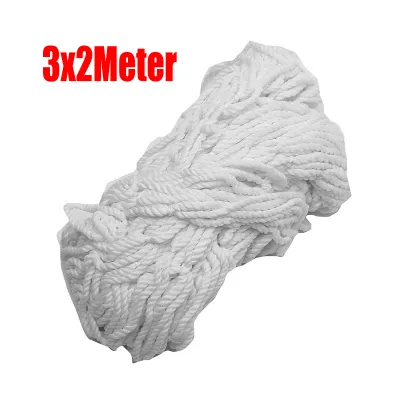
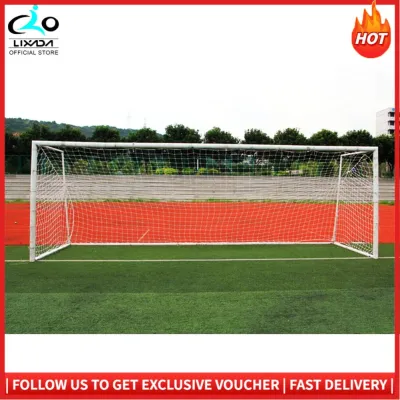
![[COD] SAjeNH SPORT 6 x 4ft Football Soccer Goal Post Net For Kids Outdoor Football Match Training Hot Sale 6 x 4ft Football Soccer Goal Post Net For Kids Outdoor Football Match Training New 6 x 4ft Football Soccer Goal Post Net For Kids Outdoor Football M](https://img.lazcdn.com/g/p/9d040375c1510c018160a5e0b1291a19.jpg_400x400q80.jpg_.webp)
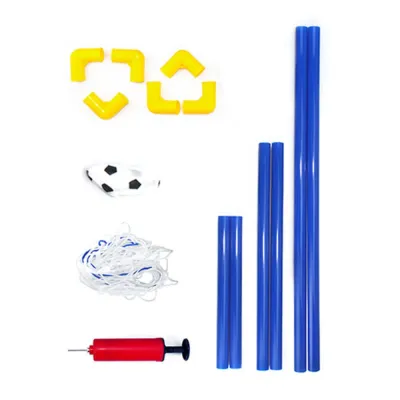
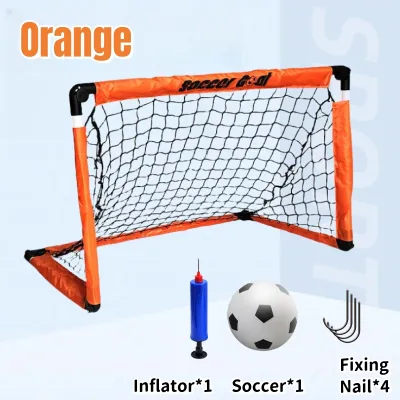
![[COD] E-WOITD Portable Micro Soccer Goal Set (Net Pump Ball Included) Lightweight Indoor Outdoor Gear For Park & Beach Training 1Set](https://img.lazcdn.com/g/p/16773ad5781fb80019280dd4e3c7aed8.jpg_400x400q80.jpg_.webp)
Prices are valid at publication and may change. Please refer to the product page for the latest price.
For adult and professional play, the standard full-size goal measures 8 feet high by 24 feet wide (approximately 2.44 meters by 7.32 meters). This size is designed for 11-a-side matches on regulation fields and requires a significant amount of open space to use safely. The depth of these goals often ranges from 4 to 6 feet at the base, requiring a deep footprint to support the net structure.
Youth and junior goals are scaled down to match shorter strides and limited goalkeeper reach. Common youth dimensions include 6.5 feet by 18.5 feet (approximately 2 meters by 5.6 meters) for players aged 9 to 12, and 6 feet by 12 feet (approximately 1.8 meters by 3.6 meters) for younger children. These intermediate sizes allow developing players to practice realistic shooting and goalkeeping without being overwhelmed by the goal’s scale.
For casual backyard play, quick drills, or small-sided games, mini or pop-up goals are highly practical. These typically range from 3 feet by 5 feet to 4 feet by 6 feet, offering a compact target that is easy to set up and store. They are lightweight, highly portable, and perfect for quick setup on concrete driveways or small grassy patches.
Choosing the Right Size for Player Age and Skill
Matching the soccer net goal to the player’s age and skill level ensures proper skill development and keeps the game enjoyable. Using a goal that is too large can discourage young goalkeepers, while a goal that is too small might not challenge older players.

Full-size goals are the standard for players aged 13 and older, including adult recreational and competitive leagues. These goals help players develop realistic shooting power, accuracy, and goalkeeper positioning that translates directly to official match play. Training with regulation dimensions is crucial for competitive players who need to build accurate muscle memory for match days.
Youth leagues utilize intermediate sizes to ease the transition as players grow. For instance, players transitioning from small-sided games to larger fields benefit from goals measuring 7 feet by 21 feet, which help them adapt to wider angles before stepping up to adult-sized equipment. This gradual progression prevents players from developing poor habits, such as staying glued to the goal line because the net is too wide to cover.
Toddlers and beginners under the age of 8 do best with mini-goals or pop-up nets. These smaller proportions match their physical scale, allowing them to focus on basic ball control, passing, and the joy of scoring without being overwhelmed by a massive frame. It also keeps the game fast-paced and fun, which is essential for maintaining interest in the sport at an early age.
Measuring Your Space and Calculating Safety Buffers
Before purchasing a soccer net goal, you must carefully measure your available space to ensure a safe and functional setup. A goal that physically fits into a yard might still be too large once you account for the movement of players and the trajectory of missed shots.
Start by measuring the physical footprint of the goal frame, which includes the width, height, and depth. The depth, or how far the net extends backward from the crossbar, is often overlooked but is crucial for determining how close the goal can sit to a wall or fence. To visualize this, use chalk or training cones to map out the exact dimensions on your lawn or driveway before making a purchase.
Calculate a generous safety buffer zone around the goal to protect your property and players. It is best to maintain at least 2 to 3 meters of clear space behind the net and on both sides to absorb high-velocity missed shots and prevent damage to windows, plants, or neighboring properties. This buffer also gives players enough room to run around the back of the goal to retrieve balls without colliding with obstacles.
Check for overhead clearance and ground obstacles before finalizing your setup. Ensure there are no low-hanging tree branches, clotheslines, or utility wires above the goal area, and verify that ground anchor points will not interfere with buried pipes or garden irrigation systems. Taking these precautions prevents costly utility damage and ensures a safe playing environment.
Aligning Goal Dimensions with Your Training Goals
The physical dimensions of your soccer net goal should directly support your specific training objectives. Different sizes encourage different styles of play and help target distinct technical skills during practice sessions.
Smaller, targeted nets are excellent for developing shooting accuracy and precision. When strikers practice with a compact target, they are forced to aim for the corners rather than relying on raw power, which significantly improves their performance in real matches. These smaller nets are also ideal for passing drills, helping players improve their short-game accuracy.
Goalkeepers require wider goals to practice essential positioning, diving, and reflex drills. Training on a goal that is too narrow prevents keepers from learning how to cover the far posts and manage their angles effectively. A wider net forces the goalkeeper to develop lateral agility and proper footwork to cover the entire goalmouth.
For casual family matches or small-sided scrimmages, a medium-sized portable goal offers the perfect balance. It provides a satisfying target for recreational players of all ages without requiring the massive footprint of a professional-grade net. These goals are versatile enough to handle both competitive backyard matches and structured training drills.
Setup, Anchoring, and Storage for Your Space
Practical considerations like setup time, anchoring methods, and storage are just as important as the physical size of the goal. In tropical climates like the Philippines, where heavy rains, high humidity, and intense sunlight are common, choosing the right materials and storage plan is vital.
Portable, foldable, or pop-up designs are ideal for multi-use spaces, such as shared driveways or barangay courts. These goals can be assembled in minutes and packed away quickly to protect them from intense sun exposure or sudden monsoon downpours. Storing your equipment indoors when not in use prevents the net fibers from degrading under harsh UV rays.
For dedicated grass or turf areas, permanent or semi-permanent anchoring is recommended to keep the frame stable. Ground pegs, J-hooks, or spiral anchors secure the frame into the soil, preventing the goal from shifting during intense play or tipping over in high winds. If you live in coastal areas, look for powder-coated steel or aluminum frames to prevent rust from salt air.
Whether you are investing in a budget-friendly pop-up net starting around ₱1,500 or a heavy-duty training frame, protecting your gear from the elements ensures you get the best value. Always check the manufacturer’s guidelines regarding weight, wind resistance, and net tension. Ensuring the net is properly tensioned prevents balls from rebounding unpredictably or escaping through loose gaps, keeping your practice sessions safe and efficient. Regularly inspect the anchor points and net attachments to ensure everything remains secure over time.
Frequently Asked Questions (FAQ)
Can I use a full-size soccer goal in a small backyard?
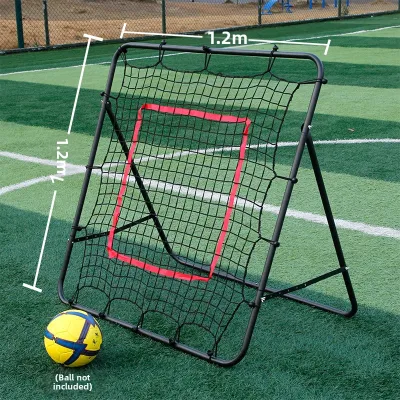
Using a full-size soccer goal in a small backyard is generally not recommended due to safety risks and spatial limitations. Without a proper safety buffer zone, missed shots can easily cause broken windows, damage fences, or land in neighboring properties, leading to safety hazards. For confined residential spaces, space-saving alternatives like rebounder nets or scaled-down portable goals are much safer and more practical options.
How do I secure a soccer goal to prevent it from tipping over?
To prevent a soccer goal from tipping over, you must secure it using anchoring methods suitable for your playing surface. On grass or turf, use heavy-duty ground pegs or metal stakes driven deep into the soil. On hard surfaces like concrete driveways or indoor courts, utilize sandbags, weighted bases, or specialized anchor straps, and always follow the manufacturer’s safety instructions to ensure the frame remains stable during use.
What is the best material for a backyard soccer net?
The best material for a backyard soccer net depends on weather exposure and how often it will be used. Look for nets made from UV-treated polyethylene or high-density nylon, which resist degradation from intense tropical sunlight and heavy rain. For the frame, powder-coated steel or heavy-duty aluminum offers excellent rust resistance and durability, while lightweight PVC is a highly portable option for casual, temporary setups.
Community discussion
Share your experience or ask a question. Comments are reviewed before publication.