
Choosing between a soft plastic and a hard body shrimp fishing lure depends on your immediate fishing environment, the target species, and your preferred retrieval style. Neither category is universally superior, but each excels under specific conditions. Soft plastic shrimp lures offer a lifelike texture, subtle leg and antenna movements, and a natural sink rate, making them highly effective in heavy cover, shallow flats, and when targeting cautious or easily spooked fish. Hard body shrimp lures provide superior casting distance, structural durability against sharp teeth, and built-in acoustic features like rattles or diving lips, making them the preferred tool for covering expansive open water, battling strong winds, and triggering aggressive reaction strikes from active predators.
By understanding how these materials behave underwater, you can select the right tool for your specific fishing scenario. Whether you are casting into mangrove roots or sweeping across sandy flats, matching the lure’s physical properties to the water conditions is the key to maximizing your catch rate.
Action and Realism: How Each Lure Mimics a Shrimp
To effectively fool predatory fish, a shrimp fishing lure must replicate the distinct behavior of a live shrimp. Shrimp rarely swim in straight lines over long distances; instead, they drift with the current, crawl along the bottom, or escape danger with sudden, backward tail flicks.
Products mentioned in this guide
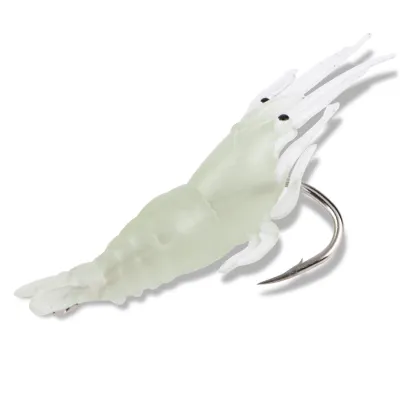
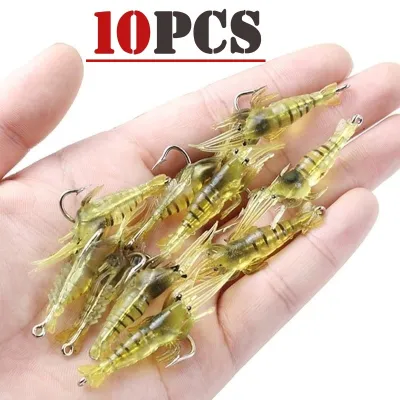
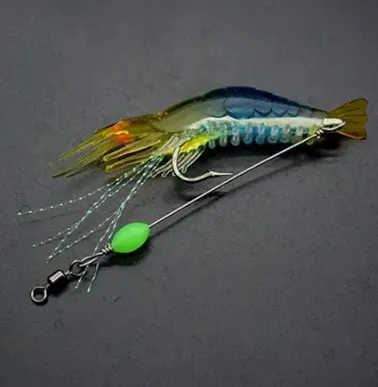
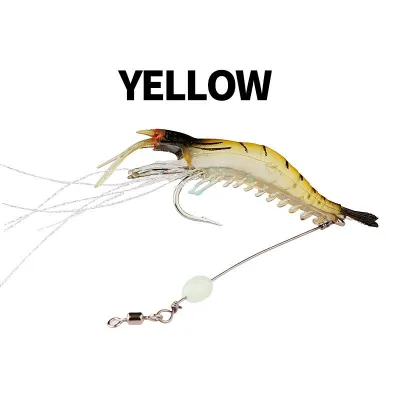
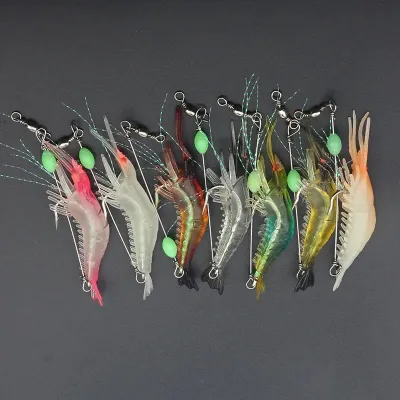
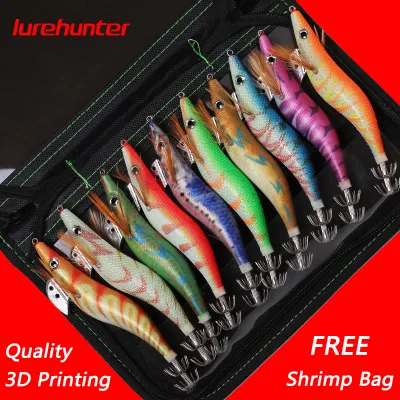
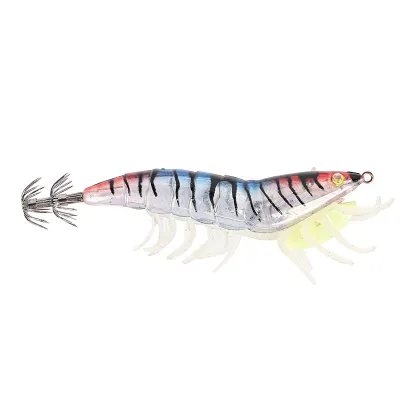
Prices are valid at publication and may change. Please refer to the product page for the latest price.
Soft plastic shrimp lures excel at mimicking these subtle, organic movements. The pliable material allows the lure’s legs, antennae, and tail to ripple with the slightest water movement, even when the bait is resting on the bottom—a technique known as dead-sticking. When twitched, a soft plastic shrimp glides and sinks with a slow, fluttering motion that closely resembles a molting or injured crustacean. This quiet, natural presentation is highly effective in clear water, where fish rely heavily on visual cues and can easily spot artificial abnormalities.
Conversely, hard body shrimp lures rely on engineered mechanics to attract attention. These lures are often constructed with jointed body segments, built-in diving lips, or internal rattle chambers. When retrieved, a hard body shrimp produces a wider, more pronounced wobble and displaces a significant volume of water. The internal rattles emit high-frequency acoustic vibrations that travel long distances through the water column, alerting predators before they even see the lure.
While the movement of a hard body lure can appear somewhat mechanical or rigid up close, its strength lies in its ability to trigger instinctual reaction strikes. The sudden flash of a hard shell combined with loud vibrations can provoke an aggressive bite from a predator that might otherwise ignore a passive bait.
When deciding which action to employ, assess the local water clarity and the activity level of the fish. In murky water or during low-light conditions, the acoustic signals and aggressive displacement of a hard body lure are invaluable for helping fish locate your bait. In crystal-clear water or highly pressured areas, the silent, ultra-realistic profile of a soft plastic lure is generally more reliable for coaxing wary fish into biting.
Durability and Lifespan: Surviving Teeth and Snags
The physical environment and the dental anatomy of your target species play a major role in determining how long your lure will last. In tropical estuaries and coastal reefs, lures are routinely subjected to abrasive structures and aggressive, toothy predators.

Soft plastic shrimp lures are inherently fragile. Species with sharp teeth or powerful crushing jaws, such as mangrove jack (mangagat), groupers (lapu-lapu), and barramundi (apahap), can easily tear, puncture, or sever a soft plastic body during a single strike. Even a missed strike can pull the plastic off the hook keeper, requiring you to adjust or replace the bait. Over a long day of fishing, this vulnerability can lead to a high consumption rate of soft plastics, requiring you to keep multiple packs in your tackle box and increasing your long-term gear expenses.
Hard body shrimp lures, typically molded from tough acrylonitrile butadiene styrene (ABS) plastic or acrylic, offer exceptional structural integrity. They easily withstand the sharp teeth of predatory fish and can bounce off rocky ledges, concrete pylons, and oyster beds without sustaining structural damage. A single high-quality hard body lure can survive dozens of aggressive strikes, making it a highly durable and cost-effective investment over its lifespan.
However, maintaining your gear requires regular inspection regardless of the material. For soft plastics, check the nose and hook exit point after every hookup; if the plastic is torn or sliding down the shank, replace it to ensure proper presentation. For hard body lures, inspect the diving lip for hairline cracks and check the hook hangers and split rings for bending after battling large fish. A cracked lip can ruin the lure’s swimming action, while bent hardware can fail during your next hookup.
From a budget perspective, soft plastics generally feature a lower upfront cost, often priced between ₱150 and ₱400 for a multi-pack, though they require frequent replacement. Hard body lures demand a higher initial investment, usually ranging from ₱300 to ₱800 per single lure, but their extended lifespan often makes them more economical over several fishing trips.
Casting Distance and Rigging Versatility
The physical weight, density, and aerodynamic profile of your lure dictate how far you can cast and how effectively you can present the bait in challenging weather conditions.
Casting Distance and Wind Resistance
Hard body shrimp lures are generally denser and more aerodynamic than their soft plastic counterparts. Because they do not deform in flight and often feature internal weight-transfer systems, hard bodies cut through strong head-winds and cross-winds with minimal resistance. This aerodynamic efficiency allows you to make exceptionally long casts, which is crucial when fishing shallow flats or open bays where close proximity to the boat or shoreline might spook wary fish.
Soft plastic shrimp lures, being lighter and more wind-resistant due to their flexible legs and appendages, are more challenging to cast long distances on their own. To achieve comparable casting distance, you must pair them with external weights, such as weighted jig heads, bullet weights, or belly-weighted hooks. While these additions improve distance, they also alter the natural sink rate and action of the soft plastic, requiring a careful balance between casting performance and underwater presentation.
Rigging Options and Hook Configurations
The primary advantage of soft plastic shrimp lures lies in their rigging versatility. They can be customized to suit almost any underwater terrain. For instance, you can rig a soft plastic shrimp weedless on an offset worm hook, allowing you to drag the bait directly through thick mangrove roots, sea grass, or over rocky structures without snagging. Alternatively, you can rig it on a heavy jig head for deep channels, or use a drop-shot configuration to keep the bait suspended just above the bottom.
Hard body shrimp lures offer far less rigging flexibility. They almost always come pre-equipped with fixed treble hooks or inline single hooks suspended from the belly and tail. While this configuration provides excellent hook-up ratios when a fish strikes, it makes the lure highly susceptible to catching on underwater obstructions. Dragging a hard body shrimp with exposed treble hooks through a mangrove root system or an oyster bed will almost certainly result in a lost lure. Consequently, hard bodies are best reserved for clean water columns, sandy bottoms, or the outer edges of structure.
Matching the Lure to Your Target Species and Environment
To maximize your success on the water, you must align your lure selection with the specific habitat you are fishing and the behavioral state of the target species.
Inshore environments characterized by dense, structural cover—such as mangrove estuaries, bamboo fish pens (baklad), and rocky breakwaters—are natural havens for shrimp and the predators that hunt them. In these snag-prone areas, soft plastic shrimp lures are highly advantageous. Rigged weedless, a soft plastic can be skipped deep under overhanging mangrove branches or bounced slowly along oyster-encrusted rocks where real shrimp seek shelter. This allows you to place the bait directly in the strike zone of ambush predators like mangrove jack and groupers without constantly losing gear to snags.
When fishing open water, sandy flats, or deep channels, the priorities shift from snag-resistance to coverage and attraction. Here, hard body shrimp lures are the superior choice. Their excellent casting distance allows you to cover expansive flats quickly, searching for active schools of fish. The vibrations and flashes produced by a hard body lure as it deflects off the sandy bottom can draw predators like threadfin salmon or barramundi from several meters away, turning a passive search into an active bite.
The behavioral state of the fish also dictates which material will perform better. Highly pressured fish in popular public fishing spots or those feeding in very clear water are often cautious and easily deterred by unnatural sounds or rigid movements. For these fish, a slow, drift-and-twitch presentation using a scent-infused soft plastic shrimp is often the only way to induce a strike. On the other hand, when fish are actively feeding during a tide change or in murky water, the aggressive vibration, flash, and sudden stop-and-go action of a hard body shrimp can trigger instinctive reaction strikes before the fish has time to inspect the lure closely.
Always match your gear selection to your physical ability and the local environment. Navigating thick mangrove roots or casting in high winds requires proper rod and line management; no lure can compensate for poor casting control or an incorrectly set drag system.
The Final Decision: A Quick Selection Framework
Selecting the right shrimp lure does not have to be a complicated process. By evaluating your immediate fishing conditions against a few key criteria, you can quickly identify the most effective option for your tackle box.
Choose a soft plastic shrimp lure if:
- Heavy Cover: You are fishing in heavy cover, such as mangrove roots, thick sea grass, or rocky structures, where snags are highly likely.
- Wary Fish: The water is exceptionally clear, or you are targeting highly pressured, cautious fish that require a silent, ultra-realistic presentation.
- Finesse Action: You want to fish slowly, utilizing dead-sticking or subtle bottom-hopping techniques to mimic a resting or injured shrimp.
- Custom Rigging: You prefer the flexibility of customizing your rigging, such as switching between weedless hooks, jig heads, or drop-shot rigs.
Choose a hard body shrimp lure if:
- Long Casting: You need to maximize your casting distance to cover large flats, open water, or to reach fish feeding far from the shoreline.
- Windy Conditions: You are fishing in windy conditions where lighter soft plastics would drift off course or fail to cast effectively.
- Toothy Predators: The target species has sharp teeth or powerful jaws that would easily destroy soft plastic baits.
- Ready to Fish: You want a highly durable, ready-to-use lure out of the box that requires no complex rigging or adjustment.
Verify first if:
- Local Regulations: Your local fishing area or catch-and-release zone has specific regulations regarding hook types. Many hard body shrimp lures come pre-rigged with treble hooks, which may be restricted in certain conservation areas. In such cases, you may need to swap the trebles for inline single hooks or opt for a single-hook soft plastic setup.
Ultimately, the most successful anglers do not rely on a single lure type. Carrying a balanced selection of both soft plastic and hard body shrimp lures ensures you can adapt instantly to shifting tides, changing weather, and the unpredictable moods of the fish.
Frequently Asked Questions (FAQ)
Do I need to add scent to hard body shrimp lures?
While hard body shrimp lures primarily rely on visual flash, water displacement, and acoustic vibrations to attract fish, applying a liquid or gel scent can be beneficial. Scent helps mask human odors—such as sunscreen, fuel, or sweat—that may have transferred to the lure during handling, and it can encourage a predator to hold onto the hard shell slightly longer when it strikes. However, because hard plastics have smooth, non-porous surfaces, topical scents wash off much faster than they do on soft, absorbent plastics. If you choose to use scent on a hard body lure, expect to reapply it frequently, or look for gel-based formulas designed for hard baits.
Can I use shrimp lures in both saltwater and freshwater?
Yes, shrimp lures are highly effective in both saltwater and freshwater environments, as many freshwater predators actively feed on freshwater prawns and shrimp. However, you must verify the specifications of the lure’s hardware before switching environments. Saltwater environments are highly corrosive, requiring specialized corrosion-resistant hooks, split rings, and eyelets. If you plan to use a freshwater-rated hard body shrimp lure in saltwater, you should replace the stock hooks and split rings with marine-grade hardware to prevent rapid rusting and structural failure during a fight.
Community discussion
Share your experience or ask a question. Comments are reviewed before publication.