
Selecting the best solar signal light for your kayak or stand-up paddleboard in the Philippines requires balancing high visibility, marine-grade durability, and secure mounting. Because tropical waters present unique challenges—ranging from intense UV exposure and highly corrosive saltwater to sudden afternoon squalls—a reliable light must do more than just shine. It must withstand constant exposure to the elements while remaining firmly attached to your watercraft. When paddling during low-light hours, such as dawn, dusk, or night, a dependable light ensures you are visible to larger motorized vessels, which is critical for safety on busy coastal waterways and inland lakes. However, remember that safety equipment is only a supplement to proper maritime training, situational awareness, and sound personal judgment.
Core Features to Evaluate for Kayak and Paddleboard Lights
To find a solar signal light that performs reliably on Philippine waters, you must first establish clear evaluation criteria based on visibility, power, and material construction.
Visibility is your primary defense against collisions. Under general maritime safety guidelines, a small, unpowered vessel should display an all-around white light visible from a distance of at least two nautical miles. When evaluating lights, look for models that offer both steady and flashing modes. A steady light helps other boaters gauge your exact position and distance, while a flashing or strobe mode is highly effective for drawing attention in emergency situations. Ensure the light output, measured in lumens, is sufficient to cut through coastal haze or heavy tropical humidity without blinding you as the paddler.
Products mentioned in this guide
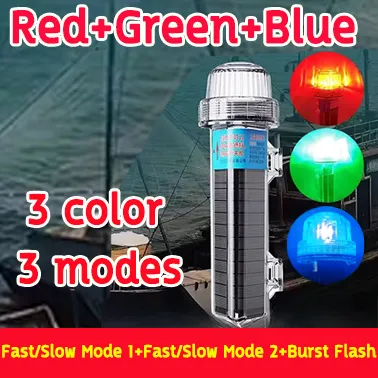
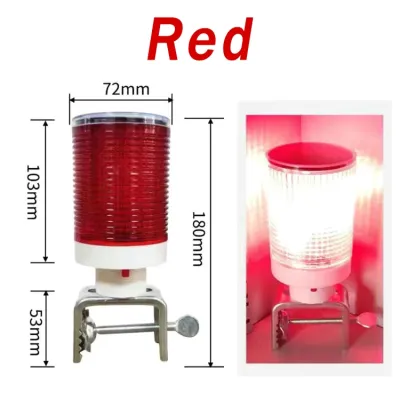
![[24h Ship]Solar Mark Beacon Light Gillnet Fishing Net Sign Light Marine Signal Light Buoy Light Mesh Label Marine Fishing Emblem Lights Boat With Signal Light Strobe Automatic Light Control Navigation Lights For Boats](https://img.lazcdn.com/g/p/4cbf56d14a830865a29f663583221faa.jpg_400x400q80.jpg_.webp)
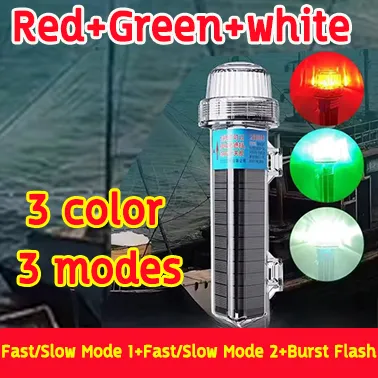
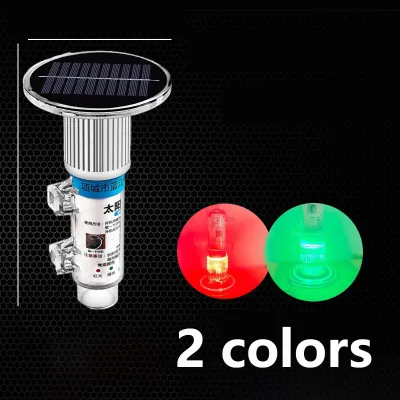
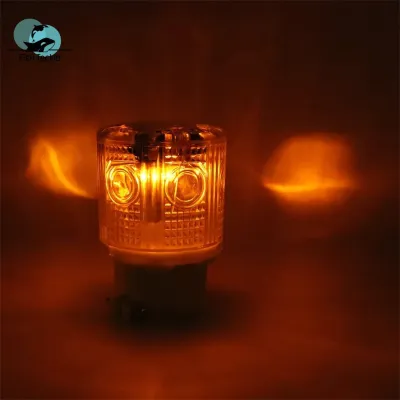
Prices are valid at publication and may change. Please refer to the product page for the latest price.
Battery capacity and solar charging efficiency are critical when operating in a tropical climate. While the Philippines enjoys abundant sunshine, seasonal monsoons and prolonged overcast periods can severely limit solar charging. Look for lights equipped with high-efficiency monocrystalline solar panels, which perform better under partial cloud cover than older polycrystalline designs. The internal battery should have a rated capacity that supports at least 12 to 15 hours of continuous operation on a single full charge, ensuring it can run through the night even if the previous day was cloudy.
The housing material must be engineered to survive the harsh combination of intense tropical UV rays and highly corrosive saltwater. Look for manufacturer specifications that explicitly mention UV-stabilized polycarbonate or marine-grade ABS plastics. Standard plastics will quickly become brittle, yellow, and crack under the Philippine sun, leading to water ingress and electrical failure.
Finally, always prioritize solar signal lights that feature a manual charging backup, such as a sealed USB port. Having a secondary way to charge the light via a power bank or wall outlet before you head out ensures you are never solely dependent on the weather, especially during the rainy season when consecutive days of heavy overcast are common.
Matching Mounting Options to Your Watercraft
A signal light is only useful if it stays attached to your vessel. The mounting mechanism you choose must match the specific material and design of your kayak or paddleboard to ensure maximum visibility without compromising the craft’s stability or structural integrity.

Deck and hull mounts are popular for rigid composite or rotomolded polyethylene kayaks. If you choose an adhesive mount, verify the manufacturer’s specifications regarding marine-grade adhesive strength and curing times. In the high-humidity environment of the Philippines, adhesives can take longer to cure fully, and improper application can lead to the mount peeling off mid-trip. For inflatable stand-up paddleboards, avoid any mounts that require drilling or screws, as these will ruin the board. Instead, look for flexible, heavy-duty suction mounts or specialized adhesive patches designed specifically for PVC drop-stitch materials. Always test the bond strength on a dry, clean surface before launching.
Rigging and bungee attachments offer an excellent alternative for kayaks with limited flat deck space. Many sit-on-top kayaks feature deck rigging or bungee cords designed for securing gear. Look for solar signal lights that feature integrated clips, carabiner loops, or flexible silicone straps that can wrap securely around these existing lines. When using bungee mounts, ensure the light is positioned high enough on the deck—such as on the bow or stern—so that it is not obstructed by your body, paddle stroke, or gear bags.
Personal flotation device (PFD) and gear clips provide an essential layer of personal visibility. If your vessel-mounted light is positioned low on the deck, it can easily be obscured by waves or the curve of your hull. A wearable solar signal light clipped to the shoulder strap of your PFD or the back of your safety vest ensures that your light remains visible at the highest possible point. Wearable lights are also invaluable if you are separated from your watercraft, as they keep you visible to rescue vessels in the water.
Checking Weather Resistance and Power Reliability
Interpreting product specifications accurately is essential to avoid purchasing a light that will fail at the first splash. Marine environments demand the highest standards of weatherproofing and electrical protection.
Start by checking the Ingress Protection (IP) rating provided by the manufacturer. For kayaking and paddleboarding, where the light is guaranteed to be splashed, sprayed, and potentially submerged during a capsize, you should look for a minimum rating of IP67. An IP67 rating means the device is completely dust-tight and can survive temporary immersion in water up to one meter deep for 30 minutes. For even greater peace of mind, an IP68 rating indicates the light is suitable for continuous submersion under conditions specified by the manufacturer. Avoid lights rated IP65 or lower, as they are only protected against light splashes and will likely fail if washed over by a wave or submerged.
Examine the material specifications of the housing and seals. High-quality marine lights utilize silicone gaskets and O-rings to seal the battery compartment and charging ports. Before purchasing, verify that these seals are thick, flexible, and seated securely in their grooves. The outer lens should be made of impact-resistant polycarbonate, which can withstand accidental paddle strikes or drops onto rocky shores.
Solar panel placement and angle adjustments also play a major role in power reliability. Some advanced solar signal lights feature adjustable mounts that allow you to angle the solar panel directly toward the sun while paddling or when parked on the beach. This flexibility maximizes solar energy absorption, especially during the early morning or late afternoon when the sun is low on the horizon.
Lastly, inspect the charging port covers. If the light features a USB backup port, the protective rubber cap must fit extremely tightly. A loose cap will allow saltwater to enter the port, causing rapid galvanic corrosion that will permanently ruin the light’s internal circuitry.
Safety Boundaries and Pre-Launch Checks
While a solar signal light is an excellent tool for increasing your visibility, it is vital to understand its operational limits and how it fits into broader water safety practices.
First, you must distinguish between supplementary visibility markers and official navigation lights. A simple solar signal light is designed to make you visible to others; it does not necessarily meet the strict legal definitions of navigation lights required for larger vessels under international maritime regulations. In the Philippines, the Philippine Coast Guard and local municipal authorities regulate waterway safety. For unpowered small craft like kayaks and paddleboards, regulations generally require you to carry at least one efficient white light (such as a flashlight or lantern) that can be exhibited in sufficient time to prevent a collision. A solar signal light serves as an excellent constant marker, but it should always be paired with an active, directional light source.
Before every launch, perform a rigorous safety check of your lighting equipment. Verify that the battery is fully charged, either from solar exposure or via a manual USB backup. Inspect the mounting bracket or adhesive to ensure it is secure and has not been degraded by heat or salt. Turn the light on and cycle through all modes to confirm the LEDs are functioning at full brightness.
Establish clear stop conditions for your trip. If your signal light fails during your pre-launch check, or if you notice water condensation inside the lens, do not proceed with a low-light paddle. Similarly, if weather conditions deteriorate rapidly, reducing visibility and limiting the solar panel’s ability to maintain a charge, seek shelter immediately. Never rely on a light to save you from hazardous sea conditions or extreme weather; equipment cannot replace proper safety training and cautious decision-making.
Building a Comparison Shortlist for Purchasing
When browsing local outdoor stores or online marketplaces in the Philippines, creating a structured decision matrix will help you filter out low-quality options and select a reliable solar signal light.
Your comparison matrix should evaluate candidate lights across four primary axes: verified light output (lumens), battery runtime on a full charge, total weight (to avoid throwing off the balance of your paddleboard), and the versatility of the included mounting hardware. Look for products that provide clear, unambiguous specifications rather than vague marketing claims. While budget-friendly options may cost only a few hundred ₱, investing in a higher-quality light with certified weatherproofing is always safer in the long run.
Additionally, check the warranty terms and the availability of replacement parts. Marine gear operates in a highly destructive environment, and the ability to purchase replacement mounting brackets, silicone straps, or O-rings locally can significantly extend the lifespan of your investment.
When reading user reviews on e-commerce platforms, look specifically for feedback from buyers who have used the light in saltwater environments over several months. Pay close attention to reports of rust on metal components, yellowing of the plastic lens, or adhesive failure under high heat. Avoid products that lack clear manufacturer specifications, official IP ratings, or contact information for customer support. Investing a bit more in a well-documented, highly rated marine light ensures your safety on the water is never compromised by cheap, unrated electronics.
Frequently Asked Questions (FAQ)
Do I need a specific color of light for kayaking at night?
Yes, maritime safety conventions generally dictate the use of specific colors to prevent confusion on the water. For small, unpowered craft like kayaks and paddleboards, an all-around white light is the standard requirement. This light must be visible from all directions to alert other vessels of your presence. Avoid using flashing red or green lights as your primary signal, as these colors are reserved for lateral navigation markers and the port or starboard sides of motorized vessels; misusing them can confuse other boaters about your direction of travel. Always consult local Philippine Coast Guard guidelines or municipal ordinances for the specific waterway you plan to paddle, as some local zones may have strict rules regarding light colors to avoid interference with official navigation buoys.
Can I rely solely on a solar signal light for night paddling?
No, you should never rely solely on a solar signal light for night paddling. A solar signal light is a passive marker designed to help others see you; it does not provide the focused, active illumination you need to see obstacles, shallow reefs, floating debris, or changes in the shoreline. For safe night operations, you must carry a primary active light source, such as a high-powered waterproof headlamp or a handheld marine flashlight, which allows you to scan the water ahead. Additionally, always carry a backup battery-powered light in case your solar light experiences a technical failure or runs out of power due to consecutive overcast days. Always assess the ambient light conditions, such as the moon phase and coastal light pollution, before launching.
Community discussion
Share your experience or ask a question. Comments are reviewed before publication.