
To safely accommodate a foldable stair climber in a typical condominium, you generally require a minimum floor area of 1.2 to 1.8 meters in length and 0.6 to 0.9 meters in width during use, alongside a ceiling height of at least 2.4 to 2.7 meters. However, these dimensions vary significantly depending on your physical height, the machine’s design, and whether it is in its active or storage state.
Condo living in urban areas like Metro Manila demands careful spatial planning, as floor space is premium and ceiling heights are often lower than those in traditional houses. Selecting fitness equipment without verifying these measurements can lead to an unusable machine, structural damage, or personal injury.
Understanding the Footprint: Deployed vs. Stored Dimensions
When planning a home gym setup in a limited space, you must distinguish between the active working area and the storage area. The deployed footprint refers to the total floor space the machine occupies while you are actively exercising. This footprint is always larger than the physical dimensions of the machine itself, as it must account for your body’s natural movement, the sway of your arms, the extension of the handlebars, and the space required to safely step onto and off the equipment.
Products mentioned in this guide
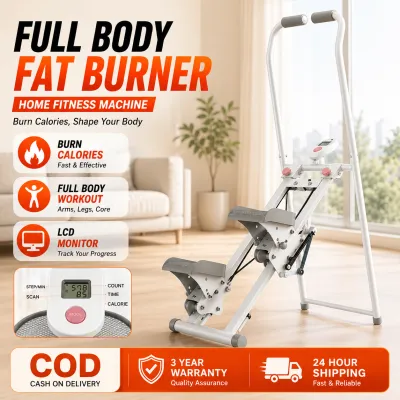
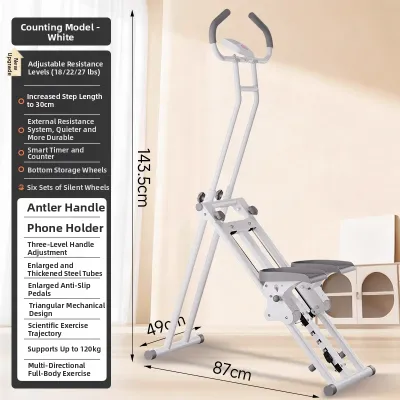
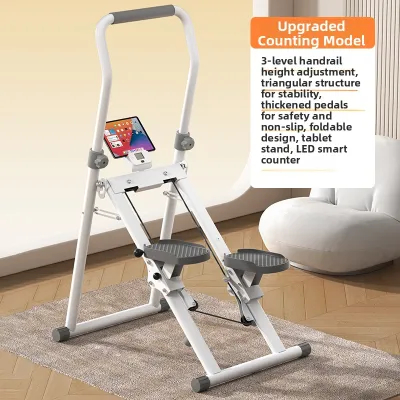
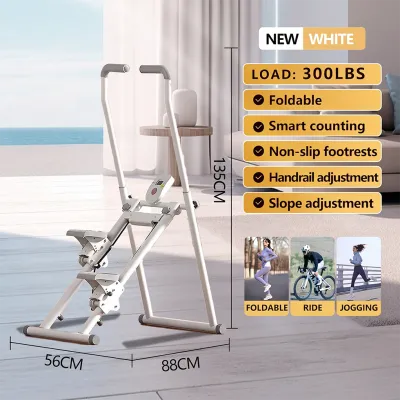
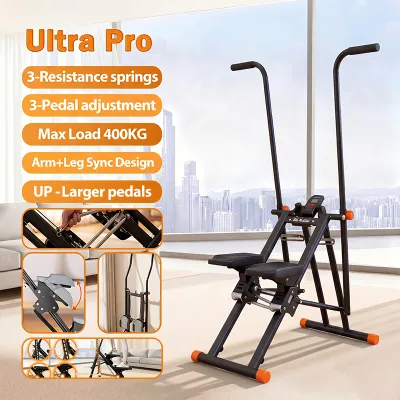
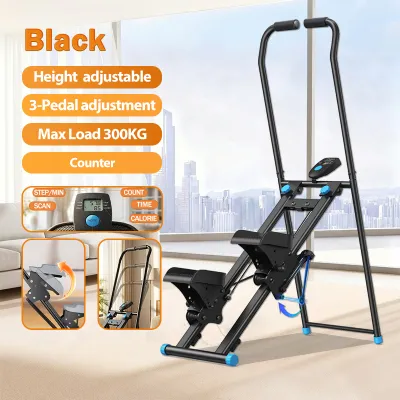
Prices are valid at publication and may change. Please refer to the product page for the latest price.
For a standard foldable stair climber, the physical frame might only measure 100 centimeters by 70 centimeters, but the actual deployed footprint required for safe operation can easily extend to 150 centimeters by 120 centimeters. Ignoring this operational boundary can lead to cramped, uncomfortable workouts and increased safety risks.
Conversely, the stored footprint represents the dimensions of the machine when it is fully collapsed, folded, or tilted upright. This state is designed to minimize the impact on your daily living space when the workout is over. Depending on the model, a foldable stair climber might fold flat to a height of 30 centimeters, allowing it to slide under a bed, or it might fold vertically, occupying a tiny floor footprint of perhaps 50 centimeters by 70 centimeters while standing upright.
To ensure a precise fit, always locate the exact physical specifications in the manufacturer’s product manual or official technical listing before making a purchase. Do not rely on generic marketing terms such as “compact,” “space-saving,” or “apartment-friendly.” These labels are subjective and do not guarantee that the machine will fit into your specific layout, making exact numerical verification an absolute necessity.
Calculating Ceiling Height and Vertical Clearance
Ceiling height is often the most critical limiting factor when placing a stair climber in a condominium. Unlike treadmills or exercise bikes, which keep your body relatively close to the floor, a stair climber constantly elevates your entire body weight. To prevent painful head injuries and ensure a comfortable workout, you must calculate your minimum vertical clearance using a straightforward formula.

The formula to determine your minimum required ceiling height is:
Minimum Ceiling Height = User Height + Maximum Pedal Elevation + Safety Headroom Buffer
The maximum pedal elevation is the height of the foot pedals at their highest point during the climbing motion, which typically ranges from 30 to 50 centimeters off the floor. The safety headroom buffer is the extra space needed to prevent your head from coming too close to the ceiling during intense, high-impact workouts where your body might bounce slightly; manufacturers generally recommend a buffer of at least 30 to 50 centimeters.
For example, if you stand 175 centimeters tall and your foldable stair climber has a maximum pedal elevation of 40 centimeters, you will need a minimum ceiling height of 245 centimeters (175 + 40 + 30) to exercise safely. If you prefer a more generous safety margin, a ceiling height of 265 centimeters is highly recommended.
Before purchasing, use a reliable tape measure to verify your condo’s actual ceiling height from the finished floor. Pay close attention to structural obstructions that reduce vertical clearance, such as recessed lighting fixtures, ceiling fans, concrete structural beams, dropped bulkheads for air conditioning ducts, or sprinkler systems. Exercising directly under a ceiling fan or a low-hanging light fixture poses an immediate safety hazard.
Additionally, the specific mechanism of your fitness equipment plays a major role in vertical height requirements. True stair-tread climbers, which feature a revolving flight of actual stairs, require a significantly higher vertical clearance because the user stands much higher off the ground. In contrast, pedal-based climbers—which utilize independent pedals moving in a vertical or slightly elliptical path—generally keep the user lower to the floor, making them far more suitable for condos with standard 2.4-meter ceilings.
Measuring Your Condo Space for Safe Placement
To avoid spatial conflicts, follow a systematic measurement protocol in your designated workout zone. Begin by clearing the area of all temporary obstacles. Using a metal tape measure, map out the exact length and width of the machine’s deployed dimensions directly on your floor. You can use painter’s tape to outline this boundary on the floor, providing a clear visual representation of how much living space the machine will temporarily occupy.
Operational clearance is vital for safety and must be factored into your measurements. Never place the machine flush against a wall or furniture during use. You must maintain a clear safety zone of at least 50 to 60 centimeters on all sides, and at least 1 meter of clear space directly behind the machine. This clearance ensures you can safely mount and dismount the equipment without tripping, allows your arms and elbows to move freely without hitting nearby walls, and provides a clear path for an emergency exit if you lose your balance.
Beyond the workout zone, you must plan the logistics of getting the machine into your unit. Measure the width and height of your condo’s front door, interior doorways, hallway corners, and the passenger elevator cabin. Many foldable stair climbers are shipped semi-assembled in large, heavy cardboard boxes. If your building’s elevator is too small or your hallway corners are too tight to navigate a 1.5-meter-long box, you may face severe delivery challenges, potentially forcing you to unbox the heavy equipment in a common corridor, which may violate condominium association rules.
Finally, consider the physical impact of the machine on your condo’s structure. While modern concrete slab buildings can easily support the weight of a domestic stair climber (which typically ranges from 40 to 80 kilograms), the concentrated weight combined with your active body movement can damage delicate flooring materials. Hardwood, engineered wood, laminate, and vinyl tiles can easily scratch, dent, or crack under the intense pressure of the machine’s feet. Placing a high-density, heavy-duty rubber equipment mat beneath the stair climber is highly recommended to protect your flooring, prevent sliding, and absorb structural vibrations.
Smart Storage Strategies for Small Apartments
Integrating a large piece of fitness equipment into a compact condo layout requires a clear storage strategy. Foldable stair climbers generally utilize one of two primary folding designs: a vertical upright fold or a flat horizontal fold. Understanding these mechanisms will help you determine where the machine can live when it is not in use.
A vertical upright fold allows the machine’s frame to collapse inward, standing upright on its base. This design is highly efficient for saving floor space, reducing the footprint to a fraction of its active size. It is ideal for storing the machine flush against a wall in a multi-purpose room, placing it inside a deep utility closet, or tucking it behind a structural column.
A flat horizontal fold, on the other hand, collapses the handlebars down parallel to the pedals, resulting in a low-profile unit. This design is perfect for sliding the machine horizontally under an elevated bed frame, beneath a raised sofa, or flat inside a large walk-in closet.
Before choosing a storage location, measure the folded dimensions of the machine and compare them to your available storage spaces. If you plan to store the unit under a bed, verify the clearance height from the floor to the underside of the bed frame using a tape measure. If storing it in a closet, ensure the door can close fully without pressing against the machine’s frame or delicate console electronics.
Moving the machine between its workout and storage locations introduces physical logistics that must not be ignored. High-quality foldable stair climbers can be heavy, often weighing between 35 and 60 kilograms. Attempting to lift and carry this weight manually across your condo can lead to severe muscle strain or back injuries, and increases the risk of dropping the machine, which could crack your floor tiles or puncture drywall.
Always verify that the machine is equipped with built-in, smooth-rolling transport wheels on its base. To move the unit safely, ensure the folding locking pin or latch is fully engaged so the machine cannot unexpectedly unfold during transport. Grip the designated transport handles, carefully tilt the machine onto its wheels, and roll it slowly to its storage spot. Avoid dragging the machine across delicate rugs or high-pile carpets, as this can damage the fibers or cause the transport wheels to bind.
Common Space-Planning Mistakes to Avoid
One of the most frequent errors condo residents make is positioning the stair climber too close to walls, glass sliding doors, or heavy furniture. During an intense cardiovascular workout, your body naturally sways, and your arms require lateral space to grip the handlebars comfortably. If the machine is squeezed into a tight corner, you risk scraping your knuckles against concrete walls, bumping your elbows against furniture, or shattering nearby glass doors if you lose your balance.
Another common oversight is ignoring the proximity of grounded electrical outlets. Motorized foldable stair climbers require a stable power source to operate their electronic consoles and resistance motors. If the designated workout zone is far from an outlet, you might be tempted to run a long extension cord across the room. This creates an immediate tripping hazard in a high-traffic condo walkway, and using an underrated extension cord can lead to voltage drops, overheating, and potential electrical fires. Always position the machine close enough to a wall outlet so the manufacturer-provided power cord can reach safely without being stretched taut.
Finally, never neglect the structural stability of the machine when it is in its folded storage position. A vertically folded stair climber has a high center of gravity. If it is stored in a busy hallway or a multi-purpose room without being properly secured, an accidental bump from a family member, a pet, or a vacuum cleaner can cause the heavy machine to tip over. This can result in catastrophic damage to your walls, floors, and the machine itself, as well as severe personal injury. Always use the manufacturer’s safety locking pins, straps, or wall-tethering kits to secure the machine firmly in place whenever it is folded.
Frequently Asked Questions (FAQ)
Can I use a foldable stair climber on a condo balcony?
While using a foldable stair climber on a balcony might seem like an excellent way to enjoy fresh air while saving indoor space, it is highly discouraged. The tropical climate of the Philippines features high humidity, salt-laden air in coastal cities, and intense seasonal monsoon rains. Exposing indoor fitness equipment to these harsh environmental factors will rapidly corrode metal frames, degrade rubber pedals, and short-circuit sensitive electronic consoles.
Additionally, direct sunlight can warp plastic components and degrade the structural integrity of safety belts or cables. Balconies also have strict weight load limits set by condominium administrations; exceeding these limits poses a severe structural risk. Furthermore, operating indoor fitness equipment in a semi-outdoor or outdoor environment almost always voids the manufacturer’s warranty, leaving you financially responsible for any repairs.
Will the noise and vibration bother my downstairs neighbors?
Yes, noise and structural vibration can easily travel through concrete floor slabs in multi-story residential buildings, potentially causing friction with your downstairs neighbors. The stepping motion on a stair climber involves a repetitive transfer of your full body weight, which creates low-frequency impact noise and structural resonance.
To mitigate this issue, always place a thick, high-density, vibration-absorbing rubber equipment mat (at least 6 to 10 millimeters thick) directly beneath the machine. This mat acts as a dampening barrier, absorbing the impact energy before it can vibrate through the concrete floor. Additionally, perform regular maintenance on your stair climber by tightening loose bolts, lubricating pivot joints, and checking the drive belt or chain according to the manufacturer’s care instructions to prevent squeaking and mechanical clatter. Scheduling your workouts during reasonable daytime hours also helps maintain good neighborly relations.
Community discussion
Share your experience or ask a question. Comments are reviewed before publication.