
Selecting the right spearfishing wetsuit for the tropical waters of the Philippines requires balancing thermal protection with the high mobility needed for breath-hold diving. While surface temperatures in tropical seas often feel warm, prolonged immersion rapidly siphons away body heat. For most divers in this region, a wetsuit thickness of 1.5 mm to 2.0 mm provides the ideal compromise. This thickness keeps you comfortable during multi-hour sessions without causing overheating on the surface or restricting your movement. Your final choice will depend on your specific dive profile, personal cold tolerance, and the design of the suit.
Understanding Wetsuit Thickness and Thermal Protection
Neoprene works by trapping a thin layer of water against your skin, which your body warms. The thickness of this material determines its insulation capacity. However, thicker neoprene increases buoyancy and resistance, requiring more energy to swim and dive. In breath-hold diving, minimizing energy expenditure is critical to maximizing your breath-hold time.
Unlike scuba diving, where you remain relatively still, spearfishing is highly active. You are constantly swimming, duck-diving, and recovering on the surface. Because of this, thick cold-water suits are impractical for tropical environments. However, relying solely on a rash guard can leave you shivering after a couple of hours. Even in water temperatures ranging from 26°C to 30°C, prolonged exposure conducts heat away from your body.
Products mentioned in this guide
![[Ready stock] Dive&Sail With Hood Spearfishing Wetsuit Camouflage Diving Suit One Piece Full Body UV protection](https://img.lazcdn.com/g/p/9076e18179fe3967195dc2d526a6aa0a.jpg_400x400q80.jpg_.webp)
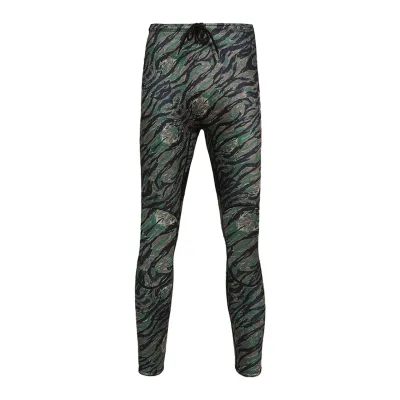
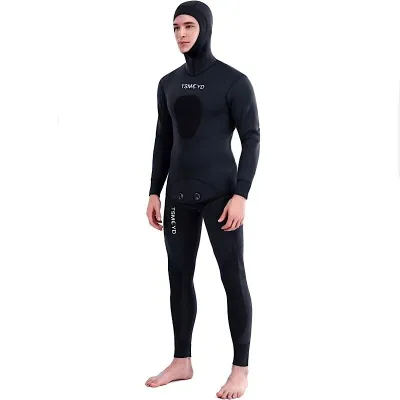
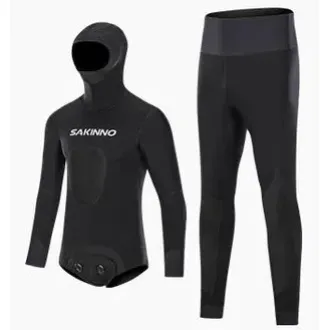
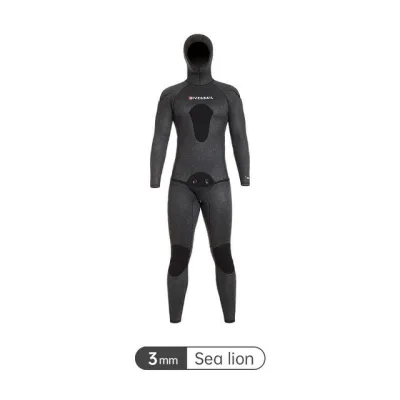
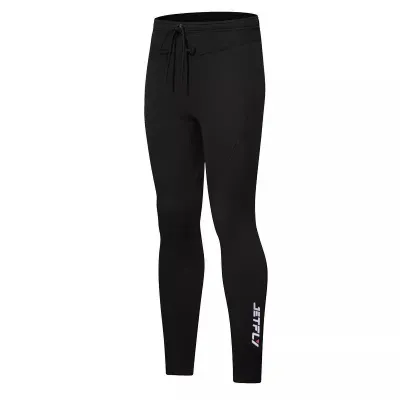
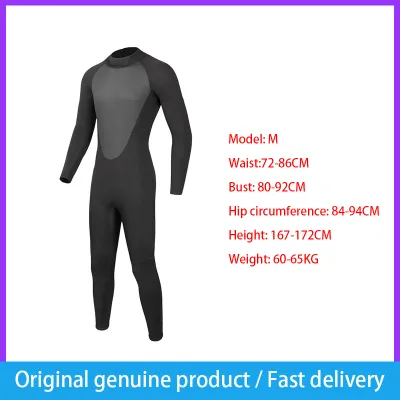
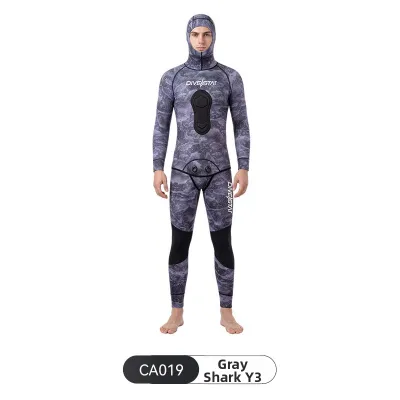
Prices are valid at publication and may change. Please refer to the product page for the latest price.
As you descend, you will also cross thermoclines—boundaries where the water temperature suddenly drops. If you plan to hunt near the bottom at depths below 15 meters, a slightly thicker suit or a highly efficient material configuration is necessary to prevent shivering, which immediately degrades your focus and breath-hold capacity.
Key Factors Influencing Your Thickness Choice
Your personal physiology and metabolic rate play a massive role in how you experience tropical waters. Some divers naturally run warm and can spend hours in a thin top, while others with lower body fat will start shivering within an hour. It is essential to evaluate your own cold tolerance honestly rather than simply copying what other divers wear.

Another critical factor is the structure of your diving day. In the Philippines, spearfishing often involves traveling between dive spots on open outrigger boats, locally known as bancas. While you might feel warm while swimming, the wind chill during a fast boat ride in a wet suit can quickly sap your core warmth. This is especially true during the monsoon seasons, when strong winds and sudden rain showers lower the air temperature. A suit that offers wind resistance on the chest can keep you from freezing between dives.
Finally, consider your target depths and the marine environment. Shallow-water reef hunting in sunny conditions requires minimal insulation but high protection against sharp coral, stinging hydroids, and jellyfish. Conversely, deep-water blue-water hunting involves longer periods of hanging quietly in the water column, where you are less active and more exposed to cooler currents. Matching your suit thickness to these realities ensures you stay comfortable throughout your trip.
Evaluating Wetsuit Design and Material Specifications
When shopping for a spearfishing wetsuit, the material type is just as important as the millimeter thickness. Spearfishing suits generally fall into two categories: open-cell and closed-cell neoprene. Open-cell suits feature raw, porous neoprene on the inside that suctions directly to your skin. This design virtually eliminates water movement inside the suit, providing exceptional warmth and allowing you to wear a thinner, more flexible 1.5 mm suit where you might otherwise need a thicker closed-cell suit. The trade-off is that open-cell suits are delicate and require soapy water as a lubricant to put on without tearing.
Closed-cell suits are lined with nylon or polyester on the inside. They are much easier to slip on dry and are highly durable, making them a practical choice for beginners or those who dive frequently from rocky shorelines. However, they allow more water to circulate against your skin, reducing their thermal efficiency compared to open-cell alternatives of the same thickness.
The physical design of the suit also impacts your comfort. Two-piece suits consisting of high-waist pants and a jacket with a beaver-tail closure are the industry standard. This design provides double the neoprene thickness over your core chest area while keeping a single layer of flexibility over your shoulders. Additionally, look for suits with glued and blind-stitched (GBS) seams, which prevent water from leaking through the seams and flushing the suit.
How to Test and Adjust Your Wetsuit Fit
Even the most advanced neoprene will fail to keep you warm if the suit does not fit correctly. A loose suit allows cold water to constantly flush in and out, carrying away your body heat. When trying on a suit, verify that the neck, wrist, and ankle seals fit snugly against your skin without cutting off circulation. There should be no large pockets of air or loose folds of material, particularly under the arms or around the lower back.
At the same time, you must ensure the suit allows for a full range of motion. Practice taking deep belly breaths to simulate your pre-dive inhalation, and mimic the motion of loading a speargun against your chest. If you feel extreme restriction across your chest or shoulders, you may need to try a different size or a more flexible neoprene grade.
If you find yourself diving in transitional seasons, you can easily adjust your thermal protection without buying multiple suits. For slightly cooler days, consider layering a thin neoprene hood or a 1.0 mm vest underneath your primary suit. Conversely, on exceptionally hot days, you can wear just the jacket of your two-piece suit paired with board shorts.
Frequently Asked Questions (FAQ)
Do I need a hood for spearfishing in the Philippines?
While a hood is not strictly mandatory for the warm surface waters of the Philippines, it is highly beneficial for extended spearfishing sessions. A significant amount of body heat is lost through the head, and wearing a hood can dramatically extend your comfortable dive time. Furthermore, a hood provides essential protection against stinging marine life, such as jellyfish and hydroids, which are common in tropical waters. It also shields your ears and neck from intense sun exposure during long surface intervals. If you find a full hood too warm, look for a lightweight, separate hood that you can easily slip on or off as conditions dictate.
How should I clean and store my wetsuit after saltwater use?
To maintain the flexibility of your neoprene and prevent premature degradation, always rinse your wetsuit thoroughly in clean, fresh water after every saltwater session. Pay special attention to removing salt crystals, sand, and organic debris from the seams and lining. Avoid using harsh detergents; instead, use a mild, neoprene-safe soap if the suit begins to develop an odor. Hang the suit to dry in a shaded, well-ventilated area, completely out of direct sunlight, as ultraviolet rays rapidly break down neoprene. Use a wide, padded hanger to support the shoulders, and store the suit flat or loosely folded to prevent permanent creases from forming in the material.
Community discussion
Share your experience or ask a question. Comments are reviewed before publication.