
Deciding between a squat rack and a power rack is a pivotal choice when building a home gym, especially when balancing training goals, safety, and available floor space. The right equipment depends on how you train, whether you lift alone, and the physical constraints of your workout area. While a squat rack offers an open, space-saving design that is easy to navigate, a power rack provides a fully enclosed cage with robust safety features that allow you to push your limits without a spotter. By evaluating your specific exercise routine, measuring your space, and understanding your long-term fitness goals, you can make an informed investment that keeps your workouts both safe and effective.
Diagnose Your Training Needs and Exercise Variety
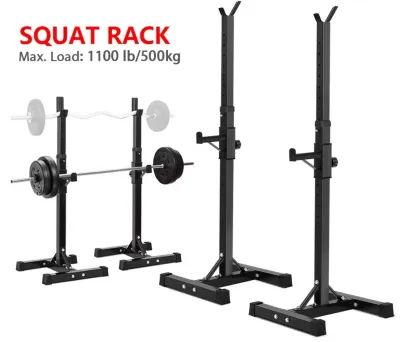
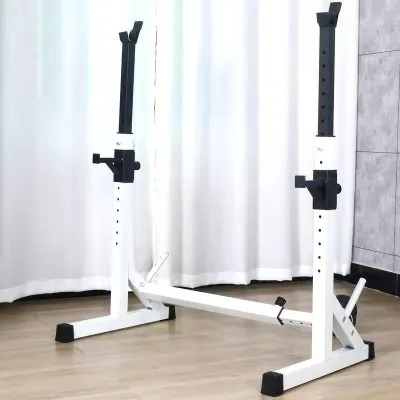
Your daily workout routine is the most critical factor in determining which rack style will serve you best. If your training consists primarily of fundamental barbell movements like back squats, front squats, and overhead presses, a standard squat rack or squat stand is often more than sufficient. These open-frame designs allow you to walk up to the bar, lift, and re-rack with minimal obstruction. They are highly efficient for lifters who prioritize Olympic weightlifting movements, where dropping the bar on a platform is common practice and an enclosed cage would only get in the way.
However, if your programming incorporates a wider variety of exercises, a power rack opens up a much broader range of training possibilities. The four-upright steel cage of a power rack serves as a highly stable anchor for auxiliary movements. Many lifters choose power racks because they easily accommodate pull-up bars, multi-grip handles, and band pegs for resistance work. If you plan to perform kipping pull-ups or high-intensity bodyweight movements, the sheer mass and structural stability of a power rack prevent the frame from shifting during dynamic exercises.
Products mentioned in this guide
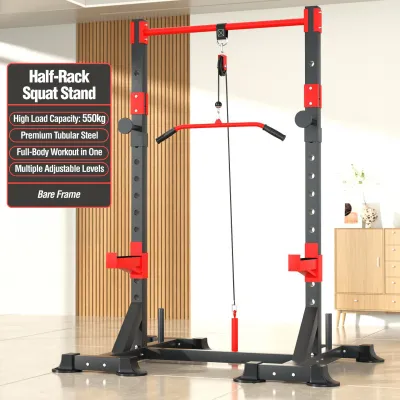
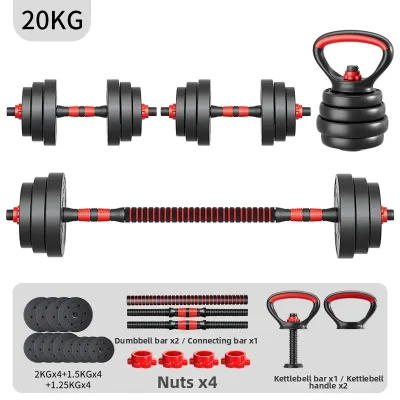
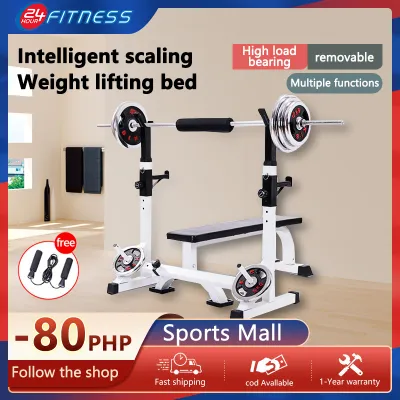
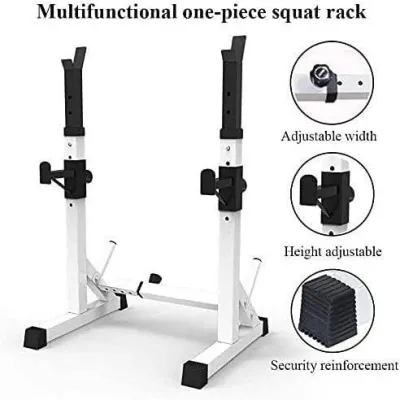
Prices are valid at publication and may change. Please refer to the product page for the latest price.
Furthermore, advanced strength training often requires partial-range movements to overcome plateaus or target specific sticking points. Exercises like pin squats, rack pulls, and pin presses rely on heavy-duty safety pins or spotter straps to support the barbell at specific heights. A power rack excels in this area, allowing you to position safety pins precisely within the cage to catch the weight at any point in your range of motion. If your training program frequently calls for these specialized variations, the enclosed structure of a power rack is practically indispensable.
Check Your Space Limitations and Budget
Before purchasing any heavy strength equipment, you must carefully measure your training area to avoid costly installation mistakes. In tropical climates like the Philippines, home gyms are frequently set up in garages, covered carports, or spare rooms where ceiling height and ventilation are key considerations. Measure your ceiling height accurately, keeping in mind that you need extra clearance above the rack if you plan to perform pull-ups. Additionally, map out the floor footprint, ensuring there is ample space on either side of the rack to comfortably slide Olympic weight plates onto a standard seven-foot barbell without hitting walls or storage shelves.

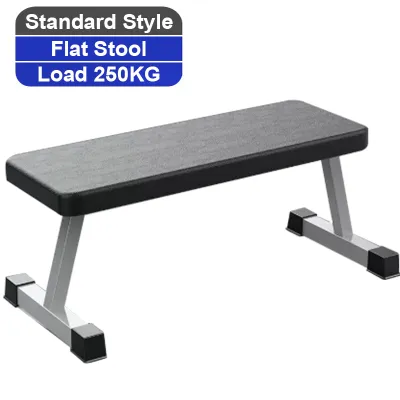
Financial planning is another major factor, as the initial cost of the rack is rarely the final price of a complete setup. A basic squat stand or open squat rack is generally more affordable, requiring a lower initial investment in ₱ compared to a full power cage. However, you must factor in the hidden costs of essential add-ons. To build a functional setup, you will need to budget for a high-quality adjustable weight bench, heavy-duty rubber floor mats to protect your tiles or concrete, and safety spotter arms if they are not included with your chosen model.
The structural weight of the equipment and your flooring type must also align. A fully loaded power rack, combined with hundreds of kilograms of weight plates and the lifter’s body weight, exerts immense concentrated pressure on the floor. If you are setting up a gym on a second-story floor or inside a condominium, a lighter, potentially foldable wall-mounted squat rack may be a safer structural choice. For ground-floor garage gyms with solid concrete slabs, a heavy steel power rack is highly suitable, though you should still use thick rubber matting to buffer the impact and protect the concrete from cracking over time.
Evaluate Safety Requirements and Future Expandability
Lifting heavy weights alone at home introduces safety risks that do not exist in a commercial gym with staff and spotters. If you regularly train to failure or attempt personal records without a training partner, safety mechanisms must be your top priority. A power rack offers the ultimate fail-safe because the barbell remains entirely inside the steel cage. If you fail a squat or a bench press, the adjustable safety pins or heavy-duty nylon straps will catch the loaded barbell, preventing serious injury and allowing you to exit the cage safely.
While open squat racks can be equipped with safety spotter arms, their protection is limited by the length of the arms and the stability of the rack’s base. If you drop a heavy barbell near the very tips of the spotter arms, there is a risk of the rack tipping forward unless it is securely anchored or counterbalanced with weight storage. When evaluating any rack, check the manufacturer’s specifications for the steel tubing size and the steel gauge, as thicker steel provides greater structural stability and higher weight capacity limits.
Your long-term fitness progression should also influence your choice, particularly regarding attachment compatibility. A high-quality rack should be able to evolve alongside your strength journey. Many manufacturers design power racks with modular ecosystems, allowing you to add accessories like dip bars, landmine attachments, lat pulldown towers, and utility seats over time. Open squat stands typically have limited compatibility for these add-ons due to their simpler frames. If you want a single piece of equipment that can eventually transform into a complete, multi-functional home gym, a power rack is the more adaptable foundation.
Determine Your Ideal Setup: Squat Rack, Power Rack, or Alternatives
To finalize your decision, you can use a simple conditional framework based on your space, budget, and training style. A squat rack or independent squat stands are the ideal choice if you have limited space, a tighter budget, or a dedicated focus on Olympic lifting and basic barbell movements. This setup is highly mobile, easy to move around a garage or patio, and leaves plenty of open space for dynamic exercises. It is perfect for lifters who prioritize flexibility and do not plan to lift near their absolute physical limits without a partner.
Conversely, a power rack is the necessary choice if you prioritize maximum safety during heavy, solo lifting sessions and want a highly versatile station. If your training involves pushing to failure on the bench press or squat, the enclosed cage provides peace of mind that cannot be matched by an open stand. It is also the best option if you have a dedicated, permanent gym space with high ceilings and want to build a comprehensive strength station utilizing various cable and pull-up attachments over the coming years.
If neither option fits perfectly, hybrid alternatives can bridge the gap between safety and space constraints. A half rack features a smaller footprint than a full power rack but still includes uprights for weight storage and short safety spotter arms, offering a middle ground in terms of stability and space. Another popular solution for tight spaces is a wall-mounted folding rack, which can be bolted to concrete walls and folded flat when not in use. This allows you to park a vehicle in your garage or use the room for other activities when you are not training, making it an excellent compromise for modern homes.
Frequently Asked Questions (FAQ)
Can I use a squat rack for bench pressing safely?
Yes, you can bench press using a squat rack, but you must use adjustable safety spotter arms to do so safely. Before you begin lifting, adjust the spotter arms so they sit just below your chest level when your lungs are fully inflated, but high enough to catch the bar if you deflate your chest and need to slide out from under it. Training alone on an open squat rack without these spotter arms is highly dangerous, as there is no built-in cage to prevent a failed lift from pinning you under the barbell.
Do I need to bolt my rack to the floor?
Whether you need to bolt your rack down depends on its design, weight, and how you use it. Heavy, full-size power racks with a flat-foot base or integrated weight storage pegs often do not require bolting for standard lifting, as the weight of the plates acts as a natural counterbalance. However, lighter squat stands, wall-mounted folding racks, and power racks used for dynamic movements like kipping pull-ups or heavy band work should be securely anchored to the floor or wall to prevent tipping or sliding during use.
Community discussion
Share your experience or ask a question. Comments are reviewed before publication.