
Choosing the right golf ball often comes down to how the ball behaves when it makes contact with your clubface. For many recreational golfers, a “soft feel” ball provides a satisfying, cushioned sensation at impact rather than a harsh, clicky shock. Deciding between the Srixon Soft Feel and its competitors requires looking closely at your personal swing dynamics, your typical playing conditions, and how different manufacturers engineer their low-compression cores. By understanding these design differences, you can select a ball that complements your swing speed and helps you maintain control from the tee to the putting green.
Understanding the Soft Feel Golf Ball Category
To understand why soft feel golf balls are so popular, it helps to look at their internal construction. The defining characteristic of this category is a low-compression core. Compression is a measurement of how much a golf ball deforms under a standard load. A lower compression rating means the ball is softer and requires less force to compress fully. When a club strikes a low-compression ball, the core deforms easily, which transfers energy efficiently even at moderate swing speeds. This deformation is what creates the signature soft feel, reducing harsh vibrations up the shaft and into your hands.
Most golf balls in this category feature a two-piece construction consisting of a large, highly resilient core wrapped in a thin cover. The cover material is typically made of an ionomer blend. Ionomer is highly durable, offering excellent resistance to scuffs, cuts, and scrapes from mis-hits or cart paths. However, ionomer is inherently firmer than the urethane covers found on premium tour-level balls. To maintain a soft feel, manufacturers must balance the firmness of the ionomer cover with an exceptionally soft core.
Products mentioned in this guide
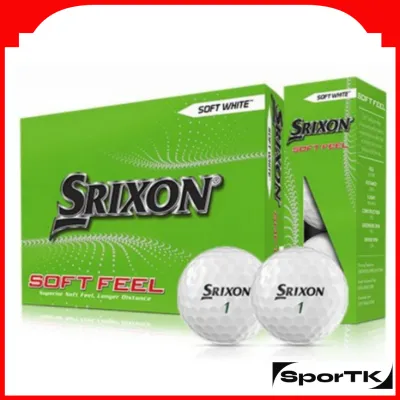
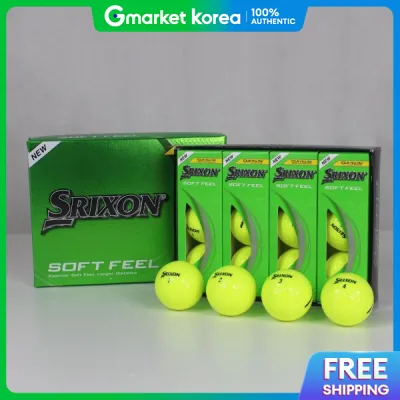
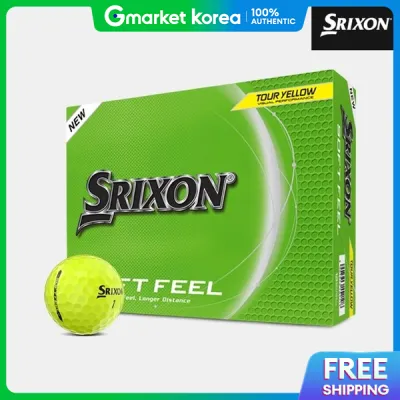
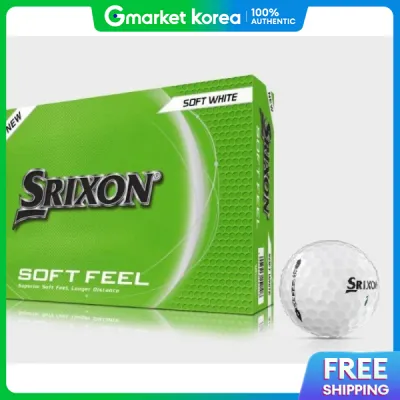
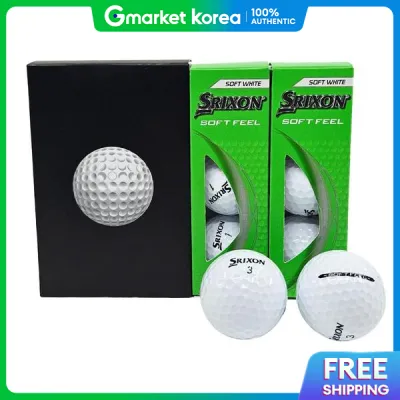
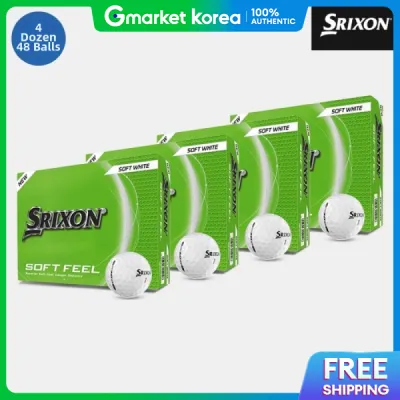
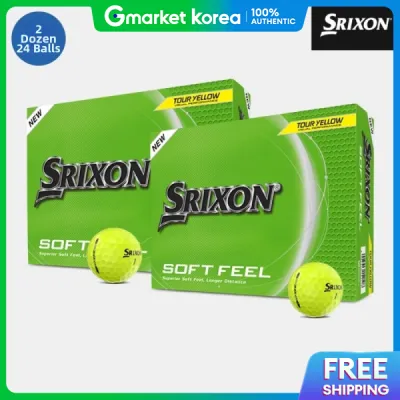
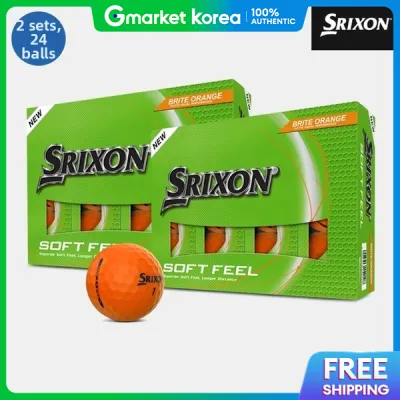
Prices are valid at publication and may change. Please refer to the product page for the latest price.
This category is generally optimized for players with moderate-to-slow swing speeds, typically under 90 miles per hour. This group often includes high-to-mid handicap players, seniors, and beginners. If your swing speed falls into this range, a high-compression tour ball may feel like a rock because you cannot swing fast enough to compress the core. A soft feel ball allows you to achieve proper compression, which helps maintain a stable, consistent flight path without requiring an aggressive, high-speed swing.
Srixon Soft Feel: Construction and Player Profile
The Srixon Soft Feel has long served as a benchmark in the low-compression category. Its design centers around a proprietary energetic gradient growth core. This core is engineered to be softer in the center and gradually firmer toward the outer edges. This transition in hardness is designed to maximize energy transfer at impact, allowing golfers with moderate swing speeds to compress the ball fully. The result is a high-launching flight with low driver spin, which helps keep tee shots tracking straighter down the fairway.

Aerodynamics play a critical role in how this ball behaves once it leaves the clubface. Srixon utilizes a specific 338 speed dimple pattern on the cover. This dimple configuration is designed to reduce aerodynamic drag and increase lift. In practical terms, when you play in windy conditions or high humidity, the dimple pattern helps the ball cut through the air more efficiently, maintaining a stable trajectory and preventing the ball from ballooning or dropping prematurely.
Around the green, the Srixon Soft Feel relies on a thin, soft ionomer cover to provide feedback. While it does not generate the high spin rates of a urethane-covered tour ball, the soft cover offers a responsive feel on chips, pitches, and putts. The target player profile for this model is a golfer who wants a reliable, durable ball that minimizes sidespin on full shots while offering a gentle, predictable roll on the greens. It is particularly suited for players who prioritize straight distance over extreme greenside stopping power.
Critical Comparison Dimensions for Soft Feel Alternatives
When evaluating other soft feel golf balls on the market, you should focus on several key specifications rather than relying solely on marketing claims. The first dimension to check is the compression rating. While manufacturers do not always print the exact compression number on the packaging, you can often find this information on official brand websites or technical spec sheets. Generally, ultra-soft balls have compression ratings in the 30s or 40s, while standard soft balls sit in the 50s or 60s. Matching this rating to your swing speed is crucial; if your swing is exceptionally slow, an ultra-low compression ball may feel better and perform more consistently.
The second dimension is the cover material and its thickness. Although most budget-friendly soft balls use ionomer covers, the specific blend and thickness vary. A slightly thicker cover can enhance durability and cut resistance, making the ball last through multiple rounds even if you occasionally strike a tree or a cart path. Conversely, a thinner, softer cover blend can slightly improve greenside spin and feel, though it may scuff more easily. You must decide whether you prioritize maximum durability or a bit more bite on short-game shots.
The third dimension is the design and visibility of the alignment aid. Many manufacturers now print prominent, multi-colored alignment lines, triple tracks, or arrow designs directly onto the ball’s cover. If you struggle with aiming your putts or squaring your clubface at address, a ball with a highly visible, pre-printed alignment aid can be a significant asset. Compare these visual aids across different brands to see which design aligns most effectively with your visual preferences on the putting green.
Decision Framework: Choosing Srixon vs. Competing Models
To decide whether to purchase the Srixon Soft Feel or a competing alternative, you should evaluate your specific on-course needs and playing style. Choose the Srixon Soft Feel if your game benefits from a balanced, mid-range soft compression that maintains excellent aerodynamic stability. If you frequently play in windy conditions or high-humidity environments, Srixon’s dimple design is highly effective at keeping the ball on its intended line. This model is ideal if you want a classic, time-tested soft feel that does not feel overly mushy at impact.
On the other hand, you should look at competing alternatives if your swing speed is exceptionally slow and you require an ultra-low compression ball to achieve proper launch. Some competitors offer balls with compression ratings below 40, which can provide a softer feel for players who struggle to generate clubhead speed. Additionally, if you are highly prone to scuffing your golf balls or play on courses with abrasive hazards, you might want to seek out alternative models that specifically advertise extra-thick, cut-resistant covers for enhanced longevity.
Before making a final decision, always verify the specific model year of the balls you are comparing. Manufacturers frequently update their core formulations, dimple patterns, and cover thicknesses every two to three years without changing the model name. A Srixon Soft Feel from a previous generation may have a slightly different compression or cover feel than the current version. Checking the packaging graphics or product descriptions will ensure you are comparing current-generation models and getting the exact performance characteristics you expect.
Verifying Specifications and Value Before Purchase
When you are ready to buy, taking a few steps to validate your purchase will ensure you get strong value and authentic equipment. Start by cross-referencing the manufacturer specifications on the physical packaging or official brand websites. Look for details regarding the core construction, dimple count, and cover material. This verification helps you confirm that the balls match your desired compression level and playing characteristics, preventing you from accidentally buying a firmer distance ball or an outdated model.
Next, calculate the price-per-ball value in ₱ to assess long-term affordability. Soft feel golf balls are generally positioned as value-oriented options, but prices can still vary depending on packaging sizes and retail promotions. To calculate this, divide the total retail price of the package by the number of balls contained within it. Comparing this unit cost across different brands and packaging options—such as double-dozen packs or bulk boxes—can help you identify the most cost-effective choice for your budget, especially if you tend to lose several balls during a round.
Finally, ensure you purchase your golf balls only from authorized sporting goods retailers, pro shops, or official brand stores in the Philippines. Counterfeit golf balls are a persistent issue in the market, particularly on unauthorized online marketplaces and discount ecommerce platforms. Counterfeit balls often use inferior materials, inconsistent core densities, and poorly molded covers, which can severely disrupt your ball flight and feel. Buying from reputable, authorized sources guarantees you are playing with genuine, quality-controlled equipment that performs exactly as engineered.
Frequently Asked Questions (FAQ)
Do soft feel golf balls sacrifice distance for control?
For golfers with moderate-to-slow swing speeds, soft feel golf balls do not sacrifice distance. In fact, because these players can fully compress the low-compression core, they often achieve optimal energy transfer, resulting in a high launch and consistent distance. However, the low-spin nature of these balls means they may roll out more on the greens, offering slightly less stopping control compared to premium, high-spin tour balls.
How does weather affect the performance of low-compression balls?
Weather conditions, particularly temperature, have a noticeable impact on golf ball performance. In cold weather, the materials in a golf ball’s core naturally stiffen, which increases its effective compression and can make a soft ball feel firmer and travel shorter distances. In the tropical heat of the Philippines, the core remains highly elastic, maintaining its soft feel and optimal energy transfer. To preserve core integrity, avoid storing your golf balls in direct sunlight or inside a hot car trunk for extended periods.
Can high-swing-speed players use soft feel golf balls?
While high-swing-speed players can physically play with soft feel golf balls, they may experience performance trade-offs. At high clubhead speeds, a low-compression ball can over-compress, leading to excessive backspin and a ballooning flight trajectory that reduces total distance. If your swing speed exceeds 95 miles per hour, you may want to transition to mid-compression or tour-level balls to maintain optimal launch angles and control.
Community discussion
Share your experience or ask a question. Comments are reviewed before publication.