
Selecting the ideal cardio machine for your home gym is a balancing act between your physical fitness goals, joint health, and the physical constraints of your living space. While a stair climbing machine offers an intense lower-body workout and high energy expenditure in a relatively compact footprint, a treadmill provides natural running mechanics that build bone density, and a spin bike delivers a quiet, low-impact endurance session. The right choice is not a matter of finding a universal winner, but rather identifying which machine aligns with your ceiling height, noise tolerance, and specific training needs.
Workout Focus and Muscle Engagement
Each of these cardio machines targets different muscle groups and energy systems, making your choice highly dependent on your specific physical goals. A stair climbing machine acts as a hybrid between cardiovascular training and lower-body resistance. With every step, you lift your body weight against gravity, which heavily engages the gluteus maximus, quadriceps, hamstrings, and calves. This constant climbing motion builds muscular endurance and functional strength in the lower posterior chain.
Treadmills offer a highly versatile platform that supports natural human movement patterns, from walking to sprinting. Running on a treadmill engages the entire lower body while requiring continuous core stabilization to maintain balance on a moving belt. If you utilize the incline feature, you can shift the focus toward your calves and hamstrings, mimicking outdoor hill climbs. Because it is a weight-bearing exercise, treadmill training is particularly effective for stimulating bone remodeling and maintaining bone density over time.
Products mentioned in this guide
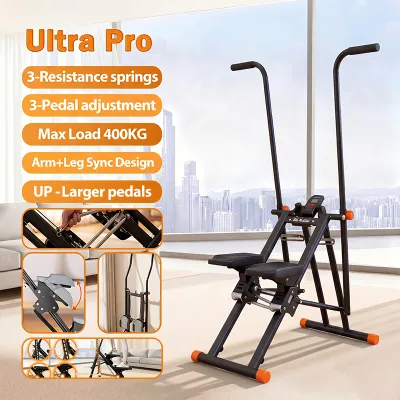
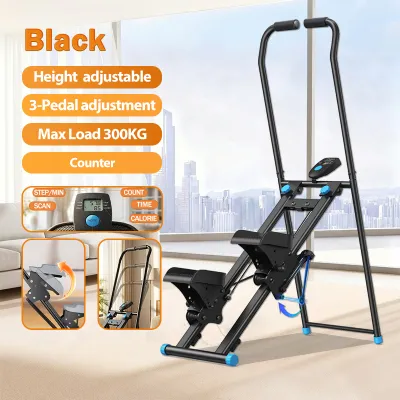
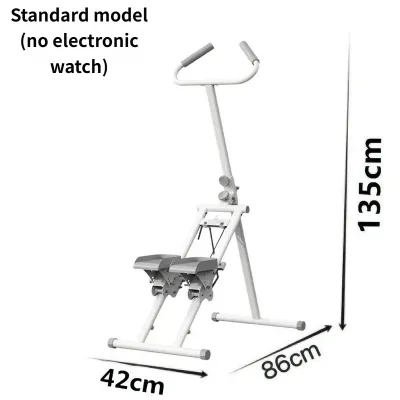
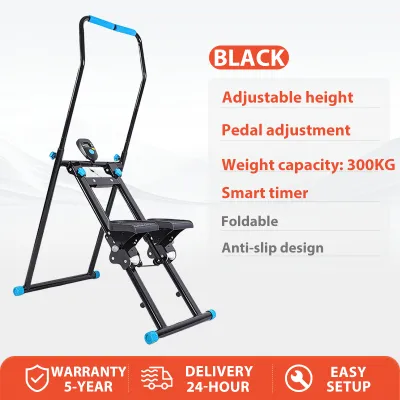
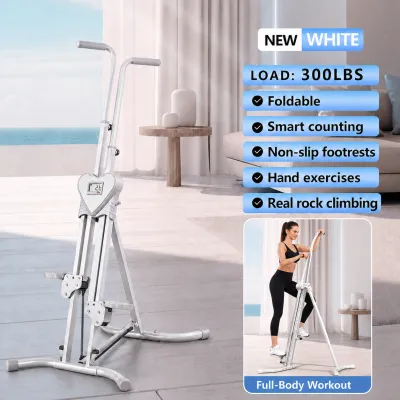
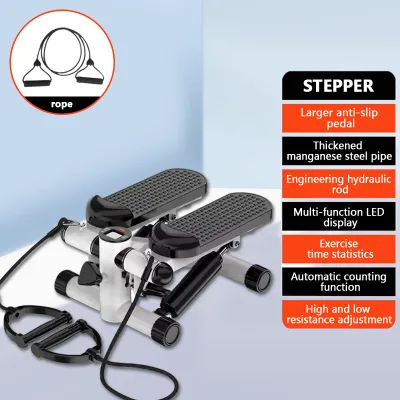
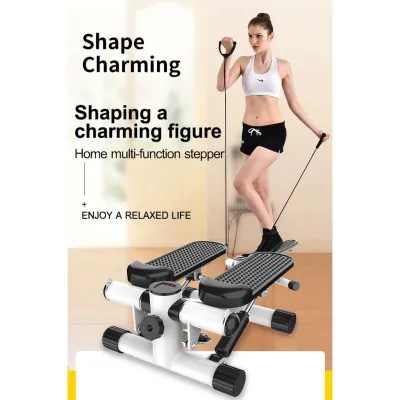
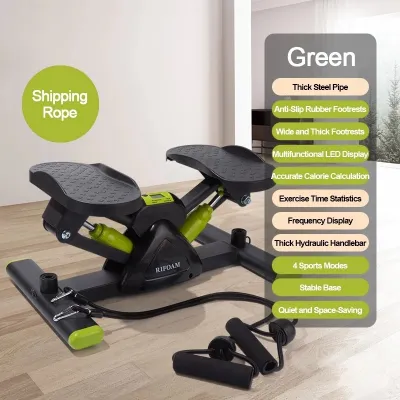
Prices are valid at publication and may change. Please refer to the product page for the latest price.
Spin bikes focus primarily on cardiovascular endurance and lower-body muscular stamina. The pedaling motion targets the quadriceps and hamstrings, with the calves and glutes playing supporting roles. Unlike the stair climber or treadmill, a spin bike allows you to easily adjust resistance to simulate flat roads or steep climbs while remaining seated or standing. This makes it highly adaptable for high-intensity interval training (HIIT) where rapid transitions in speed and resistance are required.
Energy expenditure on these machines is highly variable and depends on factors such as resistance settings, speed, incline, and your body weight. Because a stair climbing machine forces you to lift your entire mass with every step, it often elevates the heart rate quickly even at lower speeds. Treadmills allow for a wide range of calorie burn rates depending on whether you are walking, jogging, or sprinting. Spin bikes rely heavily on your cadence and the tension of the flywheel to drive energy expenditure, giving you precise control over the intensity of your session.
Space, Noise, and Home Gym Logistics
Before purchasing any heavy fitness equipment, you must carefully evaluate your physical environment to ensure safe and comfortable operation. Treadmills typically require the largest floor footprint of the three options. Even space-saving models that fold upward require significant clearance behind the machine during use to prevent injury in the event of a fall. Spin bikes are highly compact and usually feature transport wheels, making them easy to tuck into a corner or move between rooms.

Ceiling height is a critical safety factor that is frequently overlooked when planning for a stair climbing machine. Because these machines elevate your body as you climb, you must calculate your clearance before buying. To determine if your room can accommodate a stair climber, add your height to the maximum step height of the machine, then add a safety buffer of at least 30 to 50 centimeters. If this total exceeds your ceiling height, you risk head injuries during high-intensity workouts.
Noise and vibration are major considerations, especially if you live in a multi-story home or a condominium in the Philippines where neighbors are close by. Treadmills generate substantial impact noise and low-frequency vibrations from your feet striking the deck, which can easily travel through floors. Spin bikes equipped with magnetic resistance are virtually silent, making them the preferred choice for early morning or late-night workouts. Stair climbing machines produce moderate mechanical noise from the rotating steps or drive belt, but they generate very little impact vibration.
| Equipment Type | Typical Floor Footprint | Vertical Clearance Needed | Power Requirements | Noise Profile |
|---|---|---|---|---|
| Stair Climbing Machine | Moderate | High (User height + step height + safety buffer) | Standard outlet or self-powered | Low to moderate mechanical hum |
| Treadmill | Large | Standard | High (Requires dedicated motorized outlet) | High impact noise and motor vibration |
| Spin Bike | Compact | Standard | None to low (Console battery or outlet) | Extremely quiet (Magnetic resistance) |
Joint Impact and Safety Considerations
Understanding how each machine affects your joints is essential for preventing long-term wear and acute injuries. Treadmills represent the highest impact option among the three. Running on a hard, moving surface subjects your knees, ankles, and hips to repetitive shock, though modern treadmill decks incorporate elastomeric cushioning to absorb a portion of this force. If you have history of joint pain or are recovering from an injury, high-impact running may not be suitable.
Stair climbing machines and spin bikes are low-impact alternatives that keep your feet in constant contact with the equipment, eliminating the jarring forces of running. However, low-impact does not mean joint-free. The deep knee flexion required by a stair climber can place stress on the patellofemoral joint, which may cause discomfort if you have pre-existing knee issues. On a spin bike, poor bike setup or an incorrect saddle height can lead to lower back strain, hip pinching, or repetitive strain on the knee joint.
Safety features must be verified on any machine you consider for your home. When evaluating treadmills, look for a highly visible emergency stop clip that attaches to your clothing to immediately cut power if you slip. Stair climbing machines should feature robust, slip-resistant handrails that allow you to regain your balance without slouching, alongside automatic sensors that stop the steps if an object gets caught. Spin bikes require a push-down emergency brake lever to instantly stop the heavy, spinning flywheel if your feet slip out of the pedals or toe cages.
Decision Framework: Which Machine Fits Your Routine?
To finalize your decision, align your primary physical constraints and fitness goals with the unique strengths of each machine.
Choose a stair climbing machine if:
- Your primary goal is building lower-body muscular strength and glute activation.
- You have limited floor space but possess high ceilings that safely accommodate the machine's height.
- You want a highly challenging, low-impact workout that elevates your heart rate quickly.
Choose a treadmill if:
- You are training for outdoor running events, marathons, or trail races.
- You want to improve or maintain bone density through weight-bearing exercise.
- You have a dedicated ground-floor space or a robust floor structure that can handle impact vibrations.
Choose a spin bike if:
- You need an exceptionally quiet machine for early morning or late-night workouts in a shared household.
- You have sensitive joints or are recovering from lower-body injuries that require zero-impact movement.
- You prefer high-cadence cardiovascular training and want a compact machine that is easy to move.
If you require significant upper-body engagement during your cardio sessions, none of these options may be the perfect fit. In such cases, you might want to evaluate dual-action air bikes, rowing machines, or cross-trainers, which actively involve the arms, shoulders, and back alongside the lower body.
Essential Specifications to Verify Before Purchase
When shopping for cardio equipment, look past marketing claims and focus on verifiable technical specifications to ensure durability and safety.
For a stair climbing machine, verify the step height range and step width to ensure they accommodate your natural stride. Check the maximum weight capacity of the frame and inspect the handrail ergonomics to ensure you can maintain an upright posture during use. Leaning heavily on the handrails during a workout reduces the effectiveness of the exercise and can strain your lower back.
For a treadmill, look for the continuous horsepower (CHP) rating of the motor rather than the peak horsepower. A motor with at least 2.5 to 3.0 CHP is recommended for running, as it can sustain high speeds without overheating. Verify the belt dimensions; runners generally require a deck that is at least 50 centimeters wide and 140 centimeters long to prevent stepping off the sides. Additionally, research the quality of the deck’s shock absorption system to protect your joints.
For a spin bike, check the resistance type. Magnetic resistance systems are highly durable, require virtually no maintenance, and operate silently, whereas friction resistance pads wear down over time and require replacement. Verify the adjustability of both the saddle and the handlebars; look for micro-adjustments that allow you to move the seat both vertically and horizontally to achieve a precise, ergonomic fit.
Regardless of the machine you choose, consider the environmental conditions of your home gym. In the tropical climate of the Philippines, high humidity and sweat can accelerate rust on steel frames and degrade sensitive electronic consoles. Look for equipment with powder-coated, corrosion-resistant frames and sweat-resistant displays. Finally, verify the manufacturer’s warranty terms and confirm that the brand has authorized local service centers or technicians available in your region to handle future repairs and parts replacement.
Frequently Asked Questions (FAQ)
Do stair climbing machines require more maintenance than spin bikes?
Yes, stair climbing machines generally require more active maintenance than spin bikes. Because stair climbers utilize complex mechanical drive systems, chains, or alternators to manage the rotating steps, they have more moving parts that are susceptible to dust accumulation and wear. You will need to periodically vacuum the internal housing, check chain tension, and apply specialized lubricants as directed by the manufacturer. In contrast, a spin bike with magnetic resistance and a belt drive has very few moving parts, requiring little more than a regular wipe-down to prevent sweat-induced corrosion.
How much electricity do these cardio machines consume?
Electricity consumption varies significantly depending on the design of the equipment. Motorized treadmills are the most power-hungry of the three, as they require a high-horsepower motor to continuously move a rubber belt under the weight of a user. Spin bikes with magnetic resistance or simple friction pads consume virtually no electricity, often relying on small batteries or a low-draw plug to power the basic LCD console. Stair climbing machines fall in the middle; some commercial-grade models require a standard electrical outlet to power the step alternator and console, while others utilize self-generating power systems that charge as you climb.
Community discussion
Share your experience or ask a question. Comments are reviewed before publication.