
Setting up a basketball court in your driveway or barangay court requires knowing the exact dimensions of your equipment. While many aftermarket nets, training aids, and replacement parts claim their design fits standard basketball hoop setups, “standard” can mean very different things depending on whether you are dealing with a professional arena or a portable residential hoop. To avoid the frustration of buying accessories that do not line up, you must understand the precise measurements of regulation rims, backboards, and mounting systems.
A true regulation basketball hoop features a rim height of exactly 10 feet (3.05 meters) from the playing surface and an inner rim diameter of 18 inches (45.7 centimeters). However, residential hoops often scale down other components, such as the backboard size and pole thickness, to fit smaller spaces and budgets. Understanding these differences is crucial for selecting compatible accessories that will withstand both intense play and the demanding tropical climate of the Philippines.
How Accessory Compatibility Fits Standard Basketball Hoop Systems
To ensure a replacement part or training aid fits standard basketball hoop systems, you must first establish your baseline dimensions. Every official basketball hoop, from professional leagues down to local school gymnasiums, adheres to strict structural standards. The rim must sit 10 feet (3.05 meters) above the ground, and the inner diameter of the steel ring must measure exactly 18 inches (45.7 centimeters). If you are purchasing training aids like rebounders or shooting targets, they are designed specifically around this 18-inch opening.
Products mentioned in this guide
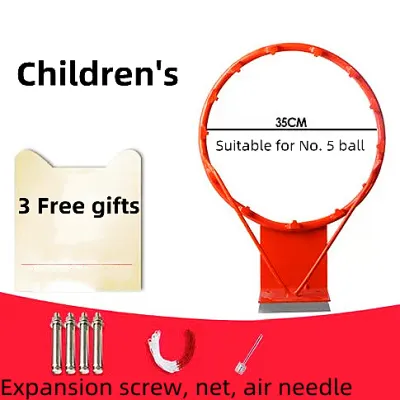
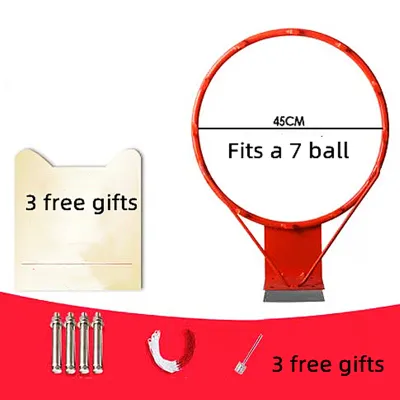
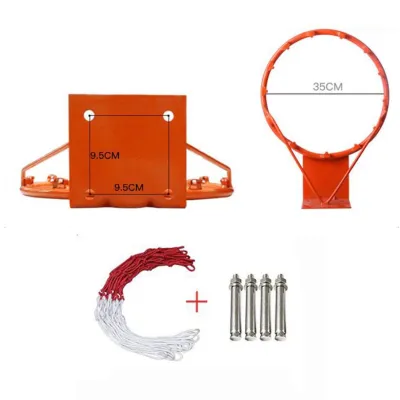
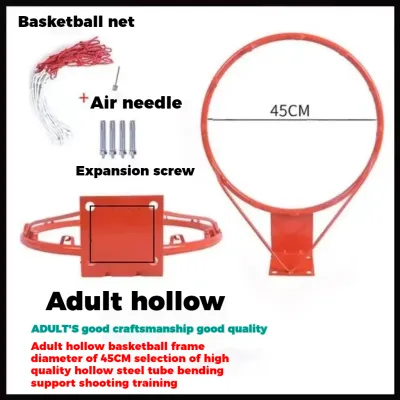
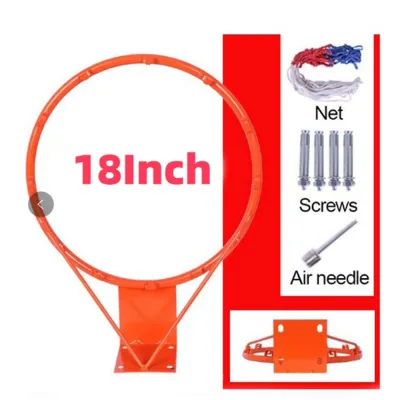
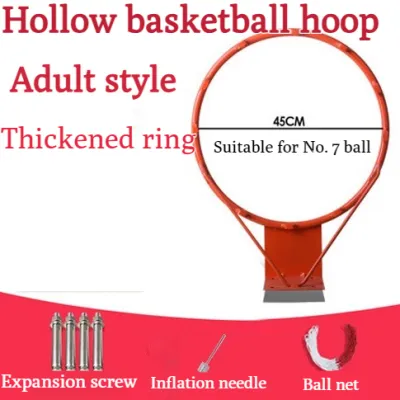
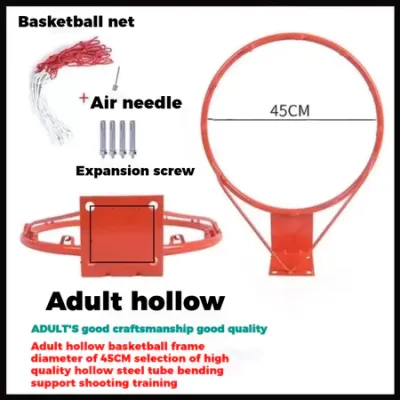
Prices are valid at publication and may change. Please refer to the product page for the latest price.
The divergence between professional and home setups becomes obvious when looking at the backboard. A professional regulation backboard measures 72 inches wide by 42 inches high (183 by 107 centimeters). In contrast, residential hoops typically feature smaller “standard” sizes, such as 54 x 33 inches (137 x 84 centimeters) or 48 x 30 inches (122 x 76 centimeters). While the inner target square painted on the backboard remains a standard 24 inches wide by 18 inches high (61 by 46 centimeters) for visual alignment, the overall board size heavily influences which mounting brackets, protective padding, or replacement boards you can use.
Rim Specs: Finding the Right Net and Shooting Aids
The rim is the most frequently replaced part of any basketball system, especially in outdoor environments where tropical rain, high humidity, and intense sun can degrade materials quickly. While the inner diameter of a standard rim is always 18 inches, the outer diameter and the thickness of the steel (typically 5/8-inch or 16-millimeter steel) can vary slightly between heavy-duty commercial rims and light residential models. This thickness determines whether snap-on training aids or protective rim covers will clamp securely onto the metal.

Net attachment systems also require close inspection. Most standard rims utilize a 12-loop net design, which aligns with the 12 welded wire hooks (often called S-hooks) on the underside of the rim. However, some premium or institutional rims feature enclosed rim channels or proprietary clip systems designed to prevent finger entanglement. If your hoop uses an enclosed channel, a standard loop net might not slide in easily without specific attachment tools.
Additionally, you must consider whether you have a breakaway (spring-loaded) or static (rigid) rim. Breakaway rims feature an enclosed spring mechanism near the mounting bracket that absorbs the impact of dunks. This housing can create clearance issues, blocking certain rigid training aids, heavy-duty rebound nets, or thick rim covers from sitting flush against the backboard or rim base. Before ordering a replacement net or accessory, look underneath the rim to count the hooks and verify the clearance around the spring box.
Backboard Sizes and Mounting Patterns Explained
Replacing a damaged backboard or adding protective padding requires a clear understanding of material differences and mounting configurations. Professional-grade backboards are made of heavy tempered glass, which offers the best ball rebound but requires massive structural support. Residential systems usually employ lighter, shatterproof materials like polycarbonate or acrylic. These residential boards are typically shaped in 54-inch or 48-inch widths, which are much easier to support on a single pole.
The most critical factor when replacing a backboard is the mounting hole pattern. Most manufacturers use a standard 4-hole configuration, but the center-to-center spacing of these holes varies wildly. Common patterns include 4×4 inches, 5×5 inches, or rectangular variations. You must measure the horizontal and vertical distance between the bolt holes on your existing bracket before purchasing a replacement board. Assuming a “universal” backboard will line up with your existing Y-bracket or straight-arm mount often leads to installation failure.
Backboard padding is another accessory where dimensions dictate success. This safety padding protects players’ hands and heads during under-the-basket play. Padding is typically sold as U-channel strips that slip over the bottom edge of the board. You must match the padding to your backboard’s thickness (such as 1/2-inch or 3/8-inch profiles) to ensure a tight, secure grip. In high-humidity coastal areas, loose-fitting padding can collect moisture, leading to mold growth or premature adhesive failure.
Pole and Base Dimensions for Pads and Sleeves
The support structure of your basketball hoop determines which protective pole pads, ground sleeves, or base accessories will fit. Support poles generally come in two shapes: round and square. Round poles are common on budget or mid-range portable systems, typically measuring 3.5 inches or 4 inches in diameter. Premium in-ground systems often use heavy-duty square poles, ranging from 4×4 inches up to 6×6 inches. Pole padding is designed specifically for these shapes and sizes, utilizing velcro or zippered closures that will slip or fail if wrapped around the wrong pole profile.
For in-ground installations, ground sleeves allow you to remove the pole for safekeeping or seasonal relocation. The sleeve’s inner diameter must match the pole’s outer diameter precisely to prevent the system from wobbling or rattling during play. Be aware of whether your pole is straight or tapered, as a tapered pole requires a specialized sleeve.
Portable systems rely on plastic bases filled with water or sand, typically holding 27 to 35 gallons (100 to 130 liters). Because the footprint and molded shape of these bases vary significantly by brand, finding a universal base cover is incredibly difficult. If you need to protect your base from UV degradation or add extra weight to withstand monsoon winds, look for model-specific covers or heavy-duty sandbags designed to drape over the existing plastic mold.
How to Measure and Verify Compatibility Before Buying
Before spending your money on a new net, backboard, or training accessory, follow this practical checklist to verify compatibility:
- Measure the Rim: Use a tape measure to confirm the 18-inch inner diameter and check the thickness of the steel ring.
- Count the Net Hooks: Ensure your rim has exactly 12 hooks, and note whether they are open wire hooks or an enclosed channel system.
- Check the Bolt Pattern: Measure the vertical and horizontal center-to-center distance between the mounting bolts on the back of your backboard.
- Identify the Pole Profile: Use a caliper or tape measure to find the exact diameter of your round pole, or the side-to-side width of your square pole.
- Locate the Manufacturer Label: Look for a metal serial plate or weather-resistant sticker on the pole, base, or backboard. Finding the exact model number allows you to source original equipment manufacturer (OEM) parts directly.
Do not rely solely on product descriptions that claim an accessory fits standard basketball hoop systems. These labels are often broad marketing terms that apply only to specific residential product lines. Taking clear photos of your mounting brackets, rim hooks, and pole connection points will help you make accurate visual comparisons when browsing online listings.
Frequently Asked Questions (FAQ)
Does a standard basketball net fit all hoops?
Most standard replacement nets are designed with 12 loops to fit standard 18-inch rims. However, some specialized school or commercial rims use proprietary hookless attachment systems or continuous wire channels. Always check your rim’s hook style before buying.
Can I put a regulation backboard on a residential pole?
No, mounting a professional 72-inch tempered glass backboard onto a standard residential pole is highly dangerous. Regulation glass boards can weigh over 100 kilograms, easily exceeding the load capacity of residential poles and causing structural failure or tipping.
What size ground sleeve do I need for a standard pole?
You must match the ground sleeve’s inner diameter directly to your pole’s outer diameter (such as 3.5-inch round or 4×4-inch square). Ensure the sleeve is rated for your specific pole shape and check whether your pole is straight or tapered to prevent wobbling.
Community discussion
Share your experience or ask a question. Comments are reviewed before publication.