
Deciding between a standard 1-inch and an Olympic 2-inch long barbell is one of the most critical choices you will make when setting up a home gym in the Philippines. The right choice depends on your current plate inventory, your budget, and your long-term strength training goals. While a standard bar offers an affordable, space-saving entry point for light-to-moderate workouts, an Olympic bar provides the structural integrity, standardized dimensions, and high load capacity required for progressive heavy lifting. By evaluating your training style and space constraints, you can avoid costly upgrades down the road.
Understanding the Core Differences: 1-Inch vs. 2-Inch Sleeves
The primary dividing line between these two barbell types lies in the sleeve diameter—the outer ends of the bar where you slide the weight plates. Standard barbells feature sleeves that are approximately 1 inch (25.4 mm) in diameter, maintaining a uniform thickness across the entire length of the bar. In contrast, Olympic barbells feature rotating sleeves with a 2-inch (50 mm) diameter, which are significantly thicker than the central shaft where you place your hands.
This physical difference dictates strict compatibility requirements for your weight plates. A standard 1-inch barbell requires plates with a matching 1-inch center hole, whereas an Olympic barbell requires plates with a 2-inch center hole. Attempting to mix these sizes is highly unsafe; a 2-inch plate will slide loosely and unevenly on a 1-inch sleeve, creating severe balance issues, while a 1-inch plate simply will not fit onto an Olympic sleeve.
Products mentioned in this guide
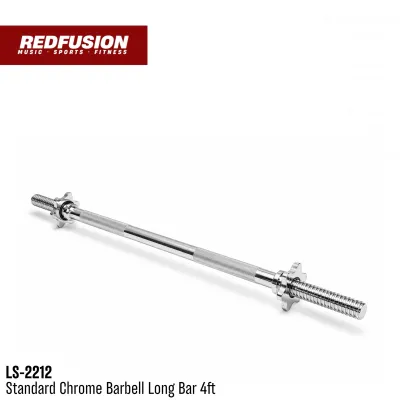
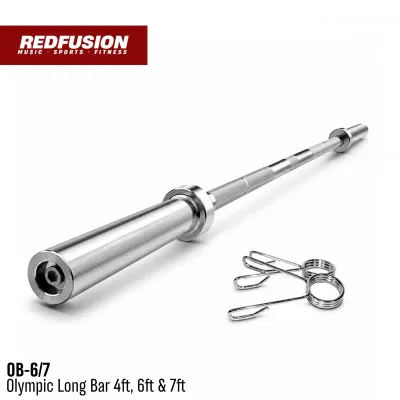
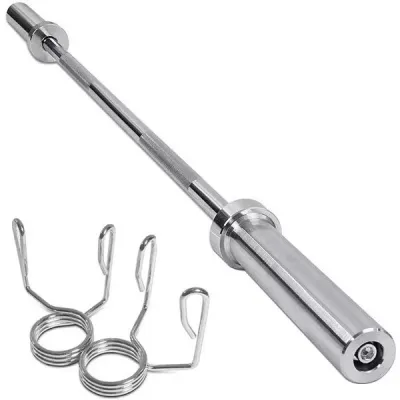
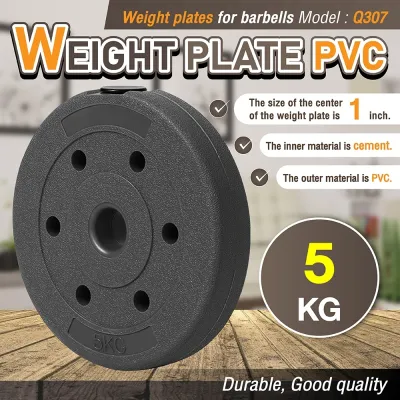
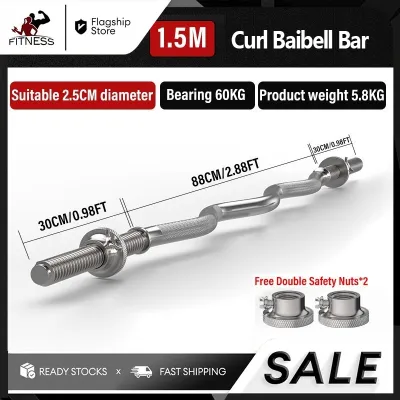
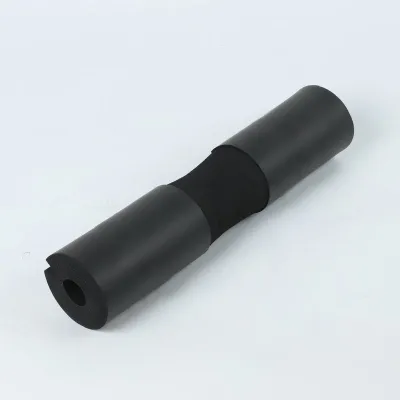
![Straight Long Bar - [ Standard Size ] 1.5 meters / FT 4.92 and 1.8 meters / FT 5.91](https://img.lazcdn.com/g/p/de55a834e3161def3143165c08481579.jpg_400x400q80.jpg_.webp)
Prices are valid at publication and may change. Please refer to the product page for the latest price.
Sleeve construction also influences how the barbell handles weight. Olympic sleeves are typically longer, allowing you to stack more plates, and they feature internal bearings or bushings that allow the sleeves to rotate independently of the shaft. This rotation reduces rotational torque on your wrists and elbows during dynamic movements like cleans or snatches. Standard sleeves are usually fixed and shorter, which limits both the total plate capacity and the bar’s natural flexibility under load. You must also ensure you use the correct collars, as standard spring clips or spinlock collars will not fit or secure Olympic sleeves, and vice versa.
Evaluating Your Training Goals and Weight Capacity
Your choice of barbell must align with your physical capabilities, training experience, and long-term fitness progression. If your routine focuses on light-to-moderate home workouts, such as high-rep toning, basic overhead presses, or light bicep curls, a standard barbell is often sufficient. However, if your goals involve progressive heavy lifting—such as heavy squats, deadlifts, or Olympic weightlifting—the structural limitations of a standard bar will quickly become a safety hazard.

Before purchasing any barbell, you must locate and interpret the manufacturer’s stated weight capacity and yield strength ratings on the product label or specification sheet. Yield strength, measured in pounds per square inch (PSI), indicates the maximum stress a bar can withstand before it permanently deforms. High-quality Olympic bars typically feature detailed PSI ratings, whereas standard bars often list only a basic maximum weight limit. Never assume a bar can handle your maximum lift without verifying these official specifications first.
Lifting heavy weights carries inherent physical risks, and equipment failure can lead to severe injury. You must regularly inspect your barbell for visual and physical signs of bending, hairline cracks, or permanent deformation. A simple way to check is to roll the unloaded bar on a flat floor or a pair of level J-cups; any wobble indicates the bar is bent. If a barbell fails to return to a perfectly straight line after being loaded, stop using it immediately, as its structural integrity has been compromised and it is at risk of snapping under load.
Budget and Space Considerations for Home Gyms
Building a home gym in the Philippines requires balancing financial investment with the physical realities of your living space. Standard barbells and their compatible 1-inch plates generally offer a much lower initial entry cost, with basic setups starting at a fraction of the price of Olympic equipment. For casual lifters or those testing the waters of home strength training, this lower price point in ₱ is highly appealing.
However, choosing a standard setup can introduce significant hidden costs if you decide to upgrade later. Because standard 1-inch plates are completely incompatible with Olympic 2-inch bars, transitioning to an Olympic setup requires you to replace your entire plate inventory alongside the barbell. This sunk cost often makes the initial savings of a standard bar a false economy for anyone committed to long-term strength progression.
Space and environmental factors also play a major role in your decision. Standard bars are often shorter (typically 5 to 6 feet) and lighter, making them easier to maneuver in tight rooms or low-ceiling spaces. Olympic bars are standardly 7 feet long and weigh 20 kilograms (approx. 44 pounds), requiring a wider footprint and a compatible, heavy-duty power rack. Additionally, the high humidity and tropical climate in the Philippines can accelerate rust on low-grade steel; when choosing either bar type, verify the finish—such as chrome, zinc, or cerakote—to ensure adequate corrosion resistance in your workout space.
Feature Comparison: Standard vs. Olympic Long Barbells
To help you visualize the key differences, the following matrix contrasts the primary decision-making dimensions of standard and Olympic long barbells. Keep in mind that specific metrics like exact weight limits and material grades vary by manufacturer and must be verified against the exact model’s specifications before you finalize your purchase.
| Feature | Standard Long Barbell | Olympic Long Barbell |
|---|---|---|
| Sleeve Diameter | Approx. 1 inch (25.4 mm) | Approx. 2 inches (50 mm) |
| Compatible Plates | 1-inch hole diameter plates | 2-inch hole diameter plates |
| Sleeve Rotation | Fixed (no bearings or bushings) | Rotating (bushings or ball bearings) |
| Typical Load Capacity | Lower (verify model specs) | Higher (verify model specs and PSI) |
| Target User Profile | Beginners, casual lifters, light training | Intermediate to advanced lifters, powerlifters |
| Relative Budget Tier | Budget-friendly initial cost | Moderate to high investment |
How to Make Your Final Decision
To make the right choice for your home gym, apply this conditional decision framework based on your current setup, budget, and fitness trajectory.
Choose a Standard bar if:
- You have a highly restricted budget and want to minimize your initial investment in ₱.
- Your training consists primarily of light-to-moderate resistance exercises, high-rep conditioning, or accessory movements.
- You have limited workout space and need a shorter, lighter bar that is easy to store and maneuver.
- You already own a substantial inventory of 1-inch weight plates and do not plan to lift heavy compound weights.
Choose an Olympic bar if:
- You plan to practice progressive overload and eventually lift weights that exceed the typical limits of standard bars.
- Your routine includes heavy compound lifts like squats, deadlifts, bench presses, or dynamic Olympic lifts.
- You want a durable, commercial-grade bar with rotating sleeves to protect your joints from rotational stress.
- You want compatibility with standard power racks, high-quality collars, and bumper plates.
Verify first if:
- You need to measure your existing power rack's hook widths and J-cup sizes to ensure the barbell's shaft length is compatible.
- You need to check your current plate inventory to confirm whether you are buying a bar that matches your existing equipment.
- You have verified the manufacturer's exact weight capacity, material finish, and warranty terms for the specific model you are considering.
Frequently Asked Questions (FAQ)
Can I use Olympic plates on a standard barbell?
No, you should not use Olympic plates on a standard barbell. Because Olympic plates have a 2-inch center hole and standard barbells have a 1-inch sleeve, the plates will fit extremely loosely. This creates a severe safety hazard, as the plates will slide, wobble, and shift during your lifts, leading to uneven loading and potential loss of control. While third-party adapter sleeves exist to convert 1-inch bars to fit 2-inch plates, these adapters do not increase the bar’s structural weight capacity. For maximum safety and stability, always match your plate hole diameter exactly to your barbell’s sleeve size.
Is a standard barbell safe for heavy deadlifts?
Generally, a standard barbell is not safe for heavy deadlifts. Deadlifts place immense dynamic stress on a barbell, and standard bars typically have lower yield strength and weight capacities compared to Olympic bars. If you exceed the manufacturer’s maximum load rating, you risk permanently bending or snapping the bar mid-lift, which can cause severe injury. Always check the manufacturer’s specifications for the exact weight limit of your bar. If you plan to deadlift heavy loads or consistently increase your lifting weight, you should transition to an Olympic barbell to ensure structural integrity and personal safety.
Community discussion
Share your experience or ask a question. Comments are reviewed before publication.