
Using a steel rope for via ferrata or fixed-line climbing requires a specialized approach to safety that differs fundamentally from traditional rock climbing. To stay safe on these routes, you must treat the steel cable as a completely static, unforgiving anchor, utilize a certified via ferrata lanyard with an active energy absorber, maintain continuous 100% clipping, inspect the physical integrity of the cable and anchors before relying on them, and strictly respect weather-related stop conditions. Understanding the physical mechanics of static lines and the environmental factors that degrade them is essential to preventing catastrophic equipment failure and severe injury.
While fixed-line climbing provides access to dramatic vertical terrain without the need for complex lead-climbing rope work, it introduces unique physical forces. Because the steel rope is entirely rigid, your safety depends on your gear’s ability to manage impact forces during a slip. By mastering proper handling techniques, systematic inspection routines, and risk assessment, you can safely navigate these demanding vertical pathways.
Understanding the Unique Hazards of Static Steel Cables
To safely climb routes equipped with a steel rope, you must first understand how steel behaves differently from nylon. In traditional rock climbing, the dynamic ropes used by climbers are designed to stretch significantly under load. This elasticity acts as a shock absorber, stretching up to thirty percent or more to gently cushion a fall and reduce the impact forces transmitted to the climber’s body and anchor points.
Products mentioned in this guide
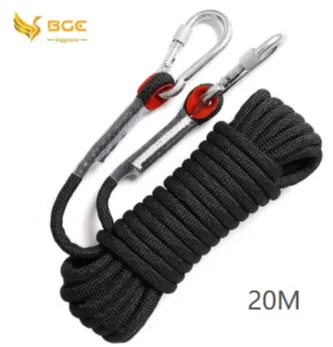
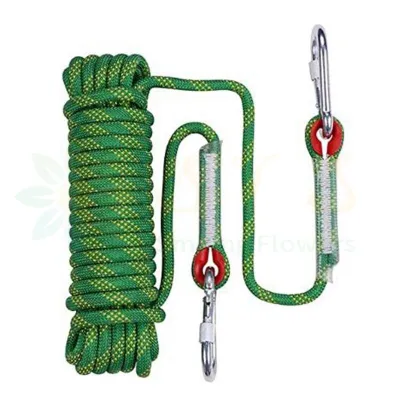
Prices are valid at publication and may change. Please refer to the product page for the latest price.
In contrast, a fixed steel rope has virtually zero dynamic stretch. It is a completely rigid, static system. If you slip and fall while attached to a steel cable, the cable itself will not absorb any of the kinetic energy. This lack of elasticity means that any fall directly onto a static connection transfers the massive shock load instantly to your harness, your body, and the anchor bolts holding the cable to the rock face. Consequently, your personal safety gear must handle one hundred percent of the energy absorption.
Environmental exposure also constantly threatens the structural integrity of fixed steel cables. In tropical and high-humidity environments, such as the mountainous regions of the Philippines, steel ropes are highly susceptible to accelerated oxidation. Moisture, heavy seasonal rainfall, and volcanic soils can cause severe internal corrosion that may not be immediately visible from the outside.
Furthermore, constant friction against sharp rock edges can wear down the outer strands of the cable. This friction creates tiny, razor-sharp wire splinters known as “fishhooks.” These splinters can easily slice through skin or damage your personal textile gear, such as slings and harnesses, upon contact. In colder alpine zones, ice accumulation can fill the grooves of the cable, making it incredibly slippery and difficult to grip, while also hiding structural defects from view.
Pre-Climb Inspection Checkpoints for Fixed Lines and Anchors
Before committing your weight to a fixed steel rope, you must perform a systematic visual and tactile inspection of the route’s hardware. Never assume a fixed line is safe simply because it is installed. You must actively verify its condition at the start of the route and continue to monitor it as you progress.

Cable Integrity Checks
- Look for structural deformation: Scan the steel rope for visible kinks, flat spots, or signs of "birdcaging"—a severe defect where the outer strands unravel and separate from the inner core, structurally compromising the cable.
- Feel for broken strands: Using heavy-duty climbing gloves, gently run your hand along accessible sections of the cable to check for broken wire strands or sharp burrs. Avoid bare-handed contact, as steel splinters can cause deep puncture wounds.
- Identify severe corrosion: Check for deep, flaky red rust that penetrates beyond superficial surface oxidation. If the cable appears significantly thinned or heavily corroded, its load-bearing capacity is compromised.
Anchor and Termination Checks
- Inspect anchor pins and bolts: Examine the steel pins and bolts securing the cable to the rock. Look for loose nuts on U-bolt clamps, cracked rock surrounding the anchor point, or signs of the pin pulling out of the stone.
- Verify swages and sleeves: Check the swaged sleeves or cable clamps at the end of each cable section. Ensure they are tightly compressed and show no signs of slippage or metal fatigue.
- Test for movement: Give the anchor pins a firm shake. If an anchor moves, rattles, or rotates within the rock, do not rely on it as a safety anchor.
Personal Gear Verification
- Check manufacturer labels: Inspect your harness, helmet, and via ferrata lanyard according to the manufacturer's care instructions and safety labels before starting.
- Examine webbing and stitching: Look for fraying, abrasion, or chemical discoloration on your harness and lanyard straps.
- Verify energy absorber integrity: Ensure the protective pouch containing the tear-out energy absorber is completely sealed and shows no signs of deployment or damage.
Safe Movement and Continuous Clipping Techniques
Maintaining continuous safety on a fixed steel rope requires strict adherence to the 100% tie-in rule. When climbing, you will regularly encounter intermediate anchor pins where the steel cable is bolted directly to the rock face. These pins divide the cable into distinct, manageable segments.
To pass an intermediate anchor safely, you must alternate your carabiners one at a time. First, unclip only one carabiner from the lower cable section, move it past the anchor pin, and clip it securely to the new upper section of the steel rope. Verify that the gate has fully closed and locked. Only after confirming that this first carabiner is completely secure should you unclip the second carabiner from the lower section and bring it across to join the first. This ensures that you are always attached to the safety system by at least one secure point during the transition.
Avoid stepping on, kicking, or dragging the steel cable during your climb. Stepping on the cable can grind dirt, grit, and moisture into the wire strands, accelerating internal wear and corrosion. Additionally, the hard steel strands can quickly chew through the rubber soles of your climbing shoes, reducing your grip on the rock and causing premature gear wear. Treat the cable strictly as a safety line and handhold, not as a footrest.
Proper carabiner orientation is also critical to preventing mechanical failure. Always clip your carabiners so that the gates face away from the rock face. If the gates face the rock, they can rub against uneven stone surfaces during movement. This contact can cause “gate flutter” or force the gate open, significantly reducing the carabiner’s strength or causing it to unclip accidentally. Keeping the gates facing outward ensures they remain unobstructed and fully closed.
Managing Fall Factors and Energy Absorption on Static Lines
Understanding the physics of a fall on a static line is essential to surviving a slip. In traditional climbing, fall severity is measured by the fall factor, which is the ratio of the fall distance to the length of dynamic rope available to absorb the energy. Because dynamic rope stretches, a low fall factor keeps impact forces safe. On a static steel rope, however, there is no rope stretch to absorb energy, meaning a fall of even a few meters can generate catastrophic shock loads.
If you slip on a vertical via ferrata, you will slide down the steel cable until your carabiners strike the next lower anchor pin. The distance of your fall is not just the length of your lanyard, but the entire distance from where you slipped down to that lower anchor pin. This means you can experience a severe fall onto a very short, static connection, creating impact forces that can easily exceed the breaking strength of standard climbing gear or cause fatal internal trauma to your body.
To minimize these dangerous impact forces, you must keep your lanyard’s attachment point as high as possible relative to your harness. As you climb, slide your carabiners along the cable ahead of you rather than letting them drag behind your feet. By keeping the carabiners high, you minimize the free-fall distance before the lanyard catches, keeping any potential fall as short as possible.
Never climb above the highest anchor point of a cable section before clipping into the next section. Climbing above an anchor creates a high-fall-factor scenario where you will drop past the anchor, generating massive kinetic energy before the system engages.
Your sole protection against these lethal shock loads is the certified tear-out energy absorber on your via ferrata lanyard. This device consists of specially stitched webbing designed to unravel progressively under a specific load. By tearing open, it absorbs the kinetic energy of the fall and limits the impact force on your body to a survivable level (typically below 6 kN). If your lanyard does not have an intact, certified energy absorber, a fall on a static line can be fatal.
When to Abort: Recognizing Unacceptable Risks and Retreat Conditions
Fixed steel ropes are valuable climbing aids, but they cannot replace sound personal judgment, route-finding skills, and proper mountaineering training. You must establish clear boundaries for when to abort a climb and initiate a controlled retreat.
Weather is one of the most critical factors when climbing on steel ropes. In tropical climates, sudden afternoon thunderstorms can develop rapidly. Because a continuous steel rope acts as a massive lightning rod draped across a mountain face, being attached to it during a storm is exceptionally dangerous. If lightning is forecast or detected in the area, you must immediately exit the route. Furthermore, heavy rain makes the metal cable and the surrounding rock face incredibly slippery, drastically increasing the physical effort required and raising the risk of slips.
Equipment red flags also mandate an immediate stop. If you encounter a section of the route with missing anchor pins, a completely severed steel rope, or unstable rock faces that threaten to drop debris onto the line, do not attempt to bypass the hazard. It is far safer to turn around and retreat down the route you have already verified than to push forward into uninspected, compromised terrain.
Finally, respect your own physical and mental limits. High humidity and heat can lead to rapid dehydration, muscle cramps, and exhaustion, which impair your coordination and decision-making. If you or anyone in your party experiences severe fatigue, heat illness, or panic, stop and assess the situation. Equipment cannot compensate for physical exhaustion; knowing when to turn back is the hallmark of a competent, safe mountaineer.
Frequently Asked Questions (FAQ)
Can I use a standard climbing sling instead of a via ferrata lanyard?
No, you must never use a standard climbing sling, quickdraw, daisy chain, or dynamic rope lanyard without an energy absorber on a fixed steel rope. Standard slings and ropes lack the capacity to absorb the extreme shock loads generated during a fall on a static steel cable.
Because the steel rope does not stretch, a fall onto a static sling can easily generate forces that exceed the breaking strength of the sling, the carabiners, or your harness, leading to catastrophic equipment failure. Even if the gear manages to hold, the sudden, violent deceleration will transfer lethal impact forces directly to your body, causing severe internal injuries or spinal trauma.
Always use a dedicated via ferrata lanyard equipped with a certified tear-out energy absorber (conforming to safety standards such as EN 958), and verify its certification status on the product label before every climb.
Community discussion
Share your experience or ask a question. Comments are reviewed before publication.