
Selecting the right mouth guard for boxing depends on your training intensity, sparring frequency, and budget. While a casual fitness boxer focusing on heavy bag drills may only require a basic barrier, a competitive fighter engaging in hard sparring needs a highly precise fit to withstand heavy impacts. Understanding the differences in protection, comfort, and long-term value among stock, boil-and-bite, and custom-fitted mouth guards will help you make an informed decision that keeps your teeth and jaw secure in the ring.
Equipment alone cannot replace proper defensive training, head movement, and ring judgment. No mouth guard offers absolute safety against dental injuries or concussions, but choosing the correct type for your activity level significantly reduces the risk of soft tissue cuts and tooth damage. Before stepping into any sparring session, verifying the fit and condition of your protective gear is a vital safety check.
Understanding the Three Main Types of Boxing Mouth Guards
Stock mouth guards are pre-formed, ready-to-use protectors available straight out of the package. Because they require no molding process, they rely entirely on a generic shape designed to fit an average arch. To keep a stock guard in place, you must constantly clench your teeth together, which can limit your ability to breathe naturally or speak during training.
Products mentioned in this guide
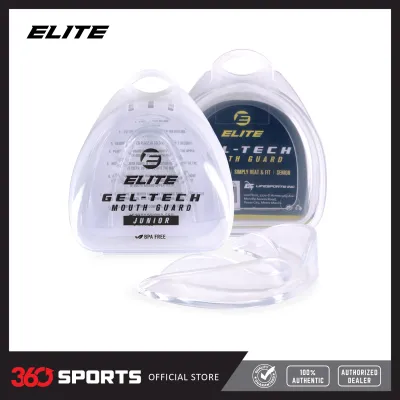
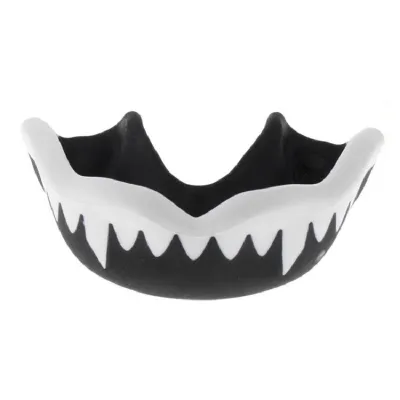
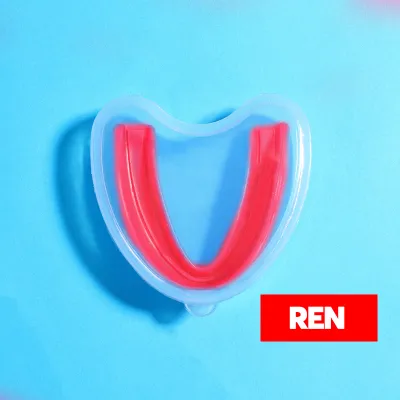
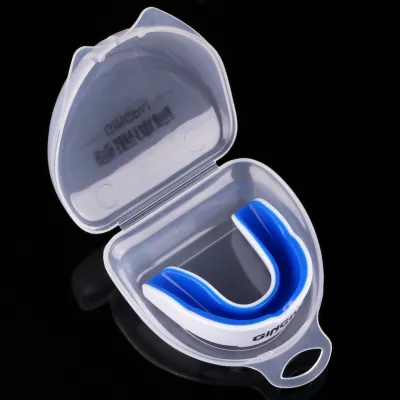
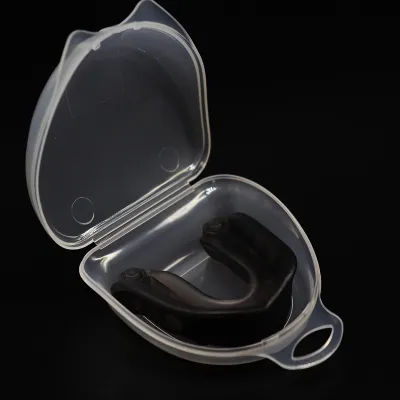
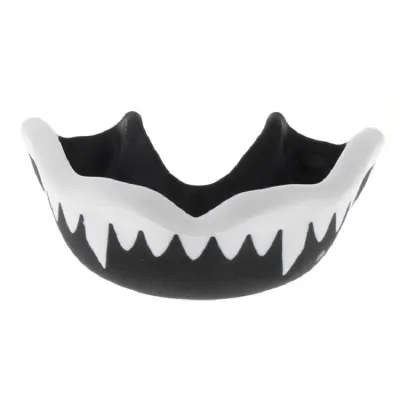
Prices are valid at publication and may change. Please refer to the product page for the latest price.
Boil-and-bite mouth guards are made from thermoplastic materials that soften when submerged in hot water. Once softened, the material is placed in the mouth and molded to the teeth using finger pressure, tongue pressure, and active suction. This category represents the most common type of protective gear found in local boxing gyms, offering a semi-custom fit at an accessible price point.
Custom-fitted mouth guards are professionally fabricated using a physical dental impression or a 3D digital scan of your teeth. This process creates an exact anatomical replica of your dental arch, ensuring the guard fits snugly over every contour of your teeth and gums. Because they are tailored to the individual, they require no active clenching to stay securely in place.
Protection and Impact Absorption: Evaluating Fit and Shock Dispersion
A mouth guard protects your teeth by distributing the force of a direct blow across a wider surface area. For this mechanism to work, the guard must maintain a secure, immovable fit during impact. If a mouth guard dislodges or shifts when you receive a punch, it leaves your teeth exposed and can become a choking hazard during a match.

Material density and thickness play a critical role in shock absorption. When purchasing a guard, you must verify the manufacturer’s specifications for material grades, such as medical-grade ethylene-vinyl acetate (EVA), and the overall thickness of the bite pads. A thicker front barrier is essential for dispersing the energy of straight punches, while reinforced side channels help stabilize the jaw against lateral hooks.
Proper jaw alignment is another key factor in reducing injury. A well-fitted mouth guard cushions the contact between your upper and lower teeth, preventing them from slamming together violently. This cushioning helps reduce the risk of dental fractures, chipped teeth, and jaw joint fatigue, allowing you to maintain a stable bite throughout your training sessions.
Comfort, Breathing, and Communication in the Ring
During intense boxing rounds, your oxygen intake is paramount. Standard boil-and-bite guards often feature excess material that can feel bulky, pushing against your lips and cheeks and restricting your airflow. Custom-fitted profiles, by contrast, are trimmed to remove unnecessary bulk while retaining maximum thickness only where protection is required.
An oversized or poorly molded guard can easily trigger a sensitive gag reflex, causing discomfort and distraction when you need to focus on your opponent. A low-profile, secure fit allows you to breathe deeply through your mouth and speak clearly to your coach between rounds. You should be able to open your mouth to communicate without the guard falling down onto your tongue.
Before every training session, inspect your mouth guard for sharp edges, uneven biting surfaces, or loose flanges that might irritate your gums. In hot and humid training environments, even minor friction can quickly cause painful oral sores. If you notice any rough spots, you may need to carefully trim the excess material or remold the guard according to the manufacturer’s instructions.
Cost, Durability, and Maintenance Requirements
Stock mouth guards offer the lowest upfront cost, typically priced at a few hundred pesos (₱), making them highly accessible for beginners. Boil-and-bite options represent a moderate investment, providing a balance of affordability and improved fit. Custom-fitted mouth guards require a premium upfront investment, often costing several thousand pesos (₱) due to the dental molding process, but they offer the longest lifespan.
To determine when to replace your gear, look for clear durability indicators. Inspect the guard regularly for deep bite marks, visible tears, thinning material around the front teeth, or permanent deformation. If the guard no longer clings to your upper teeth when you open your mouth, the material has degraded, and it is time to replace it to ensure continued protection.
In the tropical humidity of the Philippines, proper hygiene practices are essential to prevent bacterial growth and material warping. Always rinse your mouth guard with cool water immediately after training, clean it gently with a soft toothbrush and mild soap, and let it dry completely. Store the guard in a well-ventilated case, and keep it away from direct sunlight or hot gym bags, as extreme heat can warp the thermoplastic material.
Decision Framework: Matching the Mouth Guard to Your Boxing Level
Choose a stock mouth guard if you are attending your very first trial boxing class, focusing entirely on non-contact shadowboxing and heavy bag drills, or need an immediate, low-cost backup to keep in your gym bag. Because they do not offer a secure fit, stock guards are not suitable for active sparring or competitive training.
Choose a boil-and-bite mouth guard if you are a regular fitness boxer or an amateur who participates in light, controlled sparring sessions. This option provides a practical, cost-effective balance of protection and comfort, allowing you to train safely without the premium expense of a custom dental mold.
Choose a custom-fitted mouth guard if you are a competitive amateur, a professional fighter, or a frequent heavy sparrer. The superior impact dispersion, low-profile comfort, and unrestricted airflow of a custom guard are essential for maintaining peak performance and high-level safety during intense, multi-round bouts.
Before making your final selection, verify your specific dental needs. If you have braces, dental implants, recent dental work, or jaw conditions such as temporomandibular joint (TMJ) disorders, do not use standard over-the-counter guards. Consult your dentist or orthodontist to obtain a specialized guard designed to accommodate your dental structure safely.
Frequently Asked Questions (FAQ)
Can I use a standard boil-and-bite mouth guard if I have braces?
No, you should not use a standard boil-and-bite mouth guard if you wear braces. The heated thermoplastic material can flow into the spaces around your brackets and archwires, locking the guard onto your teeth as it cools. Attempting to remove it can damage your orthodontic hardware or cause severe dental pain. Instead, consult your orthodontist for a specialized braces-compatible mouth guard made from medical-grade silicone that fits comfortably over your brackets and allows your teeth to align naturally.
How do I know when it is time to replace my mouth guard?
You should replace your mouth guard immediately if you observe visible signs of wear, such as tears, deep bite marks, or thinning sections over the front teeth. Functional signs also indicate the need for a replacement; if the guard no longer stays snugly on your upper teeth without active biting, or if it begins to cause new gum irritation, the material has lost its structural integrity. For hygiene reasons, even a well-maintained guard should generally be replaced after one to two seasons of regular use.
Should I use a single-layer or double-layer mouth guard for boxing?
For most boxers, a single-layer (upper-arch) mouth guard is the preferred choice because it provides excellent protection for the upper teeth while allowing you to breathe, swallow, and communicate easily. A double-layer (dual-arch) mouth guard covers both the upper and lower teeth, offering additional protection but requiring you to keep your jaw clenched shut to hold it in place. This clenching can restrict your airflow to small breathing channels, which often leads to rapid fatigue and jaw tension during intense sparring.
Community discussion
Share your experience or ask a question. Comments are reviewed before publication.