
Selecting the right stress ball for hand therapy requires looking beyond simple desk toys to find a tool that matches your specific recovery needs. The most effective options balance precise resistance levels, hygienic materials that withstand warm climates, and ergonomic shapes tailored to your hand size.
While these tools are highly effective for building strength and restoring mobility, they are designed to support a structured recovery plan. A stress ball is a rehabilitation accessory rather than a standalone cure. For safety and optimal recovery, always consult a physical therapist or medical professional to guide your exercise routine and ensure the movements suit your specific condition.
Resistance Levels: Decoding Tension for Rehabilitation Stages
Therapeutic stress balls are categorized by their resistance levels, which typically range from extra-light to extra-firm. Matching the correct tension to your current stage of recovery is critical for safe tissue healing.
Products mentioned in this guide
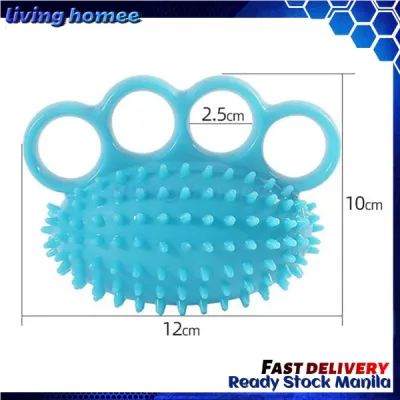
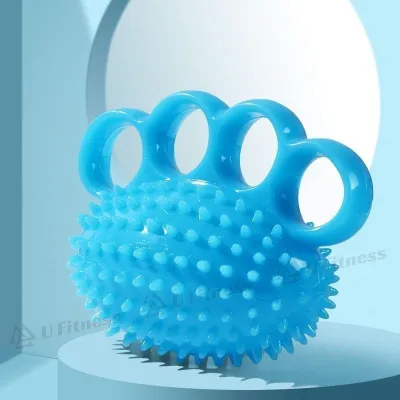
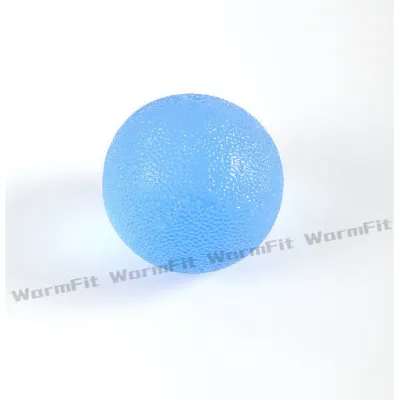
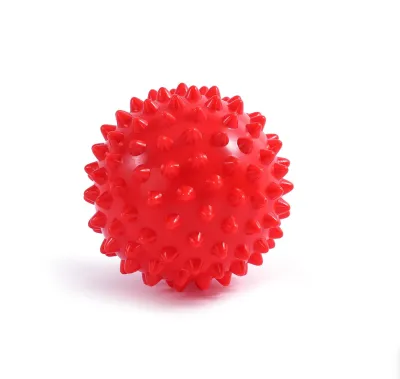
Prices are valid at publication and may change. Please refer to the product page for the latest price.
During the early phases of rehabilitation, such as post-surgery recovery or initial joint mobilization, light or extra-light resistance is ideal. These soft options require minimal force, allowing you to lubricate stiff joints and promote blood flow without putting excessive strain on healing tissues.
As your hand heals and gains basic mobility, you can transition to medium and firm resistance levels to build grip strength and muscle endurance. This progression relies on the principle of progressive overload, where you gradually increase the workload on your muscles and tendons to stimulate growth and repair.
Moving to a higher resistance level too quickly is a common mistake that can lead to secondary injuries. Excess tension can strain healing tendons, inflame joints, or exacerbate nerve compression issues like carpal tunnel syndrome.
Because recovery timelines vary, the ideal resistance level is highly individual. Your physical therapist can provide a specific protocol detailing when to squeeze, how hard, and when it is safe to progress to a firmer ball.
Material Specs: Grip, Hygiene, and Tropical Climate Performance
Hand therapy tools must withstand frequent use, sweat, and environmental factors. In the tropical climate of the Philippines, where high humidity and warm temperatures are constant, material selection directly impacts both durability and hygiene.

Silicone is widely considered the gold standard for therapeutic use. It is highly durable, non-porous, and incredibly easy to sanitize with simple soap and water. However, smooth silicone can become slippery when your hands sweat during an exercise session.
Thermoplastic Elastomer (TPE) is another excellent alternative. It offers a slightly textured, non-slip grip even when damp, making it highly stable for repetitive squeezing. TPE is also lightweight and retains its shape well over long-term use.
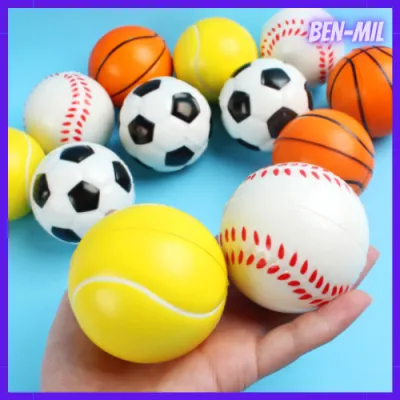
Traditional polyurethane (PU) foam is common in novelty stress balls but is poorly suited for clinical hand therapy. PU foam is highly porous, meaning it acts like a sponge that absorbs sweat, dead skin cells, and environmental moisture. In hot, humid conditions, these porous balls can quickly harbor bacteria, develop unpleasant odors, and degrade or crumble over time.
Gel-filled therapy balls, which feature a non-porous outer skin containing a dense gel, offer a unique, fluid resistance. Some gel models are designed for dual-purpose temperature therapy, though they carry a minor risk of puncturing if compressed by sharp fingernails.
For long-term safety and infection control, prioritize non-porous, washable materials that dry quickly after cleaning.
Dimensions and Ergonomics: Sizing for Targeted Muscle Activation
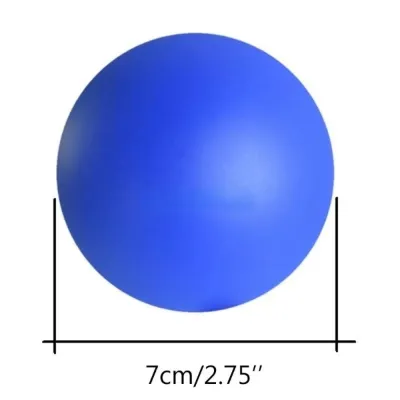
An effective hand therapy ball must fit the physical dimensions of your hand to ensure proper biomechanics during exercise. Using a ball that does not match your hand size can compromise your recovery and place unnecessary stress on your joints.
If a therapy ball is too large, you will not be able to achieve a full closed-fist squeeze. This incomplete range of motion prevents you from fully engaging your fingers and can strain the carpometacarpal (CMC) joint at the base of the thumb.
Conversely, a ball that is too small fails to distribute pressure evenly across your palm. This can lead to localized cramping and prevents the deep, intrinsic hand muscles from activating correctly.
Different shapes target specific therapeutic goals:
- Standard Spheres: Best for general grip strengthening, overall hand compression, and broad flexion exercises.
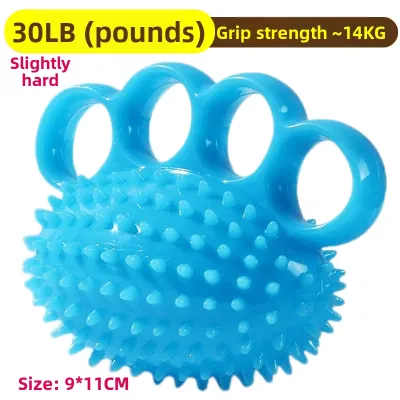
- Egg-Shaped (Ovoid) Design: Conforms naturally to the tapered grip of a resting hand, making it excellent for isolating individual fingers and practicing thumb-to-finger opposition.
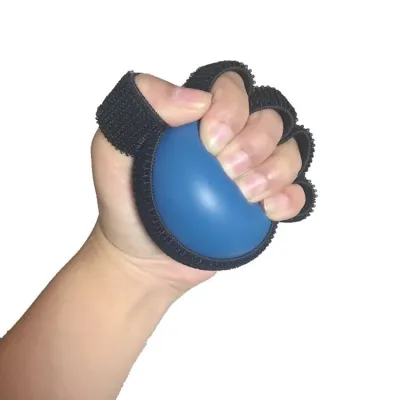
- Contoured/Grooved Balls: Feature dedicated channels for your fingers, helping to guide proper alignment and support targeted tendon gliding exercises.
Surface Texture: Sensory Feedback and Stability
The exterior texture of a therapy ball affects how securely you can hold it and how your nervous system responds to the exercise.
Textured surfaces provide essential mechanical stability. If you experience hyperhidrosis (excessive sweating) or have weakened hand strength due to arthritis, a textured surface prevents the ball from slipping out of your hand during repetitive movements.
For neurological rehabilitation, such as recovering hand function after a stroke, textured surfaces offer valuable sensory feedback. Ridges, bumps, or small nodules stimulate the sensory receptors in your palm and fingertips, helping to rebuild proprioception and improve brain-to-muscle communication.
However, safety should always come first when choosing textured surfaces. Avoid overly sharp, rigid, or hard spikes. If you suffer from peripheral neuropathy, reduced sensation, or fragile skin, aggressive textures can cause undetected skin abrasions, blisters, or pressure sores.
Low-Impact Specs: Features to Ignore When Choosing
When shopping for a hand therapy ball, it is easy to get distracted by marketing features that add cost without offering any clinical or therapeutic value.
Avoid complex internal mechanisms, such as built-in mechanical springs or electronic squeeze counters. These additions often make the ball heavy, ruin its ergonomic shape, and present more points of failure without improving your physical recovery.
Novelty shapes, such as stars, animals, or food items, should also be avoided. These shapes do not provide uniform resistance when squeezed from different angles, making it difficult to perform consistent, controlled therapeutic movements.
Finally, ignore scented or fragranced materials. Added scents do not contribute to physical rehabilitation and can trigger skin allergies, contact dermatitis, or sensory irritation during focused exercise sessions.
Frequently Asked Questions (FAQ)
How often should I use a stress ball for hand therapy?
Your daily exercise frequency and duration depend entirely on your specific diagnosis, surgical history, and current healing phase. Squeezing a therapy ball continuously throughout the day can lead to overuse injuries, such as tendonitis or joint inflammation. Always follow the specific repetition and set guidelines provided by your physical therapist.
Can a regular promotional stress ball replace a therapeutic one?
Promotional stress balls are generally unsuitable for medical rehabilitation. They are typically made from cheap, porous polyurethane foam that degrades quickly, lacks consistent or graded resistance ratings, and fails to provide the ergonomic support needed for targeted joint and muscle recovery.
Should I use heat or cold therapy with my stress ball?
Using temperature therapy can be highly beneficial, but it must be done carefully. Generally, warming a compatible gel-filled therapy ball helps relax stiff joints and increase local blood flow before you begin exercising, while cooling the ball can help soothe inflammation and reduce post-exercise soreness. Always check the manufacturer’s instructions before heating or freezing any therapy ball to prevent material rupture, burns, or skin damage.
Community discussion
Share your experience or ask a question. Comments are reviewed before publication.