
When planning a family getaway to a beach resort in Batangas or packing for a weekend pool gathering, choosing the correct water safety gear for your child is a decision that requires careful evaluation. The terms “life jacket,” “swimming vest,” and “arm floats” are often used interchangeably, but they represent entirely different categories of equipment. Each device is engineered with distinct levels of buoyancy, structural support, and physical mobility. Selecting the wrong gear for a specific environment can create a dangerous mismatch between your child’s actual swimming ability and the safety demands of the water.
To make an informed decision, parents must evaluate their child’s physical development, water comfort, and the exact nature of the water activity. A device that is perfectly suited for a controlled, shallow swimming pool can become a hazard in open coastal waters or during an island-hopping boat tour. Understanding the mechanical differences and safety limitations of these flotation aids is the first step toward preventing water-related accidents and ensuring a safe, enjoyable experience for the entire family.
Understanding How Life Jackets, Swimming Vests, and Arm Floats Actually Work
Each type of flotation gear is designed to perform a specific mechanical function in the water. Mixing up these functions can lead to a false sense of security, putting a child in a situation their gear was never designed to handle.
Products mentioned in this guide
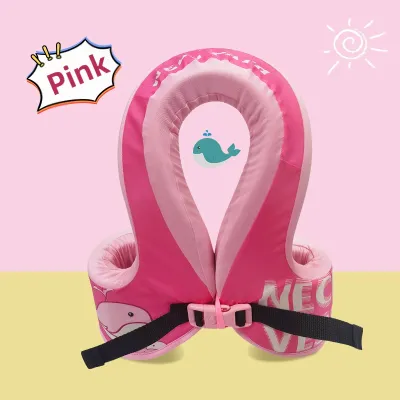
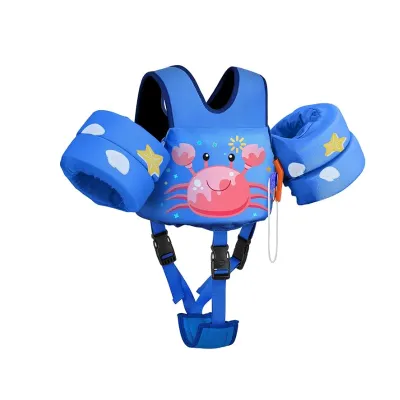
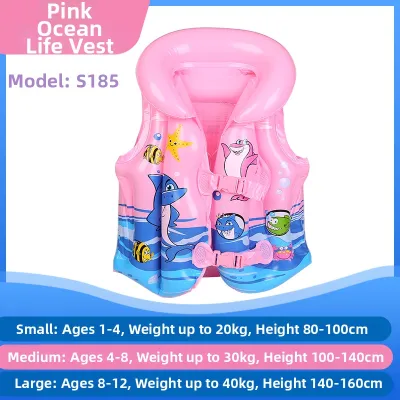
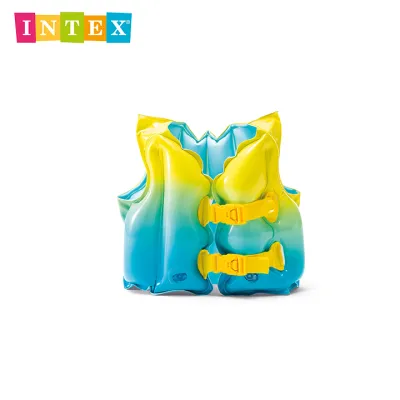
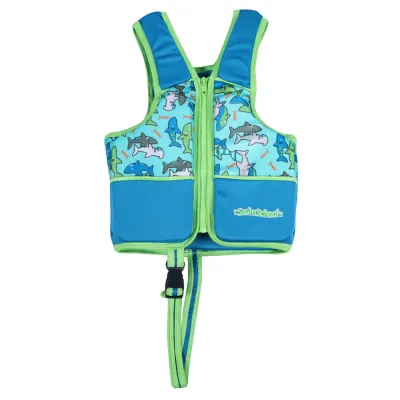
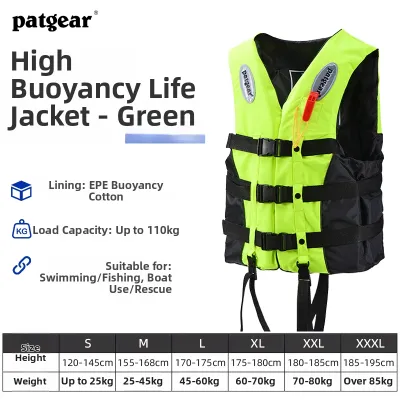
Prices are valid at publication and may change. Please refer to the product page for the latest price.
Life Jackets: Engineered for Survival and Self-Righting
A certified life jacket is a primary life-saving device engineered to keep a wearer afloat in unpredictable, open-water conditions. The defining mechanical characteristic of a high-quality life jacket is its ability to automatically turn an unconscious wearer from a face-down position to a face-up position, keeping their airway clear of the water. This is achieved through a concentrated distribution of highly buoyant foam in the front chest panels and a supportive collar that cradles the back of the child’s head. Because they prioritize survival over comfort, life jackets are bulkier and naturally restrict a child’s range of motion, particularly around the shoulders and neck.
Swimming Vests: Buoyancy Aids for Active Learning
A swimming vest for kids is classified as a buoyancy aid rather than a life-saving device. These vests are designed to assist children who are actively learning to swim by helping them maintain a natural, horizontal swimming position in the water. Unlike life jackets, swimming vests do not have self-righting capabilities; if a child flips face-down or panics, the vest will not automatically turn them over. Instead, they feature a balanced distribution of foam around the torso, leaving the arms and shoulders completely free. This design allows for a full range of motion, making it much easier for a child to practice arm strokes and kicking techniques under direct supervision.
Arm Floats: Minimal Support with High Structural Risks
Arm floats, commonly referred to as water wings, are inflatable or foam bands worn on the upper arms. They provide localized, minimal buoyancy designed primarily to help confident toddlers stay upright in shallow water where they can easily touch the bottom. However, arm floats have severe structural limitations that make them highly unreliable as safety gear. Because they rely on friction against wet skin or inflatable air chambers, they can easily slip down the arms, puncture, or lose air pressure. Furthermore, by keeping buoyancy concentrated solely on the arms, they can force a child into an unnatural vertical position, making it difficult for them to tilt their head back or swim effectively if they drift into deeper water.
Matching the Right Gear to Your Child’s Skill Level and Activity
Choosing the right gear is not about finding a one-size-fits-all solution; it is about matching the equipment to your child’s physical capabilities and the specific aquatic environment.

When to Choose a Life Jacket
A certified life jacket is non-negotiable for all open-water activities, including boating, kayaking, riding motorized bancas, and island-hopping excursions. In these environments, wind, waves, and sudden currents can quickly overwhelm even a skilled young swimmer. If a child unexpectedly falls overboard, a life jacket is the only device designed to keep them afloat and breathing while rescue efforts are underway.
Additionally, toddlers, infants, and non-swimmers should always wear a properly fitted life jacket when they are anywhere near deep water, including deep backyard or resort pools. Because young children have a higher head-to-body mass ratio, they can easily tip forward in the water; a life jacket’s collar and chest-heavy buoyancy are specifically designed to counteract this physical tendency. When selecting a life jacket, verify that it matches your child’s current weight range and features a durable crotch strap to prevent the jacket from riding up over their head.
When a Swimming Vest for Kids is the Right Choice
A swimming vest for kids is the ideal tool for controlled, supervised environments where the primary goal is swimming instruction and water confidence. If your child is comfortable putting their face in the water, can blow bubbles, and is actively learning to kick and paddle, a swimming vest provides the perfect amount of auxiliary buoyancy. It supports their torso while allowing them to build the muscle memory and physical stamina required for independent swimming.
This gear is highly effective during the transition phase between complete dependence on flotation aids and independent swimming. However, because swimming vests require the child to actively participate in keeping their own head above water, they must only be used in calm, shallow pools. Parents must remain within arm’s reach at all times, as a fatigued child can easily lose their balance or roll forward into a position where they cannot easily clear their airway.
The Limited and Risky Role of Arm Floats
Arm floats should be viewed as recreational swim toys rather than safety equipment. Their appropriate use is limited strictly to older toddlers and children who already possess basic water confidence, can stand flat-footed in the shallow end of a pool, and are under continuous, direct adult supervision. They can help a child splash around comfortably in a controlled wading pool, but they should never be relied upon in deep water or active swim environments.
The risks associated with arm floats are significant. Wet skin, sunscreen, and active splashing can cause inflatable bands to slide off a child’s arms in an instant. If a child panics, the restriction of their upper arms can prevent them from performing basic self-rescue movements, such as rolling onto their back or reaching for a pool edge. If you choose to use arm floats, treat them as a temporary play accessory and never leave a child unattended, even for a single second.
Crucial Safety Rules: Why Flotation Gear Never Replaces Supervision
One of the most dangerous misconceptions among parents is the belief that putting a flotation device on a child guarantees their safety, allowing adults to relax their vigilance. No piece of equipment, regardless of its certification or cost, can replace active, undistracted human supervision.
To ensure your child’s safety, always practice the “Touch Supervision” rule. This means that an adult must remain in the water, within arm’s reach, and fully focused on any infant, toddler, or weak swimmer, even if the child is wearing a certified life jacket or a swimming vest for kids. In a crowded resort pool or a busy beach, it takes only a moment for a child to slip out of their gear, get caught under an inflatable float, or experience a sudden cramp.
It is also vital to understand that real-world drowning does not look like the dramatic splashing, waving, and screaming often depicted in movies. Drowning is almost always silent and rapid. When a child is struggling in the water, their physiological response is to focus entirely on trying to breathe, leaving them unable to call out for help or wave their arms. A child can quietly slip beneath the surface and drown in less than a minute, often right next to other swimmers who fail to notice the struggle.
Furthermore, relying too heavily on flotation gear can foster a dangerous sense of false confidence in both parents and children. Children who spend hours floating effortlessly in swimming vests or arm floats often fail to realize that the gear is doing all the work. When the gear is removed, they may attempt to jump into deep water, completely unaware that they lack the physical strength and coordination to stay afloat on their own. Regularly schedule “no-gear” practice sessions in shallow water under close supervision to help your child understand their actual swimming boundaries.
How to Check Fit, Condition, and Safety Labels Before Every Use
Before your child enters the water, you must perform a thorough safety inspection of their flotation gear. Even the highest-rated equipment cannot protect a child if it is damaged, poorly maintained, or incorrectly sized.
First, verify the physical limits printed on the manufacturer’s label. Never select water safety gear based on age alone, as children of the same age can vary drastically in weight and body shape. Look for the exact weight and chest size specifications. Buying a larger size with the intention of letting your child “grow into it” is a dangerous mistake; an oversized vest or jacket will simply float up around the child’s face, leaving their mouth and nose submerged.
Second, perform the “lift test” to confirm a secure fit. Once the jacket or vest is zipped and buckled snugly, slide your hands under the shoulder straps and lift the child upward. If the gear slides up past their chin, nose, or ears, the straps are too loose, or the device is too large. The gear should remain securely in place against the child’s torso, allowing them to breathe and move comfortably without riding up.
Third, conduct a pre-use inspection before every swim session. Check all seams, straps, and fabric panels for signs of tearing, fraying, or degradation caused by exposure to sun, chlorine, or saltwater. Ensure that all plastic buckles click securely into place and that zippers slide smoothly without catching. For any inflatable components, submerge them briefly or apply soapy water to check for tiny air leaks, and ensure the safety valves are pushed flat into the device.
Finally, examine the safety labels printed on the product. Look for recognized marine safety certification marks, such as those from the Philippine Coast Guard (PCG), the United States Coast Guard (USCG), or international European standards (CE/EN marks). If a product lacks clear, printed safety specifications, weight limits, or manufacturer information, do not use it. Discard any gear that shows signs of mold, sun-faded fabric, or brittle plastic buckles, as these indicate that the structural integrity of the material has been compromised.
Frequently Asked Questions (FAQ)
Can my toddler use a swimming vest instead of a life jacket on a boat?
No, a swimming vest is not a safe or legal substitute for a life jacket on a boat. Boating and open-water activities require a certified life jacket equipped with a supportive collar and self-righting capabilities. If a boat capsizes or a child falls into open water, a swimming vest will not automatically turn them face-up, leaving them vulnerable if they panic or become exhausted.
At what age can a child stop wearing a life jacket in a pool?
There is no specific age at which a child can safely stop wearing flotation gear in a pool. The decision must be based entirely on their proven swimming competence and physical stamina. A child should continue to wear appropriate safety gear until they can consistently tread water for at least one minute, swim the entire length of the pool unassisted, and easily climb out of the water without using a ladder.
Community discussion
Share your experience or ask a question. Comments are reviewed before publication.