
Selecting the right uniform is a foundational step in your martial arts journey. In Taekwondo, your uniform—known as a dobok—is not merely traditional attire; it is a functional piece of equipment that directly impacts your mobility, temperature regulation, and overall performance. Finding the correct fabric weight for your dobok taekwondo depends on your current training level, the specific discipline you practice, and your local training environment.
Beginners typically benefit from lightweight fabrics that maximize comfort and ease of movement, while advanced practitioners often transition to heavier, stiffer fabrics that provide structural feedback during forms. Understanding these differences allows you to select a uniform that supports your progression without causing unnecessary discomfort. By matching the weight of your uniform to your specific training needs, you can optimize both your performance and your comfort on the mats.
Understanding Taekwondo Dobok Fabric Weights
Fabric weight in martial arts uniforms is typically measured in ounces per square yard (oz) or grams per square meter (GSM). A higher number indicates a denser, thicker, and heavier fabric, which fundamentally changes how the uniform behaves during movement. These weights are broadly categorized into lightweight, medium-weight, and heavyweight, each serving a distinct purpose on the training floor.
Products mentioned in this guide
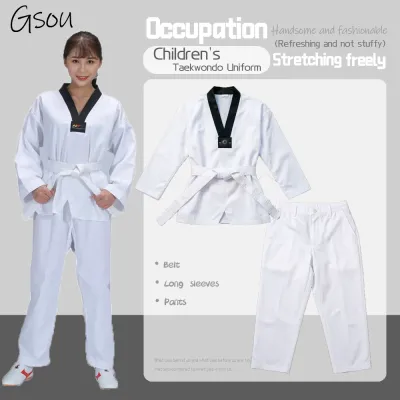
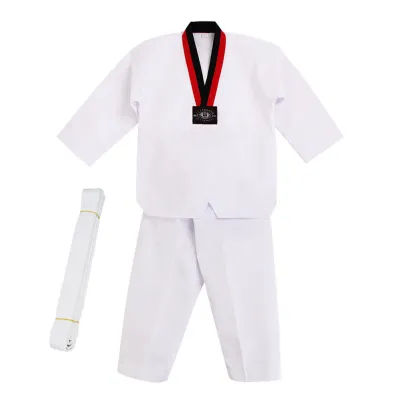
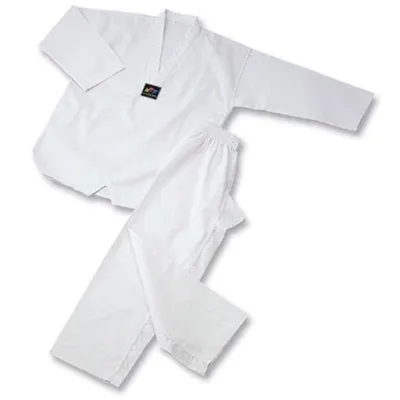
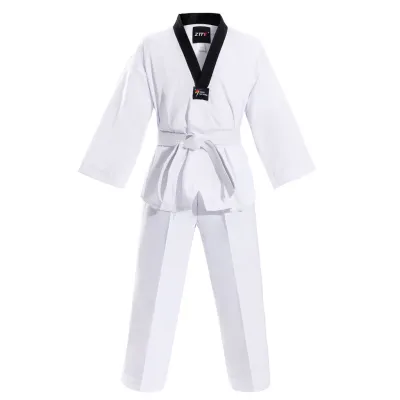
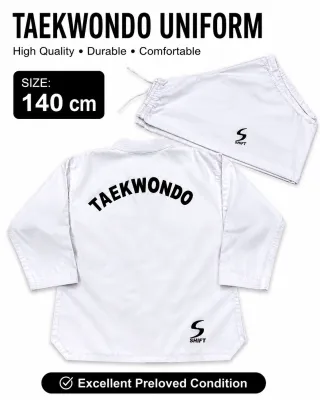
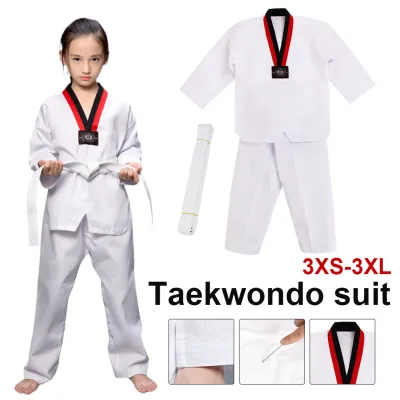
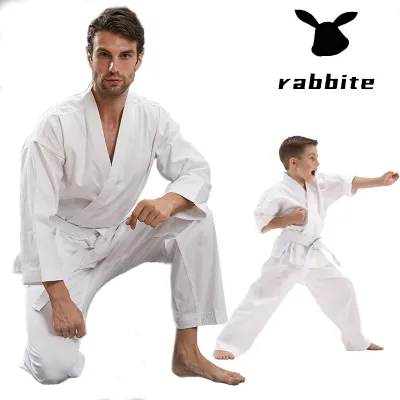
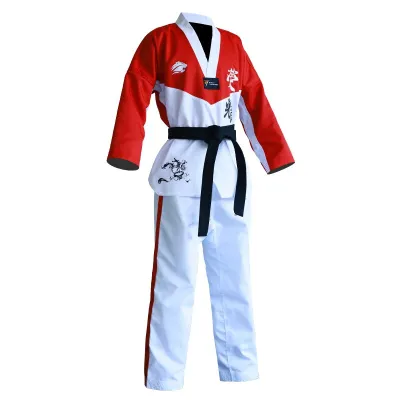
Prices are valid at publication and may change. Please refer to the product page for the latest price.
Lightweight doboks generally range from 7 oz to 8 oz (approximately 200 to 240 GSM). These uniforms prioritize maximum breathability, flexibility, and a soft drape. Because they offer minimal resistance to movement, they are highly favored for high-intensity training where heat dissipation and quick footwork are essential.
Medium-weight doboks, typically weighing between 9 oz and 10 oz (around 270 to 310 GSM), offer a balanced middle ground. They retain a moderate level of breathability while introducing a sturdier structure. This weight provides a more traditional uniform feel and enhanced durability, making it resilient against the pulling and friction common in everyday dojang sessions.
Heavyweight doboks range from 11 oz to 14 oz (around 340 to 420 GSM) and are characterized by their stiff, thick canvas texture. The primary appeal of a heavyweight uniform is its durability and the sharp, distinct “snap” sound it produces during rapid, powerful kicks and punches. This acoustic feedback is highly valued for demonstrating power and precision.
While these categories are standard, exact weight thresholds, weave styles, and stiffness can vary significantly by manufacturer. Some brands use specialized ribbed or diamond-pattern weaves to make a lighter fabric feel stiffer, so it is always wise to check specific product descriptions and sizing guides before making a purchase.
Matching Fabric Weight to Your Training Level
Your current rank and training focus are the most reliable guides for choosing the correct dobok weight. As you progress from a beginner learning basic stances to an advanced practitioner refining high-level techniques, your uniform requirements will naturally shift.

Beginners
For novice students—typically white belts through green belts—comfort and affordability are the primary considerations. A lightweight or light-medium dobok is highly recommended at this stage. Learning basic stances like Ap-seogi (walking stance) and Ap-koobi (forward stance) requires unrestricted hip and leg movement, which a soft, lightweight fabric easily accommodates. Additionally, lightweight uniforms are generally the most budget-friendly option, making them a practical choice while you establish a long-term commitment to the sport.
Intermediate Practitioners
As you reach the intermediate ranks—such as blue and red belts—your training becomes more physically demanding and dynamic. Transitioning to a medium-weight dobok is often ideal here. This weight supports more intense sparring drills and repetitive kicking sequences without wearing down quickly. It also introduces the structured, traditional look of a martial arts uniform, helping you look and feel more polished during promotion tests.
Advanced and Competition Level
For black belts and competitive athletes, the choice of fabric weight often splits based on your primary discipline. If your focus is on Poomsae (forms), a heavyweight dobok is the standard choice. The rigidity of the heavy fabric emphasizes clean lines, straight postures, and powerful execution. Crucially, the loud snap sound produced by a heavyweight uniform during a punch or kick is a key detail that judges look and listen for during competitions.
Conversely, if your focus is on Kyorugi (sparring), agility and thermal regulation are your top priorities. Even at the Olympic level, sparring competitors almost exclusively wear ultra-lightweight, highly breathable doboks. These uniforms are often made from advanced synthetic blends with integrated mesh panels to keep the athlete cool and agile, proving that heavyweight fabrics are not always the default choice for advanced practitioners.
Adjusting for Tropical Climates and Fabric Blends
In tropical environments like the Philippines, local weather conditions are a critical factor in uniform selection. Training in non-air-conditioned dojangs, community gyms, or open-air barangay halls means dealing with high temperatures and intense humidity. Under these conditions, a heavy, poorly ventilated uniform can quickly lead to overheating and fatigue.
Traditional heavyweight doboks made of 100% cotton tend to absorb a massive amount of moisture. When soaked with sweat, pure cotton becomes heavy, clings to the skin, and can cause painful chafing during repetitive kicking drills. For tropical training, a heavy pure-cotton uniform is often impractical for daily use unless your training facility is consistently air-conditioned.
To balance structure and comfort in warm climates, look for modern polyester-cotton blends (such as a 65% polyester and 35% cotton mix). Polyester fibers do not retain moisture the way cotton does; instead, they allow sweat to evaporate quickly, keeping the uniform dry and light. A medium-weight poly-cotton blend can offer the crisp appearance of a traditional uniform while remaining significantly cooler and faster-to-dry than its pure cotton counterpart.
If you must train in high-humidity environments, consider choosing a fabric weight that is slightly lighter than what is traditionally recommended, or prioritize high-performance synthetic fabrics designed specifically for moisture management. Staying dry and cool keeps your focus where it belongs: on your technique and your instructor.
Verifying Specifications and Caring for Your Dobok
Before purchasing a new dobok, take a close look at the product tag or online specification list. Verify the fabric weight in ounces or GSM, the material composition, and the weave type. If you are shopping online, reading user reviews can provide valuable insight into whether a specific model runs true to size or feels heavier than its advertised weight.
Shrinkage is a major factor to keep in mind, especially when dealing with heavyweight or high-cotton uniforms. Pure cotton fabrics can shrink up to a full size after the first few washes. To avoid a uniform that is too short or tight, always consult the manufacturer’s care instructions. If the label warns of high shrinkage, you may need to order one size up to ensure a proper fit after laundering.
To preserve the intended feel and longevity of your dobok, follow a careful washing routine. Always wash your uniform in cold water to prevent shrinking and color fading. Avoid using fabric softeners, particularly on heavyweight doboks; softeners coat the fibers, making the fabric limp and ruining the crisp, loud snap effect. Hang your dobok to air dry immediately after washing, and if you need to iron a poly-cotton blend to maintain its sharp look, ensure your iron is set to a safe, low-to-medium heat setting to avoid damaging the synthetic fibers.
Frequently Asked Questions (FAQ)
Is a heavyweight dobok too hot for sparring?
Yes, heavyweight doboks are generally too hot and restrictive for sparring (Kyorugi). Sparring requires rapid footwork, high-velocity kicks, and continuous movement, which generate substantial body heat. A heavy canvas uniform traps this heat and absorbs sweat, quickly becoming heavy, clingy, and exhausting to wear. For sparring, lightweight, moisture-wicking synthetic uniforms are highly recommended to ensure you remain cool, agile, and unrestricted.
How do I keep my heavyweight dobok stiff and crisp?
To maintain the stiffness and distinctive snap of a heavyweight dobok, wash it in cold water and strictly avoid using fabric softeners, which coat and soften the fibers. Hang the uniform to air dry immediately after washing rather than using a high-heat dryer. For a highly professional, crisp appearance before an exam or Poomsae competition, iron the uniform while it is still slightly damp, following the manufacturer’s recommended temperature settings.
Community discussion
Share your experience or ask a question. Comments are reviewed before publication.