
Quick Answer: Core Items in a Standard Taekwondo Full Set
A standard beginner’s taekwondo gear full set typically includes six essential protective pieces: a headgear, a chest protector, arm guards, shin guards, a groin guard, and a mouthguard. These core items are designed to protect high-impact zones during sparring sessions. While some packages may also bundle hand guards or foot gloves, these are often sold separately depending on the manufacturer.
Because there is no universal industry standard for what constitutes a full set, it is vital to inspect the product description carefully before purchasing. Checking the specific inclusions ensures you do not end up needing to buy missing pieces separately right before your first sparring class.
Breakdown of Each Protective Piece and Its Function
Headgear and Mouthguard
The headgear and the mouthguard form your primary defense for the head, face, and jaw. When evaluating headgear in a beginner set, look for a design that covers the forehead, the temples, the back of the skull, and the ears while leaving the face open for maximum visibility. The fit must be snug but comfortable; it should not shift when you shake your head.
Products mentioned in this guide
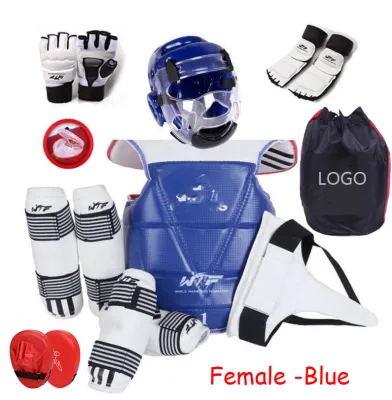
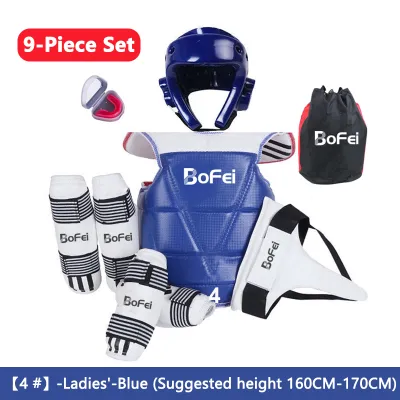
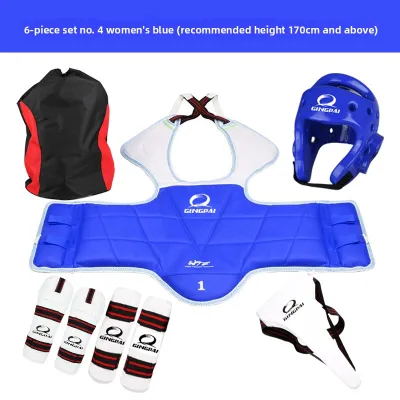
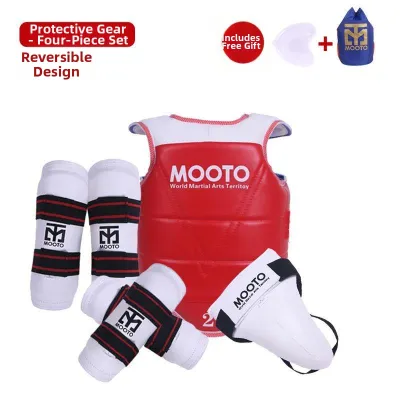
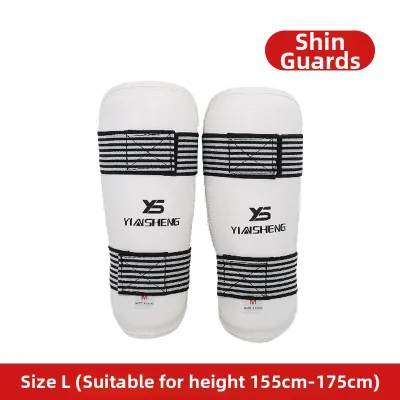
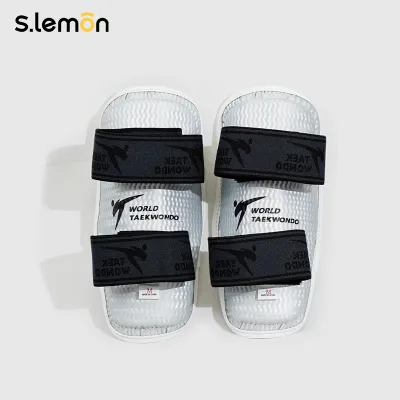
Prices are valid at publication and may change. Please refer to the product page for the latest price.

Check the fastening mechanism, which is typically a heavy-duty hook-and-loop strap under the chin. Ensure the ear cutouts are aligned properly to allow clear hearing during instructions from your coach. Proper ventilation is also key to keeping cool during intense training sessions.
The mouthguard protects the teeth, gums, and jaw from impact during sparring. Most beginner sets include a standard boil-and-bite mouthguard made of thermoplastic material. To mold it, you must submerge it in hot water according to the manufacturer’s instructions, let it cool slightly, and then bite down firmly to create a custom impression of your teeth.
Because mouthguards are personal hygiene items, online marketplaces and local sports shops strictly enforce no-return policies once the packaging is opened. Always verify the size, such as youth versus adult, before unsealing the product.
Chest Protector
The chest protector, also known as a hogu, shields the torso, ribs, abdomen, and collarbones from kicks and punches. A standard chest protector features a reversible design, with one side colored red and the other blue to denote competitors during sparring matches. When checking a chest protector, ensure it provides adequate coverage from the collarbone down to the lower abdomen, wrapping around the sides of your ribs to protect the flank areas.
There are two primary styles of chest protectors: the traditional tie-back wrap-around style and the vest style with elastic straps or buckles. Tie-back models offer a highly adjustable fit but require assistance to tie securely, whereas vest styles are easier for beginners to put on independently.
If you plan to participate in official tournaments sanctioned by local or international bodies, check the product tags for recognized federation approval labels, such as World Taekwondo certification. For casual club training, a standard non-certified chest protector is usually sufficient, but verifying the certification requirements with your instructor beforehand can save you from having to purchase a second protector later.
Arm Guards and Shin Guards
Defending against kicks requires robust protection for your limbs, as blocks often involve direct bone-on-bone contact. Arm guards shield the outer forearm from the wrist to just below the elbow. When fitting arm guards, ensure they cover the majority of the forearm bone without restricting elbow movement or sliding down onto the hand.
Shin guards perform a similar function for the lower legs, covering the shin bone from just below the knee to the top of the ankle. Some beginner sets include shin-and-instep guards, which feature an attached padded flap that covers the top of the foot.
Inspect the fastening systems of both arm and shin guards before buying. Look for wide, elasticized Velcro straps that distribute pressure evenly across the limb. High-quality elastic bands help prevent the guards from twisting or slipping during rapid movement, which is especially important in humid training environments where sweat can cause gear to slide.
Groin Guard and Supplementary Protectors
The groin guard is a mandatory safety item for both male and female practitioners during sparring. It consists of a padded protector with a hard plastic insert, held in place by an elastic waistband and support straps. For maximum safety and comfort, the groin guard must be worn underneath the uniform pants.
When selecting a set, verify whether the groin guard is gender-specific, as male and female guards feature distinct shapes designed to match anatomical differences. Ensuring a proper fit prevents the guard from shifting and causing discomfort during high kicks.
While a standard beginner set covers the core protective needs, supplementary items like hand guards and foot instep guards are frequently excluded from basic packages. If your training facility requires these items for electronic scoring or advanced sparring, you may need to purchase them separately. Reviewing the product listing’s detailed inventory list will help you determine if you need to budget for these extra accessories.
How to Verify Sizing and Fit Before Purchasing
Purchasing a taekwondo gear full set online or from a local distributor requires careful measurement to ensure a proper fit. Because protective gear must absorb and distribute impact, loose-fitting gear can shift during movement and leave vulnerable areas exposed, while overly tight gear can restrict breathing and range of motion.
To find your correct size, use a flexible measuring tape to record your head circumference, chest width, and the length of your forearms and shins. Do not rely solely on generic age or height recommendations, as body proportions vary significantly.
Instead, cross-reference your physical measurements with the specific manufacturer’s sizing chart provided on the product page. If your measurements fall between two sizes, consider how the gear will be worn. For instance, the chest protector and limb guards must fit over your uniform, so a slightly larger size with adjustable straps may offer better coverage and comfort.
Additionally, pay close attention to the adjustable range of the straps. High-quality beginner sets feature generous hook-and-loop fasteners that allow you to tighten or loosen the gear as you grow or adjust your uniform layers.
Finally, review the seller’s return and exchange policies before finalizing your purchase. While items like headgear and shin guards can usually be exchanged if they do not fit, hygiene-restricted items such as mouthguards and groin guards are almost always non-returnable once opened.
Evaluating Material and Maintenance for Beginner Sets
The durability and protective capability of your taekwondo gear depend heavily on the materials used in its construction. When browsing product specifications, look for high-density EVA foam or polyurethane padding. These materials are lightweight yet effective at dispersing impact energy.
The outer shell of the headgear and chest protector is typically made of synthetic leather or dipped foam, which resists tearing and is easy to clean. In tropical climates, high humidity and intense sweat can quickly lead to odor buildup and material degradation if the gear is not maintained properly.
Inspect the care labels on each piece of gear. Most protective pieces feature wipe-clean synthetic covers that should be wiped down with a damp cloth and mild soap after every training session. Avoid machine washing or submerging foam gear in water unless the manufacturer explicitly states it is safe to do so, as excess moisture can break down the internal padding.
Examine the stitching quality along the edges of the straps and Velcro attachments. High-stress areas, such as where the straps connect to the chest protector or shin guards, should feature reinforced or double stitching to prevent tearing during vigorous training.
After cleaning, allow your gear to air dry completely in a well-ventilated, shaded area away from direct sunlight. Prolonged exposure to UV rays can cause synthetic leather to crack and foam to harden.
Frequently Asked Questions (FAQ)
Do I need to buy a uniform (dobok) with the protective gear set?
Yes, uniforms are almost always sold separately from protective gear sets. A standard taekwondo gear full set focuses strictly on safety equipment like headgear, chest protectors, and limb guards. You will need to purchase your uniform and belt independently, ensuring they comply with your specific school’s color and branding requirements.
Can I use the same gear for both sparring and forms (poomsae)?
Protective gear is designed specifically for sparring to prevent injuries from contact. During forms practice, which focuses on precise movements, kicks, and stances without an opponent, you do not wear protective gear. Wearing heavy pads during forms would restrict your movement and make it difficult to execute techniques with the required form and speed.
How do I know when my beginner taekwondo gear needs replacing?
You should inspect your gear regularly for visible signs of wear and tear. Replace any item if the internal foam feels permanently compressed, soft, or cracked, as it will no longer absorb impacts effectively. Other warning signs include frayed straps, peeling synthetic leather, or Velcro fasteners that no longer hold securely during movement.
Community discussion
Share your experience or ask a question. Comments are reviewed before publication.