
To practice taekwondo safely, you need a comprehensive set of protective gear designed to absorb high-velocity impacts while allowing rapid, dynamic movement. The essential kit includes a headguard, a mouthguard, a chest protector, forearm and shin guards, groin protection, sparring gloves, and instep protectors. While beginners starting with basic forms and light drills may only require minimal equipment, entering full-contact sparring demands the complete, federation-approved set. As your skills progress from basic stances to high-impact sparring, you will naturally need to shift taekwondo gear to match the intensity of your training and the requirements of your belt level.
Remember that protective equipment is a secondary line of defense; it cannot replace proper defensive technique, controlled execution, and qualified coaching. In tropical climates like the Philippines, where high humidity and heat accelerate physical fatigue, choosing gear that balances robust impact protection with breathability is vital for maintaining focus and safety on the mat. Investing in the right gear ensures you can train consistently without suffering preventable injuries that sideline your progress.
Mandatory vs. Optional Taekwondo Gear
World Taekwondo (WT) rules require a complete suite of protective gear for official sparring competitions. This mandatory set includes a headguard, a chest protector, groin protection, forearm guards, shin guards, hand gloves, sensing socks for electronic scoring systems, and a mouthguard. Each piece of equipment must meet strict safety standards to ensure that both you and your sparring partner are protected during high-impact exchanges.
Products mentioned in this guide
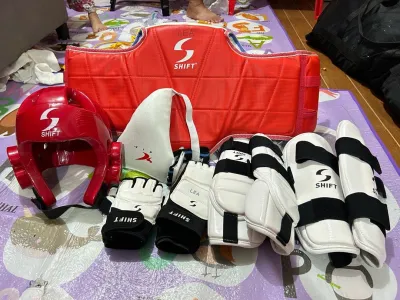
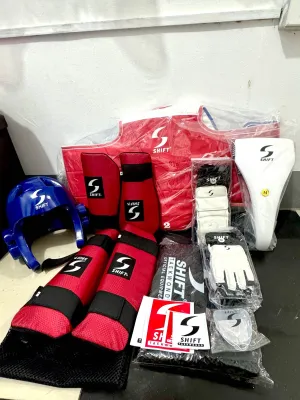
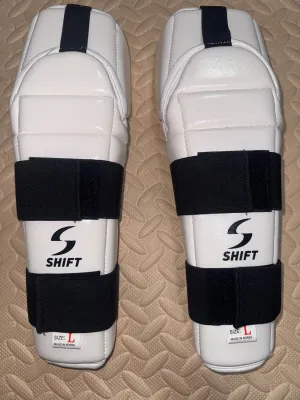
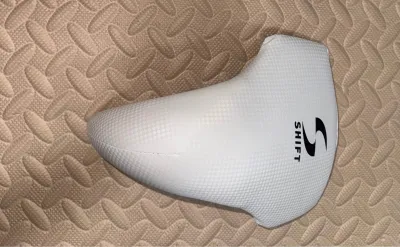
Prices are valid at publication and may change. Please refer to the product page for the latest price.
Local dojo rules, age groups, and belt levels often alter these mandatory requirements for daily training. For instance, white and yellow belts might only engage in light-contact drills, requiring only shin, forearm, and groin guards. As you advance to intermediate and senior belt levels, full-contact sparring becomes standard, making the headguard and chest protector mandatory. Additionally, children’s divisions often require headguards with integrated face shields, whereas adult divisions typically use open-face headguards.
Optional upgrades can significantly enhance your comfort and safety during heavy contact sessions. Many practitioners invest in moisture-wicking undershirts to wear beneath their traditional uniform, which helps manage sweat in hot training environments. Padded compression shorts offer extra hip protection, while specialized gear bags featuring mesh ventilation panels are highly recommended to help dry your equipment and prevent mold buildup between training sessions.
Head and Face Protection
Selecting a well-fitting headguard is critical for mitigating concussion risks and protecting the skull from direct kicks. The headguard must fit snugly around your temples and forehead without causing painful pressure points. It should sit approximately one finger-width above your eyebrows, ensuring your peripheral vision remains completely unobstructed so you can spot incoming high kicks from the side. A secure chin strap, typically utilizing a heavy-duty hook-and-loop fastener, is essential to prevent the guard from rotating or slipping over your eyes during a clash.

Dental protection is equally non-negotiable to prevent tooth fractures, lip lacerations, and jaw injuries. Moldable “boil-and-bite” mouthguards are the most practical choice for most practitioners, as they soften in hot water to form a custom, secure impression of your teeth. Standard pre-formed mouthguards are generally less secure, often requiring you to clench your jaw constantly to keep them in place, which can restrict your breathing during intense sparring rounds.
Before purchasing any headgear, perform observable checks on the padding density and shock absorption capabilities. Press your thumb firmly into the foam; it should feel dense and resilient, springing back immediately to its original shape without leaving deep indentations. Avoid headguards with thin, overly soft foam that bottoms out easily under light pressure, as these will not adequately disperse the force of a spinning heel kick.
Torso Protection: Choosing the Right Hogu
The chest protector, traditionally known as a hogu, is designed to balance impact absorption with unrestricted torso mobility. Traditional hogus feature thick, high-density foam wrapped in durable synthetic leather, designed to absorb and distribute the force of heavy roundhouse kicks. In contrast, modern electronic scoring models integrate electronic sensors that register points when struck by matching sensor-equipped foot mitts. While electronic hogus are standard in official tournaments, traditional hogus remain the primary choice for daily dojo training due to their durability and straightforward design.
Sizing parameters must be checked carefully to ensure adequate coverage for your chest, back, and vital organs. A properly sized chest protector should extend from your collarbones down to just above your hip bones. If the protector is too long, it will bump against your thighs when you chamber your leg for a kick, severely limiting your mobility. If it is too short, it leaves your lower ribs and abdomen dangerously exposed to low-striking kicks.
Adjustable strap systems play a vital role in maintaining a secure fit during dynamic kicks. Most traditional chest protectors use a crisscross tie system or heavy-duty elastic straps with plastic buckles on the back. The straps must be adjusted so the protector fits tightly against your torso without restricting your lung expansion. A loose chest protector will shift during dynamic spinning kicks, which can trip you up or leave unprotected gaps during an opponent’s counter-attack.
Limb Protection: Arms, Legs, and Hands
Protecting your extremities is essential for blocking kicks and preventing painful bone bruises or fractures. Forearm guards should extend from just below your elbow crease to about two centimeters above your wrist joint, shielding the ulna and radius bones during heavy blocking exchanges. Shin guards must cover the entire shin bone from just below the knee down to the ankle. Look for dual-strap designs with wide, elastic hook-and-loop bands that wrap completely around the limb to prevent the guards from twisting sideways when you block a kick.
Sparring gloves are lightweight and feature padding concentrated over the knuckles and the back of the hand. Unlike bulky boxing gloves, taekwondo gloves feature an open-palm or open-finger design. This design allows you to maintain natural hand dexterity, which is crucial for maintaining balance, executing blocks, and maintaining proper hand posture during close-range clinches.
Instep guards protect the top of the foot, which contains many small, fragile bones that are highly susceptible to injury when striking an opponent’s elbow or hard chest protector. These guards wrap around the ankle and cover the top of the foot with a layer of shock-absorbing foam. For electronic sparring, these are replaced by specialized sensor socks, but for standard training, durable foam instep protectors are essential to prevent painful bone bruises and fractures.
Groin Protection
Groin guards are mandatory for both male and female practitioners during sparring to protect against accidental low kicks. Male guards feature a rigid, high-impact plastic cup encased in padded foam to protect against direct upward impacts. Female groin guards are flatter, wider, and utilize dense foam padding to protect the pelvic bone and lower abdomen from stray strikes.
Integration methods can greatly affect your comfort and mobility on the mat. Many practitioners prefer wearing their groin guard over their underwear but beneath their uniform pants. Some modern athletic brands offer compression shorts with built-in pockets designed to hold the protective cup securely in place, which minimizes friction and prevents the guard from shifting during deep stances and high kicks.
Regardless of the style you choose, the guard must fit snugly against the body. A loose groin guard is highly dangerous, as it can shift out of position and actually cause injury during an impact. Ensure the elastic waistband is wide and tight enough to hold the protector firmly in place throughout a multi-round sparring session.
Sizing, Fit, and Safety Checks Before Purchase
To avoid the hassle of returns, always measure your body before purchasing gear online or at a local sports shop. Key measurements include your total height, chest circumference, and the length of your shins and forearms. Do not rely solely on generic size labels, as sizing standards vary significantly between different martial arts brands. Always compare your physical measurements against the manufacturer’s specific sizing chart.
If you plan to compete in official tournaments, check the equipment for official approval stamps, such as the World Taekwondo logo. This label ensures the gear meets strict safety, thickness, and material standards required for fair play. Using unapproved gear can lead to disqualification at the tournament inspection table, so verifying these labels before purchase is essential.
When buying gear, perform a thorough physical inspection of the materials. Examine the stitching along the edges of foam pads to ensure there are no loose threads or fraying seams. Test the elasticity of all straps by stretching them fully; they should snap back firmly without feeling loose or brittle. For used or older gear, squeeze the foam core to check for permanent compression, which indicates the material has lost its ability to absorb impact and must be replaced.
Frequently Asked Questions (FAQ)
Can I use MMA or boxing gloves for taekwondo sparring?
No, you should not use MMA or boxing gloves for taekwondo sparring. Boxing gloves are heavily padded, bulky, and completely enclose the hand, which restricts your ability to open your palms for balance, blocking, and clinching. MMA gloves, while open-fingered, often feature thick knuckle padding designed for punching and grappling on the ground, which does not align with the specific blocking and light-contact hand strikes permitted in taekwondo. Taekwondo-specific gloves are uniquely lightweight, offering targeted padding on the back of the hand and knuckles while keeping the palm open and flexible to match the sport’s dynamic movement and rules.
How often should I replace my taekwondo protective gear?
You should replace your taekwondo protective gear whenever you observe clear signs of material degradation. Inspect your gear regularly for compressed foam that no longer springs back, cracked outer synthetic leather, or frayed hook-and-loop straps that fail to stay secure during movement. In humid climates like the Philippines, sweat buildup can break down foam materials faster and cause persistent, deep-seated odors that indicate bacterial growth. Generally, with regular training two to three times a week, soft gear like shin and forearm guards should be replaced every one to two years, while hard-use items like headguards and chest protectors should be evaluated annually for safety.
Community discussion
Share your experience or ask a question. Comments are reviewed before publication.