
Selecting the right tennis training tools can mean the difference between steady, satisfying improvement and a closet full of expensive, unused gear. Many players in the Philippines, inspired by local tournaments or social club matches, rush to purchase high-tech gadgets before mastering the basics. In our humid tropical climate, outdoor court time is precious, and your training equipment must match your actual playing level to be truly effective. Investing in tools that are too advanced can disrupt your natural stroke development, while using overly simple gear can stall your progress once you reach a certain threshold. By matching your training aids to your current skill level, you ensure that every minute spent on the court or in your driveway directly translates to better match play.
Assess Your Current Tennis Skill Level
Before browsing online marketplaces for training aids, you must objectively evaluate your current playing ability. It is easy to overestimate your level after a few good hitting sessions, but choosing gear based on aspiration rather than reality often leads to frustration. Your skill level dictates not only what tools will help you but also how safely and effectively you can use them.
To identify where you stand, look for observable signals in your regular play. Beginners are typically working on basic ball contact, learning to control the direction of their shots, and establishing a consistent service motion. If you struggle to maintain a slow, five-shot rally with a partner, you are firmly in the beginner stage. Intermediate players can reliably direct their groundstrokes, hit with moderate topspin or slice, and sustain longer rallies, though they may struggle when forced to run or when facing heavy spin. Advanced players possess refined stroke mechanics, can intentionally vary pace and spin, and maintain tactical discipline during high-intensity match play.
Products mentioned in this guide
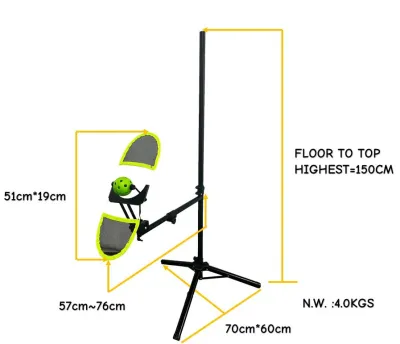
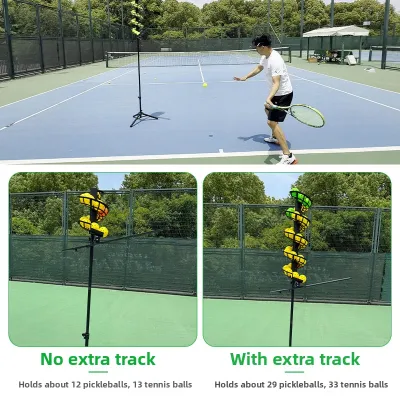
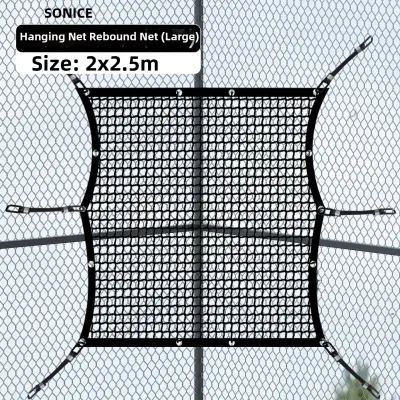
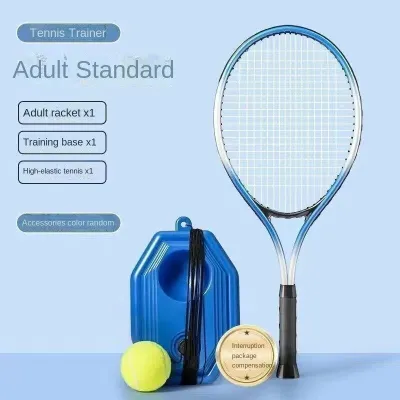
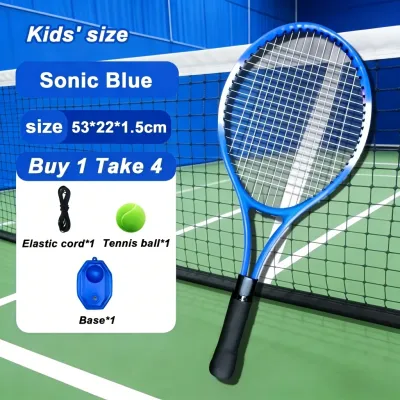
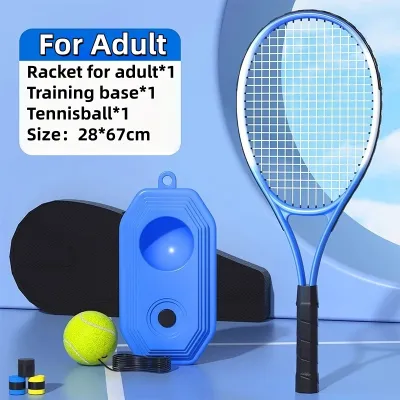
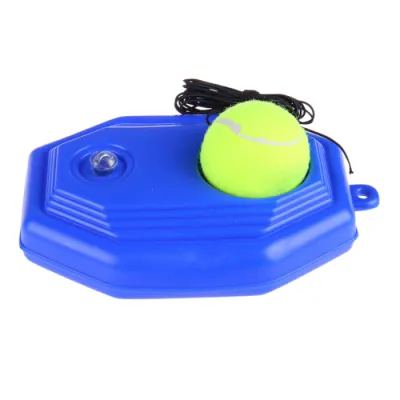
Prices are valid at publication and may change. Please refer to the product page for the latest price.
Use this self-assessment checklist to pinpoint your primary technical or physical weaknesses before buying any tools:
- Can you consistently land your first serve in the box at least half the time?
- Do you struggle more with footwork and positioning or with racket-face control?
- Does your stroke mechanics break down when you are forced to move laterally?
- Are you trying to fix a specific mechanical flaw, or do you simply need more physical conditioning?
Purchasing advanced gear, such as highly complex programmable ball machines or smart racket sensors, too early in your development carries significant risks. When you are still learning the basic swing path, data-heavy feedback can cause analytical paralysis, making you focus on numbers rather than the physical feel of clean ball contact. Furthermore, heavy or complex equipment can be difficult to transport to local public courts in hot weather, leading you to abandon solo practice altogether.
Essential Tennis Training Tools for Beginners
For those starting their tennis journey, the primary goal is to develop consistent ball contact, hand-eye coordination, and basic footwork. The most effective tools at this stage are simple, highly portable, and focused on building muscle memory without requiring complex setups.

Agility ladders and marker cones are excellent, low-cost investments for beginners. Tennis is a sport played with the feet first; if you cannot position your body correctly relative to the bouncing ball, even the most expensive racket will not help. Laying out an agility ladder on a flat surface allows you to practice quick, light footwork patterns that mimic the split-step and lateral adjustments needed on the court. Marker cones can be placed on the court or a flat driveway to serve as visual targets, helping you learn to direct your shots and recover back to the center mark after each swing.
Another highly useful tool is a basic rebound net or a tennis solo trainer, which consists of a tennis ball attached to a weighted base by an elastic cord. These tools allow you to practice your swing mechanics repeatedly without needing a partner or a full court. When using a solo trainer, focus on maintaining a relaxed grip and a smooth, complete follow-through. Be aware that the ball returns much faster on an elastic cord than in a real game, so use this tool primarily to practice your timing and footwork recovery rather than trying to hit with maximum power.
At this stage, you should actively avoid complex, high-ticket items like programmable ball machines or smart swing analyzers. These tools require a level of stroke consistency that beginners have not yet developed. Attempting to adjust your swing based on sensor data without a coach present can lead to bad habits or physical strain, particularly in the wrists and elbows. Keep your setup simple, portable, and focused on the physical sensations of clean contact and balanced movement.
Intermediate Tennis Training Tools to Refine Your Game
Once you can sustain a rally and have developed a reliable swing path, your training focus shifts to precision, spin control, and physical endurance. Intermediate players often hit a plateau where their strokes look correct, but they lack the depth, accuracy, or footwork recovery to win competitive points.
Target nets and court targets are invaluable for intermediates looking to refine their accuracy. These are lightweight straps or nets that attach directly to the tennis net or sit on the court surface, providing a clear visual goal for your shots. Instead of simply hitting the ball over, you can practice aiming for the deep corners or clearing the net at a specific height to generate depth. This helps transition your focus from basic survival rallies to intentional, tactical ball placement.
Resistance bands designed for lateral movement are another excellent tool for this stage. They help strengthen the hips and glutes, which are critical for the explosive lateral steps and quick recovery required in modern tennis. Using these bands during warm-ups or shadow-swing sessions can help correct the common intermediate flaw of standing too upright during lateral movement. Additionally, a basic oscillating ball machine can be highly beneficial if you have regular access to a court. Unlike advanced programmable models, a basic oscillator simply feeds balls to alternating sides, forcing you to practice your movement, positioning, and stroke mechanics under moderate physical exertion.
You will know you have maximized the value of your beginner tools when agility drills feel effortless and you can hit your targets on a rebound net with high consistency. If your primary limitation is no longer making contact but rather controlling the depth and spin of the ball during movement, it is time to transition to these intermediate training aids.
Advanced Tennis Training Tools for Competitive Edge
Advanced players require tools that offer precise feedback, simulate match-like unpredictability, and push their physical conditioning to the absolute limit. At this level, minor adjustments in racket head speed, spin rate, or footwork efficiency can make the difference between winning and losing tight matches.
Smart swing sensors that attach to the butt cap of your racket or are integrated into the frame can provide valuable data for advanced players. These sensors track metrics such as racket face angle, ball impact location, spin type, and swing speed. For an advanced player with established mechanics, this data is highly actionable. For instance, if you notice your topspin RPMs drop during the second hour of a match, you can adjust your physical conditioning or racket preparation to maintain stroke quality under fatigue.
Fully programmable ball machines represent another significant investment for competitive players. These machines can be programmed via smartphone apps to deliver custom drills that mimic specific opponents, such as a deep topspin groundstroke followed by a short, low slice. This forces you to make split-second decisions and adjust your footwork dynamically, closely replicating the physical and mental demands of a real match. Additionally, specialized athletic conditioning gear, such as weighted training rackets or high-resistance speed parachutes, can help build the explosive power needed for modern, high-velocity play.
However, you must carefully weigh the cost-to-benefit ratio of these advanced tools. A programmable ball machine can cost tens of thousands of ₱ and requires regular maintenance, battery charging, and a vehicle large enough to transport it. Before purchasing, ensure you have the discipline to analyze the data collected by sensors and translate it into structured, focused practice sessions. Without a clear plan and the commitment to train regularly, these high-tech tools often become expensive dust collectors.
How to Build a Cost-Effective Training Setup
Building a functional tennis training setup does not require spending a fortune. By prioritizing versatile, multi-purpose tools, you can maximize your training budget and avoid buying equipment that you will quickly outgrow.
Start by investing in low-cost, high-yield items like marker cones, resistance bands, and a quality jump rope. These tools are highly portable, durable, and useful across all skill levels, from beginner footwork drills to advanced physical conditioning. Before purchasing any single-purpose, high-ticket item, ask yourself how often you will actually use it. For example, if you are considering buying a premium ball machine, calculate the cost per use. If you only plan to use it once a month, it is far more economical to rent a machine from a local tennis club or share the purchase price with a dedicated hitting partner.
Additionally, look for practical, low-cost alternatives to commercial training aids. You can use painter’s tape to create temporary target lines on a public court wall, or use plastic water bottles filled with sand as court markers. Many local tennis clubs in the Philippines offer ball machine rentals or have hitting walls that you can use for a nominal fee. By utilizing these existing facilities and focusing your budget on highly versatile personal gear, you can build an incredibly effective training routine without unnecessary financial strain.
Frequently Asked Questions (FAQ)
Do I need a tennis ball machine as a beginner?
No, beginners do not need a tennis ball machine. While the idea of a machine feeding you endless, identical balls sounds appealing, it can actually hinder your early development. Beginners need to learn how to read the ball’s bounce, spin, and trajectory, which is best done by practicing with a coach or a hitting partner. A ball machine delivers a highly predictable ball that does not teach you how to anticipate real-world shots. Focus instead on simple wall practice, rebound nets, and basic footwork drills to build your foundational mechanics.
Can smart racket sensors actually improve my technique?
Smart racket sensors can only improve your technique if you already possess a consistent swing and know how to interpret the data. For beginners, the raw numbers can be confusing and may lead to overthinking your swing mechanics. However, for intermediate and advanced players, these sensors offer valuable insights into swing speed, ball contact consistency, and spin rates. To get the most value from a sensor, use it in conjunction with video analysis or under the guidance of a qualified coach who can help you translate the data into specific, actionable adjustments on the court. Use the sensor as a diagnostic tool to track your progress over time rather than a quick fix for mechanical errors.
Community discussion
Share your experience or ask a question. Comments are reviewed before publication.