
Setting up a martial arts training space at home requires a careful balance between training efficiency, safety, and domestic practicality. While hitting a heavy bag offers a solid solo workout, nothing replicates the dynamic flow, timing, and reflex development of training with a partner. To bring realistic striking drills into your living room, garage, or carport, you must choose the right impact-absorbing gear.
There is no single universal winner when comparing focus mitts, Thai pads, and kick shields for home use. The ideal choice depends entirely on your primary striking discipline, the physical constraints of your living space, and the physical capabilities of your training partner.
If your primary focus is boxing, hand speed, and head movement, focus mitts offer a compact and highly mobile solution. For those practicing Muay Thai or kickboxing, traditional rectangular muaythai pads provide the versatility needed to transition seamlessly between punches, kicks, knees, and elbows. If your training centers on raw kicking power, or if your training partner is an untrained family member who needs maximum protection from heavy impacts, a large kick shield is the safest and most forgiving option. Balancing these factors against your available storage and noise tolerance will point you toward the perfect setup.
Products mentioned in this guide
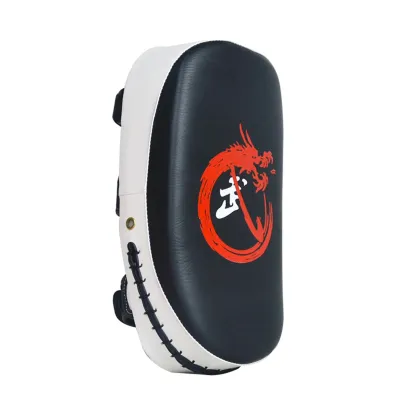
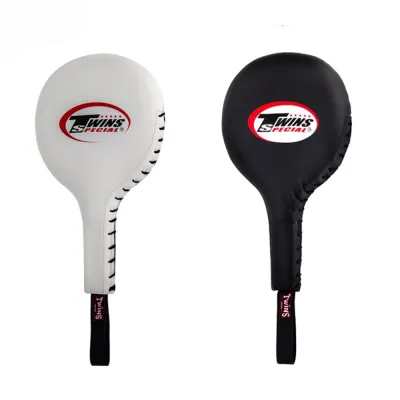
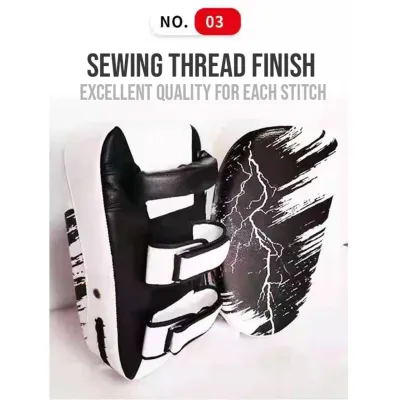
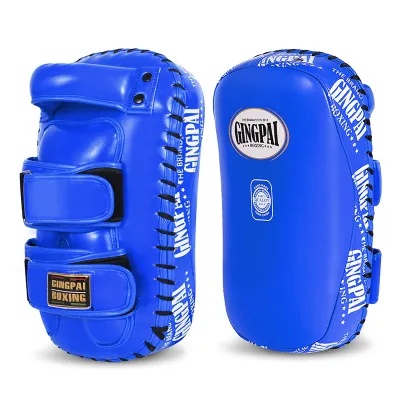
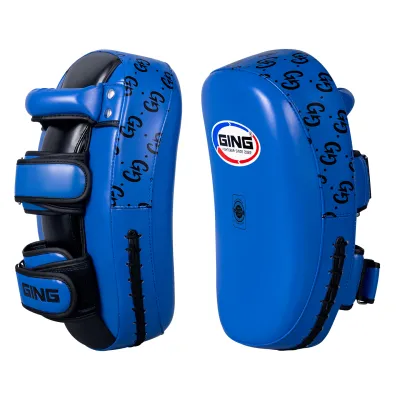
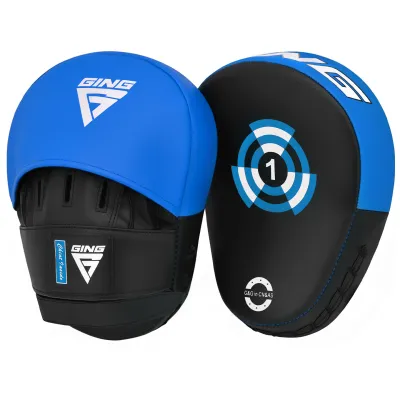
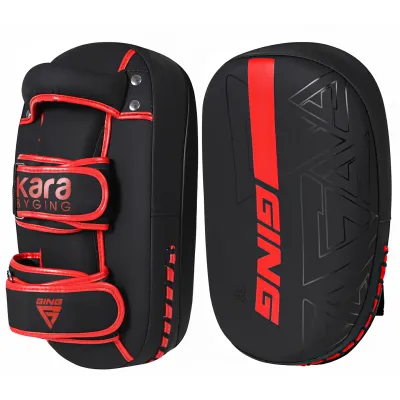
Prices are valid at publication and may change. Please refer to the product page for the latest price.
Core Functions and Training Benefits of Each Pad Type
To make an informed decision, you must first understand how each pad type is engineered and how its design shapes your training. Each tool is built to develop specific attributes, from surgical hand precision to raw, bone-conditioning impact absorption.
Focus Mitts: Precision, Speed, and Boxing Fundamentals
Focus mitts are lightweight, compact pads designed to fit closely over the holder’s hands like specialized gloves. They generally feature a curved or flat striking surface with a circular target zone in the center. The backing typically consists of an open or closed glove compartment, often supplemented with wrist straps to keep the mitt secure during rapid movements.
These mitts are engineered primarily for hand strikes, making them the gold standard for boxing training. Because of their minimal weight, a skilled holder can move them quickly, simulating rapid targets, counter-punches, and defensive scenarios. Training with focus mitts develops exceptional hand-eye coordination, punch accuracy, timing, and head movement, such as slipping, ducking, and rolling.
However, focus mitts have strict structural limitations. Their thin padding and compact size mean they cannot safely absorb the heavy, broad impact of kicks, knees, or elbows. Attempting to catch a roundhouse kick with a standard focus mitt can easily result in wrist sprains, hyperextended elbows, or direct injury to the holder’s face and ribs.
Thai Pads: The Versatile All-Rounder for Muay Thai
Traditional Thai pads, often referred to as banana pads, are thick, rectangular targets that strap directly onto the holder’s forearms. They feature a rigid handle at the top for the hand to grip and one or two heavy-duty hook-and-loop straps to secure the pad along the forearm. This dual-connection system distributes the force of incoming strikes across the holder’s entire skeletal structure rather than isolating it in the wrists.
These muaythai pads are the ultimate multi-sport tool, built to withstand the full arsenal of the “Art of Eight Limbs.” A striker can throw full-force punches, downward elbows, piercing knees, and powerful roundhouse kicks in rapid succession without needing to switch targets. The elongated design protects the holder’s forearm from stray shin strikes and allows them to actively block, check kicks, and simulate realistic counter-attacks.
While highly versatile, holding Thai pads is physically demanding. The rigid construction and moderate weight of the pads require the holder to have decent upper-body strength and a solid understanding of how to brace against incoming strikes. Without proper technique, the repetitive shock of heavy kicks can cause joint fatigue in the holder’s shoulders and elbows over time.
Kick Pads and Shields: Maximum Impact and Power Absorption
Kick pads and striking shields are large, heavily padded targets designed to absorb maximum force. They are typically held using multiple reinforced handles on the back and sides, allowing the holder to grip the shield with both hands and brace it against their chest, thighs, or torso. These shields are packed with high-density, multi-layered foam specifically engineered to disperse the energy of heavy kicks.
Their primary benefit is unmatched protection for the holder. Because the shield is held close to the body and supported by both arms, the holder can easily absorb full-power roundhouse kicks, front kicks (teeps), and flying knees from larger strikers. The massive surface area also provides a highly forgiving target, reducing the risk of injury from missed strikes or poor alignment.
This protective capacity comes at the cost of speed and mobility. Kick shields are bulky and relatively heavy, making it difficult to choreograph fast, complex combinations or simulate rapid head movement. They are best suited for raw power development, conditioning the shins, and practicing single, high-impact strikes rather than fluid, multi-angle boxing combinations.
Evaluating Suitability for Home Training Environments
Transitioning martial arts training from a commercial gym to a residential setting introduces several practical challenges. You must evaluate how each pad type performs within the physical and social boundaries of your home.

Space and Storage
The physical footprint of your gear dictates where and how you can train. Focus mitts require virtually no dedicated storage space; they can easily slide into a drawer, a small gym bag, or sit on a closet shelf. This makes them highly practical for small apartments or shared bedrooms.
Thai pads are moderately bulky. They require a dedicated shelf or closet hook and can be awkward to transport if you plan to train in a local park. Kick shields, on the other hand, are exceptionally large. Storing a full-sized suitcase kick shield in a compact home can be difficult, often requiring it to sit out in the open, which may not align with your household’s aesthetic preferences.
Noise and Vibration
In shared living spaces, townhouses, or condominiums, the acoustic impact of your training is a major consideration. Striking a dense, rigid Thai pad creates a sharp, high-frequency “crack” that easily penetrates drywall and concrete floors. If you live in a multi-story building, the vibration of heavy kicks landing on Thai pads can travel through the building’s structure, potentially disturbing your neighbors.
Focus mitts produce a lighter, quieter “pop” that is far easier to mask. Kick shields, while absorbing heavy impacts, tend to produce a low-frequency dull thud. While this thud is less sharp than a Thai pad crack, the sheer force of the kick can still send vibrations through the floorboards. To manage noise, look for pads with multi-layered, air-dispersing foam cores, and consider training on high-density interlocking foam mats to decouple your movement from the subfloor.
Partner Skill and Fatigue
In a commercial gym, you train with experienced partners who know how to catch strikes safely. At home, your training partner might be a spouse, sibling, or roommate with no formal martial arts background. This makes holder safety your absolute highest priority.
Holding focus mitts requires fast reflexes and precise timing to “catch” each punch, which can be frustrating and difficult for a beginner. Holding Thai pads requires significant forearm strength and proper bracing technique to prevent the pads from flying back into the holder’s face. If your partner is untrained, a kick shield is by far the safest choice. It requires very little technical skill to hold, and the massive foam barrier keeps the holder completely insulated from the impact.
Solo Training Viability
It is important to recognize that all three of these traditional pad types are designed strictly for two-person training. They cannot be used effectively if you are training alone.
If you do not have a reliable partner at home, purchasing handheld pads will result in unused gear. For solo setups, you must look into alternative equipment. Freestanding heavy bags, wall-mounted striking targets, or adjustable reflex bags are engineered to provide resistance and target practice without requiring a second person to hold them.
Side-by-Side Comparison of Muay Thai Pads
To help you quickly evaluate your options, the table below compares the three pad types across key practical and performance dimensions.
| Feature | Focus Mitts | Thai Pads | Kick Pads / Shields |
|---|---|---|---|
| Primary Use | Boxing & hand speed | Muay Thai & kickboxing | Heavy kicking & power drilling |
| Strike Types Accommodated | Punches only | Punches, kicks, knees, elbows | Kicks, knees, heavy body strikes |
| Holder Skill Required | High (requires fast reflexes) | Moderate to High (requires bracing) | Low (easy to hold and brace) |
| Storage Space Needed | Compact (fits in small bag) | Moderate (requires shelf space) | Bulky (requires dedicated floor/wall space) |
| Noise & Vibration Level | Low to Moderate | High (sharp cracking sound) | Moderate (deep, low-frequency thuds) |
| Best Training Goal | Accuracy, speed, head movement | Versatility, combination flow | Raw power, shin conditioning |
How to Choose the Right Pad for Your Home Setup
Selecting the right gear involves matching your personal training goals with your household constraints. Use the following conditional framework to guide your purchase.
Choose Focus Mitts if:
- Your primary training goal is boxing, improving hand speed, and perfecting head movement.
- You live in a compact apartment or condominium where storage space is highly limited.
- You need to keep training noise to an absolute minimum to avoid disturbing neighbors or sleeping family members.
- Your training partner is willing to learn fast, reactive hand movements but does not want to absorb heavy structural impacts.
Choose Thai Pads if:
- You practice Muay Thai, kickboxing, or MMA and need a single, versatile tool that accommodates punches, kicks, elbows, and knees.
- You have a dedicated training area, such as a garage, carport, or spacious living room, with adequate storage space.
- You have a committed, active training partner who is willing to learn proper pad-holding mechanics and has the physical strength to brace against heavy strikes.
- You want to practice complex, high-speed combinations that mimic a real sparring match.
Choose Kick Pads/Shields if:
- Your primary focus is developing maximum kicking power, conditioning your shins, and practicing heavy single strikes.
- Your training partner is a beginner, a younger family member, or someone who wants to assist you without risking joint strain or injury.
- You have ample storage space, such as a dedicated home gym room or garage corner, to store large, bulky gear.
- You want a highly forgiving target that minimizes the risk of injury during high-energy, high-impact workouts.
Verify First if:
Before finalizing your purchase, carefully check the manufacturer’s specifications to ensure the gear matches your specific home environment and usage frequency. Pay close attention to the following details:
- Material Selection: Genuine leather offers excellent durability and a classic feel, but it requires regular conditioning and is highly susceptible to rotting in humid environments. High-grade synthetic leathers, such as microfiber or premium engineered vinyl, are highly recommended for tropical climates like the Philippines. They resist sweat absorption, are easy to sanitize, and will not crack or harbor mold when stored in humid garages or carports.
- Strap and Handle Durability: Look for Thai pads with reinforced, riveted handles rather than simple stitched designs. Double-strap forearm closures provide much better stability than single-strap designs, preventing the pad from shifting or twisting during heavy training sessions.
- Price Bands: Budget-friendly synthetic pads (typically under ₱1,500) are suitable for light, occasional home use. Mid-range durable synthetic or standard leather pads (ranging from ₱1,500 to ₱4,000) offer a great balance of longevity and comfort for regular training. Premium, professional-grade Thai pads (above ₱4,000) are designed to withstand years of daily, full-power abuse.
Essential Setup and Safety Tips for Home Pad Work
Training at home lacks the immediate supervision of a professional coach. To prevent injuries to yourself and your partner, you must establish strict safety protocols and maintain your equipment properly.
Proper Holding Technique
Pad holding is an active skill that requires physical engagement. The holder must never stand completely passive or lock their joints. When holding Thai pads, keep your elbows slightly bent and tucked close to your ribs to protect your torso.
As the strike lands, meet the impact with a tiny, controlled forward push—often called “catching” the strike. This subtle counter-force prevents the pad from slamming back into your own face or chest and protects your wrists and shoulders from hyperextension. Never hold the pads too far apart, as this can cause the striker to overextend their joints, leading to knee or elbow sprains.
Space Preparation
Before throwing your first strike, clear a minimum training area of 3 meters by 3 meters. Push back coffee tables, chairs, and electronics to prevent accidental collisions.
Ensure your training surface is non-slip. Training on bare tiles, polished wood, or wet concrete can easily lead to slips and groin strains. Laying down interlocking high-density EVA foam mats provides excellent traction, protects your joints during movement, and helps dampen impact vibrations. Additionally, always check your vertical clearance to ensure you will not strike low-hanging light fixtures or ceiling fans during high kicks or knee strikes.
Gear Pairing
Never strike dense Thai pads or heavy kick shields with bare hands or unprotected wrists. Strikers must always wear high-quality hand wraps to support the small bones of the hand and wrist.
Pair these wraps with well-fitted boxing or Muay Thai gloves. For home pad work, gloves weighing between 12oz and 16oz are ideal. The extra padding protects your knuckles from bruising and ensures that your training partner does not absorb unnecessary shock through the pads.
Maintenance in Humid Climates
In the tropical climate of the Philippines, sweat and high humidity can quickly ruin your training gear. After every session, wipe down the striking surfaces, straps, and inner linings of your pads with a damp cloth and a mild, non-abrasive disinfectant spray.
Allow the pads to air dry completely in a well-ventilated, shaded indoor area. Never leave your pads in direct, intense sunlight for extended periods, as extreme UV exposure will dry out the foam core, crack the outer casing, and degrade the adhesive bindings. Proper maintenance prevents the buildup of bacteria, eliminates unpleasant odors, and ensures your gear remains safe and functional for years to come.
Frequently Asked Questions (FAQ)
Can I use Muay Thai pads for solo training at home?
No, traditional handheld focus mitts, Thai pads, and kick shields are designed exclusively for partner training and cannot be used effectively on your own. If you train solo at home, you should invest in a freestanding heavy bag, a wall-mounted striking pad, or a reflex bag. These tools provide the necessary resistance and target feedback without requiring a partner to hold them.
What size and weight should I look for in Thai pads for home use?
For most home practitioners, standard medium or large adult-sized Thai pads offer the best balance of protection and maneuverability. Heavier, thicker pads provide superior impact absorption for the holder, but they can quickly cause shoulder fatigue during longer training sessions. Always check the manufacturer’s listed dimensions and weight; lighter, slightly curved synthetic pads are generally easier for home partners to hold comfortably than heavy, rigid professional leather pads.
Community discussion
Share your experience or ask a question. Comments are reviewed before publication.