
Selecting the right kicking pads is one of the most critical decisions you will make for your martial arts journey. The gear you choose directly shapes your striking form, determines how hard you can train, and dictates the physical toll taken by your training partner. In combat sports, there is no single pad that excels at everything; a pad designed to absorb a heavy roundhouse kick will be too bulky for rapid boxing combinations, while a lightweight mitt built for speed will fail to protect a holder from a powerful knee strike.
To make an informed choice, you must evaluate your primary martial arts discipline, your current skill level, and your training environment. For instance, training in a humid, tropical climate requires careful consideration of material breathability and grip stability, as sweat can quickly compromise your control over the gear. By understanding the distinct engineering behind Thai pads, kicking shields, and focus pads, you can select the equipment that optimizes your performance while keeping both you and your training partner safe.
Core Differences Between Thai Pads, Kicking Shields, and Focus Pads
To choose the right training gear, you must first understand how these three pad types differ in their physical construction, target surface area, and primary training purposes. Each style of pad is engineered to handle specific types of kinetic energy and movement patterns.
Products mentioned in this guide
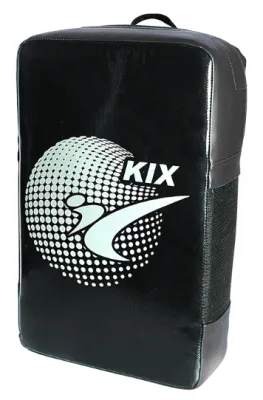
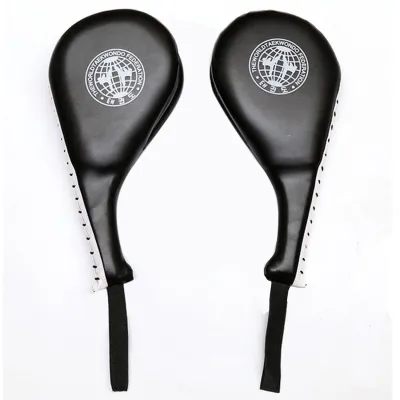
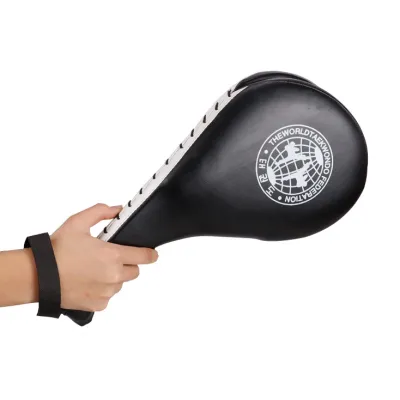
Prices are valid at publication and may change. Please refer to the product page for the latest price.
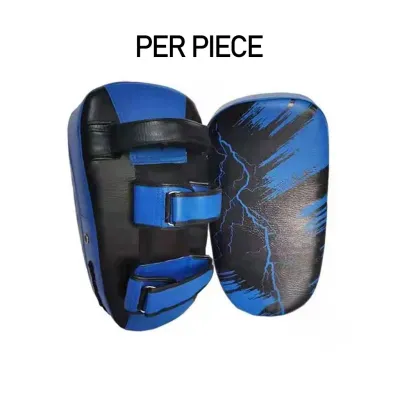
Thai pads are thick, rectangular blocks of dense foam, typically worn in pairs on the forearms. They are the standard for Muay Thai, kickboxing, and mixed martial arts (MMA) because they accommodate the full spectrum of strikes: punches, kicks, knees, and elbows. Holding them requires significant forearm strength and proper skeletal alignment, as the holder directly absorbs the impact through their arms.
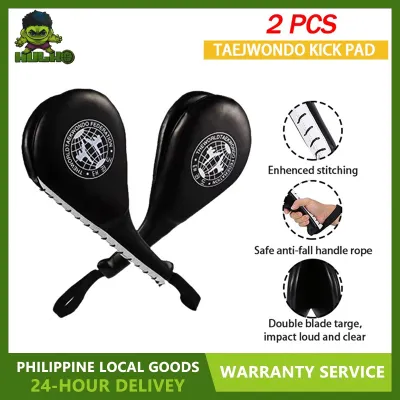
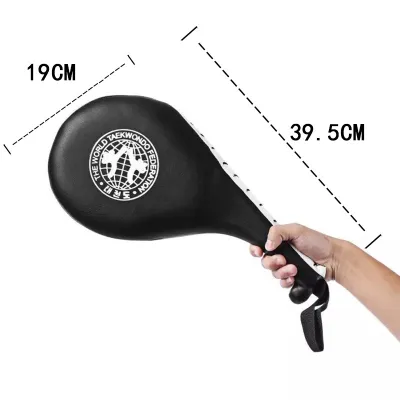
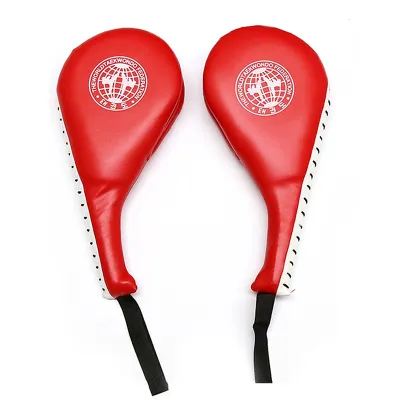
Kicking shields are much larger, single pads designed to be held with both hands against the body. They feature a massive surface area and exceptionally thick, multi-layered foam padding. This design is optimized for absorbing maximum-power leg strikes, such as roundhouse kicks, side kicks, and front push kicks. Because the shield is braced against the holder’s torso or thigh, it distributes the impact across a larger muscle group, making it the preferred choice for heavy power drills in Taekwondo, Karate, and kickboxing.
Focus pads, often called focus mitts, are small, lightweight, glove-like pads designed primarily for hand strikes. They feature a thin layer of high-density foam and are worn over the holder’s hands. Their primary purpose is to develop speed, precision, timing, and head movement. Because they are so light, the holder can move their hands rapidly to simulate a moving target, making them ideal for boxing and the punching elements of MMA. However, their minimal padding offers virtually no protection against heavy lower-body strikes.
Thai Pads: Ideal for Muay Thai and Versatile Striking
Thai pads are the workhorse of multi-disciplinary striking training. Their rectangular shape and dual-strap configuration provide a highly versatile target area that can be quickly adjusted to catch high kicks, low kicks, straight punches, and rising knees. This versatility makes them indispensable for dynamic, realistic sparring simulations where the striker must transition instantly between different types of attacks.

The structural integrity of a Thai pad relies heavily on its handle and strap system. A high-quality Thai pad features a rigid, riveted handle at the top, which the holder grips firmly, paired with one or two wide forearm straps. These straps must be secured tightly to prevent the pad from twisting or slipping off the arm when struck at an angle. For training partners, holding these pads is an active skill; they must meet the incoming strike with a slight forward pressure to neutralize the force, rather than letting their arms be blown backward.
When selecting Thai pads, consider the skill level of both the striker and the holder. Beginners may find the rigid structure of traditional Thai pads unforgiving on their shins, while inexperienced holders may struggle with the wrist and shoulder fatigue that comes from bracing against heavy kicks. If you train in a hot, humid environment, look for pads featuring curved designs and ventilated forearm channels. The curve helps catch kicks more securely, while the ventilation helps manage sweat buildup, preventing the pads from sliding down the holder’s arms during intense, high-volume training sessions.
Kicking Shields: Built for Maximum Power and Heavy Impact
If your training goals center on developing raw power, structural breaking power, or high-volume kicking endurance, the kicking shield is your most reliable tool. Unlike smaller pads, a kicking shield is engineered specifically to handle the absolute maximum force a martial artist can generate with their legs. This makes it a staple in disciplines like Taekwondo, Kyokushin Karate, and traditional kickboxing.
The secret to the kicking shield’s protective capability lies in its internal foam construction and ergonomic handle placement. Most shields utilize multi-layered, closed-cell foam that disperses the kinetic energy outward rather than letting it penetrate straight through to the holder. The back of the shield is equipped with multiple heavy-duty handles arranged vertically, horizontally, or diagonally. This allows the holder to grip the shield securely with both hands and brace it against their chest, hip, or thigh, using their entire body weight to anchor the target.
However, this extreme level of protection comes with clear trade-offs in mobility and speed. Due to their bulk and weight, kicking shields are highly restrictive. They cannot be moved quickly to accommodate rapid, multi-angle boxing combinations or fast-paced footwork drills. They are best utilized for dedicated power-kicking intervals, where the striker focuses on perfecting the mechanics of a single, devastating technique before resetting. Holders must also remain highly attentive; failing to brace properly before a heavy kick can result in the shield being driven back into their own face or chest, emphasizing that equipment cannot replace proper stance and preparation.
Focus Pads (Focus Mitts): Best for Speed, Accuracy, and Combinations
For martial artists looking to sharpen their hand speed, punch accuracy, defensive slipping, and counter-striking coordination, focus pads are the ultimate training accessory. Their lightweight, compact design allows the holder to mimic the rapid, unpredictable movements of a real opponent’s head and upper body, creating a highly dynamic and interactive training experience.
Focus pads are designed to fit snugly over the holder’s hands like a glove, often featuring an inner palm dome that helps the hand maintain a natural, curved grip. This curved profile is essential because it helps “catch” incoming punches, centering the impact and reducing the strain on the holder’s wrists and elbows. Because the pads are so light, the holder can actively participate in the drill—not just catching punches, but also throwing light counter-punches, slipping under the striker’s hooks, and forcing the striker to maintain a tight guard and active head movement.
Despite their excellent utility for handwork, focus pads have strict safety limitations that must never be ignored. They are entirely unsuitable for absorbing heavy leg kicks, knees, or full-force body strikes. The thin foam layer and small surface area mean that a heavy kick will easily bypass the pad’s protection, transferring the full force directly into the holder’s wrist, hand, or face. Using focus pads for kicking drills not only risks breaking the holder’s fingers or wrist but also rapidly degrades the pad’s stitching and internal foam, leading to premature gear failure.
Decision Framework: Matching the Pad to Your Training Goals
To finalize your choice, you must align the physical characteristics of each pad type with your specific training environment, discipline, and partner dynamics. Use the following conditional framework to guide your decision:
- Choose Thai Pads if: Your training involves a diverse mix of punches, kicks, knees, and elbows (such as Muay Thai or MMA), and you train with a partner of a similar size who can handle the physical demands of holding forearm pads.
- Choose Kicking Shields if: Your primary focus is developing maximum kicking power, practicing heavy leg strikes (such as Taekwondo or Karate), or if there is a significant size difference between you and your training partner, requiring maximum impact absorption.
- Choose Focus Pads if: You are focusing strictly on boxing, hand speed, punch combinations, head movement, and defensive reaction drills, where mobility and rapid transitions are more important than heavy impact absorption.
| Pad Type | Primary Strikes | Holder Protection | Mobility & Speed | Best For |
|---|---|---|---|---|
| Thai Pads | Punches, Kicks, Knees, Elbows | Moderate to High | Moderate | Muay Thai, MMA, Kickboxing |
| Kicking Shields | Heavy Kicks, Knees, Power Strikes | Very High | Low | Taekwondo, Karate, Power Drills |
| Focus Pads | Punches, Light Elbows, Precision | Low (Hands/Wrists only) | Very High | Boxing, Speed, Accuracy Drills |
Verify First Before Purchasing
Before you invest your money in a new set of kicking pads, perform these essential quality and safety checks to ensure the gear will withstand the rigors of your training:
- Verify the Strap and Stitching Durability: In humid tropical climates, sweat can quickly degrade low-quality materials. Inspect the stitching around the handles and straps. Look for reinforced double-stitching and heavy-duty metal buckles or high-grade hook-and-loop fasteners that will not slip when wet.
- Verify the Foam Density: Press your thumb firmly into the center of the pad. It should feel highly resistant and firm. If the foam compresses easily or feels soft, it will quickly bottom out under heavy impact, transferring the force directly to the holder and increasing the risk of injury.
- Verify the Sizing and Fit: For Thai pads, ensure the length of the pad matches your forearm. The pad should cover your arm from just below the elbow to the wrist. If the pad is too long, it will restrict your elbow movement; if it is too short, it leaves your forearm exposed to stray kicks.
Frequently Asked Questions (FAQ)
Can I use focus pads for kicking practice?
No, focus pads are not designed to absorb the high-impact force of leg kicks. Attempting to catch kicks with focus pads poses a severe risk of wrist fractures, hand injuries, or shoulder strain for the holder, as the minimal padding cannot disperse the kinetic energy of a kick. Additionally, the high-velocity impact of a kick can easily split the seams and ruin the internal foam of lightweight focus mitts. If you want to practice light kick transitions during a boxing flow, ensure the strikes are highly controlled, low-impact taps, but always transition to Thai pads or kicking shields for dedicated kicking practice.
How do I clean and maintain leather or synthetic kicking pads?
Proper maintenance is crucial, especially in humid tropical environments where sweat and moisture can lead to mold, bacteria growth, and foul odors. After every training session, wipe down the entire surface of the pads with a damp cloth and a mild, non-abrasive soap or a specialized gear cleaner. Avoid soaking the pads in water or using harsh chemical solvents like bleach, which can dry out and crack both genuine leather and synthetic materials. Always allow the pads to air-dry completely in a well-ventilated indoor area away from direct sunlight, as extreme heat can warp the internal foam and degrade the outer shell.
What should the pad holder wear for protection?
The safety of the pad holder is just as important as that of the striker, and wearing the right protective gear can prevent painful accidents. When holding Thai pads or kicking shields for heavy kickers, the holder should consider wearing shin guards to protect their own legs from stray or off-target strikes. A mouthguard is highly recommended for the holder during intense combination drills to protect against accidental slips or head collisions. Finally, wearing supportive athletic footwear with good grip is essential to help the holder maintain a stable stance and absorb impact safely on slippery gym floors.
Community discussion
Share your experience or ask a question. Comments are reviewed before publication.