
A complete taekwondo gear set is the foundation of safe, compliant, and effective martial arts training. Whether you are stepping onto the mats for your very first sparring session or preparing for a local tournament, having the correct protective equipment is essential to shield your body from high-impact kicks and strikes. For practitioners training in tropical climates like the Philippines, choosing the right gear also means finding materials that can withstand high humidity, heavy perspiration, and frequent cleaning without degrading.
This comprehensive guide serves as your ultimate checklist for assembling a complete taekwondo gear set. From the mandatory protective pieces required for full-contact sparring (Kyorugi) to the minimal gear needed for forms practice (Poomsae) and basic drills, we break down what to look for in every component. You will also learn how to verify safety standards, achieve a precise fit, and budget smartly for your equipment.
Essential Sparring Gear: The Core Kyorugi Checklist
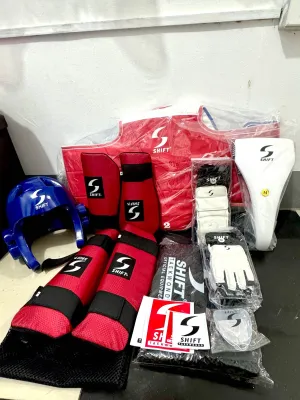
Full-contact sparring, or Kyorugi, requires a comprehensive array of protective gear designed to absorb and distribute the force of powerful kicks. Each piece of equipment in a standard sparring set targets a specific vulnerable area of the body, ensuring both you and your training partners can practice at full speed with minimal risk of injury.
Products mentioned in this guide
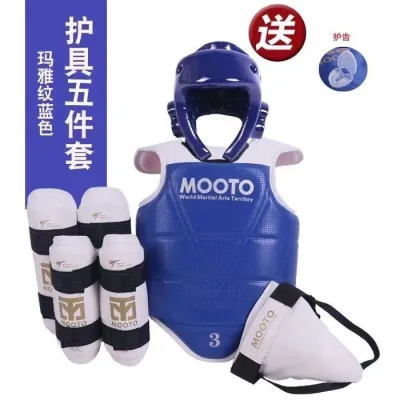
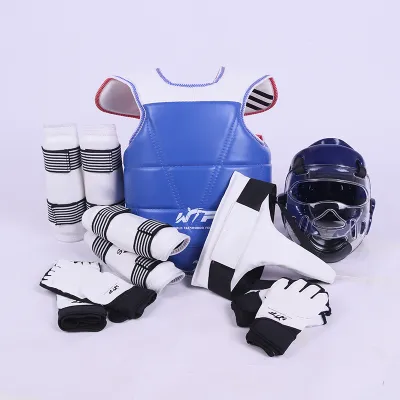
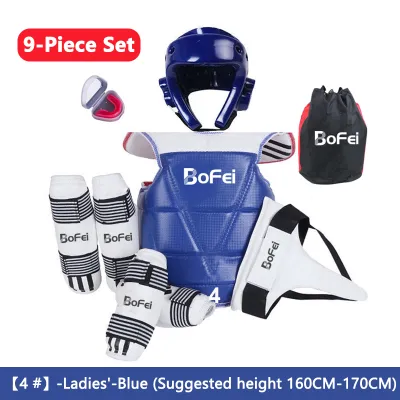
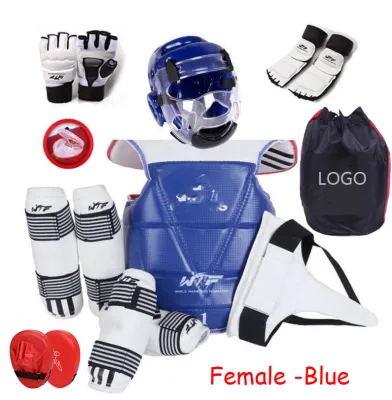

Prices are valid at publication and may change. Please refer to the product page for the latest price.
Headgear (Head Protector)
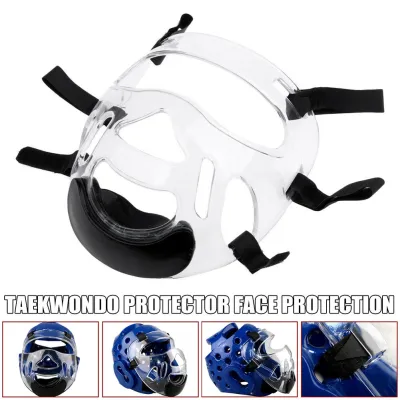
The head protector is arguably the most critical component of your sparring set. It must shield the forehead, temples, ears, and the back of the skull from accidental impacts. When evaluating headgear, prioritize peripheral visibility; the cut of the foam around the eyes must allow you to see incoming high kicks from the side without turning your head. Look for securing mechanisms like heavy-duty chin straps with hook-and-loop fasteners that keep the helmet firmly in place during rapid movement. In humid environments, dipped-foam headgear is highly practical because it does not absorb sweat and can be easily wiped clean after training.
Trunk Protector (Hogu)
The trunk protector, commonly known as the hogu, covers your chest, abdomen, ribs, and back. Standard hogus are reversible, featuring one blue side (cheong) and one red side (hong) to distinguish competitors during matches. A quality hogu uses multi-layered, high-density foam to disperse the impact of direct front kicks and roundhouse kicks. When trying on a trunk protector, ensure the shoulder straps cross comfortably at the back and tie securely through the side loops. The guard should sit low enough to protect your lower abdomen but high enough to allow you to bend at the waist and chamber your legs for kicks.
Limb Protectors (Forearm and Shin Guards)
Forearm and shin guards shield your limbs during blocking and kicking exchanges. Forearm guards protect the ulna and radius bones when you deflect incoming kicks, while shin guards absorb the impact when your leg collides with an opponent’s guard or body protector. You will generally choose between strapping designs and sleeve designs. Strapping designs feature rigid polyurethane shells secured by adjustable elastic Velcro bands, offering customizable tightness. Sleeve designs utilize a slip-on elasticated fabric sleeve with integrated padding, which tends to stay in place better during sweaty sessions but must fit perfectly to avoid restricting blood flow.
Gloves and Foot Protectors
Taekwondo gloves are lightweight and semi-open, featuring padding over the knuckles and back of the hand while leaving the palm relatively free. This design allows you to clench your fist for punches while maintaining the flexibility needed for open-hand blocking and balance. Foot protectors, or instep guards, cover the top of your foot and the ankle bones. They are crucial for preventing bruising and joint strain when striking the hogu. Ensure the foot protectors leave the sole of your foot exposed so you can maintain direct traction and grip on the puzzle mats.
Poomsae and Basics: Minimal Protective Requirements
Not every training session involves full-contact sparring. When practicing forms (Poomsae), executing basic step-sparring, or performing repetitive kicking drills on target pads, wearing a full, heavy sparring set can restrict your movement and cause unnecessary fatigue. However, maintaining a baseline level of safety is still essential.

For foundational training, a groin guard and a mouthguard remain mandatory. Dynamic movements, high-stretching kicks, and sudden pivots can occasionally lead to accidental slips or misplaced target pads. A groin guard—available in distinct male and female anatomical designs—should be worn underneath your uniform (dobok) to protect against stray low kicks. It must fit snugly against the pelvis without pinching or restricting your hip mobility.
During repetitive pad work, lightweight instep guards or elastic ankle sleeves are highly beneficial. When you are kicking a heavy bag or a vinyl target pad dozens of times per session, the repetitive friction can cause skin abrasions, blisters, or minor bruising on the top of your foot. Lightweight guards provide a thin layer of protection that shields the skin while allowing your feet to move naturally, keeping your focus entirely on perfecting your kicking technique and form.
Compared to full sparring gear, these basic protective pieces prioritize flexibility, breathability, and range of motion over maximum impact absorption. They allow you to build muscle memory, speed, and precision without the added weight and heat retention of a full hogu and headgear set.
Optional Add-Ons for Comfort and Injury Prevention
Once you have secured the core sparring and basic training gear, you can look into supplementary items that enhance your overall comfort, hygiene, and joint stability. These add-ons are especially valuable for dedicated practitioners who train multiple times a week.
Mouthguards
While often associated with sparring, a mouthguard is a wise investment for all training phases. You can choose between standard boil-and-bite mouthguards and custom-fit dental guards. Boil-and-bite models are highly accessible; you soften them in hot water and mold them to your teeth at home. Custom-fit guards, crafted by a dental professional, offer superior retention, making it much easier to breathe deeply and communicate clearly with your instructor during intense drills. A well-fitting mouthguard protects your teeth, prevents you from biting your tongue, and helps cushion the jaw during unexpected impacts.
Instep and Heel Supports
Repetitive jumping, spinning, and landing on hard puzzle mats can take a toll on your joints. Elastic ankle supports or neoprene heel sleeves provide compression and mild joint stability. They help keep the connective tissues warm, reducing the risk of minor strains and sprains. If you are recovering from a minor ankle tweak or require extra arch support during explosive movements, these simple sleeves can make a noticeable difference in your comfort levels.
Moisture-Wicking Inner Wear
Training in a warm, humid environment means your cotton uniform can quickly become heavy and saturated with sweat. Wearing a synthetic, moisture-wicking compression shirt or rash guard underneath your dobok is an excellent way to manage moisture. This inner layer prevents the wet uniform fabric and the heavy vinyl of the hogu from chafing against your skin. It also acts as a hygienic barrier, preventing sweat from soaking directly into your expensive protective pads, which helps extend the lifespan of your gear and reduces post-training odors.
Verifying Safety Standards and Getting the Right Fit
Before purchasing any taekwondo gear set, you must verify that the equipment meets recognized safety standards and fits your body correctly. Ill-fitting or unapproved gear can fail to protect you during an impact and may even be barred from use in official competitions.
First, check for official approval markings. If you plan to compete in sanctioned tournaments, your gear must feature the World Taekwondo (WT) approved logo. This mark indicates that the manufacturer has met strict international standards regarding foam density, coverage areas, and material safety. Even if you only plan to train recreationally, buying WT-approved gear ensures you are getting a product that has been rigorously tested for impact distribution.
To get the right fit, never rely on your standard clothing sizes. Instead, use a soft measuring tape to take precise physical measurements:
- Head Protector: Measure your head circumference just above your eyebrows.
- Trunk Protector: Measure your chest circumference at the widest point and your overall height.
- Limb Guards: Measure the length of your forearm (from the wrist joint to just below the elbow) and your shin (from the ankle to just below the knee).
Cross-reference these measurements with the manufacturer’s specific sizing chart. When your gear arrives, perform a thorough physical inspection. Check the elasticity of the straps; they should stretch smoothly and snap back into shape without warping. Test the grip of the Velcro fasteners to ensure they hold firmly under tension. Press your fingers into the foam padding; it should feel firm, offer resistance, and spring back immediately without leaving permanent indentations.
If you experience any sizing conflicts—such as a guard that pinches your skin, restricts your breathing, slips out of place when you move, or leaves significant gaps of exposed skin—stop using the gear immediately. Consult the manufacturer’s sizing support or ask a qualified instructor to evaluate the fit before you wear it during active training.
Building Your Set: Budgeting and Smart Purchasing
When assembling your taekwondo gear set, you will need to decide whether to buy a pre-packaged bundle or purchase each piece individually. Pre-packaged gear sets are highly convenient and often more cost-effective for beginners, as manufacturers bundle the headgear, hogu, limb guards, and gloves together at a lower total price point. However, buying modularly allows you to customize your sizes—which is ideal if you have long limbs but a smaller torso—and lets you invest more heavily in specific high-quality components.
If you are working with a limited budget, prioritize your ₱ allocation toward high-impact areas. Your head protector and trunk protector should receive the largest share of your budget, as they safeguard your head and vital organs. You can save money by opting for mid-range, durable limb guards and basic boil-and-bite mouthguards, upgrading them later as your skills and sparring intensity progress.
When shopping on online marketplaces or e-commerce platforms, take steps to ensure a safe purchase. Always verify the seller’s ratings and read detailed product descriptions to confirm the gear is authentic and WT-approved. Check the platform’s return and exchange policies specifically for protective gear, as you may need to swap sizes if the initial fit is not perfect.
Finally, keep an eye out for observable signs of wear that indicate when it is time to replace your gear. Over time, the internal foam of your hogu and headgear will compress permanently, losing its ability to absorb shock. If you notice cracked outer vinyl, frayed straps that no longer hold tension, degraded Velcro that slips during movement, or persistent odors that remain after thorough cleaning, it is time to replace that specific component to maintain your safety on the mats.
Frequently Asked Questions (FAQ)
How often should I replace my taekwondo sparring gear?
You should replace your sparring gear as soon as you observe physical signs of degradation. Inspect your gear regularly for compressed or permanently deformed foam that no longer springs back when pressed. Other clear indicators for replacement include cracked or peeling outer vinyl, frayed elastic straps, and Velcro fasteners that lose their grip during active movement. For hygienic reasons, if a piece of gear retains a persistent, sour odor despite proper washing and air-drying, it should be replaced to prevent skin infections.
Can I use boxing gloves for taekwondo sparring?
No, you cannot use boxing gloves for taekwondo sparring. Boxing gloves are designed for heavy, closed-fist punching and offer thick padding over the entire hand with rigid wrist support, which restricts hand opening. Taekwondo sparring requires lightweight, semi-open gloves that allow you to open your hands for blocking, parrying, and maintaining balance. Furthermore, boxing gloves are not compliant with World Taekwondo competition rules and their bulkiness can interfere with proper taekwondo blocking techniques, increasing the risk of injury.
Community discussion
Share your experience or ask a question. Comments are reviewed before publication.